

Trinity College, Cambridge Travel Guide
Free Guide: Cambridge’s largest college, featuring Europe’s biggest courtyard, Wren’s library and 36 acres of riverside gardens open to guided visitors.


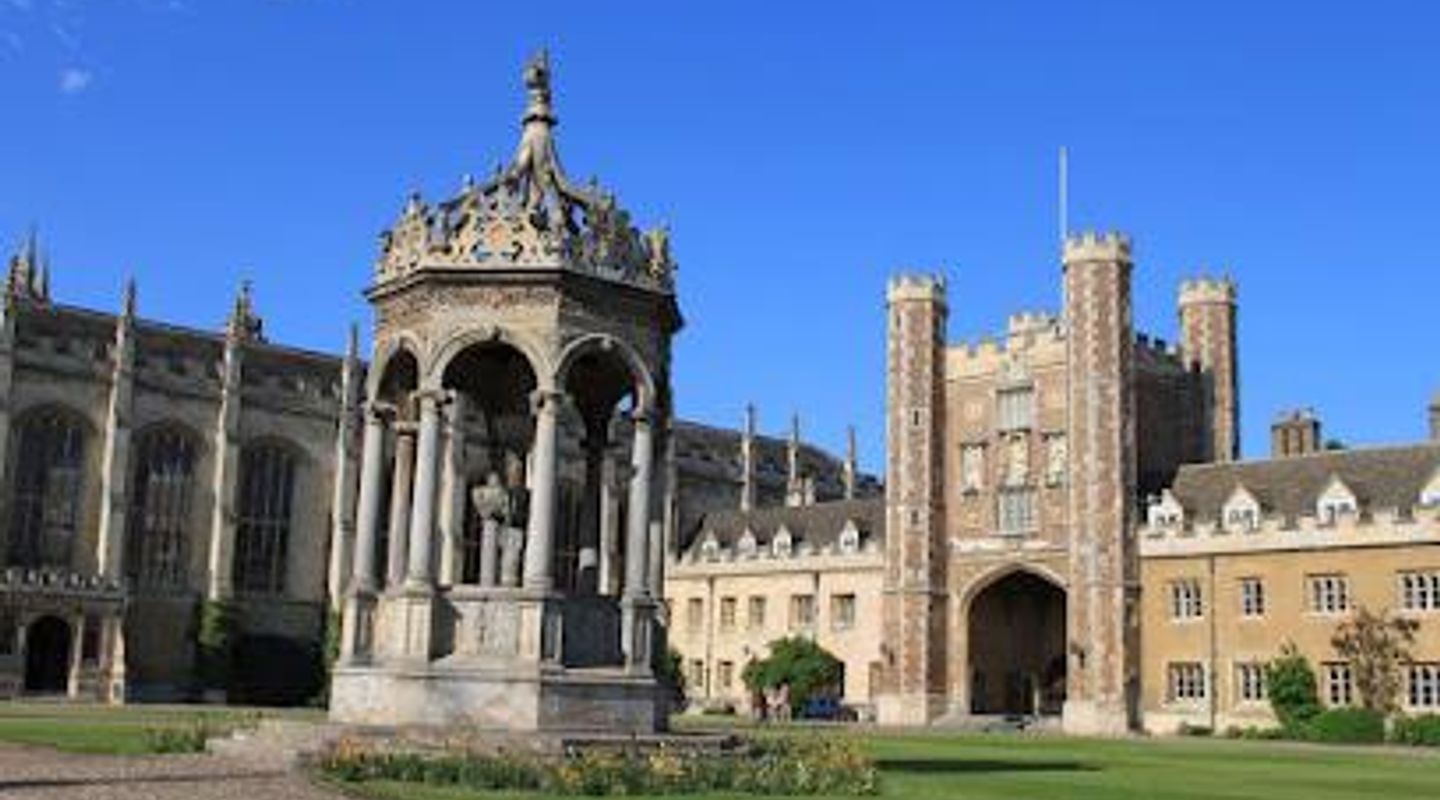
A brief summary of Trinity College
Cambridge’s largest college, featuring Europe’s biggest courtyard, Wren’s library and 36 acres of riverside gardens open to guided visitors.
Trinity College stands as Cambridge's largest and wealthiest college, founded in 1546 by Henry VIII. Its Great Court ranks as Europe's largest enclosed courtyard, while the Wren Library houses manuscripts tied to Newton, Byron and Wittgenstein. Visitors join porter-led tours through the courts or enter the library during limited public hours, then stroll the 36-acre gardens along the River Cam. The site mixes active student life with monumental 16th- and 17th-century architecture, offering a focused one- to two-hour visit centred on history, gardens and river views rather than extended exploration.
On-site amenities
 Seating areas
 Sheltered areas
 Information boards
Opening hours
- Every day10 am–5 pm
Opening hours as listed on the venue’s Google Business Profile. Hours can change for services and special events, so check with the venue before you go.
- Address
- Cambridge CB2 1TQ
- Phone
- Website
Getting there
Walk
Bus
Taxi
Discover more about Trinity College
Founding and architectural core
Trinity College was established in 1546 when Henry VIII merged earlier foundations including King’s Hall (1317) and Michaelhouse (1324). Master Thomas Nevile later created Great Court and Nevile’s Court between 1593 and 1615. The Wren Library, designed by Christopher Wren and completed between 1676 and 1695, anchors the eastern side of Nevile’s Court and remains open to the public for limited hours at no charge.
Visitor routes and daily rhythm
Most visitors arrive for one-hour porter-led tours that start at the Great Gate and cover the main courts, chapel and key buildings. Independent visitors can enter the Wren Library when open or walk the publicly accessible sections of the Backs gardens beside the River Cam. Movement follows fixed tour slots and library opening times; independent roaming of all courts is restricted. The atmosphere blends grand historic buildings, manicured lawns and seasonal river activity with the presence of current students during term.
Gardens, river and outdoor setting
Thirty-six acres of grounds include The Backs, Fellows’ Garden and Newton’s lawn with its descendant apple tree. Formal lawns, specimen trees and riverside paths provide level walking routes. Punting on the River Cam operates from Easter to late October and offers a seasonal complement to a land visit. Grass walking, picnics and flower picking are prohibited throughout the gardens.
Practical access and facilities
The college sits on Trinity Street, a five- to ten-minute walk from Market Square or King’s Parade. No on-site public parking exists; pay-and-display spaces lie on Queen’s Road. Bicycles are not permitted inside the grounds. The Porters’ Lodge at the Great Gate supplies tour tickets and basic information. Public toilets are not available to Wren Library visitors, though benches and sheltered cloisters exist in the gardens. Larger bags are restricted at the library.
Seasonal patterns and constraints
Summer months, weekends and school holidays bring the highest visitor numbers. Winter weekdays are quieter. The library closes over Christmas, certain bank holidays and selected summer dates, with extra Saturday openings only during term time. Weather affects outdoor enjoyment: rain limits court and garden time while the library and chapel remain usable. Clear skies improve photography of the courtyards and river frontage.
Who visits and accessibility notes
The college suits architecture and history enthusiasts, photographers and families. Under-12s receive free tour entry. Wheelchair users find ramps in Great Court and the chapel; the Wren Library has stairs only and no lift. Dogs are not permitted. The central location and frequent public transport connections make the site straightforward for solo travellers and couples seeking a compact, focused visit.
Evendo Review Centre
 Google
Guest reviews
Best time to go
Quietest: Jan, Feb & Dec · before 10am or from 5pm
Busy times are Evendo estimates for a typical year, to help you plan. Actual crowds vary with events, school holidays and the weather.
Explore Trinity College on the map
A handpicked selection of must-see spots near Trinity College, mapped for you.
Get your free copy of our complete guide to Trinity College, delivered straight to you.
Everything on this page, from opening hours and how to get there to Eve’s tips and the best time to go, in one PDF you can read offline, print or share.
Already have an account? Sign in
Your Trinity College guide is ready.
We'll send it to · Not you? Sign out

Getting your guide ready…
We are putting together a fresh copy of the Trinity College guide. This can take up to a minute.
This can take a few moments. If your browser asks, choose Allow so the download can start. You'll find the guide in your Downloads folder.
Nothing happened? Download it again
Sorry, the guide is taking longer than usual. Please try again in a minute, or get it by email instead.
Unlock the best of Trinity College
Skip-the-line tickets, guided tours with entry, and walking tours of the area, booked in a few clicks.


 Tour
TourCambridge Scavenger Hunt & Highlights Self-Guided Walking Tour
from $3.19 Tour
TourBridges and Brilliance Cambridge UK Self Guided Tour with App
from $5.70 Tour
TourCambridge University Self-Guided Tour: King's, Trinity, St John's
from $7.60 Tour
TourCambridge's Ghosts GPS Self Guided Audio Walking Tour w/EMFReader
from $9.26
Other nearby places you may find interesting
The closest places of the same kind, if this one is not quite what you had in mind.
-
-
-
-
-


Swipe for more places
More to explore near Trinity College

 Best experiences near Trinity College
 Best hotels near Trinity College
 Best landmarks near Trinity College
 Best attractions near Trinity College
 Best shops near Trinity College
 Best restaurants near Trinity College
 Best bars near Trinity College
Do you manage this location?
Take control to get all the benefits, like improved information, better appearance, and stronger visibility across AI-powered discovery.
Explore more

Explore more of Cambridge
Cambridge travel guide: explore historic colleges, the River Cam, museums, medieval chapels, riverside punting, independent shops and local culture.
Explore Cambridge
Explore more of United Kingdom
Discover the United Kingdom: A blend of rich history, stunning landscapes, and vibrant cities, offering a unique travel experience for every visitor.
Explore United Kingdom
