

Old Town (Cambridge) Travel Guide - Free
Explore Old Town in Cambridge with Evendo's free guide. Find the best shops, historic streets, restaurants, and gems on web or mobile.


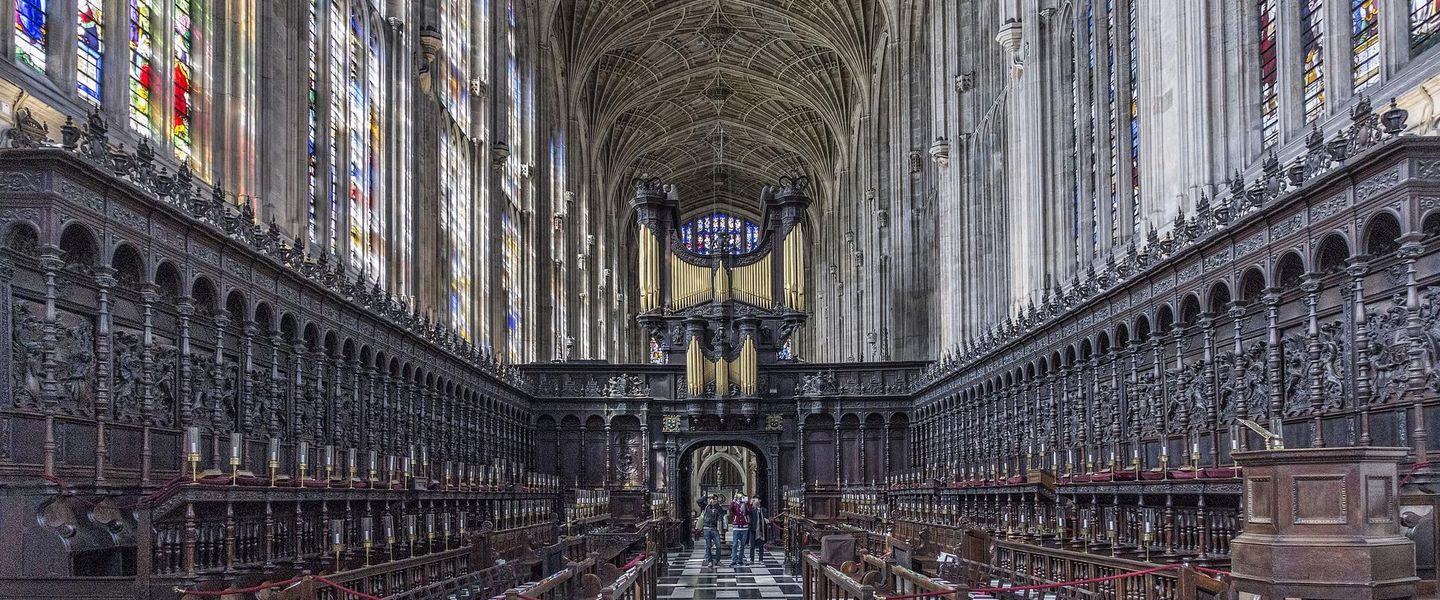


Old Town, Cambridge blends medieval lanes, college architecture, market life and riverside walks, placing historic sights and local cafés within easy reach.
A Historic Centre on Foot
Old Town is the informal name often used for Cambridge’s historic central area, where medieval lanes, university courts, parish churches and market streets gather around the city’s compact core. It is not a formal administrative district, and its edges overlap with the city centre and adjoining areas, but the character is unmistakable: much of Cambridge’s historic identity can be read within a short walk of Market Square, King’s Parade and the River Cam. Pedestrian routes make the area especially rewarding to explore slowly, with stone college façades appearing at the end of narrow streets and bicycles threading through the crowds.Read more about Old Town
College Architecture and Civic Life
Markets, Museums and the River
Explore Old Town on the map
A handpicked selection of must-see spots in Old Town, mapped for you.
Best hotels in Old Town
Old Town essentials
Getting There
Getting Around
Safety
Emergency Situations
Do's and Don'ts
Local Tips

From Eve
Local phrases worth knowing
You don't need to get them perfect. A few words go a long way, and locals appreciate the effort.
Basics
| English | Local | Say it |
|---|---|---|
| Hello | Alright | [al-rite] |
| Goodbye | Ta-ra | [ta-ra] |
| Yes | Aye | [aye] |
| No | Nah | [nah] |
| Please/You're welcome | Please/You're welcome | [Please/You're welcome] |
| Thank you | Cheers | [cheers] |
| Excuse me/Sorry | Pardon | [pardon] |
| How are you? | How do? | [how do?] |
| Fine. And you? | Alright. And you? | [al-rite. And you?] |
| Do you speak English? | Do you speak English? | [Do you speak English?] |
| I don't understand | I don't get it | [I don't get it] |
Eating & Drinking
| English | Local | Say it |
|---|---|---|
| I'd like to see the menu, please | I'll have a gander at the menu, ta | [I'll have a gander at the menu, ta] |
| I don't eat meat | I don't do flesh | [I don't do flesh] |
| Cheers! | Cheers! | [Cheers!] |
| I would like to pay, please | I'm ready to settle up, ta | [I'm ready to settle up, ta] |
Emergencies
| English | Local | Say it |
|---|---|---|
| Help! | Help! | [Help!] |
| Go away! | Clear off! | [Clear off!] |
| Call the Police! | Get the bobbies! | [Get the bobbies!] |
| Call a doctor! | Get a doctor! | [Get a doctor!] |
| I'm lost | I'm all at sea | [I'm all at sea] |
| I'm ill | I'm poorly | [I'm poorly] |
Shopping
| English | Local | Say it |
|---|---|---|
| I'd like to buy... | I fancy buying... | [I fancy buying...] |
| I'm just looking | I'm just having a gander | [I'm just having a gander] |
| How much is it? | How much is that? | [How much is that?] |
| That's too expensive | That's a bit steep | [That's a bit steep] |
| Can you lower the price? | Can you knock some off? | [Can you knock some off?] |
Time & Numbers
| English | Local | Say it |
|---|---|---|
| What time is it? | What's the time? | [What's the time?] |
| It's one o'clock | It's one o'clock | [It's one o'clock] |
| Half past (10) | Half ten | [Half ten] |
| Morning | Morning | [Morning] |
| Afternoon | Afternoon | [Afternoon] |
| Evening | Evening | [Evening] |
| Yesterday | Yesterday | [Yesterday] |
| Today | Today | [Today] |
| Tomorrow | Tomorrow | [Tomorrow] |
| 1 | One | [One] |
| 2 | Two | [Two] |
| 3 | Three | [Three] |
| 4 | Four | [Four] |
| 5 | Five | [Five] |
| 6 | Six | [Six] |
| 7 | Seven | [Seven] |
| 8 | Eight | [Eight] |
| 9 | Nine | [Nine] |
| 10 | Ten | [Ten] |
Transport & Directions
| English | Local | Say it |
|---|---|---|
| Where's a/the...? | Where's a/the...? | [Where's a/the...?] |
| What's the address? | What's the address? | [What's the address?] |
| Can you show me (on the map)? | Can you show me (on the map)? | [Can you show me (on the map)?] |
| When's the next (bus)? | When's the next (bus)? | [When's the next (bus)?] |
| A ticket (to ....) | A ticket (to ....) | [A ticket (to ....)] |
History of Old Town
Medieval Market and Parish Centre
The area now identified with Old Town grew around Cambridge’s medieval commercial and religious centre, where market activity, parish churches and routes across the River Cam drew people together. Market Square became the principal civic trading space, while churches such as Great St Mary’s served the town and, increasingly, the university community. The street plan retains traces of this layered development: narrow lanes lead away from the market towards college entrances, river crossings and former commercial yards. Rather than being created as a single planned quarter, the historic centre developed through the gradual meeting of town commerce, religious institutions and university expansion.
The University Takes Shape
From the late medieval period onwards, colleges acquired land and constructed enclosed courts close to the town’s central streets. King’s College, founded in 1441, and the later construction of King’s College Chapel gave the centre a monumental architectural focus, while institutions including Trinity College and St John’s College expanded the university’s presence around the historic core. Senate House and other university buildings further formalised the relationship between academic governance and the civic centre. This process produced the characteristic contrast still visible in Old Town: busy public streets press closely against college walls, gateways and carefully protected interiors.
Civic Streets and Victorian Change
The nineteenth century brought population growth, improved roads and changing commercial habits to central Cambridge. Shops, inns, cafés and professional premises occupied older buildings, while streets were adjusted to accommodate increasing movement between the railway, market and university. The arrival of the railway in 1845 connected Cambridge more directly with other towns, although the station was built south-east of the historic core rather than inside Old Town. Victorian restoration also altered the appearance of medieval and early modern buildings, sometimes preserving historic fabric and sometimes introducing new interpretations of the past.
A Living Heritage Quarter
During the twentieth and twenty-first centuries, central Cambridge increasingly balanced conservation with the demands of a major university city and visitor economy. Traffic management and pedestrianisation changed how people moved through streets such as King’s Parade and the lanes around Market Square, while museums, cafés, independent retailers and guided visits became important parts of the local economy. The historic core remains shaped by the university, but it is not exclusively academic: the market, parish churches, public spaces and everyday businesses preserve a civic dimension. Seasonal tourism, student life and pressure on central premises continue to influence its changing identity.
Old Town in Photos
Browse through our photo collection highlighting the charm and character of the destination.
Neighbourhoods near Old Town
The closest neighbourhoods to Old Town, if you have time for more than one stop.
-

-
-

-


Swipe for more neighbourhoods
Explore more

Explore more of Cambridge
Cambridge combines medieval colleges, river punting, world-changing science, museums and independent food culture in one historic English city to explore.
Explore Cambridge