

Best Landmarks Near Chester Rows Cafe (Chester)
Planning a trip to Chester Rows Cafe? Discover the best landmarks nearby with history, expert tips, and routes. Free on web or the Evendo app.


The best landmarks near Chester Rows Cafe
- Top rated
- Closest to Chester Rows Cafe
- Price level: low to high
- Time to spend: shortest first
- A–Z
61 landmarks
-
Cathedral4.8★13,312 reviews
Liverpool Cathedral
Liverpool Anglican Cathedral, the largest cathedral in Britain and the fifth largest in Europe, is a stunning neo-Gothic landmark renowned for its soaring vaulted ceilings, vast interior space, and breathtaking panoramic views from its tower. Open daily with free entry, it offers visitors a serene spiritual atmosphere, remarkable art installations, and a rich history dating back to its foundation in 1904, completed in 1978.
Daily 10:00–18:00Time to spend 1–3 hrs
-
Museum4.5★9,040 reviews
The Beatles Story Museum, Liverpool
Located at the historic Royal Albert Dock in Liverpool, The Beatles Story Museum offers an immersive journey into the lives, music, and cultural impact of The Beatles. This award-winning museum features authentic memorabilia, detailed recreations of iconic locations like The Cavern Club and Abbey Road Studios, and interactive exhibits. Open daily except Christmas and Boxing Day, it provides a rich experience for Beatles fans and music lovers alike.
Daily 9:00–17:00Price level $$Time to spend 1.5–3 hrs
-
Cathedral4.7★8,034 reviews
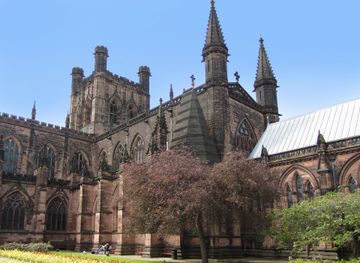
Chester Cathedral
A magnificent thousand-year-old cathedral in the heart of Chester, founded as a Benedictine Abbey in 1092 and elevated to cathedral status in 1541. This Grade I listed building showcases stunning Gothic architecture, intricate stained glass windows, and the most complete set of monastic buildings in England. Explore soaring vaulted ceilings, peaceful cloisters with a central garden, and climb 216 steps to the tower for panoramic views spanning one city, two countries, and five counties. Free entry year-round except summer and Christmas periods.
Mon–Sat 9:30–18:00 · Sun 10:00–17:00Time to spend 1–3 hrs
-
Sculpture4.7★5,556 reviews
The Beatles Statue
Standing proudly on Liverpool’s UNESCO-listed waterfront at Pier Head, The Beatles Statue is a striking bronze tribute to John, Paul, George, and Ringo. Unveiled in 2015, this larger-than-life sculpture captures the Fab Four striding together along the Mersey, each figure adorned with subtle personal details that honour their lives and legacy. It’s a must-visit landmark for Beatles fans and a powerful symbol of Liverpool’s deep connection to the world’s most iconic band.
Open 24 hoursTime to spend 0.5–1.5 hrs
-
Catholic cathedral4.6★4,314 reviews
Liverpool Metropolitan Cathedral
A striking modernist Catholic cathedral completed in 1967, featuring an iconic circular design with a soaring Crown of Glass lantern tower. Designed by Sir Frederick Gibberd and built over the crypt of an earlier Lutyens design, this Grade II* listed building showcases innovative post-Vatican II architecture with 13 chapels, stunning stained glass by John Piper and Patrick Reyntiens, and artworks by renowned sculptors. Free admission, open daily 7:30am–6pm, with guided tours, audio guides, and the historic Lutyens Crypt available to explore.
Daily 7:30–18:00Time to spend 1–3 hrs
-
Historical landmark4.6★2,596 reviews
Eastgate Clock
Perched atop Chester’s ancient Eastgate, the Eastgate Clock is one of England’s most photographed timepieces, second only to Big Ben. Erected in 1899 to mark Queen Victoria’s Diamond Jubilee, this ornate Victorian clock crowns a site that has been Chester’s main entrance for nearly 2,000 years, from Roman fortress to medieval city gate. Its gilded ironwork and panoramic views from the city walls make it a must-see symbol of civic pride and layered history.
Open 24 hoursTime to spend 0.5–2 hrs
-
Historical landmark4.3★2,481 reviews
Chester Roman Amphitheatre
Step into Roman Britain at Chester’s impressive stone amphitheatre, the largest of its kind in the country. Built around 70 AD for gladiator contests and military drills, this elliptical arena once held up to 7,000 spectators. Today, about two-fifths of the structure is visible, with tiered seating, access corridors and the central arena clearly laid out. Level paths circle the site, making it easy to explore, while steps lead down into the arena itself. Managed by English Heritage, entry is free and open during daylight hours, making it a must-see for history lovers and casual visitors alike.
Open 24 hoursTime to spend 0.5–2 hrs
-
Historical landmark4.6★2,170 reviews
St Luke’s Bombed Out Church
St Luke's Bombed Out Church stands as Liverpool's most poignant WWII memorial—a roofless Gothic shell frozen in time since the devastating May Blitz of 1941. Once a thriving Anglican parish church and concert hall designed by the Foster family, this Grade II-listed landmark now serves as a vibrant cultural hub hosting weddings, exhibitions, theatre, and community events. Nestled in the heart of the city centre near Bold Street, its haunting beauty and resilient spirit embody Liverpool's wartime sacrifice and contemporary renaissance.
Time to spend 0.5–2 hrs
-
Historical landmark4.7★2,004 reviews
Chester City Walls
The Chester City Walls are a remarkable 2-mile circuit of ancient defensive walls encircling the historic city of Chester, England. Built primarily from local red sandstone, these walls offer a scenic elevated walkway with panoramic views of iconic landmarks such as Chester Cathedral, Eastgate Clock, and the River Dee. Open 24/7 year-round, the walls provide a unique blend of Roman, medieval, and Victorian heritage, making them one of the most complete and accessible city walls in Britain.
Open 24 hoursTime to spend 1–1.5 hrs
-
Cultural landmark4.5★1,283 reviews
Chester Cross
Chester Cross is the historic heart of Chester, a Grade II listed medieval cross standing at the junction of four ancient Roman streets in the city centre. Originally erected in the medieval period, the cross was damaged during the English Civil War and removed, but was painstakingly restored and reinstated in its original position in 1975 using recovered fragments. Today it serves as a vibrant meeting point, civic focal point, and gateway to Chester's famous Rows and distinctive black-and-white Tudor architecture.
Open 24 hoursTime to spend 0.5–2 hrs


Queens Park Bridge
The Queens Park Suspension Bridge is a historic pedestrian suspension bridge crossing the River Dee in Chester. Opened in 1923 and designed by City Engineer Charles Greenwood, it connects the scenic Groves area with the residential Queens Park suburb. Known for its elegant design and gentle springiness underfoot, the bridge offers picturesque views along the river and is a cherished local landmark.
Open 24 hoursTime to spend 0.5–2 hrs

Flint Castle - Castell y Fflint
Flint Castle, built in 1277 by King Edward I, is a striking medieval fortress located on the northeast coast of Wales overlooking the River Dee estuary. Famous for its unique round donjon tower and role in Shakespeare’s Richard II, the castle offers free entry to its atmospheric ruins, scenic estuary views, and accessible battlements. Visitors can explore the layered defences, climb towers, and enjoy coastal walks in a tranquil historic setting.
Daily 10:00–16:00Time to spend 1–2 hrs

Bridge Gate and Old Dee Bridge
The Bridge Gate and Old Dee Bridge stand as iconic historical landmarks on the River Dee in Chester, England. The Old Dee Bridge, originally built in Roman times and rebuilt in 1387, spans the tidal river, offering scenic views and a glimpse into Chester’s rich medieval past. Adjacent to the bridge is the Bridge Gate, part of Chester’s ancient city walls, providing a striking medieval gateway and vantage point over the river and city.
Open 24 hoursTime to spend 0.5–2 hrs

Queen Victoria Monument
The Queen Victoria Monument in Liverpool is a grand neo-Baroque monument located at Derby Square, built over the historic site of Liverpool Castle. Featuring a towering statue of Queen Victoria surrounded by 26 intricate bronze figures representing virtues and key societal sectors like agriculture, commerce, industry, and education, it stands as a significant symbol of the city’s rich history and architectural heritage.
Open 24 hoursTime to spend 0.5–1.5 hrs

Eleanor Rigby Gravesite
The Eleanor Rigby Gravesite, located in the churchyard of St. Peter's Church in Woolton, Liverpool, marks the resting place of the real woman whose name inspired The Beatles' iconic song. This historic site is a poignant reminder of Liverpool's rich musical heritage and the village where John Lennon and Paul McCartney first met. The gravestone, bearing the name Eleanor Rigby along with family inscriptions, has become a pilgrimage spot for Beatles fans worldwide.
Time to spend 0.5–1.5 hrs

Cilla Black
The Cilla Black Statue is a life-size bronze sculpture located on Mathew Street, Liverpool, near the iconic Cavern Club. Unveiled in 2017, it honors the celebrated Liverpool-born singer and entertainer Cilla Black, depicting her in a youthful, vibrant pose that reflects her early career and lasting impact on British music and television. The statue captures the spirit of Liverpool’s rich musical heritage and offers visitors a poignant connection to one of the city’s most beloved cultural figures.
Open 24 hoursTime to spend 0.5–1.5 hrs

Penny Ln
Penny Lane is a legendary street in Liverpool's Mossley Hill area, immortalised by The Beatles' iconic 1967 song of the same name. Once an ordinary suburban thoroughfare and bus terminal junction, it transformed into a global cultural landmark following the release of Paul McCartney's nostalgic composition. Today, the street attracts Beatles pilgrims from around the world who come to experience the real locations that inspired the song's vivid characters—the barber, the banker, and the fire station—all of which still exist. Despite its modest appearance, Penny Lane represents the power of music to elevate everyday places into the realm of legend.
Time to spend 0.5–2 hrs

Parish Church of St John the Baptist, Chester
One of England's most significant medieval churches, St John the Baptist stands as a testament to over a thousand years of continuous worship. Originally founded in the 7th century and rebuilt as a Norman cathedral in 1075, this Grade I listed building showcases magnificent Norman architecture with soaring piers and intricate stonework. Though it fell into ruin twice—once in the 16th century and again in the 19th—the church survives as an active parish church in the heart of Chester's historic city centre, welcoming visitors to explore its captivating interior and rich ecclesiastical heritage.
Mon–Fri 11:00–15:00 · Sat 10:00–16:00Time to spend 0.8–2 hrs

Liverpool Masonic Hall
A grand Victorian Masonic lodge on Hope Street in Liverpool's cultural quarter, built in 1872 and extended in 1932. This historic building serves as the spiritual and administrative home of Liverpool Freemasonry, hosting multiple lodges and chapters. The hall features ornate interiors including the Egyptian Suite and remains an active centre for Masonic ceremonies, charitable work, and cultural events. Its striking architecture and prominent location between two of Liverpool's most iconic cathedrals make it a notable landmark in the city's heritage landscape.
Time to spend 0.5–2 hrs

Chester Town Hall
Chester Town Hall, located at 33 Northgate Street, is a striking Grade II* listed building completed in 1869. Designed by William Henry Lynn, this Victorian Gothic Revival structure features a soaring 160-foot tower, richly decorated interiors with stained glass, carved woodwork, and grand assembly rooms. It serves as the ceremonial and civic hub for Chester, hosting events, weddings, and council meetings, while embodying the city's rich historical and architectural heritage.
Mon–Fri 9:00–17:00Time to spend 0.5–2 hrs

St Barnabas Penny Lane
St Barnabas Penny Lane is a historic church located on the famous Penny Lane in Liverpool, England. Built between 1900 and 1914, it is renowned for its connection to the Beatles, particularly Paul McCartney, who sang in its choir as a child. The church features memorials to the First World War and has been revitalized as a vibrant community and music venue, blending its spiritual heritage with Liverpool’s rich musical culture.
Tue 11:30–13:00 · Sun 10:30–12:30, 17:30–19:30Time to spend 0.5–2 hrs

Churchill House
Churchill House is a prominent historic building within the University of Chester’s Queen’s Park campus, blending academic purpose with architectural heritage. Situated near the River Dee, it hosts lecture theatres, seminar rooms, and the popular De Gaulle Brasserie, offering striking views of Chester. This vibrant hub serves students and visitors alike, combining modern facilities with a scenic riverside setting in Chester’s lively city environment.
Mon–Sat 10:00–21:00Time to spend 1–3 hrs

King Charles Tower
King Charles Tower, also known as the Phoenix Tower, is a medieval watchtower on Chester's historic City Walls. Dating back to the 13th century, it is famed for its association with King Charles I, who reputedly watched the Battle of Rowton Moor from here in 1645. The tower features distinctive heraldic symbols and steep internal steps, offering insight into Chester's military and guild history.
Sat–Sun 11:59–17:00Price level $Time to spend 0.5–1.5 hrs

Nordic Church and Cultural Centre
Gustaf Adolfs Kyrka, also known as the Scandinavian Seamen's Church, is a distinctive octagonal Gothic Revival church built in 1883 near Albert Dock in Liverpool's city centre. Designed by renowned architect William Douglas Caroe, this unique place of worship serves Liverpool's Nordic community with regular Sunday services, weekday coffee mornings, and Scandinavian language courses. The church features characteristic Nordic architectural elements including stepped gables and a concave lead spire, making it one of only four octagonal church buildings remaining in the United Kingdom.
Time to spend 0.8–2 hrs

Chester Shot Tower
The Chester Shot Tower, built in 1799, stands as the oldest and tallest shot tower in the UK at 168 feet. A Grade II* listed building, it symbolizes Chester's rich industrial heritage as the last remaining leadworks tower, historically used to produce lead shot for muskets during the Napoleonic Wars. Though interior access is limited, the tower’s striking red-brick facade and canal-side setting make it a compelling historical landmark and a unique glimpse into 18th-century industrial innovation.
Time to spend 0.5–1.5 hrs

Norton Water Tower
Norton Water Tower is a striking Victorian-era water tower located in Norton, Runcorn. Built between 1888 and 1892, this 40-meter-tall red sandstone structure was designed to regulate water pressure and supply clean water from Lake Vyrnwy to Liverpool and surrounding areas. Still in use today as part of the regional water system, it stands as an impressive example of functional yet ornate Victorian industrial architecture.
Open 24 hoursTime to spend 0.5–1.5 hrs

Pemberton's Parlour
Pemberton's Parlour is a Grade I listed historic landmark located on the northern side of Chester’s ancient city walls. Crafted from distinctive red sandstone, this crenelated tower is a striking example of medieval and Victorian architecture, offering visitors a glimpse into Chester’s rich defensive heritage. Open 24 hours and free to explore, it forms part of the longest and most complete city walls circuit in Britain, providing a unique vantage point over the city’s historic landscape.
Open 24 hoursTime to spend 0.5–1.5 hrs

The Christmace Truce Memorial Statue - St Luke's Church
Located at Liverpool’s iconic Bombed Out Church, the Christmas Truce Memorial Statue commemorates the extraordinary 1914 ceasefire during World War I when British and German soldiers momentarily laid down arms to share peace, carols, and a football match. The statue, designed by Andy Edwards, depicts two young soldiers reaching out to shake hands over a football, symbolizing unity amid conflict. Set within the evocative ruins of St Luke’s Church, this landmark blends history, art, and remembrance.
Time to spend 0.5–1.5 hrs

Old Wall Arch Albert Dock UK
The Old Wall Arch at Albert Dock is a striking historical landmark in Liverpool, dating from the early 19th century. Once a vital entry point for goods arriving by sea, this Georgian architectural gem reflects Liverpool’s rich maritime heritage. Situated in the vibrant Albert Dock area, the arch offers a glimpse into the city’s trading past amid a lively waterfront filled with museums, galleries, restaurants, and scenic views.
Open 24 hoursTime to spend 0.5–2 hrs

George Harrison's Childhood Home
Step into the intimate world of George Harrison at 25 Upton Green, the Speke home where the quiet Beatle lived from 1950 to 1962. This modest council house served as both family residence and early rehearsal space for The Quarrymen, the band that evolved into The Beatles. Now open for guided tours, visitors can explore the rooms where George's musicianship flourished alongside Paul McCartney, stand in the living room where the band rehearsed, and experience the authentic atmosphere of a working-class Liverpool home that shaped one of music's greatest legacies.
Price level $$Time to spend 1.5–2.5 hrs

The Port Of Liverpool Building
Standing proudly at Liverpool’s Pier Head, the Port of Liverpool Building is the oldest of the city’s iconic Three Graces. Completed in 1907 as the headquarters of the Mersey Docks and Harbour Board, this Grade II* listed Edwardian Baroque masterpiece features a grand Portland stone façade and a striking central dome inspired by Renaissance palaces. Adorned with maritime motifs and rich decorative details, it remains a powerful symbol of Liverpool’s golden age as a global port and a defining feature of the city’s UNESCO Maritime Mercantile skyline.
Time to spend 0.5–1.5 hrs

'The Great Escape' statue
A striking bronze horse sculpture cast from rope by artist Edward Cronshaw, standing at the corner of Liver Street and Strand Street in Liverpool's waterfront district. Created in 2000, this 15-foot tall, 4-ton equine figure symbolises humanity's struggle for freedom and liberation from oppression. Located opposite the Albert Dock, it has become one of Liverpool's most distinctive public artworks, blending industrial heritage with contemporary artistic vision.
Open 24 hoursTime to spend 0.5–2 hrs

Chinese Arch
Standing proudly at the top of Nelson Street, Liverpool’s Chinese Arch is the tallest ceremonial arch of its kind in Europe and a vibrant symbol of the city’s historic and thriving Chinese community. Constructed in 2000 by skilled artisans from Shanghai, this 44-foot-high paifang features 200 intricately carved dragons and is painted in five auspicious colors representing Chinese elements. It marks the gateway to one of Europe’s oldest Chinatowns, reflecting Liverpool’s deep cultural ties with China and its diverse heritage.
Time to spend 0.5–1.5 hrs

Chester War Memorial
Located within the grounds of Chester Cathedral, the Chester War Memorial stands as a solemn tribute to the service and sacrifice of soldiers from Chester and surrounding areas. This elaborate neo-medieval monument was unveiled on May 24, 1922, and features intricate stonework and inscriptions honoring the war dead. The memorial sits in the southwest corner of the Cathedral close, forming part of a larger complex of remembrance spaces that includes the Cheshire Regiment Memorial Garden and commemorative oak tree.
Time to spend 0.5–2 hrs

The Dock Traffic Office, Liverpool
A Grade I listed Victorian heritage building at the heart of Royal Albert Dock, the Dock Traffic Office stands as a masterpiece of 19th-century industrial architecture. Built in 1846–1847 by Jesse Hartley and Philip Hardwick, this iconic structure features a stunning cast-iron Tuscan portico and served as a pioneering example of fireproof warehouse design. Now officially known as the Dr Martin Luther King Jr Building, it remains a symbol of Liverpool's maritime legacy and architectural innovation.
Mon–Fri 9:00–17:00 · Sat 10:00–16:00Time to spend 0.5–2 hrs

Ancient Roman Columns, Chester
Standing proudly on Northgate Street in the heart of Chester, these relocated Roman column bases represent fragments of the city's extraordinary Roman past. Originally part of a significant structure within the fortress of Deva Victrix, these columns once supported buildings central to Roman civic and military life. Now positioned outside the Coach House Inn, they serve as tangible reminders of Chester's status as one of Britain's most important Roman legionary fortresses, founded in 79 AD and home to the formidable Legio XX Valeria Victrix.
Open 24 hoursTime to spend 0.2–1 hr

Huskisson Memorial
The Huskisson Memorial in Liverpool is a solemn mausoleum dedicated to William Huskisson, the first notable railway fatality in history. Located at Cathedral Gate near Upper Duke Street, this classical monument commemorates Huskisson’s tragic death during the opening of the Liverpool-Manchester railway in 1830. It stands as a poignant reminder of the dawn of the railway age and Liverpool’s rich industrial heritage.
Daily 7:00–22:00Time to spend 0.5–1.5 hrs

Albert Dock Pride Sculpture
The Albert Dock Pride Sculpture, located on Gower Street in Liverpool, stands as a striking public artwork celebrating LGBTQ+ pride and the city’s rich maritime heritage. Set within the historic Royal Albert Dock area, this sculpture is a beacon of cultural diversity and inclusivity, surrounded by the dock’s iconic Victorian architecture and lively waterfront atmosphere.
Daily 5:00–23:58Time to spend 0.5–1.5 hrs

Roman South East Corner Tower
The Roman South East Corner Tower in Chester is a significant remnant of the ancient fortress of Deva Victrix, marking the south-east corner of the Roman legionary fort. This Grade I listed historical landmark reveals the strategic military architecture of Roman Britain, with its stone walls and corner towers forming part of Chester’s original defensive circuit. Situated near Pepper Street and the Roman amphitheatre, it offers a glimpse into Chester’s Roman past within the city’s medieval walls.
Time to spend 0.5–1.5 hrs

Cae-Llywd Bunker
Nestled near Penycae in Llangollen, the Cae-Llywd Bunker stands as a poignant historical landmark reflecting Cold War tensions. This underground facility, built to monitor and respond to nuclear threats, offers visitors a glimpse into mid-20th-century defense strategies amid breathtaking Welsh countryside. Though no longer operational, its preserved state invites exploration of its austere architecture and the era it represents.
Open 24 hoursTime to spend 0.5–1.5 hrs

Coopers Building
Coopers Building, located on Church Street in Liverpool, is a distinguished historical landmark dating from the early 20th century. Known for its striking architecture and rich urban heritage, it stands as a testament to Liverpool’s commercial evolution. The building’s façade and design reflect the city’s architectural character, making it a notable point of interest in Liverpool’s vibrant city centre.
Mon–Fri 10:00–17:00Time to spend 0.5–1.5 hrs

Wishing Steps
Nestled at the southeastern corner of Chester’s medieval city walls, the Wishing Steps are a historic set of stone steps built in 1785. Steeped in local folklore, the steps are famed for a charming tradition: if you run up and down them without pausing to breathe, your wish is said to come true. Once leading to a now-removed watchtower, these steps offer a unique glimpse into Chester’s rich heritage and the enduring allure of its ancient walls.
Time to spend 0.2–1 hr

Bonewaldesthorne's Tower
A striking medieval gatehouse standing on Chester's northwest corner, Bonewaldesthorne's Tower is an integral part of Britain's most complete Roman and medieval defensive walls. Built between 1322 and 1326, this robust structure once controlled access to the city from the west and served as the gateway to the adjacent Water Tower. Today, visitors can explore its historic architecture from the elevated city walls and occasionally access the interior during special heritage openings, offering a tangible connection to Chester's strategic past.
Time to spend 0.5–2 hrs

The Nine Houses
A striking row of six Grade II listed almshouses dating from 1650, featuring distinctive black-and-white timber-framed architecture on Park Street in Chester's historic city centre. Originally nine dwellings, only six remain today—rescued from near-demolition in the late 1960s and meticulously restored. These charming medieval cottages, with their characteristically small doors and sandstone bases, offer a tangible glimpse into 17th-century life and stand as the only surviving pre-19th-century almshouses in Chester. Perfectly positioned adjacent to the Roman Gardens and within easy walking distance of the city walls.
Time to spend 0.2–1 hr

Walmoor Hill (Douglas Castle)
Walmoor Hill, also known as Douglas Castle, is a grand Elizabethan-style house perched on an elevated site overlooking the River Dee in Chester. Built in the 1890s by the renowned architect John Douglas for his own residence, this striking red sandstone building features distinctive towers, mullioned windows, and a chapel room. Its rich history includes use as a private home, schools, and the Cheshire Fire Brigade headquarters, making it a fascinating heritage landmark.
Time to spend 0.5–2 hrs

Old Spital Pinfold
Old Spital Pinfold is a quaint historical landmark located at 16 Brimstage Road in Bebington, Wirral. This charming site reflects the local heritage of the area, offering visitors a glimpse into traditional community practices. Surrounded by a peaceful suburban environment, it is a notable point of interest for those exploring Wirral’s rich history and picturesque surroundings.
Open 24 hoursTime to spend 0.5–1 hr

Legacy Sculpture
The Legacy Sculpture, located at Liverpool’s historic Royal Albert Dock, is a poignant bronze statue commemorating the migration journeys from Liverpool to the New World. This evocative artwork depicts a young family poised on the brink of a new life overseas, symbolizing hope, courage, and the enduring human spirit. Set near the Tate Liverpool gallery, it enriches the dock’s cultural landscape and invites reflection on Liverpool’s global connections.
Open 24 hoursTime to spend 0.5–1.5 hrs

Viewing window to the Old Dock
The Viewing Window to the Old Dock offers a unique glimpse into Liverpool’s maritime origins beneath the modern Liverpool ONE complex. This preserved section reveals the world’s first commercial enclosed wet dock, constructed between 1710 and 1715 by engineer Thomas Steers. Once a revolutionary hub that transformed Liverpool into a leading global port, the Old Dock’s remains lie beneath a glass viewing panel on Thomas Steers Way, connecting visitors to the city’s rich trading history and pioneering dock technology.
Open 24 hoursPrice level $Time to spend 0.5–1.5 hrs

Eastgate St
Eastgate Street is the vibrant heart of Chester's medieval city centre, renowned for its distinctive black-and-white timber-framed buildings and the iconic Victorian Eastgate Clock. This historic thoroughfare seamlessly blends architectural heritage with modern retail and dining, featuring the unique Chester Rows—elevated medieval shopping galleries found nowhere else in England. Lined with independent shops, cafes, restaurants, and pubs, it offers visitors an immersive experience of Chester's rich past while serving as the primary commercial hub of this ancient walled city.
Price level $$Time to spend 1.5–4 hrs

Crypt Chambers
Crypt Chambers, located at 26 Eastgate Street in Chester, is a Grade I listed historical landmark renowned for its stunning Gothic Revival architecture and preserved medieval undercroft. Built in 1858 on the site of a medieval merchant’s house, it forms part of Chester’s famous Rows and offers visitors a unique glimpse into the city’s rich architectural and commercial heritage.
Price level $Time to spend 0.5–1.5 hrs

Uffington House, Chester
Uffington House is a striking Victorian mansion built in 1885 for Thomas Hughes, author of Tom Brown's School Days. Located in the picturesque Dee Hills Park area of Chester, this elegant residence exemplifies the architectural ambitions of the late 19th century. The house stands as a testament to Chester's prosperous Victorian era, when wealthy merchants and notable figures commissioned grand homes within the city's expanding suburbs. Today, it remains a notable historical landmark reflecting the city's architectural heritage.
Time to spend 0.5–1.5 hrs

Town Hall
Chester Town Hall, located on Northgate Street in the heart of Chester, England, is a stunning example of Gothic Revival architecture completed in 1869. Built from banded pink and buff sandstone, it features a striking 160-foot spire and intricate stone sculptures that depict the city's rich history. Originally serving as the city’s administrative center, the building now hosts special events and occasional public tours, embodying Chester’s civic pride and architectural heritage.
Price level $$Time to spend 0.5–2 hrs

Bridge Of Sighs
The Bridge of Sighs in Chester is a historic Grade II listed stone bridge built in 1793, designed by architect Joseph Turner. It spans the Shropshire Canal and once linked Northgate Gaol to the chapel in the Bluecoat Building, allowing condemned prisoners to receive their last rites before execution. This evocative structure is steeped in somber history and offers a poignant glimpse into Chester's past.
Time to spend 0.2–1 hr

12 Arnold Grove
The modest Victorian terraced house in Wavertree where George Harrison, founding member of The Beatles, was born and spent his first seven years. This small two-up, two-down home, now marked with a Historic England blue plaque unveiled in May 2024, offers a tangible connection to one of music's greatest icons and reveals the humble beginnings of a man who would profoundly shape global culture through music, film, and humanitarian work.
Time to spend 0.2–1 hr

Blackburne House
A Grade II-listed Georgian mansion on Hope Street in Liverpool's historic quarter, Blackburne House is a landmark centre dedicated to women's empowerment and education. Originally built in the 1780s as a private residence, it became the first girls' school in Liverpool in 1844 and now operates as a training and resource centre offering wellness sessions, empowerment programmes, and a bistro café. The building showcases stunning period architecture with ornate oak staircases, high ceilings, and decorative windows, blending 18th-century grandeur with modern facilities.
Time to spend 1–3 hrs

Mount Pleasant
Mount Pleasant is a historic street in the heart of Liverpool city centre, renowned for its striking Victorian architecture and cultural significance. Located near Hope Street, this atmospheric thoroughfare showcases the city's 19th-century grandeur with beautifully preserved buildings that reflect Liverpool's prosperous maritime past. The street serves as a gateway to major attractions including the Metropolitan Cathedral and offers visitors an authentic glimpse into Liverpool's architectural heritage.
Time to spend 0.5–2 hrs

Wolstenholme Square
Wolstenholme Square is a historic public space in Liverpool's Ropewalks district, originally laid out around 1750 as an elegant tree-lined square on land owned by the Wolstenholme family. Once a fashionable Georgian address, the square evolved through Liverpool's industrial expansion before entering a phase of regeneration. Today, it is anchored by Jorge Pardo's striking sculptural installation Penelope, a vibrant public artwork commissioned by Liverpool Biennial that references both classical mythology and the area's maritime rope-making heritage.
Time to spend 0.5–2 hrs

Billy Fury
The Billy Fury statue, located at Liverpool's Royal Albert Dock, commemorates one of the city's most iconic rock and roll stars. Created by local sculptor Tom Murphy and unveiled in 2003, this bronze figure honors Fury's influential music career and enduring legacy. Overlooking the River Mersey, the statue celebrates his impact alongside Liverpool’s rich musical heritage, standing as a tribute funded by his devoted fan club.
Time to spend 0.2–1 hr

Mann Island
Mann Island is a contemporary waterfront development in Liverpool's UNESCO World Heritage Maritime Mercantile City, featuring striking black granite architecture that reflects the River Mersey and historic Three Graces buildings. This reclaimed land, created from 18th-century dock construction, now hosts modern cultural spaces, retail, and dining venues alongside heritage sites including the Victorian St George's Dock Pumping Station. The development represents Liverpool's evolution from a historic trading hub to a vibrant contemporary destination.
Time to spend 1.5–4 hrs

Derby Square
Derby Square is a historic public square in Liverpool's city centre, situated on the former site of Liverpool Castle (built circa 1235, demolished by 1721). The square features the Grade II listed Victoria Monument, unveiled in 1906 to honour Queen Victoria, crowned with a victorious angel in Beaux-Arts style. Surrounded by significant architecture including Castle Moat House and the Queen Elizabeth II Law Courts, Derby Square serves as a tranquil urban gathering space with ample seating, offering visitors a blend of historical reflection and modern city life in the heart of Liverpool.
Time to spend 0.5–2 hrs

Canada Blvd
Stretching along Liverpool’s UNESCO-listed waterfront, Canada Boulevard is a poignant memorial walkway lined with maple trees and plaques honouring Canadian sailors who served in the Battle of the Atlantic. Framed by the iconic Three Graces – the Royal Liver, Cunard and Port of Liverpool Buildings – this open-air promenade offers sweeping views of the River Mersey, the Liverpool Cruise Terminal and the city’s historic docks. It’s a place where maritime history, international remembrance and modern city life converge, perfect for a reflective stroll or a photo of Liverpool’s world-famous skyline.
Time to spend 0.5–2 hrs
Explore Chester Rows Cafe on the map
A handpicked selection of must-see spots near Chester Rows Cafe, mapped for you.
More about Chester Rows Cafe

More to explore near Chester Rows Cafe

 Best experiences near Chester Rows Cafe
 Best hotels near Chester Rows Cafe
 Best attractions near Chester Rows Cafe
 Best shops near Chester Rows Cafe
 Best bars near Chester Rows Cafe
 Best restaurants near Chester Rows Cafe
Explore more

Getting your guide ready…
We are putting together a fresh copy of the Chester Rows Cafe guide. This can take up to a minute.
This can take a few moments. If your browser asks, choose Allow so the download can start. You'll find the guide in your Downloads folder.
Nothing happened? Download it again
Sorry, the guide is taking longer than usual. Please try again in a minute, or get it by email instead.

