

Prebends Bridge, Durham Travel Guide
Free Guide: An 18th-century stone bridge framing one of England's most iconic cathedral views


A brief summary of Prebends Bridge
An 18th-century stone bridge framing one of England's most iconic cathedral views
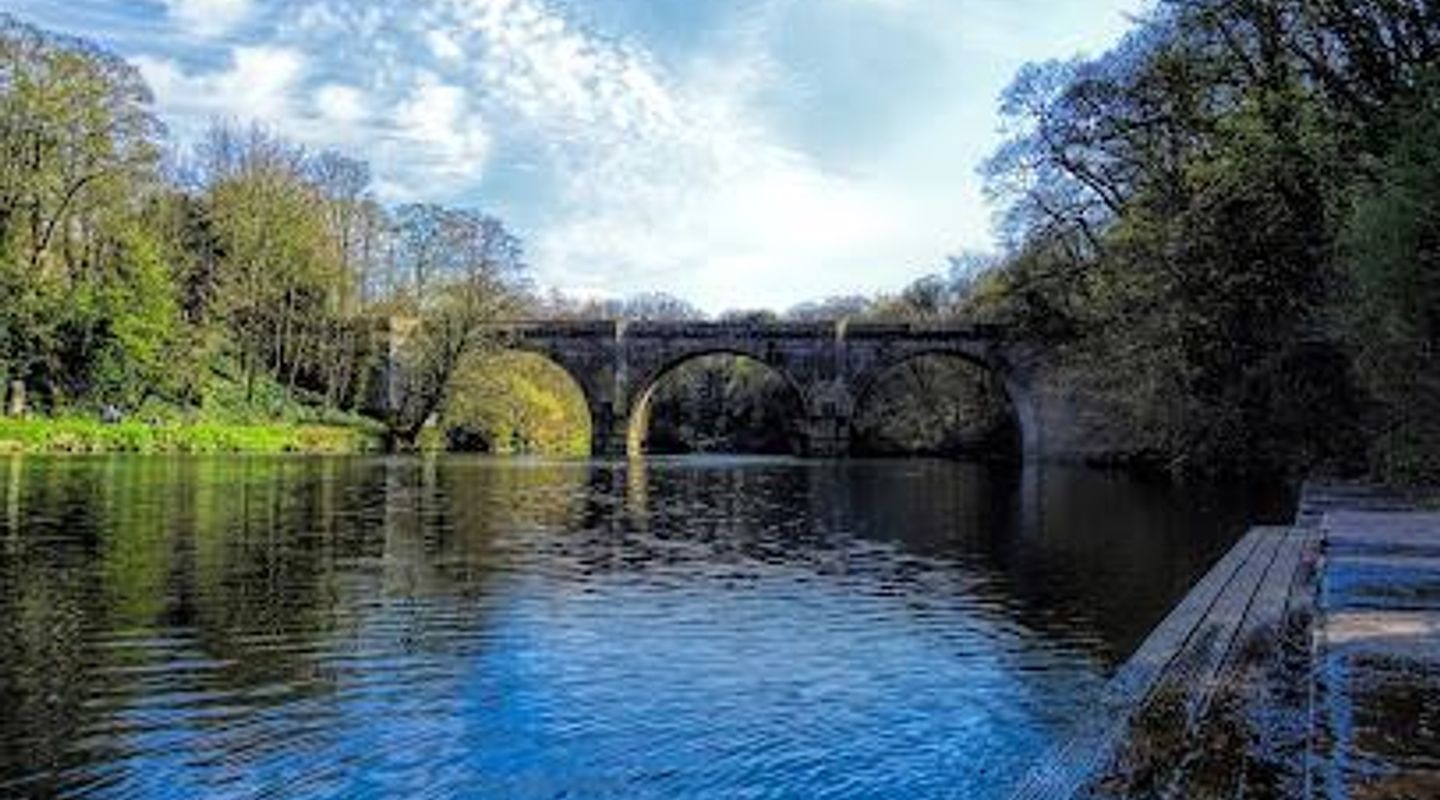
An elegant 18th-century stone bridge spanning the River Wear in Durham's historic centre. Built between 1772 and 1778 by architect George Nicholson, this Grade I listed structure was deliberately positioned to frame spectacular views of Durham Cathedral and the surrounding wooded riverbanks. Originally serving as a private road for the Dean and Chapter of Durham, it now functions primarily as a pedestrian crossing, offering one of England's most iconic postcard perspectives and serving as a beloved gateway to the cathedral for thousands of visitors annually.
On-site amenities
 Seating areas
 Information boards
 Trash bins
Opening hours
- Every dayOpen 24 hours
Opening hours as listed on the venue’s Google Business Profile. Hours can change for services and special events, so check with the venue before you go.
- Address
- Prebends Bridge, S Bailey, Durham DH1 3EA
Getting there
On foot from Durham City Centre
By car with parking
By bus from Durham Bus Station
From Durham Railway Station
Discover more about Prebends Bridge
A Bridge Designed for Beauty
Prebends Bridge stands as a masterpiece of 18th-century aesthetic engineering. When architect George Nicholson designed this stone-arch bridge between 1772 and 1778, he made a deliberate choice to position it slightly north of its predecessor, at a wider section of the River Wear. This decision was not merely practical—it was intentional landscape design. The bridge was built specifically to maximize the visual impact of Durham Cathedral's towers and the picturesque wooded riverbanks. Trees were planted along the water's edge to complete the Romantic vision, transforming the site into one of England's most celebrated views. The bridge's three semicircular stone arches feature distinctive architectural details, including triangular cutwaters with semi-hexagonal geometry and a dentilated arch ring. Waterspouts positioned strategically along the elevations demonstrate sophisticated drainage planning, with scalloped humps visible in the road surface directing water toward these outlets—an unusual engineering refinement rarely seen in masonry bridges of the period.
From Private Access to Public Treasure
Originally constructed on the instructions of the Dean of Durham, Prebends Bridge served as a private road providing exclusive access for the Dean and Chapter through the Watergate from the south. This ecclesiastical function shaped its early purpose, yet the bridge's location at the end of South Bailey, just beyond St Cuthbert's Society, gradually transformed it into a public amenity. Although the structure is wide enough to accommodate vehicles, it has functioned primarily as a footbridge for decades, leading only to riverside paths and a closed road barrier. The bridge's role shifted entirely following the devastating floods of 1771, which swept away an earlier timber bridge built on stone piers that had stood since 1574. Prebends Bridge replaced that lost structure, becoming not merely a functional crossing but a symbol of Durham's resilience and architectural ambition.
Literary Legacy and Cultural Significance
The bridge carries profound cultural weight through its association with Sir Walter Scott, the celebrated Scottish author. A plaque affixed to the bridge displays an extract from Scott's poem Harold the Dauntless, published anonymously in 1817, capturing his romantic vision of Durham: "Grey towers of Durham, Yet well I love thy mixed and massive piles, Half church of God, half castle 'gainst the Scot, And long to roam these venerable aisles, With records stored of deeds long since forgot." The artist J.M.W. Turner, one of England's greatest landscape painters, frequently painted from this vantage point, immortalizing the bridge and cathedral in his watercolours. These artistic endorsements cemented Prebends Bridge's status as one of Britain's most significant viewpoints, attracting artists, writers, and visitors seeking to capture the essence of Durham's medieval grandeur.
Preservation and Structural Heritage
As a Grade I listed building and part of the Durham Castle and Cathedral UNESCO World Heritage Site, Prebends Bridge represents a crucial element of England's architectural heritage. The structure underwent comprehensive restoration between 1955 and 1956, and further significant conservation work was undertaken in 2011–2012 to address masonry deterioration caused by poor drainage and water infiltration through the road deck. The bridge was temporarily reopened to limited road traffic in autumn 2010 while Saddler Street underwent extensive repaving as part of the Heart of the City project. Today, the bridge remains under the stewardship of Durham Cathedral, which maintains responsibility for its upkeep. Future restoration projects are anticipated to be substantial undertakings, reflecting the complexity of preserving such a historically significant structure while ensuring its continued accessibility to the thousands of visitors who cross it annually to reach the cathedral.
The Three Bridges of Durham
Prebends Bridge forms part of Durham's remarkable collection of historic stone-arch bridges. Alongside Framwellgate Bridge, constructed in 1127 by Bishop Flambard and representing Durham's oldest crossing, and Elvet Bridge, built between 1170 and 1195 by Bishop Hugh Le Puiset, these three structures span the River Wear in the city centre. Each bridge tells a distinct story of Durham's medieval and post-medieval development. Framwellgate served as the main entrance to the city and was originally lined with shops and booths; Elvet Bridge once featured gates as part of the city's defensive system. Prebends Bridge, the youngest of the three, represents a shift toward aesthetic considerations in bridge design, reflecting Enlightenment ideals about landscape and the relationship between architecture and nature.
Evendo Review Centre
 Google
Guest reviews
Best time to go
Quietest: Jan, Feb & Dec · before 6am or at 10pm
Busy times are Evendo estimates for a typical year, to help you plan. Actual crowds vary with events, school holidays and the weather.
Explore Prebends Bridge on the map
A handpicked selection of must-see spots near Prebends Bridge, mapped for you.
Get your free copy of our complete guide to Prebends Bridge, delivered straight to you.
Everything on this page, from opening hours and how to get there to Eve’s tips and the best time to go, in one PDF you can read offline, print or share.
Already have an account? Sign in
Your Prebends Bridge guide is ready.
We'll send it to · Not you? Sign out

Getting your guide ready…
We are putting together a fresh copy of the Prebends Bridge guide. This can take up to a minute.
This can take a few moments. If your browser asks, choose Allow so the download can start. You'll find the guide in your Downloads folder.
Nothing happened? Download it again
Sorry, the guide is taking longer than usual. Please try again in a minute, or get it by email instead.
Unlock the best of Prebends Bridge
Skip-the-line tickets, guided tours with entry, and walking tours of the area, booked in a few clicks.


Other nearby places you may find interesting
The closest places of the same kind, if this one is not quite what you had in mind.
-
-
-
-
-


Swipe for more places
More to explore near Prebends Bridge

 Best experiences near Prebends Bridge
 Best hotels near Prebends Bridge
 Best landmarks near Prebends Bridge
 Best attractions near Prebends Bridge
 Best shops near Prebends Bridge
 Best restaurants near Prebends Bridge
 Best bars near Prebends Bridge
Do you manage this location?
Take control to get all the benefits, like improved information, better appearance, and stronger visibility across AI-powered discovery.
Explore more

Explore more of Durham
Discover the unique blend of history and modernity in Durham. From the iconic Cathedral in England to the vibrant innovation hub in North Carolina.
Explore Durham
Explore more of United Kingdom
Discover the United Kingdom: A blend of rich history, stunning landscapes, and vibrant cities, offering a unique travel experience for every visitor.
Explore United Kingdom
