

The Count's House, Durham Travel Guide
Free Guide: A quaint neoclassical riverside summerhouse in Durham, steeped in history and linked to the legendary Count Boruwlaski.


A brief summary of The Count's House
A quaint neoclassical riverside summerhouse in Durham, steeped in history and linked to the legendary Count Boruwlaski.
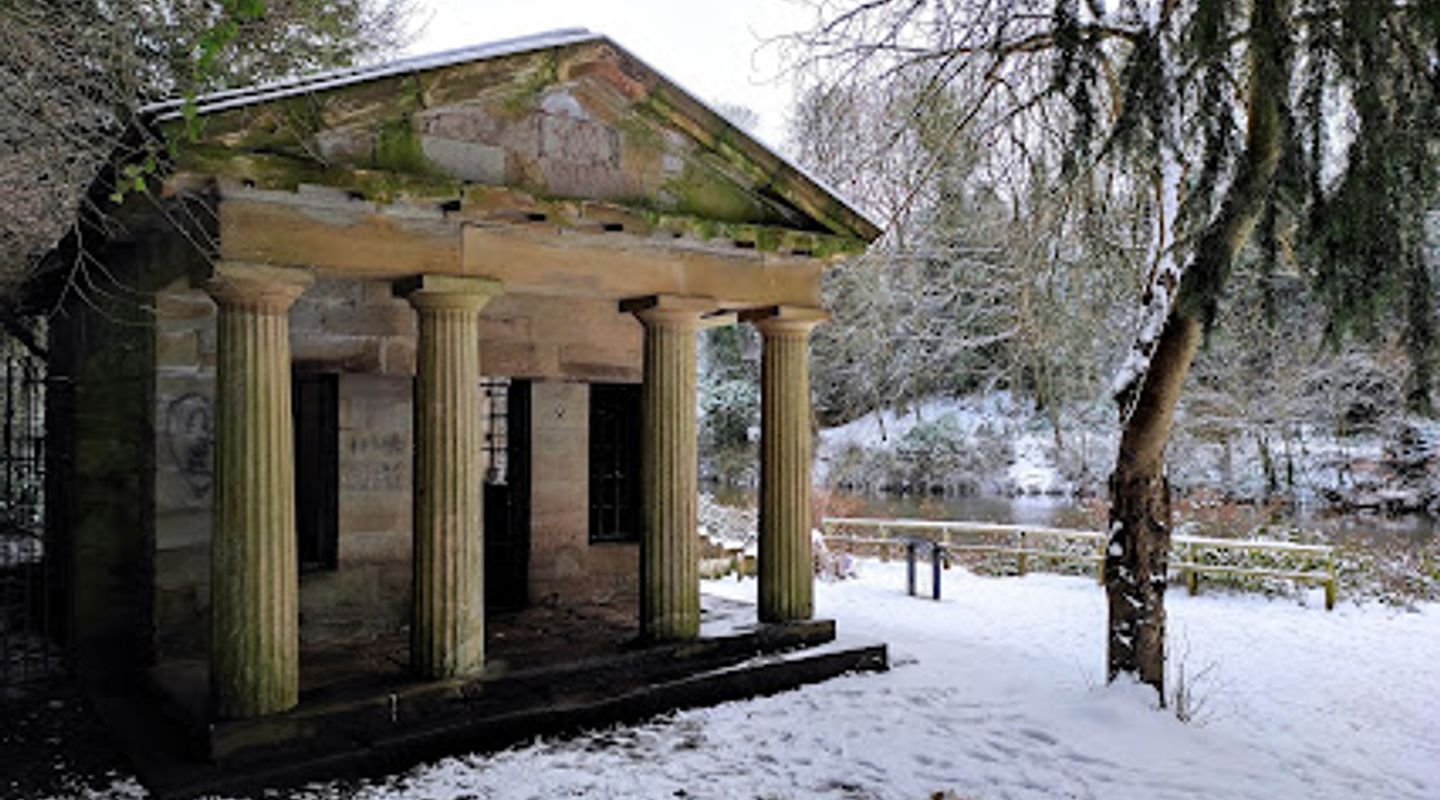
The Count's House is a small, neoclassical summerhouse on the banks of the River Wear in Durham, built in the 1820s. Resembling a miniature Greek temple, it is named after Joseph Boruwlaski, a famed Polish dwarf and entertainer who lived nearby, though he never actually resided in the house. This Grade II listed landmark offers a unique glimpse into local history and architecture, nestled amidst tranquil riverside scenery.
On-site amenities
 Seating areas
 Information boards
 Trash bins
- Address
- Durham DH1 3AN
Getting there
Bus
Walking
Taxi
Discover more about The Count's House
A Distinctive Neoclassical Landmark on the River Wear
The Count's House is a charming small building designed in the style of a Greek temple, featuring iconic ionic columns and a pediment. Constructed in the 1820s by the Dean and Chapter of Durham Cathedral, it was likely intended as a summerhouse or pleasure pavilion for the nearby riverside grounds owned by the Shipperdson family. Its classical design is attributed to the architect Ignatius Bonomi, who was active in Durham at the time. The building’s modest scale and elegant proportions make it a notable example of neoclassical architecture in the city.
The Enigmatic Namesake: Joseph Boruwlaski, the Count
Though the house bears his name, Joseph Boruwlaski, a Polish-born dwarf famed across European courts in the late 18th and early 19th centuries, never lived here. Standing just over three feet tall, Boruwlaski styled himself as “Count” and gained celebrity through his musical performances, social gatherings, and self-published memoirs. He eventually settled nearby in Banks Cottage, where he cultivated gardens adapted to his stature. The Count’s House likely acquired its name through local association and romanticized connections to Boruwlaski, whose legacy remains a captivating part of Durham’s cultural heritage.
Historical Layers and Local Life
Over the centuries, the Count's House served various roles, including a family home for several residents and even a café known for serving tea and scones. It later became an antique shop before falling into disuse. The building’s riverside location near Prebends Bridge offers scenic views and a peaceful atmosphere, making it a quiet retreat from the city bustle. Despite its small size, the house has witnessed layers of local history and community life, reflecting changing uses and stories over two centuries.
Architectural and Cultural Significance
The Count's House is a Grade II listed structure, recognized for its architectural merit and historical associations. Its Greek temple form is a rare and whimsical feature along the River Wear, contributing to Durham’s rich heritage landscape. The building’s design and setting invite reflection on neoclassical aesthetics and the social histories intertwined with Durham Cathedral’s influence and the city’s riverside development.
Visiting the Count's House Today
Today, the Count's House stands partly concealed by riverside foliage, accessible via a footpath along the River Wear. Its quaint and quirky appearance continues to intrigue visitors, who appreciate the blend of architectural elegance and local folklore. While the interior is not open to the public, the exterior and its riverside setting offer excellent photographic opportunities and a moment of quiet contemplation within Durham’s historic environment.
Enduring Mystique and Community Connection
The Count’s House embodies a blend of fact and folklore, symbolizing how local history can become entwined with legend. It commemorates not only the figure of Joseph Boruwlaski but also the families and communities who have maintained the riverside area. The building’s story encourages visitors to explore the deeper narratives behind Durham’s landmarks and to appreciate the city’s layered cultural fabric.
Evendo Review Centre
 Google
Guest reviews
Best time to go
Quietest: Jan, Feb & Dec · before 7am
Busy times are Evendo estimates for a typical year, to help you plan. Actual crowds vary with events, school holidays and the weather.
Explore The Count's House on the map
A handpicked selection of must-see spots near The Count's House, mapped for you.
Get your free copy of our complete guide to The Count's House, delivered straight to you.
Everything on this page, from opening hours and how to get there to Eve’s tips and the best time to go, in one PDF you can read offline, print or share.
Already have an account? Sign in
Your The Count's House guide is ready.
We'll send it to · Not you? Sign out

Getting your guide ready…
We are putting together a fresh copy of the The Count's House guide. This can take up to a minute.
This can take a few moments. If your browser asks, choose Allow so the download can start. You'll find the guide in your Downloads folder.
Nothing happened? Download it again
Sorry, the guide is taking longer than usual. Please try again in a minute, or get it by email instead.
Other nearby places you may find interesting
The closest places of the same kind, if this one is not quite what you had in mind.
-
-
-
-
-


Swipe for more places
More to explore near The Count's House

 Best experiences near The Count's House
 Best hotels near The Count's House
 Best landmarks near The Count's House
 Best attractions near The Count's House
 Best shops near The Count's House
 Best restaurants near The Count's House
 Best bars near The Count's House
Do you manage this location?
Take control to get all the benefits, like improved information, better appearance, and stronger visibility across AI-powered discovery.
Explore more

Explore more of Durham
Discover the unique blend of history and modernity in Durham. From the iconic Cathedral in England to the vibrant innovation hub in North Carolina.
Explore Durham
Explore more of United Kingdom
Discover the United Kingdom: A blend of rich history, stunning landscapes, and vibrant cities, offering a unique travel experience for every visitor.
Explore United Kingdom
