

Merchant City (Glasgow) Travel Guide - Free
Explore Merchant City in Glasgow with Evendo's free guide. Find the best shops, historic streets, restaurants, and gems on web or mobile.


Merchant City Glasgow blends medieval streets, grand merchants’ buildings, galleries, restaurants and lively evenings in the city’s historic commercial quarter.
Historic Commercial Quarter
Merchant City occupies the oldest commercial part of central Glasgow, where the medieval High Street meets Trongate, Glasgow Cross and the lanes leading towards the River Clyde. Its name reflects the wealthy merchants who transformed the area during the eighteenth century, when Glasgow’s Atlantic trade funded substantial warehouses, townhouses and public buildings. Today, remnants of that mercantile past stand beside converted lofts, galleries, restaurants and cultural venues.Read more about Merchant City
Architecture and Street Life
Food, Culture and Evenings
Best attractions in Merchant City
Merchant City’s attractions are concentrated within a walkable historic quarter. Glasgow Cross and the surviving Tolbooth Steeple provide a natural starting point, while Trongate leads past the Glasgow Police Museum and towards the Gallery of Modern Art at Royal Exchange Square, close to the neighbourhood’s western edge. Candleriggs brings together the City Halls, the Old Fruitmarket and event spaces in buildings associated with Glasgow’s former produce market. The Glasgow Police Museum offers a specialist look at the city’s policing history, while Merchant Square presents a more contemporary setting in a restored commercial building. Visitors can also explore Ingram Street, Virginia Court and the lanes around Glassford Street for architectural details, public art, cafés and independent businesses. Nearby Glasgow Cathedral and the medieval High Street are better described as adjacent attractions, reached easily on foot but lying beyond the core of Merchant City.
-
Park and Garden
George Square
George Square, Glasgow’s historic civic heart, blends grand architecture, iconic statues, and vibrant public life in the city centre.
4 min walk · 0.3 km from neighbourhood centre
-
Cathedral
Glasgow Cathedral
Discover Glasgow Cathedral, Scotland’s medieval masterpiece and spiritual heart, where history, faith, and stunning architecture converge.
10 min walk · 0.8 km from neighbourhood centre
-
Events Venue
Merchant Square
Glasgow’s vibrant Merchant City hub for dining, craft fairs, and lively entertainment in a historic covered courtyard setting.
2 min walk · 0.1 km from neighbourhood centre
-
Shopping Centre
Argyll Arcade
Scotland's diamond epicenter: Victorian arcade brimming with luxury jewelry, watches, and bespoke sparkle in Glasgow's heart.
7 min walk · 0.5 km from neighbourhood centre


Best landmarks in Merchant City
Merchant City’s landmarks reveal Glasgow’s change from medieval settlement to mercantile and cultural centre. The Tolbooth Steeple at Glasgow Cross is the quarter’s most recognisable historic survivor, marking the former civic focus where major routes met. Along Trongate and Ingram Street, stone commercial buildings and former warehouses express the wealth generated by eighteenth- and nineteenth-century trade, although that prosperity was also connected to Atlantic commerce and colonial exploitation. The City Halls at Candleriggs remain an important civic and performance building, while the Old Fruitmarket preserves the memory of the produce market that once served the city. Merchant Square, set within a restored commercial building, represents the area’s later conversion to leisure and events. Virginia Court and the lanes around Glassford Street are smaller-scale landmarks, valued for their surviving urban plan, masonry details and relationship to the historic street network.
-
Bar
Merchant Square
Glasgow's cobbled courtyard gem: historic Merchant Square blends dining, bars, markets, and entertainment in the heart of Merchant City for an unforgettable vibe.
2 min walk · 0.1 km from neighbourhood centre
-
Historical landmark
McLennan Arch
A majestic neoclassical archway welcoming visitors to Glasgow Green, embodying the city’s rich heritage and architectural elegance.
8 min walk · 0.7 km from neighbourhood centre
-
Historical landmark
Tolbooth Steeple
A towering 17th-century monument at Glasgow Cross, the Tolbooth Steeple stands as a timeless symbol of the city’s rich civic history and architectural heritage.
4 min walk · 0.3 km from neighbourhood centre


Explore Merchant City on the map
A handpicked selection of must-see spots in Merchant City, mapped for you.
Best hotels in Merchant City
Best restaurants in Merchant City
Merchant City has one of central Glasgow’s most concentrated dining scenes, spread through Trongate, Candleriggs, Ingram Street, Albion Street and the lanes leading towards Glasgow Cross. Restaurants range from Scottish cooking and polished modern dining to Italian, Spanish, Mediterranean and broader international menus, while cafés and casual eateries occupy many of the old commercial buildings. Long-established names such as Café Gandolfi sit alongside restaurants including Mharsanta, Sarti and Café Andaluz, giving the area a mixture of local identity and cosmopolitan appeal. Merchant Square adds a distinctive courtyard setting for food and drink, while the City Halls and Old Fruitmarket bring additional demand on performance and event nights. The neighbourhood is particularly suited to combining dinner with a gallery visit, concert or walk through its historic streets, although individual venues and menus change over time.
-
Restaurant
Cafe Gandolfi
A historic Glasgow bistro blending Scottish culinary tradition with artisanal craftsmanship and warm, convivial atmosphere.
2 min walk · 0.2 km from neighbourhood centre
-
Italian
Santa Lucia Merchant City Glasgow
Experience authentic Italian flavours and vibrant atmosphere in the heart of Glasgow’s Merchant City at Santa Lucia.
1 min walk · 0.1 km from neighbourhood centre
-
Italian
Mediterraneo Italian Restaurant & Champagne Bar
Experience authentic Mediterranean flavors and elegant champagne moments in the heart of Glasgow’s vibrant city centre.
2 min walk · 0.2 km from neighbourhood centre
-
Steak
The Spanish Butcher Glasgow
Savor premium Galician beef and Spanish flavors in a chic, industrial-style steakhouse at Glasgow’s vibrant city centre.
4 min walk · 0.3 km from neighbourhood centre



Best bars in Merchant City
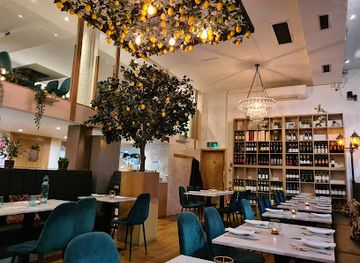
Merchant City’s evening life is centred more on bars, restaurants, live performances and event nights than on a single club strip. Merchant Square is a well-known gathering place in a converted commercial setting, while the streets around Trongate, Candleriggs, Glassford Street and the City Halls offer cocktail bars, late venues and informal places to meet. The Old Fruitmarket and City Halls contribute concerts, comedy and cultural programming that can bring a substantial after-dark crowd, whereas quieter residential lanes require considerate behaviour when venues close. The neighbourhood’s nightlife is closely linked to dining and scheduled events, with the atmosphere shifting from office district to social quarter as the evening progresses. Nearby High Street and Trongate provide further options, but venues beyond Merchant City should not be treated as part of the neighbourhood itself.
-
Restaurant
BrewDog Glasgow Merchant City
Craft beer rebellion meets smoky barbecue in Glasgow's historic Merchant City – 25 taps, outdoor patio, and dog-friendly vibes await.
2 min walk · 0.1 km from neighbourhood centre
-
Bar
The Piper Whisky Bar
Glasgow's premier whisky haven with 200+ Scotches, live music nightly, and pub grub overlooking George Square – pure Scottish spirit in every sip.
3 min walk · 0.2 km from neighbourhood centre
-
Pub
Cairns Bar
Cozy Merchant City pub pouring Belhaven ales, serving pub classics, and screening live sports in Glasgow's lively heart—perfect for pints and pies anytime.
5 min walk · 0.4 km from neighbourhood centre
-
Cocktail bar
The Spiritualist Glasgow
Moody, theatrical cocktail bar and small-plate restaurant in central Glasgow — inventive drinks, shareable dishes and a lively evening atmosphere.
4 min walk · 0.3 km from neighbourhood centre


Best nightclubs in Merchant City
Merchant City’s evening life is centred more on bars, restaurants, live performances and event nights than on a single club strip. Merchant Square is a well-known gathering place in a converted commercial setting, while the streets around Trongate, Candleriggs, Glassford Street and the City Halls offer cocktail bars, late venues and informal places to meet. The Old Fruitmarket and City Halls contribute concerts, comedy and cultural programming that can bring a substantial after-dark crowd, whereas quieter residential lanes require considerate behaviour when venues close. The neighbourhood’s nightlife is closely linked to dining and scheduled events, with the atmosphere shifting from office district to social quarter as the evening progresses. Nearby High Street and Trongate provide further options, but venues beyond Merchant City should not be treated as part of the neighbourhood itself.
-
Gay night club
Polo Lounge
Glasgow's grandest gay nightclub: multi-level dance floors, cheap drinks, and non-stop energy until dawn in Merchant City's heart.
3 min walk · 0.2 km from neighbourhood centre
-
Events Venue
18 Candleriggs
Glasgow's kitsch cabaret haven where dazzling shows, tasty grill fare, and lively vibes create unforgettable Merchant City nights.
3 min walk · 0.2 km from neighbourhood centre
-
Nightclub
Delmonicas
Scotland's biggest gay club: drag shows, karaoke, DJs, and non-stop inclusive party vibes in Glasgow's Merchant City heart.
3 min walk · 0.2 km from neighbourhood centre
-
Nightclub
Club Tropicana & Venga
Dance through the 80s and 90s at Glasgow's retro nightclub hotspot, where classic hits and neon lights fuel unforgettable weekend nights.
9 min walk · 0.7 km from neighbourhood centre


Best shops in Merchant City
Shopping in Merchant City combines specialist retail with cafés, galleries and independent businesses rather than forming a single conventional shopping centre. Trongate and the streets around Glasgow Cross contain a changing mix of shops, while Ingram Street is associated with more design-conscious retail, interiors and fashion. The lanes and courtyards around Candleriggs, Glassford Street and Virginia Court reward slow browsing for small businesses and architectural details, although stock and occupiers change regularly. Art and design-led browsing is also close to the Gallery of Modern Art and the wider city-centre retail district. The neighbourhood’s commercial character comes from its historic premises and mixed-use streets: visitors move between contemporary shops, food businesses and cultural venues in buildings that originally served merchants, warehouses and markets. It is less a dedicated souvenir quarter than a compact part of Glasgow’s independent and specialist urban shopping landscape.
-
Clothing Shop
Primark
Vast budget fashion haven on Glasgow's Argyle Street: trendy clothes, beauty, home goods, and more in a wheelchair-accessible city-center mega-store.
5 min walk · 0.4 km from neighbourhood centre
-
Shopping Centre
Princes Square Shopping Centre
Glasgow's elegant 19th-century gem: designer shopping, gourmet dining, and boutique cinema under a stunning Art Nouveau glass roof.
7 min walk · 0.5 km from neighbourhood centre
-
Shop
Geek-aboo
Dive into Glasgow's ultimate geek haven: official merch, epic collectibles, and gaming events from your favorite franchises await at Geek-aboo.
5 min walk · 0.4 km from neighbourhood centre
-
Vintage Clothing Shop
Mr Ben Retro Clothing
Glasgow's longest-running retro gem: handpicked vintage clothing from decades past, where every piece whispers history in the heart of Merchant City.
6 min walk · 0.5 km from neighbourhood centre


Merchant City essentials
Getting There
Getting Around
Safety
Emergency Situations
Do's and Don'ts
Local Tips

From Eve
Local phrases worth knowing
You don't need to get them perfect. A few words go a long way, and locals appreciate the effort.
Basics
| English | Local | Say it |
|---|---|---|
| Hello | Alright | [al-ryt] |
| Goodbye | Ta-ra | [ta-ra] |
| Yes | Aye | [aye] |
| No | Naw | [naw] |
| Please/You're welcome | Please/You're welcome | [Please/You're welcome] |
| Thank you | Cheers | [cheers] |
| Excuse me/Sorry | Sorry | [sorry] |
| How are you? | How's it gaun? | [hows it gon] |
| Fine. And you? | A'm awricht. An' yersel? | [am al-ryt. an yersel] |
| Do you speak English? | Dae ye speak Scots? | [dai ye speak scots] |
| I don't understand | Ah dinnae ken | [ah dinnae ken] |
Eating & Drinking
| English | Local | Say it |
|---|---|---|
| I'd like to see the menu, please | Can a see the menu, please | [kan a see the menu please] |
| I don't eat meat | Ah dinnae eat meat | [ah dinnae eat meat] |
| Cheers! | Cheers! | [cheers] |
| I would like to pay, please | Ah'd like tae pay, please | [ah'd like tae pay please] |
Emergencies
| English | Local | Say it |
|---|---|---|
| Help! | Help! | [help] |
| Go away! | Gae awa! | [gae awa] |
| Call the Police! | Gies a bell tae the Polis! | [gies a bell tae the polis] |
| Call a doctor! | Gies a bell tae the Doc! | [gies a bell tae the doc] |
| I'm lost | Ah'm tint | [ah'm tint] |
| I'm ill | Ah'm feelin' gey peely-wally | [ah'm feelin gey peely-wally] |
Shopping
| English | Local | Say it |
|---|---|---|
| I'd like to buy... | Ah'd like tae buy... | [ah'd like tae buy] |
| I'm just looking | Ah'm just haein' a swatch | [ah'm just haein a swatch] |
| How much is it? | Hoo much is it? | [hoo much is it] |
| That's too expensive | Thon's affa dear | [thon's affa dear] |
| Can you lower the price? | Can ye gie's it fur less? | [can ye gies it fur less] |
Time & Numbers
| English | Local | Say it |
|---|---|---|
| What time is it? | Whit time is it? | [whit time is it] |
| It's one o'clock | It's yin o'clock | [it's yin o'clock] |
| Half past (10) | Half ten | [half ten] |
| Morning | Mornin' | [mornin] |
| Afternoon | Eftirnin | [eftirnin] |
| Evening | E'enin | [e'enin] |
| Yesterday | Yesterday | [yesterday] |
| Today | Today | [today] |
| Tomorrow | Morn | [morn] |
| 1 | Yin | [yin] |
| 2 | Twa | [twa] |
| 3 | Three | [three] |
| 4 | Fower | [fower] |
| 5 | Five | [five] |
| 6 | Sax | [sax] |
| 7 | Seven | [seven] |
| 8 | Eight | [eight] |
| 9 | Nine | [nine] |
| 10 | Ten | [ten] |
Transport & Directions
| English | Local | Say it |
|---|---|---|
| Where's a/the...? | Whaur's a/the...? | [whaurs a/the] |
| What's the address? | Whit's the address? | [whits the address] |
| Can you show me (on the map)? | Can ye show me (on the map)? | [can ye show me (on the map)] |
| When's the next (bus)? | Whit time's the next (bus)? | [whit times the next (bus)] |
| A ticket (to ....) | A ticket (tae ....) | [a ticket (tae)] |
History of Merchant City
Medieval High Street and Glasgow Cross
Merchant City developed around the medieval city’s main east-west routes, especially High Street and Trongate, with Glasgow Cross acting as a significant meeting point. Trongate’s name refers to its historic route towards the town’s western gate, while the wider area connected the cathedral precinct, markets and the crossing towards the River Clyde. The medieval street pattern still informs the neighbourhood’s form, although later rebuilding has altered many individual plots. The Tolbooth Steeple at Glasgow Cross, completed in the early seventeenth century, is the most visible surviving reminder of the old civic centre and the authority once concentrated here.
Merchants, Warehouses and Atlantic Trade
During the eighteenth century, Glasgow’s growing commerce with North America and the Caribbean enriched merchants whose businesses were concentrated around the city centre and river approaches. Merchant City’s later name reflects this association, even though the trading system also involved slavery and colonial exploitation, a history that should not be obscured by the district’s grand architecture. New streets and substantial buildings appeared around Trongate, Glassford Street, Ingram Street and Miller Street, including warehouses, counting houses and residences. The area became a dense commercial quarter linked by movement of goods between the Clyde, central markets and expanding urban communities.
Civic and Commercial Expansion
Nineteenth-century Glasgow brought industrial growth, rising population and increasingly formal civic institutions to the neighbourhood. Commercial premises, banks, public halls and markets occupied or replaced earlier buildings, while improved transport and road connections strengthened the relationship between the city centre and the Clyde. The City Halls, opened in 1841, became an important venue for public meetings and performance, and the surrounding streets acquired the mixture of civic, retail and warehouse architecture still evident today. By the late nineteenth and early twentieth centuries, the original merchant quarter had become part of a much larger commercial city.
Decline, Clearance and Urban Renewal
Changing retail patterns, industrial restructuring and post-war planning weakened the traditional central market and warehouse districts during the twentieth century. Parts of the area suffered vacancy, demolition and insensitive redevelopment, while the Tolbooth buildings at Glasgow Cross were largely removed in the early twentieth century, leaving the steeple. From the late twentieth century, conservation-led regeneration reframed the quarter as Merchant City: historic buildings were repaired or converted, Candleriggs gained new cultural and event uses, and streets were adapted for restaurants, shops, galleries and housing. This renewal brought investment and visitors while also changing the balance between working commercial premises and leisure-oriented development.
Merchant City in Photos
Browse through our photo collection highlighting the charm and character of the destination.
Neighbourhoods near Merchant City
The closest neighbourhoods to Merchant City, if you have time for more than one stop.
-

-

-
-


Swipe for more neighbourhoods
Explore more

Explore more of Glasgow
Glasgow blends Victorian architecture, major museums, live music and riverside culture with welcoming neighbourhoods and Scotland’s landscapes.
Explore Glasgow