

Free Inverness-shire Travel Guide & Mobile App
Explore Inverness-shire with free travel guides. Discover regional history, expert tips, proposed trips, and audio guides on web or mobile app.


Explore Inverness-shire for Loch Ness, Highland history, mountain scenery, ancient sites and outdoor adventures around Inverness and the Great Glen.
Read more about Inverness-shire
When is the best time to visit Inverness-shire?
Best: June–August · 17–19°C| Month | High (°C) | Rainfall (mm) |
|---|---|---|
| January | 6 | 82 |
| February | 6 | 70 |
| March | 9 | 75 |
| April | 12 | 65 |
| May | 15 | 69 |
| June (best) | 17 | 78 |
| July (best) | 19 | 79 |
| August (best) | 19 | 90 |
| September | 16 | 91 |
| October | 13 | 108 |
| November | 8 | 96 |
| December | 6 | 86 |
Getting to and around Inverness-shire
How to get there
Transportation
Top city travel guides in Inverness-shire
The cities of Inverness-shire, and the easiest places to base yourself.
-

-


Swipe for more cities
Destinations in Inverness-shire
Resorts, valleys and scenic spots worth a trip of their own.
-

-


Swipe for more destinations
Best attractions in Inverness-shire
Inverness-shire offers an unusually broad range of attractions because its historic territory spans urban heritage, lochs, mountains and western glens. In and around Inverness, visitors can combine the River Ness, Inverness Museum and Art Gallery, Culloden Battlefield and the prehistoric Clava Cairns. Loch Ness provides opportunities for boat trips, shoreline walks and visits to Urquhart Castle, while the Caledonian Canal and its locks reveal the engineering history of the Great Glen. Fort Augustus and Fort William serve as gateways to different parts of the landscape, with Glen Nevis offering woodland, rivers and mountain scenery below Ben Nevis. Further east, the Cairngorm Mountain area and Strathspey are suited to hiking, wildlife watching and winter sports, subject to conditions. Forest trails, historic estates, distilleries, small museums and railway journeys add quieter alternatives to the principal sightseeing route. The attractions are spread across a large territory, so an itinerary should be organised geographically rather than attempting to see every major site from Inverness in a single day.
-
 Castle
Urquhart Castle
Explore the dramatic ruins of Urquhart Castle, steeped in Scottish history and set against the stunning backdrop of Loch Ness.
-
Battle site
Culloden Battlefield
Step onto the historic moor where Scotland’s last battle unfolded, and experience immersive stories that shaped a nation’s destiny.
-
Scenic point
Chanonry Point
Experience one of Europe’s top land-based dolphin watching spots with stunning coastal views on Scotland’s Black Isle.
-
Shopping Centre
Eastgate Shopping Centre
A vibrant shopping hub in Inverness offering diverse stores, local markets, and convenient amenities in a welcoming city-centre setting.


Best landmarks in Inverness-shire
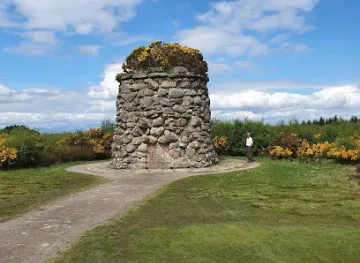
The most recognisable landmark associated with Inverness-shire is Urquhart Castle, whose ruined walls occupy a strategic promontory above Loch Ness and testify to centuries of conflict over the Great Glen. Culloden Battlefield is a different kind of landmark: its open moor, memorial stones and graves preserve the setting of the 1746 battle and make the landscape itself central to the history. Clava Cairns provides a striking prehistoric counterpart, with stone-built burial monuments and standing stones arranged on a terrace near the River Nairn. The Caledonian Canal is an important engineering landmark, particularly where locks and bridges step through the Great Glen. Inverness Castle, although largely a nineteenth-century building on an older fortified site, remains a defining feature of the city skyline. In the west, Ben Nevis dominates the landscape around Fort William, while the steep-sided glens and waterfalls below it form a natural landmark system rather than a single monument. Together these places express the region's archaeological, military, engineering and mountainous identities.
-
Historical landmark
Clava Cairns
Ancient Bronze Age burial cairns aligned with winter solstice, set in mystical Highland woodland.
-
Market
The Victorian Market
Discover Inverness’s historic Victorian Market with its unique shops, vibrant food hall, and charming 19th-century architecture in the city centre.
-
Pub
The Castle Tavern
Historic Scottish pub with stunning views of Inverness Castle, serving traditional fare and local ales in a warm, welcoming atmosphere.
-
Hotel
Kingsmills Hotel
Historic elegance meets modern luxury with spa, pool, fine dining, and tranquil grounds just minutes from Inverness city center.
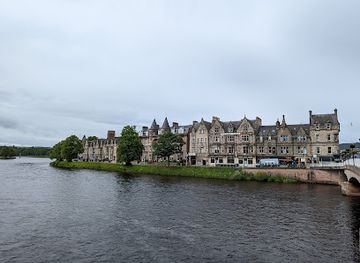


Explore Inverness-shire on the map
Plan your trip on one map. See where the top cities, national parks and sights are, and book hotels and experiences in a few clicks.
Best hotels in Inverness-shire
Best restaurants in Inverness-shire
Dining in Inverness-shire reflects both Highland produce and the practical cooking traditions of a large rural region. Menus commonly feature venison, Highland beef, lamb, salmon, trout, game birds and seasonal vegetables, while coastal and lochside communities contribute shellfish and other seafood. Inverness has the widest choice of restaurants, cafés, bakeries and contemporary kitchens, with Fort William, Aviemore, Fort Augustus and other larger settlements providing additional places to eat. Pubs and rural inns remain useful for hearty meals, often including soups, stews, pies and fish, while cafés make good stops on long journeys through the glens. Local whisky is widely available, and craft beer and Scottish gin appear alongside more traditional drinks. Farmers' markets and farm shops can be good places to find cheeses, preserves, smoked fish, oat products and baking, though opening days vary. In remote districts, plan meals around limited evening options rather than assuming that every village has a late kitchen.
-
Hotel
The Kings Highway - JD Wetherspoon
Affordable central Inverness hotel above a lively Wetherspoon pub, steps from River Ness, castle and Loch Ness trails—perfect for value-driven Highland exploration.
-
Modern European
The Mustard Seed Restaurant
Historic church setting meets modern European cuisine with fresh local flavors and riverside views in the heart of Inverness.
-
Pub
Johnny Foxes
Experience authentic Highland hospitality with live music, hearty food, and a lively atmosphere at Johnny Foxes in Inverness.
-
Pub
The Castle Tavern
Historic Inverness pub with stunning castle views, traditional Scottish fare, and a lively beer garden for a true Highland experience.


Best bars in Inverness-shire
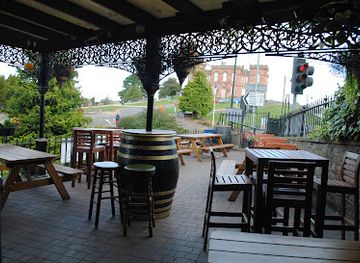
Evening life in Inverness-shire is concentrated in Inverness, Fort William, Aviemore and a smaller number of market or tourist settlements. Inverness has the broadest selection of traditional pubs, contemporary bars, live music venues and restaurants, with cultural programming at venues such as Eden Court Theatre adding an alternative to drinking. Fort William and Aviemore have a strong after-outdoors atmosphere, with pubs and casual bars serving walkers, climbers and seasonal visitors. In the Great Glen and more remote districts, evenings generally centre on village pubs, hotel bars, restaurants and occasional live music rather than nightclubs. Some pubs offer local ales, whisky and informal music, but the character varies by town and season. Rural transport is limited after dark, so visitors staying outside a town should arrange a taxi or accommodation transport in advance rather than planning to walk along unlit roads.
-
Bar
Black Isle Bar & Rooms
Craft beer haven and cozy rooms in central Inverness with organic brews, wood-fired pizzas, and a secret rooftop garden.
-
Pub
Johnny Foxes
Experience authentic Irish pub culture with lively music, hearty Highland fare, and warm hospitality in the heart of Inverness.
-
Pub
The Castle Tavern
Historic Scottish pub with stunning castle views, real ales, and a lively beer garden in the heart of Inverness.
-
Live music bar
Hootananny
Experience the heart of Scottish folk music and vibrant nightlife at Hootananny, Inverness’s award-winning live music bar and restaurant.


Best nightclubs in Inverness-shire
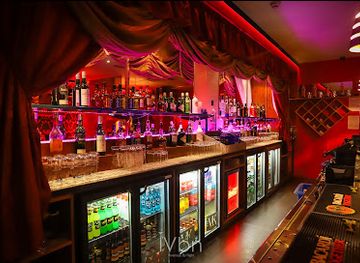
Evening life in Inverness-shire is concentrated in Inverness, Fort William, Aviemore and a smaller number of market or tourist settlements. Inverness has the broadest selection of traditional pubs, contemporary bars, live music venues and restaurants, with cultural programming at venues such as Eden Court Theatre adding an alternative to drinking. Fort William and Aviemore have a strong after-outdoors atmosphere, with pubs and casual bars serving walkers, climbers and seasonal visitors. In the Great Glen and more remote districts, evenings generally centre on village pubs, hotel bars, restaurants and occasional live music rather than nightclubs. Some pubs offer local ales, whisky and informal music, but the character varies by town and season. Rural transport is limited after dark, so visitors staying outside a town should arrange a taxi or accommodation transport in advance rather than planning to walk along unlit roads.
-
Pub
Johnny Foxes
Experience lively Irish charm, hearty Highland fare, and nightly live music at Johnny Foxes, Inverness’s beloved pub and restaurant.
-
Nightclub
Private Eyes Inverness
Experience Inverness nightlife at Private Eyes, a stylish nightclub with vibrant music, elegant decor, and a welcoming atmosphere in the city center.

Best shops in Inverness-shire
Shopping in Inverness-shire is centred on Inverness, where the Victorian Market, city-centre streets, independent retailers, galleries, booksellers and larger commercial premises serve both residents and visitors. Fort William, Aviemore, Fort Augustus and other settlements offer smaller selections aimed at everyday needs, outdoor equipment, gifts and local produce rather than extensive high-street shopping. Farm shops, distillery visitor shops and food producers provide opportunities to buy whisky, smoked fish, oat products, shortbread, preserves, cheese and Highland-themed provisions, with availability varying by location. Craft outlets and galleries may stock woollens, textiles, woodwork, jewellery, ceramics and artwork inspired by the surrounding landscape. Outdoor clothing and walking equipment are particularly practical purchases in a region where weather and terrain can change quickly. In rural areas, opening days and hours can be limited, so buy essentials in larger towns and treat local shops as part of the journey rather than relying on them for last-minute supplies.
-
Shopping Centre
Inverness Shopping Park
A vibrant retail and leisure destination offering diverse shopping, dining, and entertainment just outside Inverness city centre.
-
Market
The Victorian Market
Discover Inverness’s historic Victorian Market, a vibrant hub of independent shops and diverse food stalls beneath a stunning cast-iron domed roof.
-
Clothing Shop
Primark
Discover budget-friendly fashion and homeware in Inverness city centre at Primark’s welcoming multi-floor store.
-
Homewares Shop
The Range, Inverness
A versatile homewares and lifestyle store in Inverness Retail Park offering furniture, garden, pet, lighting, toys, and art supplies under one roof.


Get your free copy of our complete guide to Inverness-shire, delivered straight to you.
Everything on this page, from attractions and restaurants to essentials and local phrases, in one PDF you can read offline, print or share.
Already have an account? Sign in
Your Inverness-shire guide is ready.
We'll send it to · Not you? Sign out

Getting your guide ready…
We are putting together a fresh copy of the Inverness-shire guide. This can take up to a minute.
This can take a few moments. If your browser asks, choose Allow so the download can start. You'll find the guide in your Downloads folder.
Nothing happened? Download it again
Sorry, the guide is taking longer than usual. Please try again in a minute, or get it by email instead.
Inverness-shire essentials
Currency and Payment
Safety
Emergency Situations
Do's and Don'ts
Local Tips
From Eve
Local phrases worth knowing
You don't need to get them perfect. A few words go a long way, and locals appreciate the effort.
Basics
| English | Local | Say it |
|---|---|---|
| Hello | Hello | [həˈloʊ] |
| Goodbye | Goodbye | [ɡʊdˈbaɪ] |
| Yes | Aye | [aɪ] |
| No | Nae | [neɪ] |
| Please/You're welcome | Please/You're welcome | [pliːz/ jʊr 'wɛlkəm] |
| Thank you | Thank ye | [θæŋk ji] |
| Excuse me/Sorry | Excuse me/Sorry | [ɪkˈskjus mi/ˈsɔːri] |
| How are you? | How are ye? | [haʊ ɑr ji] |
| Fine. And you? | Fine. And yersel'? | [faɪn. ənd jərˈsɛl] |
| Do you speak English? | Dae ye speak English? | [deɪ ji spiːk ˈɪŋɡlɪʃ] |
| I don't understand | Ah dinnae understand | [aɪ ˈdɪneɪ ˌʌndərˈstænd] |
Eating & Drinking
| English | Local | Say it |
|---|---|---|
| I'd like to see the menu, please | Ah'd like tae see the menu, please | [aɪd laɪk tə si ðə ˈmɛnjuː, pliːz] |
| I don't eat meat | Ah dinnae eat meat | [aɪ ˈdɪneɪ iːt miːt] |
| Cheers! | Cheers! | [ʧɪrz] |
| I would like to pay, please | Ah'd like tae pay, please | [aɪd laɪk tə peɪ, pliːz] |
Emergencies
| English | Local | Say it |
|---|---|---|
| Help! | Help! | [hɛlp] |
| Go away! | Gie us peace! | [ɡi ʌs piːs] |
| Call the Police! | Call the Police! | [kɔl ðə pəˈliːs] |
| Call a doctor! | Call a doctor! | [kɔl ə ˈdɑktər] |
| I'm lost | Ah'm lost | [aɪm lɔst] |
| I'm ill | Ah'm unwell | [aɪm ʌnˈwɛl] |
Shopping
| English | Local | Say it |
|---|---|---|
| I'd like to buy... | Ah'd like tae buy... | [aɪd laɪk tə baɪ...] |
| I'm just looking | Ah'm just looking | [aɪm dʒʌst ˈlʊkɪŋ] |
| How much is it? | How much is it? | [haʊ mʌʧ ɪz ɪt] |
| That's too expensive | That's a wee bit dear | [ðæts ə wiː bɪt dɪr] |
| Can you lower the price? | Can ye lower the price? | [kæn ji ˈloʊər ðə praɪs] |
Time & Numbers
| English | Local | Say it |
|---|---|---|
| What time is it? | Whit time is it? | [wɪt taɪm ɪz ɪt] |
| It's one o'clock | It's one o'clock | [ɪts wʌn əˈklɑk] |
| Half past (10) | Half past ten | [hæf pæst tɛn] |
| Morning | Mornin' | [ˈmɔrnɪn] |
| Afternoon | Afternoon | [ˌɑːftərˈnuːn] |
| Evening | Evenin' | [ˈiːvnɪŋ] |
| Yesterday | Yestreen | [jɛsˈtriːn] |
| Today | T'day | [təˈdeɪ] |
| Tomorrow | Morrow | [ˈmɔroʊ] |
| 1 | One | [wʌn] |
| 2 | Two | [tuː] |
| 3 | Three | [θriː] |
| 4 | Four | [fɔːr] |
| 5 | Five | [faɪv] |
| 6 | Six | [sɪks] |
| 7 | Seven | [ˈsɛvən] |
| 8 | Eight | [eɪt] |
| 9 | Nine | [naɪn] |
| 10 | Ten | [tɛn] |
Transport & Directions
| English | Local | Say it |
|---|---|---|
| Where's a/the...? | Whar's a/the...? | [hwɛrz ə/ðə...?] |
| What's the address? | Whit’s the address? | [wɪts ðə əˈdrɛs] |
| Can you show me (on the map)? | Can ye show me (on the map)? | [kæn ji ʃoʊ mi (ɒn ðə mæp)?] |
| When's the next (bus)? | When's the next (bus)? | [wɛn z ðə nɛkst (bʌs)?] |
| A ticket (to ....) | A ticket (ta ....) | [ə ˈtɪkɪt (tə ....)] |
History of Inverness-shire
Prehistoric monuments at Clava Cairns
The Clava Cairns near Inverness preserve a prehistoric burial and ceremonial landscape dating chiefly from the Bronze Age, around 4,000 years ago. The complex includes passage graves, ring cairns, kerb cairns and standing stones, demonstrating that the region was used for organised ritual long before the emergence of historical kingdoms. Its position on a natural terrace above the River Nairn also illustrates how prehistoric communities selected prominent landscapes. The stones and carefully constructed chambers remain among the most important archaeological survivals in the Inverness area, although later popular associations with fictional time travel should not obscure their genuine archaeological significance.
Pictish and Gaelic northern Scotland
Before and during the early medieval period, the wider Inverness area lay within a zone shaped by Pictish power and later by the spread of Gaelic culture. Pictish stones, place names and archaeological remains record communities whose political centres and religious networks connected the northern Highlands to other parts of Scotland. Over subsequent centuries, Gaelic became deeply established in the glens and western districts, influencing local names, oral traditions and cultural identity. The region's historical character therefore reflects overlapping Pictish, Gaelic, Norse and later Scots influences rather than a single unchanging tradition.
Inverness and the medieval Highlands
Inverness developed as a strategic settlement at the northern end of the Great Glen, where routes through the Highlands met the Moray Firth. A royal burgh by the medieval period, it was associated with regional trade, administration and military control. Repeated conflict affected the town and its surroundings, including struggles involving the Scottish Crown, local lordships and the powerful Clan Donald. Inverness Castle occupies the site of earlier fortifications, though the present red sandstone building is a nineteenth-century structure. The city's enduring importance comes from its position as a gateway between eastern lowlands, western seaways and the Highland interior.
The Great Glen and military roads
Following the Jacobite risings, the British government strengthened its control of the Highlands through forts, barracks and a network of military roads. Fort Augustus and Fort William were important parts of this system, while routes through the Great Glen improved the movement of troops and supplies. General Wade and later Major William Caulfeild oversaw much of the road-building programme during the eighteenth century. These works had a coercive purpose, but their routes later influenced civilian travel and remain visible in sections of old road, bridges and military infrastructure. The Great Glen's strategic geography is therefore central to understanding both Highland resistance and state integration.
The Jacobite defeat at Culloden, 1746
The Battle of Culloden took place on 16 April 1746 on moorland east of Inverness, ending the Jacobite campaign to restore the Stuart dynasty. Government forces under the Duke of Cumberland defeated the Jacobite army commanded by Charles Edward Stuart in a brief and highly destructive battle. The aftermath brought executions, imprisonment, confiscation of estates and restrictions on aspects of Highland society, including weapon ownership and some forms of dress. The battlefield is now preserved as a memorial landscape, and the visitor centre interprets the battle from multiple perspectives while helping explain its long political and cultural legacy.
The Caledonian Canal and nineteenth-century engineering
The Caledonian Canal was constructed in the early nineteenth century under the direction of engineer Thomas Telford, linking a chain of lochs across the Great Glen between the Moray Firth and Loch Linnhe. Completed in 1822, it was intended to provide a safer route for shipping than the exposed waters around northern Scotland, though commercial use was less extensive than originally hoped. Its locks, bridges and engineered channels remain a major historic work. The canal also helped connect communities along the glen and later became important for leisure boating, demonstrating how infrastructure can acquire a new role after its original economic purpose fades.
Clearances, land use and Highland emigration
During the eighteenth and nineteenth centuries, parts of Inverness-shire experienced changes in estate management, population movement and land use associated with the Highland Clearances. Communities were displaced or reorganised as landlords promoted sheep farming, sporting estates and more commercially managed land. The effects varied from district to district, but many people emigrated to other parts of Scotland, the British Empire and beyond. Crofting, fishing, forestry and seasonal work continued in different areas, while the population became concentrated in settlements such as Inverness and Fort William. The region's dispersed communities and extensive estates still reflect these transformations.
Railways, tourism and the modern Highlands
Railway construction in the nineteenth century connected Inverness and later the western Highlands and Strathspey more closely to Scotland's growing industrial and urban economy. Rail access supported trade, administration and tourism, while romantic interest in Highland scenery encouraged hotels, excursions and sporting travel. In the twentieth and twenty-first centuries, outdoor recreation, heritage tourism, forestry, food and drink, public services and renewable energy have joined traditional land-based industries as important parts of the regional economy. Inverness has grown as the principal service and cultural centre, while many rural areas continue to balance tourism with community life and environmental pressures.
Inverness-shire in Photos
Browse through our photo collection highlighting the charm and character of the destination.
Neighbouring regions of Inverness-shire
The closest regions to Inverness-shire, if you have time for more than one.
-

-

-

-
-


Swipe for more regions
Explore more

Explore more of United Kingdom
Discover the United Kingdom: A blend of rich history, stunning landscapes, and vibrant cities, offering a unique travel experience for every visitor.
Explore United Kingdom