
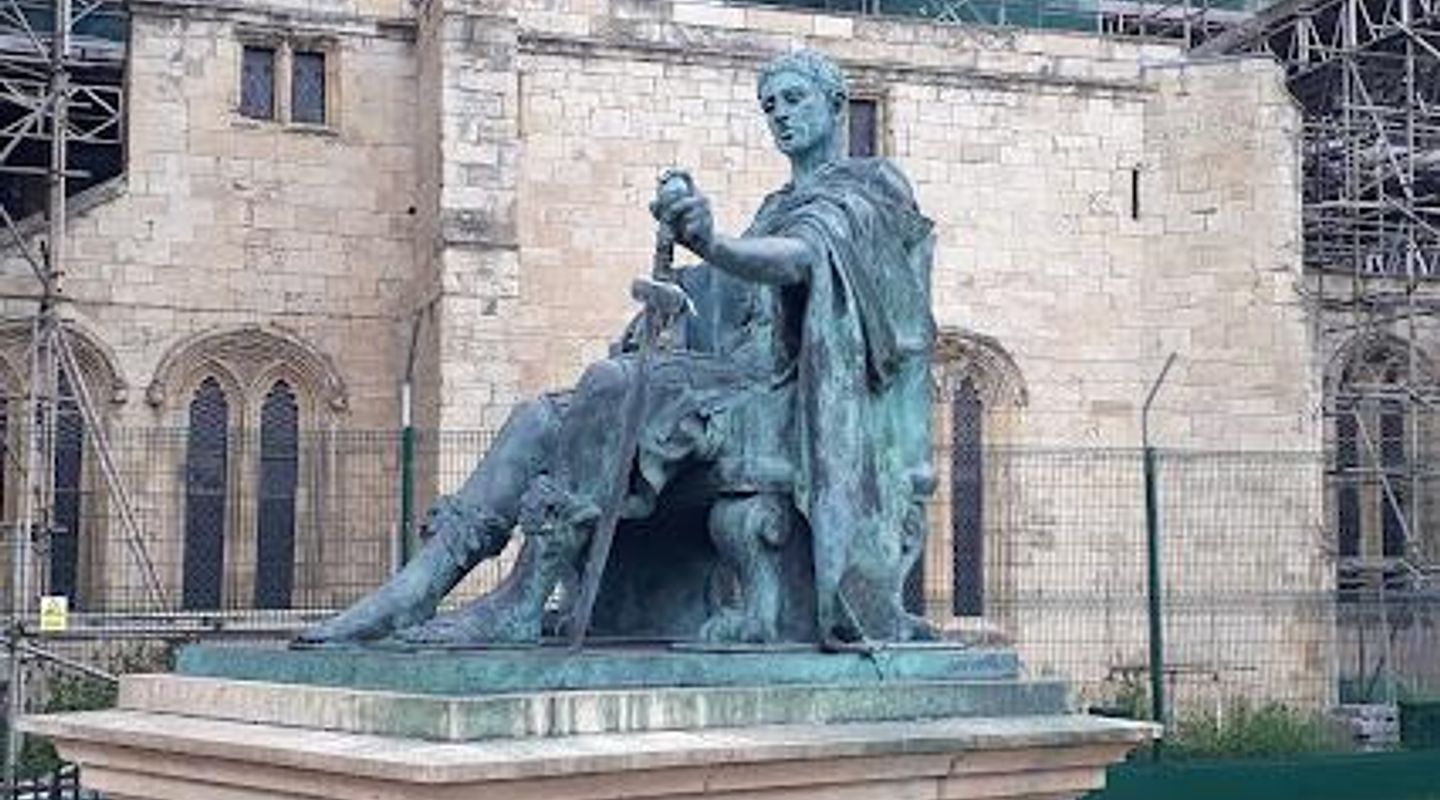
Constantine the Great, Leeds Travel Guide
A commanding bronze tribute to the Roman Emperor Constantine, marking his proclamation in York and his enduring legacy in history and faith.
The Statue of Constantine the Great is a striking bronze monument located in Minster Yard, York, near York Minster. Unveiled in 1998 and designed by sculptor Philip Jackson, it commemorates Constantine's proclamation as Roman Emperor in AD 306 at this historic site. The statue depicts Constantine seated in military dress with a broken sword, bearing the inscription 'Constantine by this sign conquer,' symbolizing his legendary vision before battle.
A brief summary to Constantine the Great
- 4 Minster Yard, York, YO1 7JB, GB
- Click to display
- Duration: 0.25 to 1 hours
- Free
-
 Outdoor
- Mobile reception: 4 out of 5

Know before you go
Hi, I'm Eve. Here are a few practical things to know before exploring Constantine the Great.
- Visit the statue early in the morning or late afternoon for the best natural light and fewer crowds.
- Combine your visit with York Minster and the nearby Roman column to fully appreciate the Roman heritage of the area.
- Look closely at the statue’s inscription and broken sword to understand the symbolism of Constantine’s story.
- Check for any special events or commemorations by the York Civic Trust that may include the statue.
Do you manage this location?
Take control to get all the benefits, like improved information, better appearance, and stronger visibility across AI-powered discovery. Learn more about listing your business on Evendo
Activate your presenceOther nearby places you may find interesting
The closest places of the same kind, if this one is not quite what you had in mind.


Explore Constantine the Great on the Map
A handpicked selection of must-see spots near Constantine the Great, mapped for you.
Unlock the Best of Constantine the Great
Buy tickets
-
No tickets available
Book tours with entry


Getting There
-
Bus
Take the York Park & Ride bus service to the York Minster stop; buses run every 10-15 minutes and the journey takes about 20-30 minutes from the city outskirts. From the stop, it’s a short 5-minute walk to the statue. Tickets cost approximately £3-£5.
-
Train
Arrive at York Railway Station, which is about 1.5 km from Minster Yard. A taxi ride takes around 5-10 minutes costing £6-£10, or a 20-minute walk through the city centre on mostly flat terrain.
-
Walking
If staying in central York, walking to the statue is easy and pleasant, taking 10-15 minutes on paved, wheelchair-accessible paths through historic streets.
For the on-the-go comforts that matter to you
-
 Restrooms
-
 Drink Options
-
 Food Options
-
 Information Boards
-
 Seating Areas
Discover more about Constantine the Great
A Monument Honoring a Roman Emperor's Rise
The Statue of Constantine the Great stands proudly in Minster Yard, just outside the imposing York Minster. Created by renowned sculptor Philip Jackson and unveiled in 1998, this bronze statue commemorates the momentous occasion in AD 306 when Constantine was proclaimed Roman Emperor in Eboracum, the Roman name for York. The statue captures Constantine seated on a throne, dressed in military attire, his right arm outstretched behind him and his left hand gripping the pommel of a broken sword. The base bears the Latin-inspired inscription, 'Constantine by this sign conquer,' referencing the Christian vision that inspired his victory.Historical and Cultural Significance
Constantine's reign marked a pivotal era in Roman and world history. He was the first Roman emperor to convert to Christianity and played a crucial role in establishing religious tolerance within the empire. His founding of Constantinople laid the groundwork for the Byzantine Empire. The statue's location is deeply symbolic, situated near the very spot where Constantine's father died and where Constantine was declared emperor by his troops. This site connects York’s rich Roman heritage with the broader narrative of Western history and Christianity’s rise.Artistic Features and Symbolism
Philip Jackson’s work portrays Constantine with a commanding presence, blending imperial majesty with a contemplative air. The broken sword held by Constantine symbolizes both conquest and the trials of leadership. The statue’s scale, at 1.5 times life size, and its placement on a pedestal inscribed with Constantine’s name and dates, emphasize the emperor’s enduring legacy. Behind the statue, the illuminated cross atop York Minster reinforces the Christian symbolism tied to Constantine’s story.Surrounding Roman Heritage
Nearby, visitors can also find a Roman column dating back to the 1st century, originally part of a larger structure supporting an earlier church. This column, discovered beneath York Minster in 1969, ties the modern cityscape to its Roman roots. Together with the statue, these elements create a tangible link to York’s ancient past as a Roman provincial capital.Modern Interactions and Preservation
The statue has been a focal point for local culture and occasional controversy. In 2016, its sword was stolen and later recovered, with restoration funded by the York Civic Trust. During the COVID-19 pandemic, the statue was even seen wearing a protective face mask, reflecting its integration into contemporary community life. Despite some media reports suggesting the statue was under review due to historical controversies, it remains a respected landmark celebrating York’s imperial heritage.Legacy and Visitor Experience
Today, the statue is a popular photo spot and a powerful reminder of York’s role in shaping imperial and religious history. It invites visitors to reflect on the complex legacy of Constantine, from military leader to Christian emperor, and to appreciate the layers of history embedded in York’s urban fabric. The statue’s commanding presence outside York Minster makes it an essential stop for those exploring the city’s rich cultural landscape.












Your all‑in‑one travel companion app
Explore expert travel guides, compare and book tours, experiences, hotels, and more—all from the palm of your hand. Download now for seamless trip planning wherever your wanderlust takes you.


Explore More of Leeds

Looking beyond Constantine the Great? Discover Leeds for broader travel guides, local hot-spots, and regional highlights.
Explore Leeds

