Fitzroy Square, London Travel Guide
Free Guide: A compact Georgian square in Fitzrovia, where formal terraces, trees, and a private garden create a quiet pause in central London.


A brief summary of Fitzroy Square
A compact Georgian square in Fitzrovia, where formal terraces, trees, and a private garden create a quiet pause in central London.
Fitzroy Square is one of central London’s most restrained Georgian spaces: a formal garden square ringed by period terraces, quiet streets, and mature trees. It is less a destination for activities than a place to slow down, study the architecture, and take a short break from Fitzrovia’s traffic and office blocks. Visits are usually brief, calm, and best on foot.
On-site amenities
 Seating areas
 Trash bins
 Information boards
- Address
- London
Getting there
Underground
On foot
Taxi or rideshare
Cycling
Discover more about Fitzroy Square
What it is
Fitzroy Square is a Georgian garden square in Fitzrovia, laid out in the late 18th century and associated with Robert Adam’s urban planning. It reads as a planned residential ensemble rather than a standalone attraction: a compact central garden framed by symmetrical terraces, with the square’s value lying in its proportions, materials, and sense of order. In a district now shaped by offices, medical buildings, creative businesses, and busy streets, the square preserves a quieter, more formal London.
What you see and feel
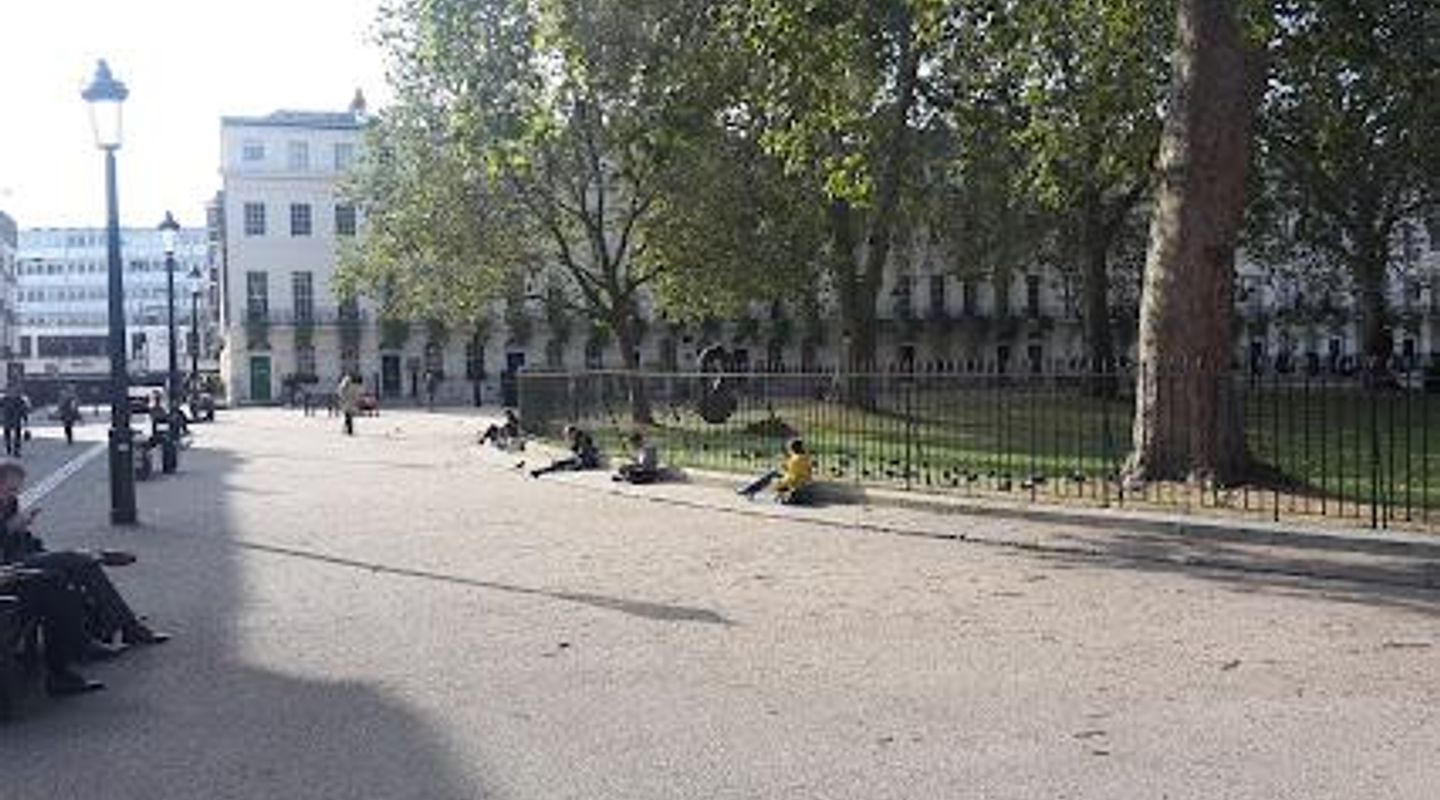
The experience is visual and measured. You come here to walk the perimeter, look across the garden, and study the Georgian facades from close range. Mature trees soften the hard lines of the architecture, but the overall effect remains disciplined rather than lush. It is a place for short pauses, photographs, and slow observation. The atmosphere is residential and composed, with little of the noise or spectacle associated with nearby West End streets. On a good day, the square feels almost detached from the city around it; on a wet or windy day, it becomes even quieter and more functional.
Why travellers stop here
Travellers usually visit as part of a Fitzrovia or Bloomsbury walk, or as a detour between nearby Underground stations and central London landmarks. It suits people interested in Georgian London, garden squares, and urban design, as well as anyone wanting a calm place to sit for a few minutes. The square is not built for long stays or family activities, and facilities are limited. That makes it useful as a pause point rather than an all-day outing. Most visits last only long enough to circle the square, take a few photos, and move on.
History and setting
The square belongs to London’s tradition of planned garden squares, where architecture and open space were designed together. Its present garden has been altered and restored over time, but the original idea remains clear: a formal green centre surrounded by terraces that give the square its identity. The setting is fully urban and enclosed, with no wide views or landscape drama. Its appeal comes from scale, symmetry, and the contrast between the calm interior and the dense city outside. For travellers who notice streetscapes, Fitzroy Square offers a compact lesson in Georgian London without the crowds of better-known monuments.
Practical expectations
Access is straightforward on foot or by Tube, and the square works well as a short stop between other central London sights. Facilities at the square itself are minimal, so nearby cafés and public services in Fitzrovia are the practical fallback. The best conditions are mild, dry days when the trees and terraces are easy to appreciate. In winter or rain, the visit is still possible but much shorter. This is a place for architecture, quiet, and a brief reset rather than entertainment.
Evendo Review Centre
 Google
Guest reviews
Best time to go
Quietest: Jan, Feb & Dec · before 8am or from 10pm
Busy times are Evendo estimates for a typical year, to help you plan. Actual crowds vary with events, school holidays and the weather.
Explore Fitzroy Square on the map
A handpicked selection of must-see spots near Fitzroy Square, mapped for you.
Get your free copy of our complete guide to Fitzroy Square, delivered straight to you.
Everything on this page, from opening hours and how to get there to Eve’s tips and the best time to go, in one PDF you can read offline, print or share.
Already have an account? Sign in
Your Fitzroy Square guide is ready.
We'll send it to · Not you? Sign out

Getting your guide ready…
We are putting together a fresh copy of the Fitzroy Square guide. This can take up to a minute.
This can take a few moments. If your browser asks, choose Allow so the download can start. You'll find the guide in your Downloads folder.
Nothing happened? Download it again
Sorry, the guide is taking longer than usual. Please try again in a minute, or get it by email instead.
Unlock the best of Fitzroy Square
Skip-the-line tickets, guided tours with entry, and walking tours of the area, booked in a few clicks.


Other nearby places you may find interesting
The closest places of the same kind, if this one is not quite what you had in mind.
-
-
-
-
-


Swipe for more places
More to explore near Fitzroy Square

 Best experiences near Fitzroy Square
 Best hotels near Fitzroy Square
 Best landmarks near Fitzroy Square
 Best attractions near Fitzroy Square
 Best shops near Fitzroy Square
 Best restaurants near Fitzroy Square
 Best bars near Fitzroy Square
Do you manage this location?
Take control to get all the benefits, like improved information, better appearance, and stronger visibility across AI-powered discovery.
Explore more

Explore more of London
Explore London: A city of iconic landmarks, rich history, vibrant culture, and endless attractions that cater to every taste, making it a must-visit destination.
Explore London
Explore more of United Kingdom
Discover the United Kingdom: A blend of rich history, stunning landscapes, and vibrant cities, offering a unique travel experience for every visitor.
Explore United Kingdom