

Spitalfields Charnel House, London Travel Guide
Free Guide: A compact medieval charnel house in Bishops Square, where rare surviving fabric from St Mary Spital sits in plain sight amid modern Spitalfields.


A brief summary of Spitalfields Charnel House
A compact medieval charnel house in Bishops Square, where rare surviving fabric from St Mary Spital sits in plain sight amid modern Spitalfields.
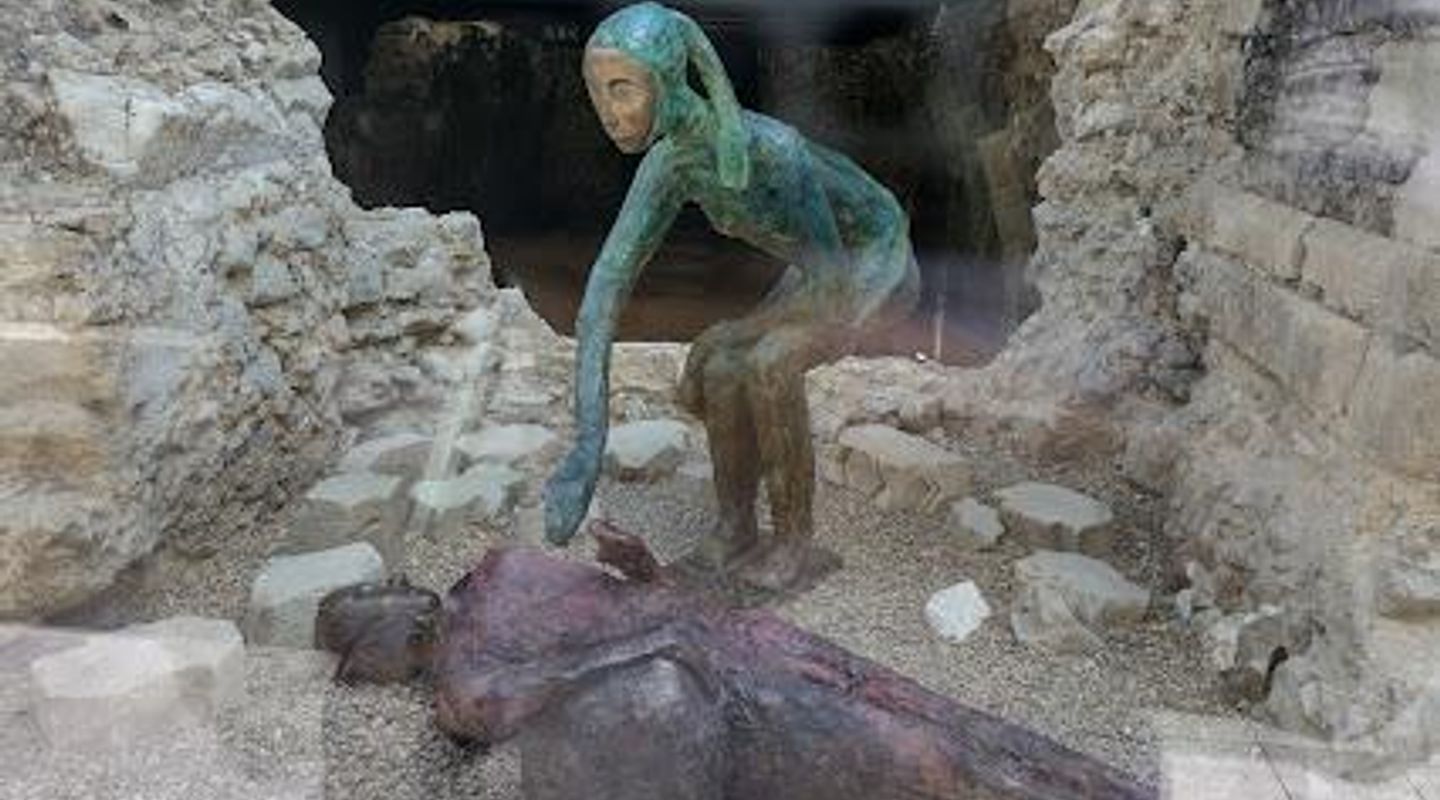
Spitalfields Charnel House is a small but striking medieval survivor set in Bishops Square, where a preserved archaeological remnant sits amid glass, offices, and retail. Linked to the Priory and Hospital of St Mary Spital, it offers a brief, reflective stop rather than a full attraction. Most visitors pause for a few minutes, read the interpretation, and fold it into a wider Spitalfields walk.
On-site amenities
 Seating areas
 Sheltered areas
 Information boards
Opening hours
- Every dayOpen 24 hours
Opening hours as listed on the venue’s Google Business Profile. Hours can change for services and special events, so check with the venue before you go.
- Address
- Bishops Square London
Getting there
Underground and rail
On foot
Cycling
Taxi or rideshare
Discover more about Spitalfields Charnel House
What it is
Spitalfields Charnel House is a preserved medieval heritage remnant in Bishops Square, East London. It is not a museum in the usual sense and not a large standalone attraction. Instead, it is a compact archaeological feature associated with the former Priory and Hospital of St Mary Spital, kept in place within a modern commercial square. Its importance lies in survival: it is widely regarded as one of the oldest surviving pieces of building fabric in the area and a rare medieval structure in Tower Hamlets.
What the visit feels like
The experience is short, visual, and quietly absorbing. You usually approach it from the public square, look down or across at the remains from a fixed viewing point, and spend a few minutes taking in the contrast between rough medieval stone and the surrounding office-and-retail development. There is little sense of a formal attraction with a long route or multiple rooms. Instead, the site works as a pause in the middle of a busy district, especially for travellers already walking through Spitalfields, Old Spitalfields Market, or the streets around Christ Church.
History in context
The charnel house belongs to the medieval religious landscape that once stood outside the City of London. Charnel houses were used to store bones when burial grounds were reused, and this one survives as a rare fragment of that practice. It was rediscovered during redevelopment works in the late 1990s and then preserved in situ. That matters because so much of medieval London has vanished beneath later building phases. Here, the past is not reconstructed for effect; it sits inside a working urban square, with the surrounding district carrying its own layers of Huguenot, immigrant, market, and regeneration history.
How to fit it into a visit
This is best treated as a stop on a wider heritage walk rather than a destination that fills an afternoon. Five to ten minutes is enough for a basic look, while 20 to 40 minutes makes sense if you are combining it with nearby streets and markets. The setting is easy to reach on foot from Liverpool Street or Aldgate, and the area around it usually provides the practical amenities the site itself does not. Expect a low-key stop, limited facilities, and a strong payoff for anyone interested in urban archaeology, layered cityscapes, or the survival of medieval fabric in central London.
Evendo Review Centre
 Google
Guest reviews
Best time to go
Quietest: Jan, Feb & Nov · before 7am or from 9pm
Busy times are Evendo estimates for a typical year, to help you plan. Actual crowds vary with events, school holidays and the weather.
Explore Spitalfields Charnel House on the map
A handpicked selection of must-see spots near Spitalfields Charnel House, mapped for you.
Get your free copy of our complete guide to Spitalfields Charnel House, delivered straight to you.
Everything on this page, from opening hours and how to get there to Eve’s tips and the best time to go, in one PDF you can read offline, print or share.
Already have an account? Sign in
Your Spitalfields Charnel House guide is ready.
We'll send it to · Not you? Sign out

Getting your guide ready…
We are putting together a fresh copy of the Spitalfields Charnel House guide. This can take up to a minute.
This can take a few moments. If your browser asks, choose Allow so the download can start. You'll find the guide in your Downloads folder.
Nothing happened? Download it again
Sorry, the guide is taking longer than usual. Please try again in a minute, or get it by email instead.
Unlock the best of Spitalfields Charnel House
Skip-the-line tickets, guided tours with entry, and walking tours of the area, booked in a few clicks.


Other nearby places you may find interesting
The closest places of the same kind, if this one is not quite what you had in mind.
-
-
-
-
-


Swipe for more places
More to explore near Spitalfields Charnel House
-
 Best experiences near Spitalfields Charnel House
-
 Best hotels near Spitalfields Charnel House
-
 Best landmarks near Spitalfields Charnel House
-
 Best attractions near Spitalfields Charnel House
-
 Best shops near Spitalfields Charnel House
-
 Best restaurants near Spitalfields Charnel House
-
 Best bars near Spitalfields Charnel House


Do you manage this location?
Take control to get all the benefits, like improved information, better appearance, and stronger visibility across AI-powered discovery.
Explore more

Explore more of London
Explore London: A city of iconic landmarks, rich history, vibrant culture, and endless attractions that cater to every taste, making it a must-visit destination.
Explore London
Explore more of United Kingdom
Discover the United Kingdom: A blend of rich history, stunning landscapes, and vibrant cities, offering a unique travel experience for every visitor.
Explore United Kingdom
