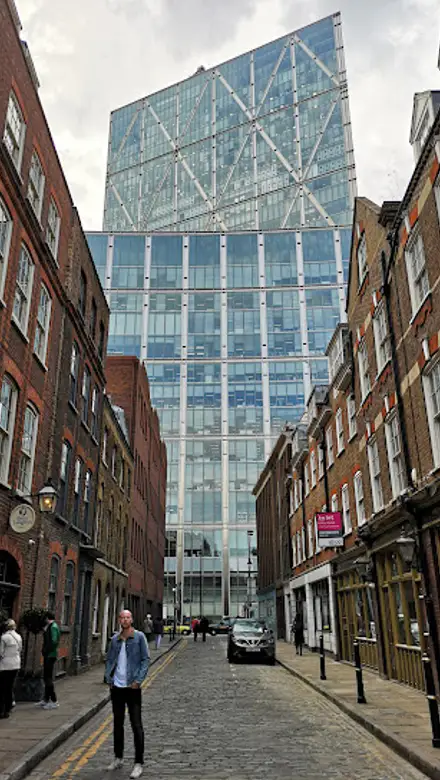
Dennis Severs' House, Middlesex Travel Guide
Step into a candlelit Georgian townhouse and journey through centuries of Spitalfields’ silk-weaving heritage in a uniquely immersive theatrical museum.
Dennis Severs' House is a unique Georgian terraced house museum in London’s East End, transformed into a theatrical time capsule by artist Dennis Severs. Located at 18 Folgate Street, it immerses visitors in the imagined lives of a fictional Huguenot silk-weaving family from 1724 to the early 20th century. Each candle-lit room evokes different historical periods with authentic artifacts, ambient sounds, and evocative scents, offering a sensory journey through the rise and decline of Spitalfields’ silk industry and community.
A brief summary to Dennis Severs' House
- 18 Folgate St, London, E1 6BX, GB
- Click to display
- Click to display
- Duration: 1 to 2 hours
- Mid ranged
-
 Indoor
- Mobile reception: 4 out of 5
- Friday 12 pm-3:15 pm
- Saturday 12 pm-3:15 pm
- Sunday 12 pm-3:15 pm

Know before you go
Hi, I'm Eve. Here are a few practical things to know before exploring Dennis Severs' House.
- Book tickets in advance as visits are by guided tour only and spaces are limited.
- Visit on a Friday or Saturday evening to experience the house’s atmospheric candlelit tours.
- Allow at least 1.5 to 2 hours to fully absorb the sensory experience across all ten rooms.
- Combine your visit with exploring nearby Spitalfields Market and its vibrant cultural scene.
Do you manage this location?
Take control to get all the benefits, like improved information, better appearance, and stronger visibility across AI-powered discovery. Learn more about listing your business on Evendo
Activate your presenceOther nearby places you may find interesting
The closest places of the same kind, if this one is not quite what you had in mind.
Explore Dennis Severs' House on the Map
A handpicked selection of must-see spots near Dennis Severs' House, mapped for you.
Unlock the Best of Dennis Severs' House
Buy tickets
-
No tickets available
Book tours with entry
-
No tours available
Book tours without entry

Getting There
-
Public Transport
Take the London Underground to Liverpool Street Station, approximately a 10-minute walk from the house. Frequent services run on the Central, Circle, Hammersmith & City, and Metropolitan lines. Expect a 5-10 minute wait depending on time of day; no fare surcharge applies beyond standard tube fares.
-
Bus
Several London bus routes stop near Folgate Street, including routes 8, 26, and 67. Buses run every 10-15 minutes during peak hours. A single fare costs £1.75 with an Oyster card or contactless payment.
-
Taxi or Ride-Hailing
A taxi or ride-hailing service from central London takes approximately 15-25 minutes depending on traffic. Fares typically range from £10 to £20. Note that parking in the immediate area is limited and restricted.
-
Walking
If staying nearby in Shoreditch or the City, walking to Dennis Severs' House is feasible and pleasant, taking 15-25 minutes over mostly flat terrain through vibrant urban streets. Suitable for most visitors with moderate mobility.
For the on-the-go comforts that matter to you
-
 Restrooms
-
 Drink Options
-
 Food Options
-
 Information Boards
-
 Seating Areas
Discover more about Dennis Severs' House
Origins and Artistic Vision of Dennis Severs
Dennis Severs, an American artist drawn to London by its famed "English light," purchased the dilapidated Georgian townhouse at 18 Folgate Street in 1979. Rather than restoring it conventionally, he embarked on a decades-long project to create a "still-life drama"—a living theatrical set evoking the lives of a fictional Huguenot silk-weaving family, the Jervises. Severs lived in the house himself, sleeping in each of its ten rooms with only a candle, chamber pot, and bedroll, to intuitively capture the soul of each space. His vision was not historical accuracy but an immersive, emotional experience blending art, history, and storytelling.Immersive Experience Through Time and Senses
The house’s ten rooms are arranged chronologically, spanning from its construction in 1724 through the Victorian era and into the early 20th century. Each room is meticulously furnished with period artifacts, fabrics, and furnishings, enhanced by subtle soundscapes like carriage wheels, distant voices, and ambient noises that deepen the illusion of presence. Scent and lighting play crucial roles, with flickering candles and evocative aromas enveloping visitors. This multisensory approach invites guests to step "through the picture frame" into the imagined daily life, struggles, and fortunes of the Jervis family and the broader Spitalfields community.Historical Context of Spitalfields and the Huguenots
Spitalfields was a thriving center for Huguenot refugees—French Protestant silk weavers fleeing persecution in the 17th century. England welcomed them, and they established a prosperous silk industry here, reflected in the house’s early opulent rooms. Over time, the area’s fortunes waned, especially after the repeal of the French silk import ban, leading to economic decline and poverty. This trajectory is embodied in the house’s upper floors, where rooms show signs of decay and squalor, reflecting the social changes in East London through the centuries.The House as Living Art and Legacy
Dennis Severs’ House is more than a museum; it is a theatrical installation and an artistic legacy. Severs’ partner, Simon Pettet, contributed ceramic works that remain integral to the house’s atmosphere. After Severs’ death in 1999, the Spitalfields Historic Buildings Trust took over stewardship, preserving the house almost exactly as Severs left it. The house continues to captivate visitors by blending history, art, and narrative, offering a rare glimpse into a vanished world through a deeply personal and imaginative lens.Architectural and Cultural Significance
The Grade II listed Georgian townhouse, built circa 1724, is part of a terrace that exemplifies Spitalfields’ architectural heritage. Its painted facade and trellis-patterned window frames are characteristic of the period. The house stands as a cultural landmark, illustrating the layered history of immigration, craftsmanship, and urban transformation in London’s East End. Its preservation and unique presentation highlight the importance of storytelling in heritage conservation.Visitor Experience and Atmosphere
Visitors enter a dimly lit world where silence and subtle sounds create an intimate atmosphere. The house’s ambiance shifts as one ascends, from the warmth and richness of the silk-weavers’ heyday to the starkness and hardship of later eras. The experience is contemplative and evocative, encouraging guests to engage emotionally with history rather than merely observe it. This makes Dennis Severs’ House a singular destination for those interested in art, history, and immersive storytelling.












Your all‑in‑one travel companion app
Explore expert travel guides, compare and book tours, experiences, hotels, and more—all from the palm of your hand. Download now for seamless trip planning wherever your wanderlust takes you.


Explore More of Middlesex
Looking beyond Dennis Severs' House? Discover Middlesex for broader travel guides, local hot-spots, and regional highlights.
Explore Middlesex
Indoor street-food hall on Brick Lane with dozens of traders, casual seating, and easy access to East London’s busiest market streets.

Step into a candlelit Georgian house where history, art, and imagination bring the lives of a Huguenot silk-weaving family vividly to life.