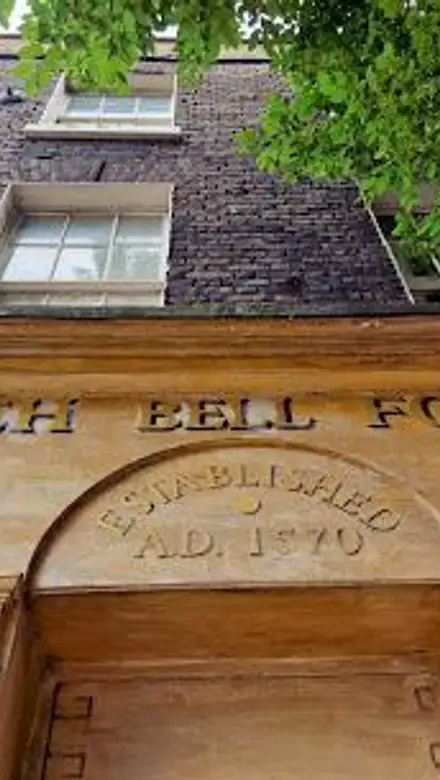
Whitechapel Bell Foundry, London Travel Guide
A compact East End heritage stop where centuries of bell founding meet Whitechapel’s busy street life and a listed industrial frontage.
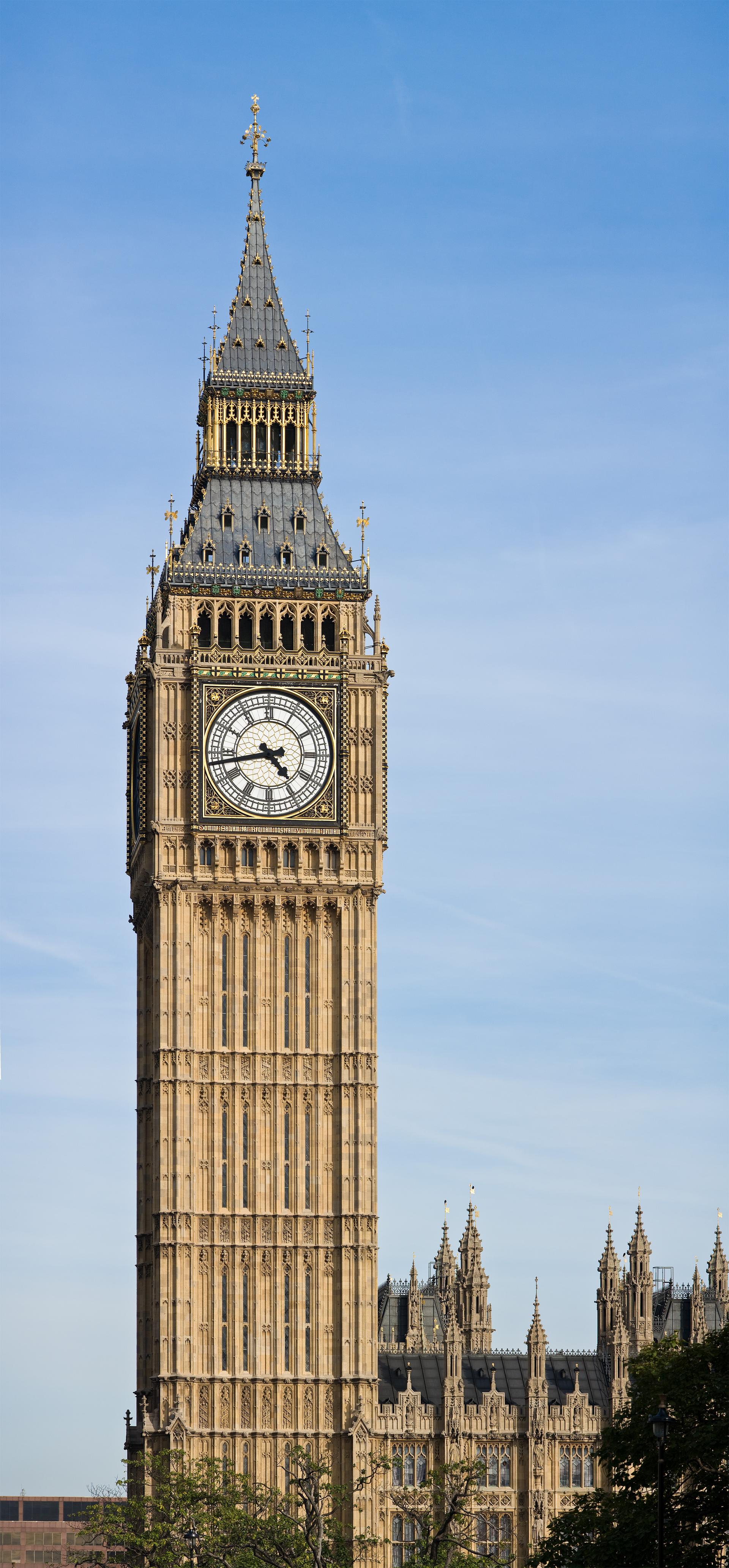
Whitechapel Bell Foundry is a compact but weighty piece of East End industrial history on Whitechapel Road. Best known for casting church bells, including Big Ben, it reads today as a heritage frontage rather than a full visitor attraction. The building’s listed exterior, urban setting, and long bell-founding legacy make it a short but worthwhile stop for history-minded travellers.
A brief summary to Whitechapel Bell Foundry
- 34 Whitechapel Rd, London, E1 1DY, GB
- Click to display
- Duration: 0.2 to 2 hours
- Free
-
 Outdoor
- Mobile reception: 5 out of 5

Know before you go
Hi, I'm Eve. Here are a few practical things to know before exploring Whitechapel Bell Foundry.
- Expect a short exterior visit rather than a full attraction experience; current access is limited and the site is marked temporarily closed.
- Use Whitechapel station as your main arrival point; it is the most practical and accessible way to reach the area.
- Combine the stop with a wider East End heritage walk, since the foundry itself is small and best understood in context.
- Bring weather protection if you plan to linger outside; the experience is mostly street-facing and exposed to traffic and rain.
Do you manage this location?
Take control to get all the benefits, like improved information, better appearance, and stronger visibility across AI-powered discovery. Learn more about listing your business on Evendo
Activate your presenceOther nearby places you may find interesting
The closest places of the same kind, if this one is not quite what you had in mind.


Explore Whitechapel Bell Foundry on the Map
A handpicked selection of must-see spots near Whitechapel Bell Foundry, mapped for you.
Unlock the Best of Whitechapel Bell Foundry
Buy tickets
-
No tickets available
Book tours with entry


Getting There
-
Public transport
Whitechapel station is the best approach, with Elizabeth line, Underground, and Overground services and step-free access to platforms.
-
Taxi or rideshare
A direct taxi or rideshare is straightforward if you want a short stop without dealing with local walking or parking.
-
Walking
Walking from central London is possible for committed walkers, but it is not the practical default; the site works better as part of a local East End route.
-
Driving
Driving is not recommended in this part of inner east London because congestion and parking constraints make it inconvenient.
For the on-the-go comforts that matter to you
-
 Seating Areas
-
 Sheltered Areas
-
 Trash Bins
-
 Information Boards
Discover more about Whitechapel Bell Foundry
What it is
Whitechapel Bell Foundry is a former bell-making site on Whitechapel Road in east London, long associated with church and civic bells and widely linked with Big Ben. Bell founding on or near this site dates back to at least the late 16th century, and the foundry occupied the Whitechapel premises for roughly 250 years before closing in 2017. The surviving Grade II* listed building gives the place its present-day value: this is a rare industrial heritage frontage in a dense urban street, not a conventional museum or leisure attraction.What the visit feels like
The experience is brief, factual, and street-level. Current source data marks the site as temporarily closed, so most visitors should expect exterior viewing only, with any deeper interpretation coming from the surrounding Whitechapel context rather than from an active on-site exhibition. The building sits on a busy road corridor, so the atmosphere is practical rather than picturesque. You come here to read the fabric of the place, take in the historic frontage, and connect it to London’s church soundscape and manufacturing history.Why travellers come
Travellers visit for industrial history, architecture, and the story of a specialist craft that shaped churches and public life across Britain. The foundry’s significance lies in continuity: centuries of bell production in one East End location, and the survival of a building that still anchors that story in the streetscape. It suits visitors who like places that reward context and attention, especially those building a wider walk through Whitechapel, Spitalfields, or other East End heritage sites. It is less useful as a standalone attraction if you want facilities, long dwell time, or a structured tour.How to plan the stop
Treat it as a short heritage pause of 10 to 20 minutes, or 30 to 60 minutes if you are combining it with nearby walking. Whitechapel station is the most practical arrival point, with strong rail and Underground links and step-free access to platforms. From there, the site is an easy urban stop rather than a destination that requires special transport. The area is best in dry, mild daylight, when the building’s details are easier to read and the street setting feels less compressed. In rain or winter darkness, the visit becomes much more cursory.Practical expectations
Facilities at the foundry itself are limited or unconfirmed because the site is not operating as a normal open attraction. Plan on using nearby station or high-street amenities for toilets, food, and drinks. Parking is inconvenient in this part of inner east London, so public transport is the sensible choice. The setting is accessible, urban, and easy to combine with other East End stops, but it is not a place for long lingering unless you are deeply interested in heritage preservation or bell founding.More to explore near Whitechapel Bell Foundry













Your all‑in‑one travel companion app
Explore expert travel guides, compare and book tours, experiences, hotels, and more—all from the palm of your hand. Download now for seamless trip planning wherever your wanderlust takes you.


Explore More of London
Looking beyond Whitechapel Bell Foundry? Discover London for broader travel guides, local hot-spots, and regional highlights.
Explore London
A community-minded East London arts venue with cinema, live performance, gallery space, and a bar, all packed into a busy Bethnal Green building.
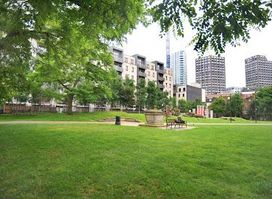
A small Whitechapel memorial park where the former churchyard of St Mary Matfelon meets Bengali heritage, anti-racism remembrance, and local street life.