

Covent Garden (London) Travel Guide - Free
Explore Covent Garden in London with Evendo's free guide. Find the best shops, historic streets, restaurants, and gems on web or mobile.


Covent Garden in London combines its historic piazza, Royal Opera House, market halls, theatres, cafés and lively West End streets for a memorable city visit.
The Piazza and Its Surroundings
Covent Garden occupies a compact, intensely visited part of central London between the Strand, Charing Cross Road and Drury Lane. Its best-known space is Covent Garden Piazza, the former fruit-and-vegetable market whose restored arcades now frame a mixture of craft stalls, cafés, restaurants and visitor-oriented shops. The Apple Market and Jubilee Market give the area a visual focus, while surrounding streets lead towards Seven Dials, Long Acre and the Strand. The district is easy to explore on foot, although its narrow lanes and crowded central spaces can become busy during the day.Read more about Covent Garden
A Neighbourhood Built Around Performance
Markets, Lanes and Everyday City Life
Best attractions in Covent Garden
Covent Garden's principal attraction is its Piazza, where the restored market buildings, Apple Market, Jubilee Market and street performances create the district's most recognisable public scene. The Royal Opera House presents opera and ballet and also contributes to the area's architectural presence, while the London Transport Museum explores the development of London's buses, Underground and wider transport network through substantial collections and interactive displays. St Paul's Church, facing the Piazza, is known as the Actors' Church and provides a more reflective counterpoint to the surrounding crowds. Visitors can browse the lanes towards Neal's Yard, Cecil Court and Seven Dials, where compact courtyards, specialist shops and historic streets offer a change of scale. The Theatre Royal Drury Lane and other nearby West End venues add an evening dimension, although their performances require separate tickets and schedules.
-
Museum
The British Museum
Explore over two million years of human history under one magnificent glass roof in London’s iconic British Museum.
8 min walk · 0.6 km from neighbourhood centre
-
 Plaza
Trafalgar Square
Iconic London square featuring Nelson’s Column, historic lion statues, vibrant events, and the annual Norwegian Christmas tree tradition.
9 min walk · 0.7 km from neighbourhood centre
-
Tourist attraction
Covent Garden
Historic market piazza and cultural hotspot blending world-class theatre, vibrant street life, luxury shopping, and diverse dining in London’s West End.
2 min walk · 0.1 km from neighbourhood centre
-
Art museum
The National Gallery
Discover centuries of European art masterpieces for free at London’s iconic National Gallery in Trafalgar Square.
8 min walk · 0.6 km from neighbourhood centre


Best landmarks in Covent Garden
Covent Garden Piazza is the neighbourhood's defining architectural space, a formal square planned in the seventeenth century around the former market area. Its colonnaded market buildings preserve the commercial character that followed the wholesale trade, although their present uses are largely retail and cultural. St Paul's Church, completed in 1638 to Inigo Jones's design, anchors the western side of the Piazza and is closely associated with actors and theatrical performance. The Royal Opera House forms a major cultural landmark on Bow Street, while the Theatre Royal Drury Lane, rebuilt several times, represents the enduring theatre history of the surrounding district. Smaller features also matter: the lanes of Cecil Court, the courtyard at Neal's Yard and surviving Georgian façades reveal how Covent Garden's identity is built from connected streets and spaces rather than from one isolated monument.
-
Shopping Centre
Covent Garden
London's lively piazza where street performers, historic markets, and West End culture collide in a whirlwind of shopping, shows, and seasonal splendor.
3 min walk · 0.2 km from neighbourhood centre
-
Memorial
Agatha Christie memorial
A striking bronze tribute in Covent Garden celebrating Agatha Christie’s timeless legacy in literature and theatre.
4 min walk · 0.3 km from neighbourhood centre
-
Historical landmark
Eleanor Cross
A Victorian Gothic Revival monument marking the final resting place of Queen Eleanor’s funeral procession, blending medieval legacy with London’s historic heart.
8 min walk · 0.6 km from neighbourhood centre
-
Historical landmark
Historic Seven Dials
Discover Seven Dials, a historic London quarter where seven streets meet at a unique sundial pillar, blending rich heritage with vibrant culture.
2 min walk · 0.2 km from neighbourhood centre


Explore Covent Garden on the map
A handpicked selection of must-see spots in Covent Garden, mapped for you.
Best hotels in Covent Garden
Best restaurants in Covent Garden
Eating in Covent Garden reflects the neighbourhood's role as a theatre quarter, shopping district and long-established market area. The Piazza and surrounding streets contain cafés, bakeries, casual counters and restaurants aimed at visitors and theatre-goers, while Henrietta Street, Floral Street, Long Acre and the lanes around the market offer a broad range of cooking styles. The area's food culture is more varied than a single local speciality: historic associations with produce trading sit alongside contemporary British cooking, international cuisines, coffee shops and quick pre-theatre meals. Market buildings provide informal places to eat, though the busiest periods coincide with shopping hours and theatre performances. For a less concentrated atmosphere, explore the smaller streets towards Seven Dials and Neal's Yard, where independent food businesses sit among fashion, design and specialist retail rather than forming one continuous dining strip.
-
Steak
Flat Iron Covent Garden
Savor expertly crafted flat iron steaks in a historic Covent Garden setting, complete with rustic charm and a signature ice cream treat.
4 min walk · 0.4 km from neighbourhood centre
-
Asian fusion
Inamo Covent Garden
Experience interactive pan-Asian dining with innovative touch-screen tables and a vibrant menu in the heart of Covent Garden.
1 min walk · 0.1 km from neighbourhood centre
-
French
Balthazar
Experience the lively charm of a Parisian brasserie with classic French cuisine in the heart of Covent Garden, London.
3 min walk · 0.3 km from neighbourhood centre
-
Japanese
Flesh & Buns Covent Garden
Lively Japanese izakaya in Covent Garden famed for its signature bao buns, vibrant atmosphere, and innovative pan-Asian small plates.
1 min walk · 0.1 km from neighbourhood centre


Best bars in Covent Garden
Covent Garden's evening life is dominated by theatres, restaurants, wine bars, pubs and cocktail-led venues rather than by a large concentration of nightclubs. The Piazza and streets around Long Acre, Henrietta Street and the Strand remain active after shops close, with audiences moving between the Royal Opera House, Theatre Royal Drury Lane, the Novello Theatre and other West End venues. Historic pub interiors and modern bars cater to pre-theatre drinks and post-performance conversation, while the surrounding theatre district supplies much of the neighbourhood's cultural energy. Nightlife is busiest around performance times and can feel comparatively quiet in the narrower lanes once venues empty. Visitors should check individual theatre and venue arrangements in advance, since schedules, admission policies and late-evening services vary and are not uniform across the district.
-
Wine bar
All Bar One Covent Garden
Stylish Covent Garden wine bar serving shareable plates, extensive wines, and cocktails in a lively West End setting—ideal for pre-theatre drinks or group gatherings.
5 min walk · 0.4 km from neighbourhood centre
-
Pub
Mr Fogg's Tavern
Step into Phileas Fogg's cluttered Covent Garden tavern, where Victorian curiosities, globe-trotting cocktails, and hearty British bites create an intimate escape from the city's hustle.
5 min walk · 0.4 km from neighbourhood centre
-
Bar
Blame Gloria - Covent Garden
Dive into Gloria's basement disco den for neon cocktails, drag-fueled brunches, and 70s fever in Covent Garden's wild underbelly.
4 min walk · 0.3 km from neighbourhood centre
-
Cocktail bar
Dirty Martini - Covent Garden
Glamorous Covent Garden cocktail haven pulsing with martini magic, bottomless brunches, and late-night DJ vibes under sparkling chandeliers.
3 min walk · 0.3 km from neighbourhood centre


Best nightclubs in Covent Garden
Covent Garden's evening life is dominated by theatres, restaurants, wine bars, pubs and cocktail-led venues rather than by a large concentration of nightclubs. The Piazza and streets around Long Acre, Henrietta Street and the Strand remain active after shops close, with audiences moving between the Royal Opera House, Theatre Royal Drury Lane, the Novello Theatre and other West End venues. Historic pub interiors and modern bars cater to pre-theatre drinks and post-performance conversation, while the surrounding theatre district supplies much of the neighbourhood's cultural energy. Nightlife is busiest around performance times and can feel comparatively quiet in the narrower lanes once venues empty. Visitors should check individual theatre and venue arrangements in advance, since schedules, admission policies and late-evening services vary and are not uniform across the district.
-
Nightclub
Zoo Bar & Club
Dive into Leicester Square's edgy nightlife hub: two floors of R&B beats, sports screens, and wild energy until 3am at Zoo Bar & Club.
6 min walk · 0.5 km from neighbourhood centre
-
Nightclub
Bunga Bunga Covent Garden
A neon-soaked, pizza-and-karaoke supper club under Drury Lane — 90s nostalgia, stage shows and shareable Italian feasts.
2 min walk · 0.2 km from neighbourhood centre
-
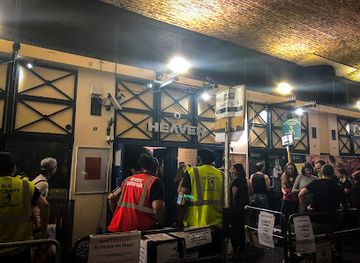
Gay night club
Heaven
London's legendary gay superclub under Charing Cross arches, pulsing with pop anthems, drag stars, and four decades of queer nightlife energy.
8 min walk · 0.7 km from neighbourhood centre
-
Nightclub
The Ivy Club
Art-Deco‑tinged members’ club above The Ivy — piano bars, discreet private dining and polished West End glamour.
4 min walk · 0.3 km from neighbourhood centre



Best shops in Covent Garden
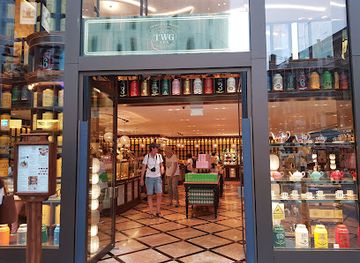
Shopping in Covent Garden combines visitor-focused market retail with established West End streets and smaller specialist businesses. The Apple Market and Jubilee Market offer changing selections of craft goods, design items, souvenirs and other stall-based merchandise, while Long Acre and Neal Street are associated with mainstream fashion, footwear and beauty shops. Floral Street adds design-conscious retail, and Cecil Court is known for its compact bookselling and specialist character just beyond the Piazza. Neal's Yard provides a small courtyard setting with independent food, wellness and lifestyle businesses. The area's retail identity is therefore mixed rather than purely traditional: historic market architecture frames contemporary brands, while the lanes towards Seven Dials offer a more intimate scale. Stock, stallholders and opening arrangements change, so the market experience is best understood as part of the neighbourhood's commercial atmosphere rather than a fixed catalogue of shops.
-
Gift shop
M&M'S London
A four‑floor candy theatre in Leicester Square where colour, souvenirs and photo ops collide in a sugar-saturated spectacle.
8 min walk · 0.6 km from neighbourhood centre
-
Comic book shop
Forbidden Planet London Megastore
London's ultimate megastore for comics, sci-fi treasures, fantasy realms, and pop culture icons—where every aisle unleashes epic adventures.
3 min walk · 0.2 km from neighbourhood centre
-
Gift shop
The Moomin Shop London
Step into Tove Jansson's whimsical Moominvalley at this Covent Garden gem, brimming with plush toys, books, homeware, and Moomintroll meet-and-greets for pure nostalgic delight.
3 min walk · 0.3 km from neighbourhood centre
-
Vintage Clothing Shop
Rokit Covent Garden
Dive into retro treasures at Rokit Covent Garden, where sustainable vintage fashion meets London's vibrant street style heritage on Shelton Street.
1 min walk · 0.1 km from neighbourhood centre


Covent Garden essentials
Getting There
Getting Around
Safety
Emergency Situations
Do's and Don'ts
Local Tips

From Eve
Local phrases worth knowing
You don't need to get them perfect. A few words go a long way, and locals appreciate the effort.
Basics
| English | Local | Say it |
|---|---|---|
| Hello | Alright mate | [al-rite mate] |
| Goodbye | Ta-ra | [ta-ra] |
| Yes | Aye | [ay] |
| No | Nah | [nah] |
| Please/You're welcome | Ta/No worries | [ta/no wuh-reez] |
| Thank you | Cheers | [cheers] |
| Excuse me/Sorry | Pardon/Soz | [par-dun/soz] |
| How are you? | You alright? | [yoo al-rite] |
| Fine. And you? | Sound. You? | [sownd. yoo] |
| Do you speak English? | You speak English? | [yoo speek ing-glish] |
| I don't understand | I ain't got a scooby | [I aint got a scoo-bee] |
Eating & Drinking
| English | Local | Say it |
|---|---|---|
| I'd like to see the menu, please | Can I see the menu, please | [kan I see the menu, please] |
| I don't eat meat | I'm veggie | [I'm ved-jee] |
| Cheers! | Cheers! | [cheers] |
| I would like to pay, please | Can I pay, please | [kan I pay, please] |
Emergencies
| English | Local | Say it |
|---|---|---|
| Help! | Help! | [help] |
| Go away! | Sod off! | [sod off] |
| Call the Police! | Ring the Old Bill! | [ring the old bill] |
| Call a doctor! | Get a doc! | [get a doc] |
| I'm lost | I'm lost | [I'm lost] |
| I'm ill | I'm poorly | [I'm poor-lee] |
Shopping
| English | Local | Say it |
|---|---|---|
| I'd like to buy... | I wanna buy... | [I wanna buy] |
| I'm just looking | Just browsing | [just brows-ing] |
| How much is it? | How much? | [how much] |
| That's too expensive | That's a rip off | [that's a rip off] |
| Can you lower the price? | Can you do it cheaper? | [kan yoo do it chee-per] |
Time & Numbers
| English | Local | Say it |
|---|---|---|
| What time is it? | What's the time? | [whats the time] |
| It's one o'clock | It's one | [its one] |
| Half past (10) | Half ten | [half ten] |
| Morning | Morning | [morning] |
| Afternoon | Afternoon | [afternoon] |
| Evening | Evenin' | [evenin] |
| Yesterday | Yesterday | [yest-uh-day] |
| Today | Today | [to-day] |
| Tomorrow | Tomorra | [tom-or-ra] |
| 1 | One | [wun] |
| 2 | Two | [too] |
| 3 | Three | [three] |
| 4 | Four | [four] |
| 5 | Five | [five] |
| 6 | Six | [six] |
| 7 | Seven | [seven] |
| 8 | Eight | [eight] |
| 9 | Nine | [nine] |
| 10 | Ten | [ten] |
Transport & Directions
| English | Local | Say it |
|---|---|---|
| Where's a/the...? | Where's the...? | [wheres the] |
| What's the address? | What's the addy? | [whats the addy] |
| Can you show me (on the map)? | Can you point it out? | [kan yoo point it out] |
| When's the next (bus)? | When's the next bus? | [whens the next bus] |
| A ticket (to ....) | A ticket to... | [a ticket to] |
History of Covent Garden
From Convent Garden to Market
The name Covent Garden derives from the medieval garden belonging to the convent of St Peter, Westminster, whose religious house held land here before the Reformation. After the dissolution of the monasteries in the sixteenth century, the area passed into private ownership and gradually became associated with market gardening. Its position west of the City allowed produce to be brought into London, and the name survived in altered form as the district grew. The market's role was not simply commercial: it shaped the street pattern, attracted workers and traders, and established the association between this part of London and the buying, selling and distribution of food.
Inigo Jones and the Piazza
In the 1630s, the fourth Earl of Bedford commissioned Inigo Jones to plan a residential square on the former garden land. Inspired by Italian urban design, Jones created the Piazza and the first English square deliberately planned around a formal open space. St Paul's Church was completed in 1638 as part of the scheme, while houses and arcades developed around it. The design gave Covent Garden an architectural identity that still survives, even though later rebuilding altered many façades. The square also helped establish the neighbourhood as a fashionable residential and commercial quarter at the western edge of the expanding city.
Theatre and Commercial Expansion
Covent Garden's theatrical identity strengthened after the establishment of theatres in the surrounding area, including the Theatre Royal at Drury Lane and the opera house that became the Royal Opera House. The market expanded through successive buildings as London's population grew, eventually becoming one of the capital's principal wholesale fruit, vegetable and flower markets. Coffee houses, shops, workshops and entertainment venues filled the nearby streets, creating a mixed district where commerce and performance operated side by side. Covent Garden's reputation became closely linked both to the theatre world and to the noise, labour and early-morning trade of its market.
Relocation and Conservation
By the twentieth century, congestion and changing distribution methods made the central market increasingly difficult to operate. The wholesale market moved to Nine Elms in 1974, leaving the historic buildings and Piazza facing an uncertain future. Proposals for large-scale redevelopment prompted a major campaign to preserve the area, and Covent Garden was subsequently adapted for retail, food and cultural uses rather than cleared. This transition changed the local economy and intensified visitor activity, while conservation ensured that the Piazza, market structures and surrounding historic streets remained legible within modern central London.
Covent Garden in Photos
Browse through our photo collection highlighting the charm and character of the destination.
Neighbourhoods near Covent Garden
The closest neighbourhoods to Covent Garden, if you have time for more than one stop.
-

-

-

-

-


Swipe for more neighbourhoods
Explore more

Explore more of London
London combines royal landmarks, world-class museums, historic neighbourhoods, theatre, markets and diverse dining along the River Thames for rich urban exploration.
Explore London