

Kensington (London) Travel Guide - Free
Explore Kensington in London with Evendo's free guide. Find the best shops, historic streets, restaurants, and gems on web or mobile.


Kensington, London: explore royal museums, Victorian streets, garden squares, palace history, independent cafés and cultural attractions in one elegant district.
Royal Kensington and Its Gardens
Kensington occupies a broad stretch of west-central London, extending from the palace and parkland around Kensington Palace towards South Kensington's museums and the commercial sweep of Kensington High Street. Its identity is shaped by royal connections, formal garden squares, grand Victorian architecture and a remarkable concentration of cultural institutions. The area can feel composed and residential in one street, then richly monumental in the next, particularly around Kensington Gardens, Exhibition Road and the Albert Hall.Read more about Kensington
Museums and Cultural Architecture
Streets, Squares and Local Life
Best attractions in Kensington
Kensington's principal attractions form an unusually concentrated cultural landscape. Kensington Palace introduces the area's royal history, with state rooms and exhibitions set within Kensington Gardens, while the gardens themselves lead towards the Albert Memorial and Royal Albert Hall. South Kensington's museum quarter brings together the Victoria and Albert Museum, Natural History Museum and Science Museum, each offering a different route into art, design, natural history, technology and scientific discovery. Exhibition Road is itself part of the experience, linking major institutions through a grand civic setting. In western Kensington, Holland Park provides a change of pace with lawns, woodland paths, formal gardens and the Kyoto Garden, while the Design Museum on Kensington High Street adds a contemporary perspective. Kensington Church Street and the residential garden squares are less formal attractions, but they reward unhurried walks through older architecture, galleries and independent businesses.
-
 Art museum
Victoria and Albert Museum
Explore 5,000 years of global art, design, and creativity in London’s iconic Victoria and Albert Museum, home to over 2.8 million objects.
5 min drive · 1.5 km from neighbourhood centre
-
Museum
Science Museum
Explore centuries of scientific breakthroughs and interactive wonders at London’s iconic Science Museum in South Kensington.
15 min walk · 1.2 km from neighbourhood centre
-
Park and Garden
Kensington Gardens
Tranquil royal gardens in central London blending historic grandeur, iconic landmarks, and serene green spaces for all to enjoy.
14 min walk · 1.1 km from neighbourhood centre
-
Museum
Natural History Museum
Discover 4.5 billion years of Earth’s story through iconic fossils, immersive galleries, and stunning Victorian architecture at London’s Natural History Museum.
16 min walk · 1.2 km from neighbourhood centre


Best landmarks in Kensington
Kensington Palace is the area's defining historic landmark, a royal residence whose evolution from Nottingham House shaped Kensington's status and surrounding landscape. Kensington Gardens contains the Albert Memorial, an elaborate Victorian monument commemorating Prince Albert, and provides the setting for the palace and the broad ceremonial approach to the Royal Albert Hall. The hall itself is one of London's most recognisable concert buildings and remains a working performance venue rather than merely a historic façade. South Kensington's museum buildings form another landmark group: the ornate Romanesque architecture of the Natural History Museum, the Victoria and Albert's galleries and the Science Museum collectively express the Victorian ambition to bring art, science and education to the public. In western Kensington, the former Commonwealth Institute building, now home to the Design Museum, represents a later chapter in the area's cultural architecture.
-
Historical landmark
The Tower House
Explore The Tower House, a Victorian Gothic Revival jewel in London, famed for its striking tower, rich symbolism, and artistic legacy.
9 min walk · 0.7 km from neighbourhood centre
-
Historical landmark
Béla Bartók Memorial
Celebrate the legacy of Béla Bartók, the Hungarian composer and ethnomusicologist, through this evocative bronze memorial in London’s South Kensington.
5 min drive · 1.6 km from neighbourhood centre
-
Historical landmark
Kensington War Memorial
A solemn gothic cross memorial honoring Kensington’s fallen soldiers, set beside the historic St Mary Abbots Church.
2 min walk · 0.1 km from neighbourhood centre
-
Historical landmark
Empire House
Historic Edwardian landmark in South Kensington offering luxurious apartments near London’s premier cultural and shopping districts.
5 min drive · 1.7 km from neighbourhood centre


Explore Kensington on the map
A handpicked selection of must-see spots in Kensington, mapped for you.
Best hotels in Kensington
Best restaurants in Kensington
Kensington's dining scene reflects its museums, international residents, hotels and affluent residential streets rather than one narrowly defined cuisine. Around South Kensington and Gloucester Road, visitors find cafés, bakeries and restaurants serving European, Middle Eastern, Indian, Italian and other international food, making the area practical for a meal between museum visits. Kensington High Street offers a mixture of established dining rooms, casual chains and independent cafés, while Kensington Church Street has a more village-like selection of restaurants and food shops. Hotel dining is also a visible part of the neighbourhood, particularly around the larger cultural institutions and transport corridors. Pubs and traditional British menus appear alongside contemporary restaurants, but prices and styles vary considerably by street. For a less commercial pause, the neighbourhood's cafés and bakeries are useful in the morning, while the area's food markets and specialist shops are better treated as local retail experiences than as a single permanent market destination.
-
Indian
Dishoom Kensington
Experience the vibrant flavours and Art Deco charm of Bombay’s iconic Irani cafés at Dishoom Kensington, London’s stylish Indian dining destination.
1 min walk · 0.1 km from neighbourhood centre
-
British
The Ivy Kensington Brasserie
Classic British brasserie charm meets lively Kensington atmosphere in this elegant all-day dining hotspot on High Street.
1 min walk · 0.1 km from neighbourhood centre
-
Latin American
Zuaya London
Discover modern Latin American cuisine with vibrant flavors, stylish ambiance, and exceptional cocktails in the heart of Kensington.
3 min walk · 0.3 km from neighbourhood centre
-
Italian
Spaghetti House Italian Restaurant Kensington High Street
Authentic Italian flavors and cozy charm await at Spaghetti House on Kensington High Street, perfect for casual dining in central London.
4 min walk · 0.3 km from neighbourhood centre


Best bars in Kensington
Kensington is not primarily a clubbing district, and its evenings are generally shaped by restaurants, hotel bars, traditional pubs and performances rather than late-night venues. The Royal Albert Hall creates the neighbourhood's most distinctive after-dark rhythm, bringing concert audiences to the streets around Kensington Gore, while cultural events at the museums and nearby institutions can extend the area's daytime character into the evening. Kensington High Street and Gloucester Road have the broadest selection of places for a drink, with quieter pubs and polished bars mixed among restaurants. South Kensington is sociable after work and after museum visits but tends to become calmer away from the main roads. Visitors seeking a large concentration of nightclubs will find more choice in central London districts beyond Kensington, while those staying locally can expect a measured evening atmosphere and should be considerate near residential terraces.
-
Pub
The Churchill Arms, Kensington
London's floral-festooned pub icon: Churchill memorabilia, pioneering Thai eats, and blooming facades since 1750 in vibrant Kensington.
8 min walk · 0.6 km from neighbourhood centre
-
Pub
The Hereford Arms, South Kensington
Victorian South Kensington pub pouring Fuller's ales, serving refined classics like cod and cottage pie amid Hitchcock charm and Ripper lore.
15 min walk · 1.2 km from neighbourhood centre
-
Pub
The Builders Arms
A classic Kensington pub with cosy period character, modern British comfort food and a lively, neighbourhood atmosphere.
5 min walk · 0.4 km from neighbourhood centre
-
Pub
Prince of Wales
A cosy Kensington pub of warm wood, classic pints and a surprising Thai menu tucked behind a Victorian façade.
2 min walk · 0.2 km from neighbourhood centre


Best nightclubs in Kensington
Kensington is not primarily a clubbing district, and its evenings are generally shaped by restaurants, hotel bars, traditional pubs and performances rather than late-night venues. The Royal Albert Hall creates the neighbourhood's most distinctive after-dark rhythm, bringing concert audiences to the streets around Kensington Gore, while cultural events at the museums and nearby institutions can extend the area's daytime character into the evening. Kensington High Street and Gloucester Road have the broadest selection of places for a drink, with quieter pubs and polished bars mixed among restaurants. South Kensington is sociable after work and after museum visits but tends to become calmer away from the main roads. Visitors seeking a large concentration of nightclubs will find more choice in central London districts beyond Kensington, while those staying locally can expect a measured evening atmosphere and should be considerate near residential terraces.
-
Club
Dolce Night Club , London
Elite VIP nightclub in South Kensington blending luxurious design, R&B beats, and high-end cocktails for unforgettable weekend revelry.
18 min walk · 1.4 km from neighbourhood centre
-
Nightclub
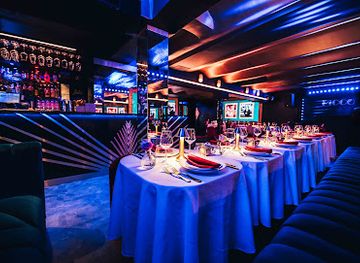
Ricco London
Descend into art deco glamour at Ricco London, where live cabaret, Mediterranean bites, and cocktails fuel unforgettable nights in Kensington Olympia's hidden basement lounge.
16 min walk · 1.3 km from neighbourhood centre
-
Night Club
B London
Dive into South Kensington's electric nightlife at B London, where sophisticated beats and stylish crowds fuel unforgettable nights from 9pm till dawn.
18 min walk · 1.4 km from neighbourhood centre
-
Night Club
Metric
A compact, collegiate nightclub beneath Imperial College’s Beit Quadrangle — lively student nights, intimate dancefloor and a campus-centred party vibe.
13 min walk · 1.0 km from neighbourhood centre



Best shops in Kensington
Shopping in Kensington ranges from major high-street retail to specialist and independent businesses. Kensington High Street is the main commercial spine, with fashion, beauty, homeware, cafés and everyday services extending between High Street Kensington and the western side of the neighbourhood. Kensington Church Street offers a more distinctive browse, particularly for antiques, decorative arts, galleries and smaller independent shops, while Gloucester Road and the streets around South Kensington combine food shops, cafés, bookshops and practical retail aimed at residents and museum visitors. The area is not primarily a market quarter, so shoppers should not expect one central bazaar; its appeal lies in the contrast between established shops, specialist dealers and the polished convenience of the high street. Independent retailers are especially useful for seeing Kensington's older commercial character, while the museum shops provide design, art and science-related gifts linked to the neighbourhood's cultural institutions.
-
Gift shop
Science Museum Shop
Ignite curiosity with science-inspired gifts, gadgets, and toys at this inventive shop inside London's Science Museum – perfect for all ages.
17 min walk · 1.3 km from neighbourhood centre
-
Clothing Shop
Urban Outfitters
Trendy threads and eclectic home vibes on London's iconic Kensington High Street – Urban Outfitters delivers boho-chic shopping with a creative edge.
3 min walk · 0.3 km from neighbourhood centre
-
Gift shop
Kensington Palace Shop
Discover regal treasures at Kensington Palace Shop: fine china, jewellery, and exclusive souvenirs inspired by centuries of royal elegance in London's premier palace grounds.
7 min walk · 0.6 km from neighbourhood centre
-
Charity shop
Oxfam Shop - Kensington High Street
Unearth ethical treasures on Kensington High Street at this vibrant Oxfam shop, where second-hand style funds global change amid London's posh shopping scene.
5 min walk · 0.4 km from neighbourhood centre


Kensington essentials
Getting There
Getting Around
Safety
Emergency Situations
Do's and Don'ts
Local Tips

From Eve
Local phrases worth knowing
You don't need to get them perfect. A few words go a long way, and locals appreciate the effort.
Basics
| English | Local | Say it |
|---|---|---|
| Hello | Allo | [ah-loh] |
| Goodbye | Ta-ra | [tah-rah] |
| Yes | Aye | [eye] |
| No | Nah | [nah] |
| Please/You're welcome | Please/You're welcome | [please/your welcome] |
| Thank you | Cheers | [cheers] |
| Excuse me/Sorry | Sorry | [saw-ree] |
| How are you? | How are you? | [how are you?] |
| Fine. And you? | Fine. And you? | [fine. and you?] |
| Do you speak English? | Do you speak English? | [do you speak english?] |
| I don't understand | I don't understand | [i dont under-stend] |
Eating & Drinking
| English | Local | Say it |
|---|---|---|
| I'd like to see the menu, please | I'd like to see the menu, please | [id like to see the menu, please] |
| I don't eat meat | I don't eat meat | [i dont eat meet] |
| Cheers! | Cheers! | [cheers!] |
| I would like to pay, please | I would like to pay, please | [i would like to pay, please] |
Emergencies
| English | Local | Say it |
|---|---|---|
| Help! | Help! | [help!] |
| Go away! | Go away! | [go away!] |
| Call the Police! | Call the Police! | [call the police!] |
| Call a doctor! | Call a doctor! | [call a doctor!] |
| I'm lost | I'm lost | [im lost] |
| I'm ill | I'm ill | [im ill] |
Shopping
| English | Local | Say it |
|---|---|---|
| I'd like to buy... | I'd like to buy... | [id like to buy] |
| I'm just looking | I'm just looking | [im just looking] |
| How much is it? | How much is it? | [how much is it?] |
| That's too expensive | That's too expensive | [thats too expensive] |
| Can you lower the price? | Can you lower the price? | [can you lower the price?] |
Time & Numbers
| English | Local | Say it |
|---|---|---|
| What time is it? | What time is it? | [what time is it?] |
| It's one o'clock | It's one o'clock | [its one oh-clock] |
| Half past (10) | Half past (10) | [half past ten] |
| Morning | Morning | [morning] |
| Afternoon | Afternoon | [after-noon] |
| Evening | Evening | [ee-ven-ing] |
| Yesterday | Yesterday | [yes-ter-day] |
| Today | Today | [toh-day] |
| Tomorrow | Tomorrow | [toh-mor-row] |
| 1 | One | [wun] |
| 2 | Two | [too] |
| 3 | Three | [three] |
| 4 | Four | [four] |
| 5 | Five | [five] |
| 6 | Six | [six] |
| 7 | Seven | [sev-en] |
| 8 | Eight | [ate] |
| 9 | Nine | [nine] |
| 10 | Ten | [ten] |
Transport & Directions
| English | Local | Say it |
|---|---|---|
| Where's a/the...? | Where's a/the...? | [wheres a/the?] |
| What's the address? | What's the address? | [whats the address?] |
| Can you show me (on the map)? | Can you show me (on the map)? | [can you show me (on the map)?] |
| When's the next (bus)? | When's the next (bus)? | [whens the next (bus)?] |
| A ticket (to ....) | A ticket (to ....) | [a ticket (to)] |
History of Kensington
A Medieval Village West of London
Kensington began as a settlement separate from London, recorded in medieval sources as Chenesitun or a related form of the name. Its early landscape was rural, with farmland, lanes and manorial land west of the growing capital. The parish church and village centre developed around what is now Kensington Church Street, while the area's position on routes between London and settlements to the west gradually gave it greater importance. Kensington remained distinct from the city in character for centuries, although its proximity to London exposed it to expanding property development and increasing movement along the western roads.
Kensington Palace and Royal Influence
The neighbourhood's royal association strengthened after Nottingham House was acquired for William III and Mary II in 1689 and remodelled as Kensington Palace. The court brought status, building activity and improved connections to London, while Kensington Gardens was shaped as a formal royal landscape beside Hyde Park. The palace remained an important royal residence through the eighteenth and nineteenth centuries, and its presence influenced the area's social standing. Many later streets and terraces were developed within a landscape already associated with court life, fashionable residence and carefully planned open space.
Victorian Expansion and the Great Exhibition
Kensington changed rapidly during the nineteenth century as London expanded westwards and new villas, terraces, institutions and transport links transformed former fields. The 1851 Great Exhibition in neighbouring Hyde Park generated the cultural and educational ambitions that shaped South Kensington. Profits from the exhibition helped establish institutions including the South Kensington Museum, now the Victoria and Albert Museum, while the Natural History Museum and Science Museum followed within the developing cultural quarter. The Royal Albert Hall, opened in 1871, and the Albert Memorial completed a monumental Victorian ensemble around the memory of Prince Albert and the ideals of art, science and industry.
Museums, Modernisation and a Changing High Street
During the twentieth century Kensington's museums, concert hall, royal parkland and educational institutions consolidated its role as one of London's major cultural districts. Bomb damage and post-war change affected parts of the wider area, while later decades brought alterations to Kensington High Street, new commercial development and the renewal of museums and public spaces. The opening of the Design Museum in the former Commonwealth Institute building added a modern cultural focus in the western part of Kensington. Today the neighbourhood still combines affluent residential streets and historic institutions with visitor-heavy museum zones, independent retail and the continuing presence of Kensington Palace and its gardens.
Kensington in Photos
Browse through our photo collection highlighting the charm and character of the destination.
Neighbourhoods near Kensington
The closest neighbourhoods to Kensington, if you have time for more than one stop.
-

-

-

-

-


Swipe for more neighbourhoods
Explore more

Explore more of London
London combines royal landmarks, world-class museums, historic neighbourhoods, theatre, markets and diverse dining along the River Thames for rich urban exploration.
Explore London