

The Columbia Basin, Washington Travel Guide
Discover the Columbia Basin in Washington, a picturesque region with stunning landscapes, rich history, and abundant recreational activities for every traveler.
The Columbia Basin in Washington is a stunning region filled with natural beauty, diverse wildlife, and rich history. Located in the heart of the Pacific Northwest, this area is known for its vast landscapes, including rolling hills, fertile farmlands, and scenic river valleys. The Columbia River, one of the most significant rivers in North America, flows majestically through the basin, providing breathtaking views and endless recreational opportunities. Visitors to the Columbia Basin can explore numerous state parks, nature reserves, and hiking trails. One of the highlights is the Columbia National Wildlife Refuge, which offers excellent bird watching, fishing, and photography opportunities. The basin is also home to the Hanford Reach National Monument, where you can discover unique geological formations and ancient Native American petroglyphs. In addition to its natural attractions, the Columbia Basin has a rich agricultural heritage. The region is a major producer of apples, cherries, and wine grapes, making it a perfect destination for food and wine enthusiasts. Tour local wineries and orchards, and enjoy farm-to-table dining experiences that showcase the area's fresh produce. Whether you're seeking outdoor adventure, cultural experiences, or simply a peaceful retreat, the Columbia Basin has something to offer every traveler.

Know before you go
Hi, I'm Eve. Here are a few practical things to know before exploring The Columbia Basin.
- Visit during spring or fall for the best weather and fewer crowds.
- Bring binoculars for bird watching at the Columbia National Wildlife Refuge.
- Take a guided tour of the Hanford Reach National Monument to learn about its historical significance.
- Don't miss the local farmers' markets for fresh produce and handmade goods.
- Plan a wine tasting tour to explore the region's renowned vineyards.
Top City Travel Guides in The Columbia Basin
The cities of The Columbia Basin, and the easiest places to base yourself.

Explore The Columbia Basin: Things to Do, Places to Eat, Hotels & More
Handpicked recommendations for top attractions, local dining, accommodations, and more

Top Attractions & Sightseeing in The Columbia Basin
Top-rated picks
Best Attractions

Space Needle
Experience breathtaking panoramic views and iconic Seattle skyline at the Space Needle, a must-visit observation deck and tourist attraction.

Chihuly Garden and Glass
Explore the mesmerizing world of Dale Chihuly at Chihuly Garden and Glass, where vibrant glass sculptures blend seamlessly with stunning gardens in Seattle.

Columbia River Gorge National Scenic Area
Discover the breathtaking beauty and adventure of the Columbia River Gorge National Scenic Area, a paradise for hikers and nature lovers in Oregon.

Fremont Troll
Explore the whimsical Fremont Troll, a giant sculpture capturing the quirky spirit of Seattle, nestled under the Aurora Bridge in the vibrant Fremont neighborhood.

Best landmarks in The Columbia Basin
Top-rated picks
Best Landmarks

Columbia River Gorge National Scenic Area
Discover the breathtaking Columbia River Gorge National Scenic Area in Oregon, a paradise for outdoor enthusiasts and nature lovers alike.
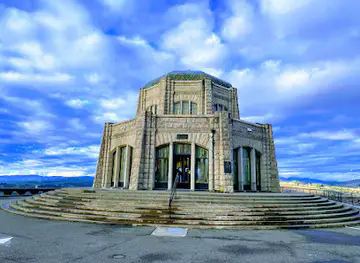
Vista House at Crown Point
Discover the breathtaking views and rich history at Vista House, a captivating landmark overlooking the stunning Columbia River Gorge.

Columbia State Historic Park
Discover the rich history of California's Gold Rush at Columbia State Historic Park, where the past meets scenic beauty and engaging experiences.
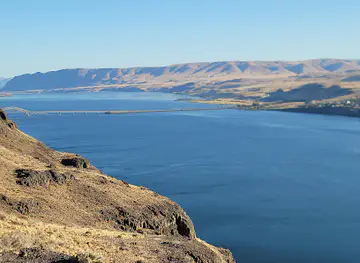
Scenic Overlook of the Columbia River
Experience the stunning vistas of the Columbia River at this scenic overlook, a natural gem in Quincy, Washington, perfect for relaxation and photography.

Best restaurants in The Columbia Basin
Top-rated picks
Best Restaurants

Anthony's at Columbia Point
Savor exquisite seafood dishes while enjoying breathtaking views at Anthony's at Columbia Point in Richland, WA.

Andy's North
Savor delicious breakfasts at Andy's North in Pasco - where comfort food meets cozy ambiance!

Cliff House Restaurant
Experience fine American dining at Cliff House Restaurant in Tacoma with stunning views of the Puget Sound.

Tulio
Discover the exquisite Italian dining experience at Tulio in Seattle's Central Business District - perfect for breakfast, brunch, or dinner.

Best bars in The Columbia Basin
Top-rated picks
Best Bars

Old Stove Brewing Co — Pike Place
Experience the essence of Seattle at Old Stove Brewing Co, a brewpub in Pike Place Market serving craft beers and delicious local cuisine.

Unicorn
Experience the magic of Unicorn Bar in Seattle's Capitol Hill – a whimsical dining and nightlife destination with unique food and drink offerings.

Victoria Gastro Pub
Savor the best of American cuisine and craft beverages at Victoria Gastro Pub in Columbia, MD, where great food meets a vibrant atmosphere.

The Brick Saloon
Discover the historic charm and vibrant atmosphere of The Brick Saloon in Roslyn, WA, where delicious food and crafted drinks await.

Best nightclubs in The Columbia Basin
Top-rated picks
Best Nightclubs

Monkey Loft
Discover Monkey Loft, Seattle's ultimate lounge and nightclub, where eclectic music and vibrant nightlife create unforgettable experiences.

Sarajevo Nightclub
Discover the pulsating energy and vibrant culture of Sarajevo Nightclub, a top nightlife destination in Seattle's Belltown district.

Vue Lounge
Unwind and dance the night away at Vue Lounge, Seattle's premier nightlife destination, complete with stunning skyline views and a vibrant atmosphere.

Trinity
Discover the electrifying nightlife at Trinity Nightclub in Seattle's Pioneer Square, where music and energy unite for an unforgettable experience.

Best shops in The Columbia Basin
Top-rated picks
Best Shops

Westfield Southcenter
Discover Westfield Southcenter, Seattle's largest shopping mall, featuring diverse stores, dining options, and entertainment for an unforgettable experience.

Seattle Premium Outlets
Explore unbeatable deals and a vast selection of brands at Seattle Premium Outlets, a premier shopping destination in Washington.

Columbia Center
Explore Columbia Center in Kennewick, WA – a shopping paradise with diverse stores, delightful dining, and vibrant community events.

Ye Olde Curiosity Shop
Explore Ye Olde Curiosity Shop in Seattle for an unforgettable blend of unique gifts, local history, and eclectic curiosities.

Explore The Columbia Basin on the Map
A handpicked selection of must-see spots in The Columbia Basin, mapped for you.
The Columbia Basin Essentials
-
The Columbia Basin is located in Washington State, USA. The nearest major airports are Spokane International Airport (GEG) and Seattle-Tacoma International Airport (SEA). From Spokane, you can drive to the Columbia Basin in about 1-2 hours, while from Seattle it takes approximately 3-4 hours by car. Alternatively, you can take a bus or train to nearby cities like Moses Lake or Wenatchee and then use local transportation options.
-
Within the Columbia Basin, a car is the most convenient way to get around, especially if you plan to visit multiple sites. Car rentals are available at major airports and in larger towns. Public transportation options such as buses are limited but available in some cities like Moses Lake. Biking is also popular for shorter distances and offers a scenic way to explore the area.
-
The official currency is the US Dollar (USD). Credit and debit cards are widely accepted in most places, but it's advisable to carry some cash for smaller establishments and rural areas. ATMs are available in larger towns and cities within the Columbia Basin.
-
The Columbia Basin is generally a safe place to visit. However, standard precautions should be taken. Areas with higher crime rates targeting tourists are rare, but it is wise to stay vigilant, especially in larger cities and during nighttime. Keep your belongings secure and avoid walking alone in unfamiliar areas after dark.
-
In case of emergency, dial 911 for police, fire, or medical assistance. Major towns and cities have hospitals and clinics for medical emergencies. It's advisable to have travel insurance that covers medical emergencies. For minor health issues, pharmacies are available in most towns.
-
Fashion: Do dress in layers as the weather can be unpredictable. Casual attire is generally acceptable. Avoid very revealing clothing. Religion: Do respect local places of worship. Public Transport: Do be courteous and offer seats to elderly or disabled passengers. Don't eat or drink on public transport. Greetings: Do greet people with a friendly 'hello' or a handshake. Eating & Drinking: Do try local specialties like fresh produce and wines. Don't waste food, as it is considered impolite.
-
To experience the Columbia Basin like a local, visit farmers' markets for fresh produce and local crafts. Engage with locals who are often friendly and eager to share their knowledge about the area. Don't miss exploring the Grand Coulee Dam, the Columbia River, and various state parks for breathtaking views and outdoor activities. For a unique experience, consider a guided fishing trip or a wine-tasting tour in local vineyards.
When is the best time to visit The Columbia Basin?
Useful Local Phrases for The Columbia Basin
You don't need to speak the language perfectly. Even learning a few simple words can make conversations warmer—and locals usually appreciate the effort.
— Eve

Here are the phrases I use most often in The Columbia Basin. Try a few—you'll be surprised how far they go! 😊
❤️
-
- HelloHey there
[Hey thair] - GoodbyeSee you later
[See yuh lay-tur] - YesYou bet
[Yuh bet] - NoNah
[Nah] - Please/You're welcomeNo problem
[No prob-lum] - Thank youThanks a lot
[Thangs a lot] - Excuse me/SorryPardon me
[Par-dun mee] - How are you?How's it going?
[How's it goin'?] - Fine. And you?Good. And you?
[Good. An' yuh?] - Do you speak English?You speak English?
[Yuh speak Inglish?] - I don't understandI don't get it
[I don't get it]
- HelloHey there
-
- I'd like to see the menu, pleaseCan I see the menu?
[Can I see the men-yoo?] - I don't eat meatI’m vegetarian
[I'm vege-tar-i-an] - Cheers!To good times!
[To good times!] - I would like to pay, pleaseCan I get the bill?
[Can I get the bil?]
- I'd like to see the menu, pleaseCan I see the menu?
-
- Help!Help me!
[Help mee!] - Go away!Leave me alone!
[Leev mee a-lone!] - Call the Police!Call the cops!
[Call the kops!] - Call a doctor!Get a doctor!
[Get a dok-tur!] - I'm lostI can't find my way
[I can't find my way] - I'm illI'm not feeling well
[I'm not feelin' well]
- Help!Help me!
-
- I'd like to buy...I want to buy...
[I want to buy...] - I'm just lookingJust browsing
[Just browsin'] - How much is it?What's the price?
[What's the price?] - That's too expensiveThat's way too much
[That's way too much] - Can you lower the price?Can you give me a deal?
[Can you give me a deel?]
- I'd like to buy...I want to buy...
-
- What time is it?What time ya got?
[What time ya got?] - It's one o'clockIt's one
[It's one] - Half past (10)Half past ten
[Half past ten] - MorningMorning
[Mornin'] - AfternoonAfternoon
[Afternoon] - EveningEvening
[Eve-ning] - YesterdayYesterday
[Yes-ter-day] - TodayToday
[To-day] - TomorrowTomorrow
[To-mor-row] - 1One
[One] - 2Two
[Too] - 3Three
[Three] - 4Four
[Four] - 5Five
[Five] - 6Six
[Six] - 7Seven
[Seven] - 8Eight
[Eight] - 9Nine
[Nine] - 10Ten
[Ten]
- What time is it?What time ya got?
-
- Where's a/the...?Where's the nearest...?
[Where's the neer-est...?] - What's the address?What's the address?
[What's the add-ress?] - Can you show me (on the map)?Can you point it out?
[Can you point it out?] - When's the next (bus)?When's the next bus?
[When's the next bus?] - A ticket (to ....)One ticket to...
[One tik-it to...]
- Where's a/the...?Where's the nearest...?
History of The Columbia Basin
-
The Columbia Basin's geological history dates back millions of years. It was shaped by a series of cataclysmic events, including volcanic eruptions and the Missoula Floods. These floods, occurring at the end of the last Ice Age, were some of the largest and most powerful floods in Earth's history. They carved out the unique landscape that characterizes the basin today, including the Channeled Scablands.
-
The Columbia Basin has been home to indigenous peoples for thousands of years, including the Yakama, Umatilla, and Colville tribes. These communities thrived along the Columbia River, relying on its plentiful salmon for sustenance. They developed rich cultural traditions and sophisticated fishing techniques, many of which are still practiced today.
-
In 1805, the Lewis and Clark Expedition passed through the Columbia Basin as they journeyed towards the Pacific Ocean. This historic expedition provided the first detailed maps and accounts of the region, opening the door for future exploration and settlement. Their encounters with local tribes were crucial for their survival and success.
-
During the early 19th century, the Columbia Basin became a focal point of the fur trade. The Hudson's Bay Company and the North West Company established trading posts in the region, such as Fort Nez Percés, also known as Fort Walla Walla. These posts facilitated the exchange of furs and goods between Native Americans and European traders.
-
The mid-19th century saw an influx of settlers to the Columbia Basin, spurred by the promise of fertile land and the construction of the Oregon Trail. The Homestead Act of 1862 further encouraged settlement. Agriculture, particularly wheat farming, became the backbone of the region's economy, transforming the landscape and leading to the establishment of numerous small towns.
-
One of the most significant events in the Columbia Basin's modern history was the construction of the Grand Coulee Dam, completed in 1942. This massive infrastructure project was part of the larger Columbia Basin Project, designed to provide irrigation, hydroelectric power, and flood control. The dam transformed the region, creating new lakes and reservoirs, and enabling extensive agricultural development.
-
During World War II, the Columbia Basin played a pivotal role in the Manhattan Project. The Hanford Site, located near the Columbia River, was established in 1943 to produce plutonium for nuclear weapons. The site's operations had a significant impact on the region, both economically and environmentally, and it remains a key location for nuclear research and cleanup efforts.
-
Today, the Columbia Basin is a vibrant region known for its agricultural production, outdoor recreation, and cultural heritage. The area's wineries, orchards, and farms attract visitors from around the world. Festivals and events, such as the Pendleton Round-Up and various Native American cultural celebrations, showcase the region's rich and diverse history.
Neighbouring Regions of The Columbia Basin
The closest regions to The Columbia Basin, if you have time for more than one.




Your all‑in‑one travel companion app
Explore expert travel guides, compare and book tours, experiences, hotels, and more—all from the palm of your hand. Download now for seamless trip planning wherever your wanderlust takes you.


Explore More of Washington

Looking beyond The Columbia Basin? Discover Washington for broader travel guides, local hot-spots, and regional highlights.
Explore WashingtonThe Columbia Basin in Photos
Browse through our photo collection highlighting the charm and character of the destination.


The Majestic Columbia Basin: Washington's Hidden Gem
The Columbia Basin in Washington is a stunning region filled with natural beauty, diverse wildlife, and rich history. Located in the heart of the Pacific Northwest, this area is known for its vast landscapes, including rolling hills, fertile farmlands, and scenic river valleys. The Columbia River, one of the most significant rivers in North America, flows majestically through the basin, providing breathtaking views and endless recreational opportunities. Visitors to the Columbia Basin can explore numerous state parks, nature reserves, and hiking trails. One of the highlights is the Columbia National Wildlife Refuge, which offers excellent bird watching, fishing, and photography opportunities. The basin is also home to the Hanford Reach National Monument, where you can discover unique geological formations and ancient Native American petroglyphs. In addition to its natural attractions, the Columbia Basin has a rich agricultural heritage. The region is a major producer of apples, cherries, and wine grapes, making it a perfect destination for food and wine enthusiasts. Tour local wineries and orchards, and enjoy farm-to-table dining experiences that showcase the area's fresh produce. Whether you're seeking outdoor adventure, cultural experiences, or simply a peaceful retreat, the Columbia Basin has something to offer every traveler.