In the world’s great deserts, romance is written not in neon skylines but in constellations. Out here, luxury is measured in silence, starlight, and the feeling that the horizon belongs only to the two of you.Whispers of the Desert: Finding Your Secluded Sanctuary
The first thing you notice is the quiet. In the heart of the Mojave Desert, just beyond the heat-shimmered highways and the low-slung motels that fringe Death Valley National Park, the world falls away into a tapestry of sand, stone, and sky. The usual soundtrack of city life is replaced by something subtler: the soft sigh of the wind combing through creosote bushes, the crunch of your footsteps on sun-baked earth, the distant call of a desert bird tracing lazy circles above the dunes. This is the promise of desert glamping for couples – a sanctuary where wilderness and indulgence are not opposites, but co-conspirators in a perfectly crafted escape.
In recent years, a new generation of camps has emerged across the world’s arid landscapes, redefining what it means to run away together. In the Mojave, chic tented retreats just outside Death Valley cocoon you in cream canvas and natural wood, their silhouettes echoing the low, rolling hills behind them. By day, your private deck becomes a front-row seat to the theater of light and shadow playing across the valley. By night, soft lanterns guide you back to a king-size bed dressed in high-thread-count linens, where the desert air drifts in through mesh panels carrying the scent of sage and sun-warmed stone.
On the other side of the world, the sands of the Arabian Desert unfurl in endless waves around Dubai. Here, glamping takes on a distinctly opulent tone. Just an hour outside the glittering skyscrapers, intimate desert conservation reserves shelter a handful of low-impact luxury camps. Imagine arriving at a private stargazing dome, its curved glass panels framing a 360-degree panorama of dunes that blush gold at sunset and turn silver beneath the moon. Inside, cool marble floors and plush rugs underfoot contrast with the wild landscape beyond. A discreet butler appears with chilled date-infused water, as oryx and gazelles move like pale ghosts across the horizon.
The architecture of these desert hideaways is as varied as the sands they inhabit. Traditional yurts, inspired by nomadic tents of Central Asia, have migrated to the high desert fringes of the American Southwest and the plateaus hugging Death Valley. Step inside and you’ll find circular sanctuaries lined with woven textiles and leather, the central skylight acting as your personal planetarium after dark. Elsewhere, Bedouin-style canvas suites in the Arabian Desert pay homage to centuries-old desert traditions, with low cushions, lantern-lit alcoves, and woven screens that filter the sun into honeyed bands of light.
Then there are the stargazing domes: geodesic bubbles perched on timber decks, as if they’ve just drifted down from the Milky Way and come to rest on the sand. In select corners of the Mojave and in far-flung desert locations across the globe, these clear or semi-clear structures wrap you in a shell of transparent luxury. You slip into a freestanding bathtub while the sky blazes above you, or curl beneath a cashmere throw to watch meteors scratch fleeting lines of light across the darkness. Climate control keeps the air perfectly chilled in summer and cozy in winter, ensuring that the elements remain a spectacle rather than a challenge.
What unites these wildly different properties is not just their address in the desert, but their insistence on pairing raw nature with thoughtful indulgence. Private plunge pools appear like mirages, carved discreetly into decks that hover over the sand. Slip into the water at twilight in the Dubai desert and you might hear nothing but your own breathing and the whisper of the wind, the last blush of pink reflecting off the mirrored surface. In the Mojave, a plunge pool may be more modest but no less magical, ringed by boulders and native grasses, where you float on your back and watch ravens etch black arcs across a cobalt-blue sky.
Gourmet dining follows you even into these remote reaches. One moment you’re traversing a dusty track in a 4x4, the next you’re sitting down to linen-draped tables under a stretch of sky unblemished by power lines or tower blocks. In the deserts around Dubai, multi-course tasting menus riff on Emirati flavors: think charred lamb with cardamom and saffron rice, or smoky eggplant purée topped with pomegranate jewels, prepared by chefs who trained in international kitchens before trading skylines for sand dunes. Near Death Valley, seasonal tasting menus might feature locally sourced dates, citrus from California groves, and wine pairings from nearby vineyards, all served under a canopy of desert stars.
Perhaps the most intoxicating amenity, however, is privacy. Desert glamping is designed with seclusion in mind: tents spaced a respectful distance apart, sightlines engineered so that even at full capacity, the camp feels like it belongs solely to you and the person at your side. Pathways are softly lit by solar lanterns, and many camps encourage quiet after a certain hour, allowing the desert’s own nocturne – the rustle of a lizard darting over sand, the far-off bark of a fox – to become the soundtrack of your night. It is this balance of wildness and comfort that transforms the desert from a place to pass through into a place to linger, to reconnect, and to fall in love all over again.
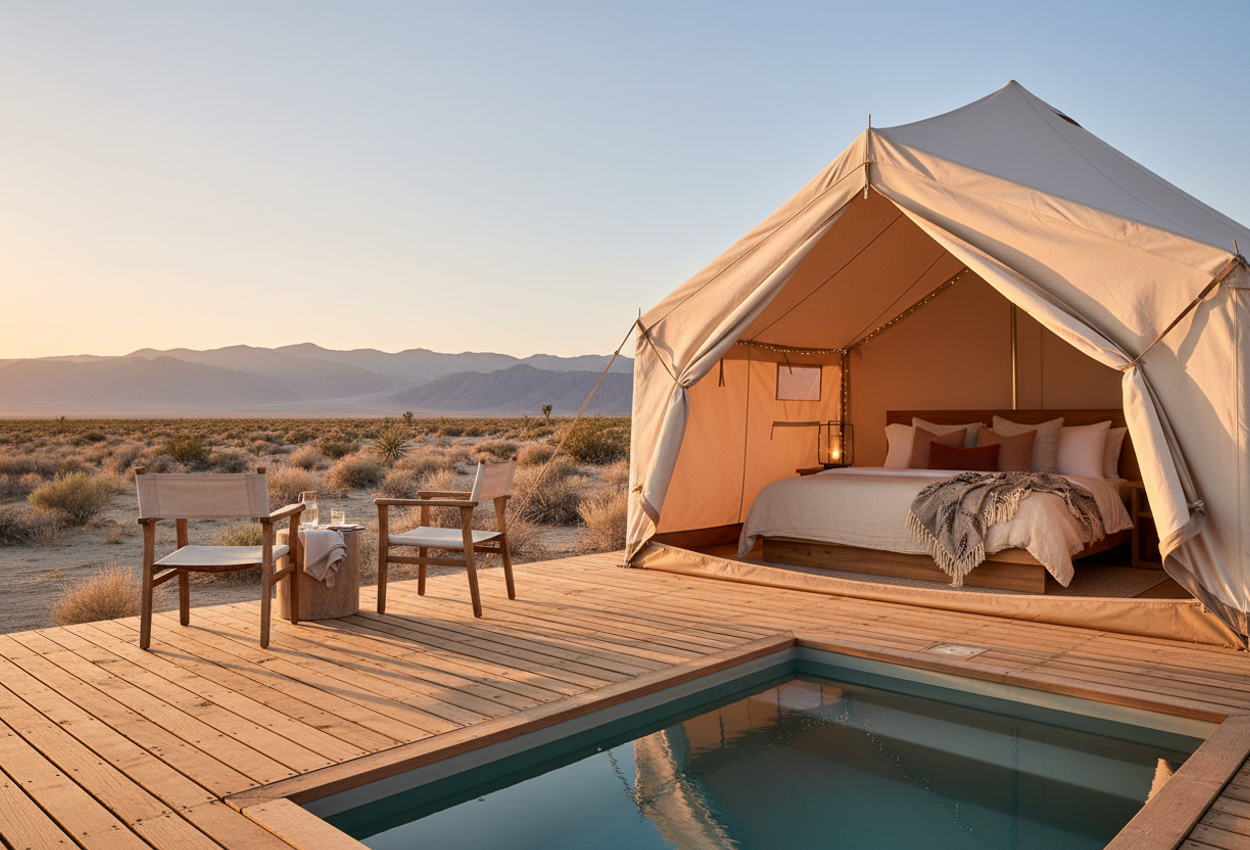
Local Tip: When choosing your desert sanctuary near Death Valley or Dubai, look for camps located within or bordering protected areas or conservation reserves. Not only will you enjoy richer wildlife encounters and darker skies, but you also help support long-term stewardship of these fragile landscapes.
Celestial Suites: Stargazing from Your Bed
Night in the desert does not simply arrive; it descends in stages, like theater curtains drawn back to reveal a show you did not realize you had tickets for. In the Atacama Desert of northern Chile, widely regarded as one of the finest stargazing destinations on earth, twilight stretches into an unforgettable prelude. The last smear of coral on the horizon slowly dissolves, and the air cools until your breath feels sharper, cleaner. Above you, the first bright pinpricks appear – Venus hanging low, the Southern Cross rising with regal poise. Within an hour, the sky has become so dense with stars that the familiar constellations almost vanish, swallowed by their more distant cousins.
Desert glamping here means your suite is not merely a place to sleep, but your own private observatory. Many high-end camps near San Pedro de Atacama offer open-air terraces directly accessible from your bedroom, where telescopes stand ready beside daybeds piled with alpaca throws. Panoramic windows blur any distinction between inside and out: you might be nestled on a king mattress, yet you feel as if you are lying directly beneath the celestial dome. As your eyes adjust to the darkness, the streak of the Milky Way becomes almost three-dimensional, an opalescent river rushing from one edge of the horizon to the other.
The experience is no less powerful in other deserts. In the Mojave, where strict light-pollution controls around Death Valley have preserved some of North America’s darkest skies, glamping tents and domes often come with retractable roofs or vast skylights angled precisely toward the constellations. You pull a discreet leather tab and feel the canvas shift aside, inviting a cascade of stars directly into your suite. In the Arabian Desert outside Dubai, mirrored glass domes and roof terraces crowned with oversized loungers give you a front-row seat to meteor showers that burn brief, brilliant trails through the cool night air.
For couples, this intimacy with the cosmos becomes its own kind of love language. Perhaps you share a pair of binoculars and trace the jagged outline of a crater on the moon, or lean together over a tablet running a stargazing app that translates unfamiliar southern constellations into myth and legend. You might watch as Orion tilts slowly toward the horizon, or as Scorpius coils into view later in the year, learning to recognize them like the lines on each other’s palms. Out here, time stretches; conversations deepen. Without notifications or street noise, you find yourselves whispering, as if the stars are listening.
Glamping accommodations are deliberately designed to heighten this sense of wonder. In the Atacama, some lodges offer entirely open-air suites, with only low stone walls marking the perimeter and gauzy curtains fluttering in the dry night breeze. Others provide rooftop platforms reached by narrow staircases, where staff lay out thick blankets, hot water bottles, and steaming cups of coca tea or Chilean herbal infusions before retreating, leaving you alone with the galaxy. Near Death Valley, desert camps might offer sky-viewing decks furnished with rocking chairs and red-light lanterns that preserve your night vision while still guiding your steps.
The magic, however, lies not only in the setting, but in understanding how to read the sky. For the clearest views, plan your desert escape around the new moon, when lunar brightness will not wash out the more delicate stars. In the Atacama, the prime season for stargazing typically runs from roughly April through October, when cloudless nights are the norm and atmospheric conditions are exceptionally stable. In the Mojave and Arabian Desert, cooler months – from late autumn through early spring – bring crisp, transparent skies and more comfortable nighttime temperatures, letting you linger outdoors long after midnight.
Even a bit of low-fi tech can deepen the experience. Before your trip, download a reputable stargazing app that functions offline; many allow you to point your phone toward the heavens and see constellations, planets, and even distant galaxies labeled and explained. Some desert camps provide their own tablets pre-loaded with astronomy guides or offer nightly talks with resident experts. In the Atacama, it is common to find small observatories on-site, where professional-grade telescopes are trained on Saturn’s rings or the dusty lanes of the Magellanic Clouds. A guide might invite the two of you to take turns at the eyepiece, quietly narrating the light-year distances as if telling a bedtime story.
And when your eyes tire from star counting, there is the simple, grounding pleasure of returning to your glamping cocoon. You slip back into a bed warmed by discreet under-mattress heaters or hot stone bottles, listening to the faint rustle of the desert wind against canvas. Perhaps your camp has left a small decanter of local spirits by the bedside – pisco in Chile, date-infused liqueur in Dubai, or a small-batch whiskey in the American desert – encouraging one final nightcap as you replay the constellations you have just learned. In those moments, the universe feels both infinite and intimately close, as if the stars have bent down just enough to eavesdrop on your shared secrets.
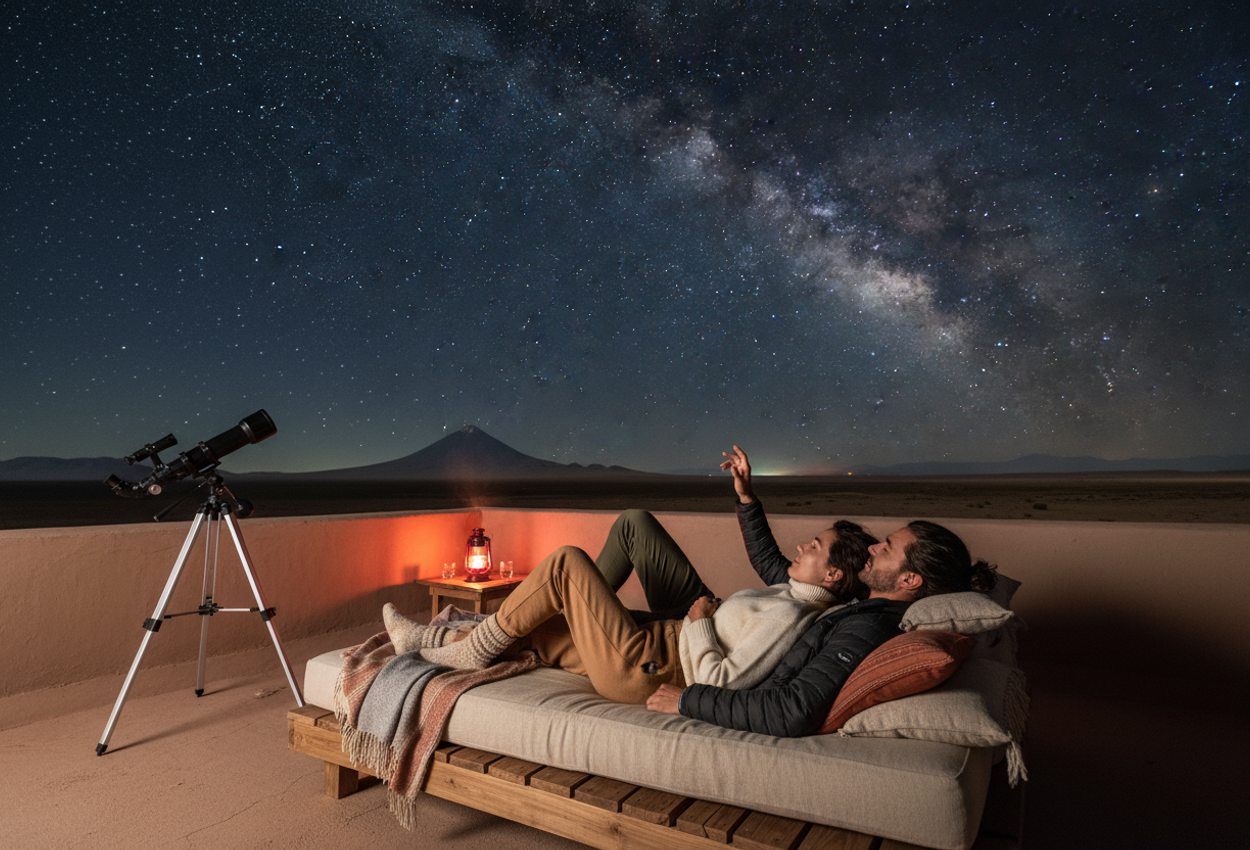
Hidden Gem: In the Atacama Desert, look for glamping lodges that partner with nearby observatories. Some arrange after-hours access to advanced telescopes usually reserved for researchers, turning your romantic getaway into a once-in-a-lifetime deep dive into the cosmos.
Adventures in the Sand: Thrills by Day
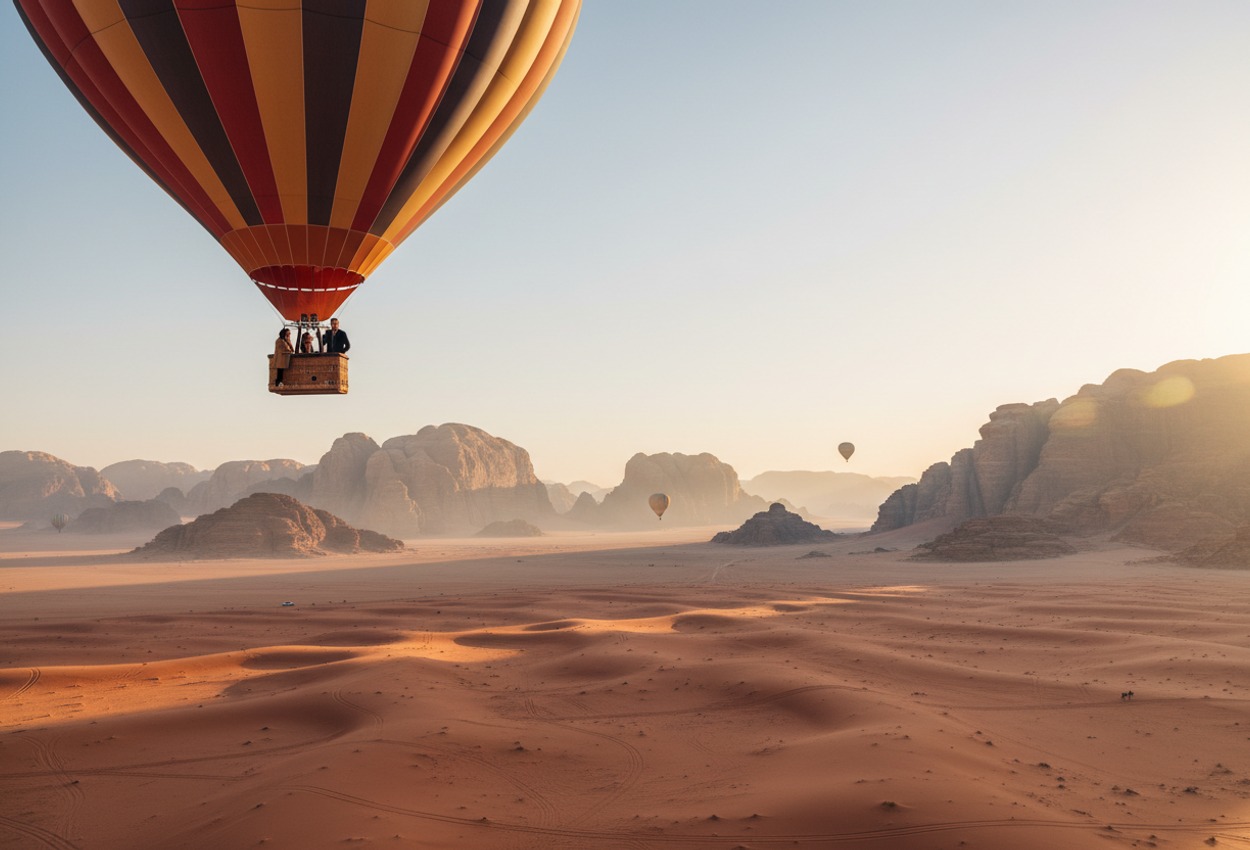
As ethereal as desert nights can be, the days here pulse with their own electricity. Sunrise finds you standing in a wide-basket gondola in Wadi Rum, the rust-red desert of southern Jordan spreading out in all directions. The burners ignite with a soft roar, sending heat rippling through the cool dawn air. Slowly, almost imperceptibly, your hot air balloon begins to rise, slipping its tether to the ground. The sandstone massifs of this UNESCO-listed landscape, often compared to the surface of Mars, shrink and tilt beneath you. Your partner’s hand finds yours, fingers interlaced, as the first light of day ignites the cliffs in shades of apricot and ember.
From this aerial vantage point, every ripple of sand becomes a sculpture, every shadow a brushstroke. The silence is profound, broken only by the occasional rush of the burner flame and the faint tinkle of goat bells drifting upward from a distant Bedouin camp. As the balloon drifts, your pilot points out natural arches, narrow canyons, and the ancient caravan routes that have threaded across Wadi Rum for centuries. This is adventure in its purest, most romantic form: exhilarating yet unhurried, thrilling but utterly safe, leaving you enough space to absorb the magnitude of the landscape and of the moment.
Back on solid ground, the desert becomes a playground. In the Atacama Desert, near San Pedro de Atacama, immense dunes beckon sandboarders to carve bold lines into their slopes. Guides fit you with lightweight boards and talk you through stance and balance, then send you skimming down golden faces of sand that gleam under an indigo sky. You alternate between laughter and shrieks as you pick up speed, your partner waiting at the bottom with outstretched arms, both of you coated in a fine dusting of desert powder by the time you collapse together at the base.
Farther afield in Jordan, open-backed 4x4s rumble across the dunes of Wadi Rum, engines growling softly as they climb rust-colored hills and zigzag through narrow gorges. A skilled local driver – often a Bedouin who has grown up reading these sands like a book – will pause at viewpoints whose grandeur catches even frequent travelers off-guard. You might scramble hand in hand up a rock bridge, pausing at the top to gaze over a sea of sculpted sandstone, or duck into a cool, shaded canyon where ancient petroglyphs document nomadic life in strokes of ocher along the walls.
Desert glamping camps excel at curating these daytime adventures so that you can lean entirely into the experience. Many properties offer tailor-made itineraries, allowing you to balance high-adrenaline thrills with slower, more contemplative excursions. One morning might be devoted to camel trekking, a gently swaying journey that traces the routes of traders and pilgrims. As you ride, the rhythmic plod of hooves in the sand creates a meditative soundtrack, and your camel guide introduces you to the hardy shrubs, medicinal plants, and hidden water sources that have sustained life here for generations.
Cultural encounters add a deeper dimension to the romance of exploration. In Wadi Rum, you may find yourself welcomed into a traditional Bedouin tent for cardamom-scented coffee and stories of navigating the desert by stars long before GPS. In the Atacama, visits to local communities reveal timeworn irrigation systems that thread through the arid valleys, supporting small orchards and fields of quinoa bright against the dun-colored soil. Couples who crave a sense of connection as well as escape often speak of these conversations as some of their most enduring memories: human constellations that anchor the grand, sweeping expanses of the landscape.
There is also adventure in simply walking. Early-morning hikes along desert ridgelines near Death Valley take you past wildflowers that bloom briefly and fiercely after winter rains, their delicate petals a reminder of resilience. In Wadi Rum, guided scrambles up sandstone domes reward you with panoramas that feel like standing at the edge of another planet. By timing your outings to the cooler hours just after sunrise or before dusk, you can move for hours through landscapes that glow first with a molten, golden light and then with the soft, rose-colored blush of sunset.
When the heat peaks in the middle of the day, your glamping retreat becomes a sanctuary once more. Perhaps you return to your private plunge pool in the Arabian Desert, submerging just enough that the waterline cuts the horizon in two, the dunes appearing to float like islands. Or, in the Atacama, you retreat to a shaded terrace overlooking a salt flat where flamingos feed in shallow pools, their reflections rippling in the glare. This is the subtle, often overlooked thrill of desert adventure: the juxtaposition of intensity and stillness, of high-speed descents down sand slopes balanced by long, languid hours spent side by side in silence, watching the landscape change with the angle of the sun.
Local Tip: In Wadi Rum and the Atacama Desert, book hot air ballooning and popular guided experiences well in advance, especially between spring and autumn. Many operators run only one balloon flight per morning, and slots for prime sunrise departures often fill weeks ahead.
Oasis of Flavors: Culinary Delights Under the Open Sky
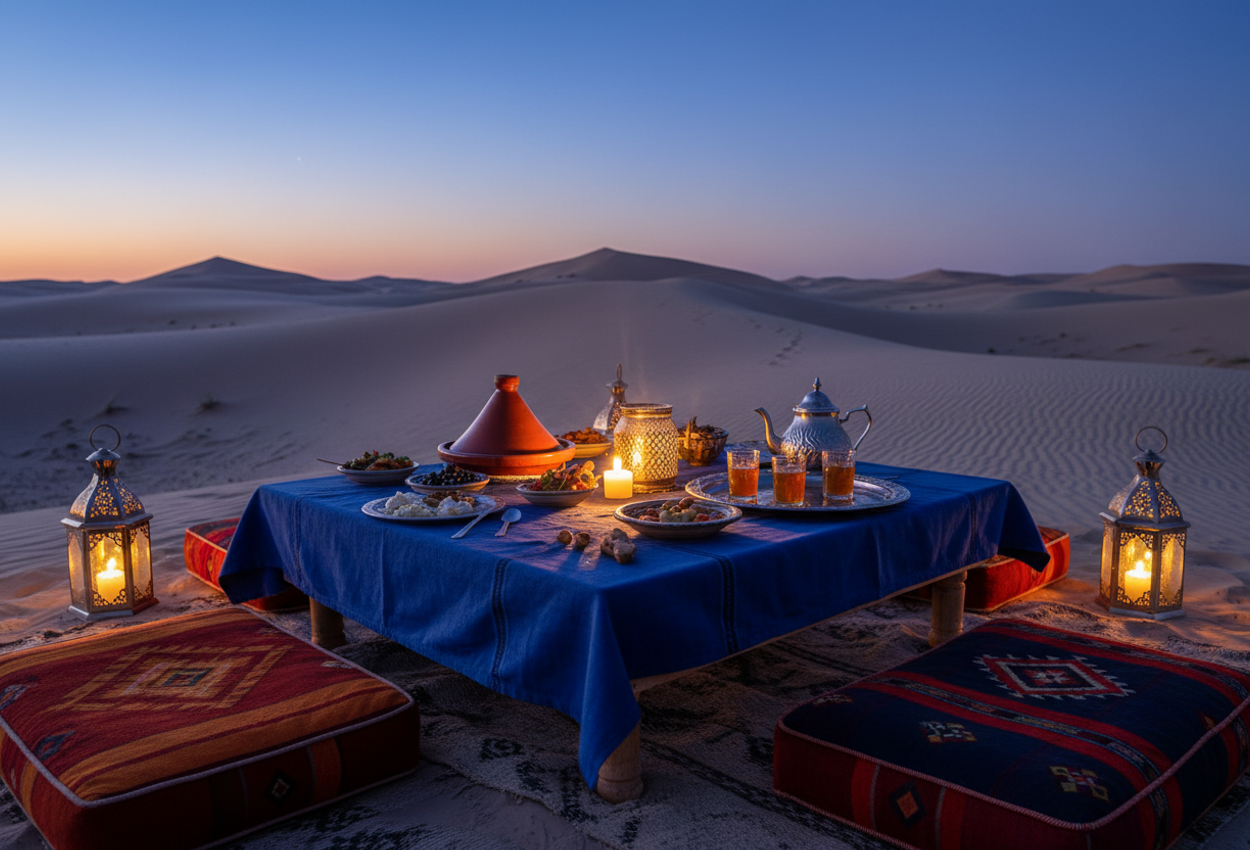
Even in the world’s driest places, romance finds a way to flow – often in the form of an exquisitely set table under an impossible number of stars. As evening deepens across the dunes of Morocco’s Sahara, your guide leads you up a gently sloping ridge, lantern in hand. At the crest, a scene unfolds that seems plucked from a dream: a low table draped in indigo linens, scattered with rose petals and tiny flickering candles shielded from the wind by glass. Floor cushions invite you to sink down, shoes forgotten at the edge of the carpet, while the surrounding sand glows soft bronze in the last of the twilight.
Desert glamping has elevated open-air dining into an art form. In Morocco, luxury camps near the dunes of Merzouga and Erg Chebbi reinterpret classic Berber and North African dishes with a refined, contemporary touch. A silver tray arrives bearing small ceramics of smoky zaalouk, a roasted eggplant salad fragrant with cumin and paprika, alongside bowls of glossy olives and warm flatbreads blistered from clay ovens. The main course might be a slow-cooked lamb tagine, the meat so tender it yields at the mere suggestion of your fork, nestled among apricots, almonds, and onions caramelized to sweetness. Steam curls into the cool night air, carrying aromas of cinnamon, saffron, and preserved lemon.
In Jordan, desert camps in Wadi Rum introduce couples to Bedouin-style feasts that are as much performance as meal. One of the signature experiences is the zarb: a whole lamb or chicken, marinated with spices and vegetables, cooked for hours in an underground pit lined with hot coals. As darkness settles, your hosts gather you around the sand-covered oven. With a small flourish, they lift the metal lid, releasing a billow of aromatic steam that mingles with the crisp desert air. The meat emerges bronzed and glistening, infused with the smoky perfume of the earth itself. Seated at a low communal table, you share platters of zarb with roasted vegetables, rice jeweled with nuts, salads bright with mint and cucumber, and rounds of flatbread warm enough to melt the butter on contact.
In the Dubai desert, glamping menus lean into the cosmopolitan flavors of the city while honoring local traditions. One evening you might dine in a dry riverbed transformed into a pop-up restaurant, candlelight reflected in polished glassware and brass lanterns swaying from acacia branches. Starters could include delicate mezze – hummus whipped to silken perfection, muhammara studded with walnuts, fattoush salad scattered with crisp shards of pita – followed by grilled seafood or spice-rubbed lamb paired with roasted cauliflower and tahini. Dessert might arrive as a shared plate of sticky date pudding with saffron custard, accompanied by tiny cups of Arabic coffee poured from long-spouted dallahs, the scent of cardamom lingering on your fingers as you cradle the warm porcelain.
Wine and spirits weave their own narrative into these evenings. In the Atacama, sommelier-led tastings introduce you to high-altitude Chilean wines whose mineral-rich profiles echo the stark landscape outside. Imagine sipping a crisp sauvignon blanc as the last sunlight ignites the Andes in a blaze of pink and gold, or sharing a deep, velvety carménère by the firepit as constellations sharpen overhead. Elsewhere, carefully curated pairings spotlight regional specialties: Moroccan mint tea poured with theatrical arcs from silver teapots, Jordanian arak served alongside grilled meats, or non-alcoholic infusions of hibiscus and citrus for those who prefer a gentler nightcap.
What sets desert glamping cuisine apart is not only what you eat, but where and how you eat it. Camps take full advantage of their natural stage sets, arranging dinners in places you would never expect to find linen napkins and polished cutlery. In Wadi Rum, a narrow canyon becomes a private dining room, the sandstone walls glowing amber in the lantern light as soft music drifts from a discreet speaker or a live oud player’s strings. In the Mojave, a picnic spread might be laid out atop a boulder ridge, with artisanal cheeses, charcuterie, and seasonal salads arranged in wooden crates, the valley floor unfurling hundreds of meters below.
For couples celebrating milestones – engagements, anniversaries, or simply the audacity of carving time out for each other – camps often orchestrate elaborate surprise experiences. You may return from a sunset camel ride to find your tent transformed: the deck set with a private tasting menu just for two, lanterns leading the way to a table positioned at the edge of a dune, cushions arranged so that you can recline and watch the first stars appear between courses. Chefs relish the challenge of personalization; with advance notice, they can recreate the dish you shared on your first date, or design a dessert platter spelling out a message in powdered sugar and cocoa.
Yet amid all this drama, the small, quiet culinary moments often linger longest. The sunrise breakfast brought to your deck in Death Valley, where you eat flaky pastries and ripe fruit while wrapped in blankets, watching the valley floor gradually reveal its contours. The simple clay cup of sweetened Bedouin tea, brewed over open coals in Wadi Rum, that you cradle in both hands as dawn’s first chill brushes your cheeks. The shared spoonfuls of saffron rice eaten straight from a steaming pot because you cannot be bothered to wait for plates, too entranced by the Milky Way arching overhead.
Hidden Gem: Ask your camp in Wadi Rum or the Moroccan Sahara about arranging a pop-up breakfast or sunset picnic on a remote dune accessible only by jeep or camel. Many will scout spots where no other guests – or camp lights – are visible, so it truly feels as if the desert has laid the table just for the two of you.
Hidden Harmonies: Desert Spa Rituals for Two
The desert, at first glance, seems an unlikely setting for indulgent wellness. Harsh sun, parched earth, austere horizons – it reads more as a test of endurance than a balm. Yet look closer, and you discover a quieter truth: these landscapes have always held rituals of restoration, practiced for centuries by the nomadic peoples who learned how to coax comfort and healing from an environment that others deemed inhospitable. Today, desert glamping retreats reinterpret those traditions for couples seeking not just adventure, but profound rest.
In the dune-fringed reserves surrounding Dubai, spa pavilions rise from the sand like mirages – low, whitewashed structures with shaded courtyards, their walls thick enough to keep out the midday heat. Step inside and the air shifts instantly: cool, scented with frankincense and myrrh, the hush broken only by the burble of a small fountain and the soft chime of metal against glass as therapists prepare oils. Treatment menus here draw deeply from the desert’s own pantry. Sand scrubs, using ultra-fine, sun-warmed grains blended with nourishing oils, buff away the dryness and dust of the day’s adventures, leaving your skin satin-smooth. Date-seed exfoliations, argan oil hair masks, and wraps infused with desert herbs echo the age-old beauty rituals of the region.
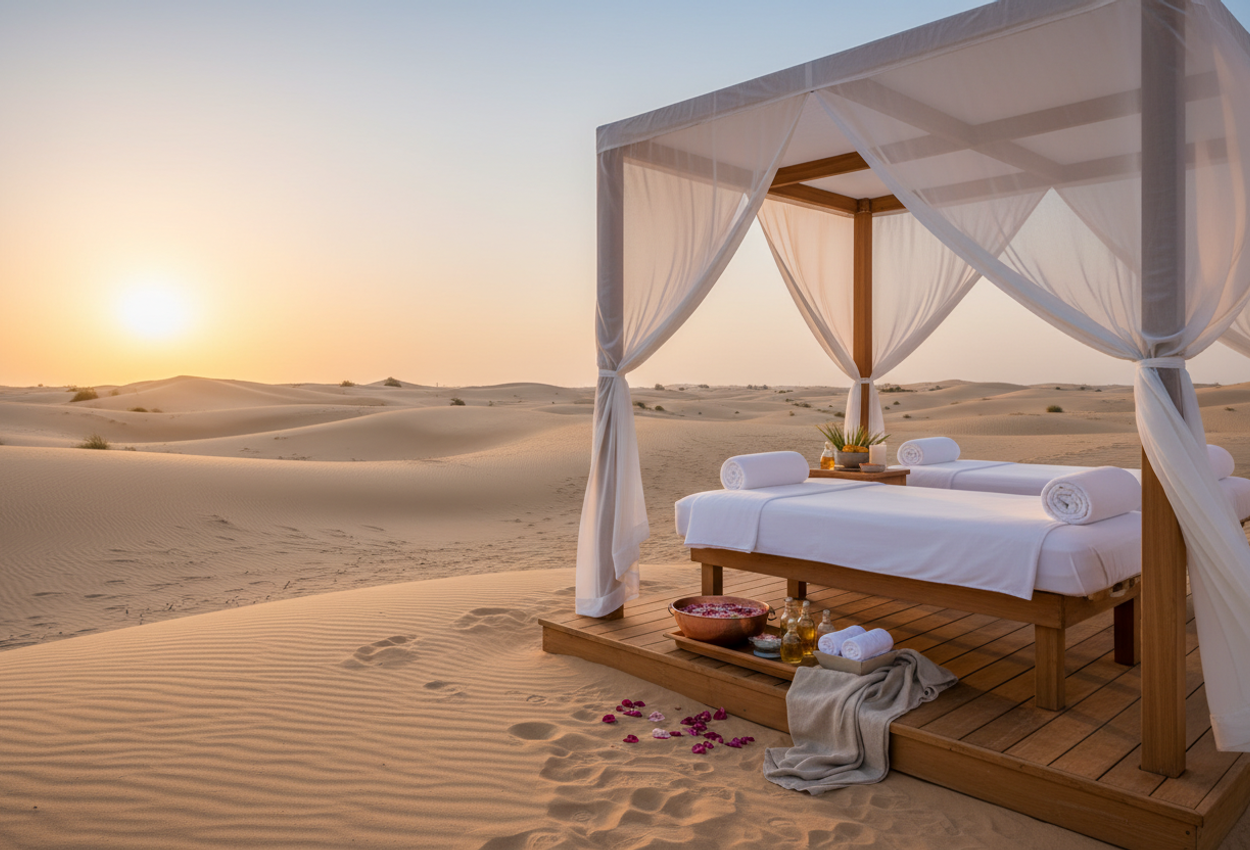
For couples, many camps offer side-by-side treatments in open-air cabanas that seem to float above the dunes. You might begin with a foot ritual in shallow copper basins, your feet bathed in warm water steeped with aromatic leaves and petals while you sip cooling hibiscus tea. Then you move to adjacent massage tables beneath billowing white canopies. As skilled hands work slow circles into tired muscles, you feel the tension and the travel miles dissolving. Above, the ceiling is partially open, framing a strip of burnished sky; a mild breeze carries in the sound of rustling palms or the distant call of a desert owl. It is an experience that feels both grounded and transcendent, your awareness of your own body expanding even as your mind drifts.
In the Mojave Desert and around Death Valley, spa experiences lean into the mineral wealth hidden just beneath the surface. Natural hot springs, channeled into pools and soaking tubs at select retreats, offer powerful hydrotherapy under open skies. Imagine slipping into warm, mineral-rich water at dusk, the surrounding hills turning indigo as the first stars wink into view. Beside you, your partner leans back against smooth stone, eyes half closed, as fine steam curls into the cooling air. Some properties set these pools on the edges of bluffs, so that as you soak, you look out over an undulating sea of desert floor stretching all the way to the mountains. It is a kind of desert onsen, deeply American in setting yet echoing timeless bathing traditions from around the globe.
Further south in Jordan’s Wadi Rum or in the Moroccan Sahara, wellness rituals often take place steps from your tent. Portable massage tables appear on private decks as if by magic, draped in crisp linens, with low lanterns casting soft halos of light. Therapists trained in both traditional and contemporary techniques blend locally sourced oils – perhaps infused with wild thyme, sage, or orange blossom – and adapt pressure according to your body’s cues. After a day of climbing sandstone ridges or bouncing across dunes by jeep, the sensation of practiced hands releasing knots beneath the vast sky can feel revelatory.
Desert-inspired body treatments invite you to experience the elements in a new way. Warm sand compresses, for instance, use pouches filled with sun-heated sand and herbs pressed along the spine and joints, the residual heat sinking deep into muscles and encouraging circulation. Clay masks, drawn from mineral-rich deposits in dry riverbeds or ancient seabeds, detoxify and soften the skin. Some camps offer couples’ hammam-inspired rituals, where you alternate between steamy enclosures and cool rinse-downs, guided through a progression of scrubs, soapy massages, and slow, deliberate rinses that leave you feeling lighter, almost newly minted.
Not all wellness in the desert is packaged as a treatment, however. Many of the most intimate rituals are self-led and quietly woven into your days. Sunrise yoga on a wooden deck facing the dunes, for example, where you and your partner flow through gentle poses while the sky shifts from violet to gold. Breathwork sessions at the edge of a canyon, guided by a practitioner who teaches you to match the length of your inhales and exhales to the rhythm of your footsteps on the sand. Even simple, shared silences take on a therapeutic quality here. To sit together at the lip of a dune, barefoot, watching shadows lengthen and hearing nothing but the wind, can be as potent as hours in a treatment room.
Wellness-forward desert camps are increasingly mindful of mental as well as physical restoration. Journaling materials, meditation cushions, and curated reading lists often appear in your tent, inviting slow mornings and reflective afternoons. Some retreats host visiting practitioners who offer couples’ workshops on communication and mindfulness, held not in sterile conference rooms but under airy pergolas, where the desert horizon becomes a visual metaphor for possibility and perspective. In the Atacama, you might find sound baths conducted under the night sky, the vibrations of gongs and singing bowls blending with the chirp of nocturnal insects and the near-imperceptible hum of the desert wind.
Water, that most precious of desert resources, becomes a recurring motif in these rituals. Private plunge pools carved into stone terraces, outdoor rain showers hidden behind screens of local reeds, and deep soaking tubs set beside floor-to-ceiling windows all turn bathing into an act of reverence as much as hygiene. Picture a bath for two in a suite overlooking the dunes of the Arabian Desert: the tub filled with warm, lightly salted water strewn with rose petals, a tray across its width bearing chilled dates, nuts, and two slender glasses of sparkling juice. As you sink into the water, the glass wall in front of you begins to mirror the dusk sky, blending your reflections with the glowing horizon.
Ultimately, what desert spa rituals offer couples is a chance to sync their internal rhythms with the slow, ancient tempo of the landscape. You arrive perhaps wound tight from deadlines and time zones, your conversations fragmented by the noise of everyday life. After a few days of massages that end with you dozing side by side, soaks under cold-bright stars, and unhurried mornings spent stretching toward a limitless sky, something softens. The boundaries between body and environment blur; the desert’s quiet steadiness seeps in. You find yourselves listening more closely – to the wind, to your own breath, and crucially, to each other.
Local Tip: In desert regions like those around Dubai, Wadi Rum, and the Mojave, schedule couples’ spa treatments for late afternoon or just before sunset. The temperatures are gentler, the light is at its most beautiful, and you can transition seamlessly from treatment table to a private lookout to watch the sky shift through a spectrum of colors before the stars appear.