Some of the most unforgettable journeys begin in absolute secrecy, crafted in late-night search tabs and scribbled notes that your partner will never see—until the moment you finally say, Pack a bag.Planning a surprise romantic getaway is equal parts logistics and love letter. It is choosing a destination that speaks to your partner’s private daydreams, juggling flight alerts and hotel confirmations under the radar, and quietly rearranging real life so the two of you can slip away unnoticed. Done well, it becomes more than a weekend away. It is an act of deep attention, a carefully choreographed revelation that says I see you, I know you, and I have created a world where, just for a little while, nothing else matters.
This step-by-step guide walks you through every layer of the process—from the first whisper of an idea to the final flourish of the grand reveal. Along the way, you will learn how to choose the perfect destination, keep bookings discreet, budget without panic, pack cleverly, and glide gracefully through inevitable travel hiccups. Think of it as your behind-the-scenes script to the kind of surprise that feels cinematic yet utterly personal.
Crafting the Dream: Unveiling Destination Secrets
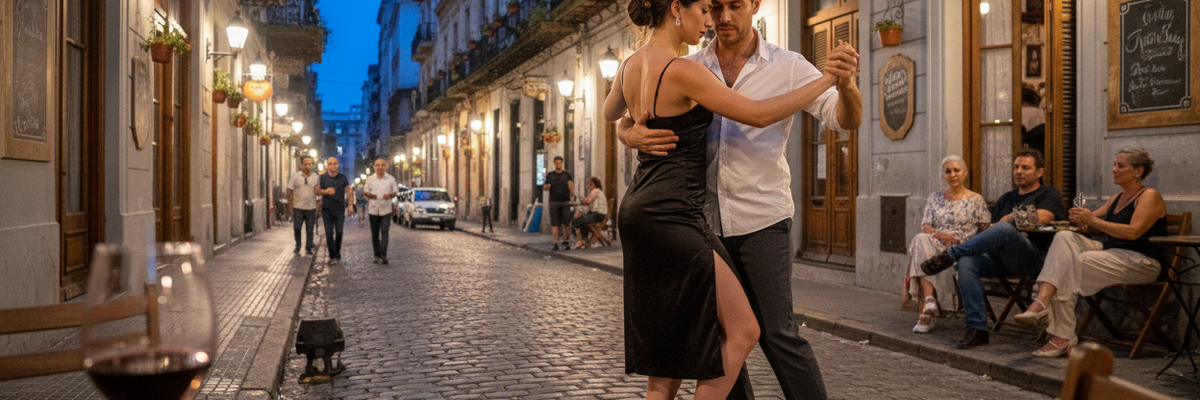
The heart of a surprise romantic getaway is not the price of the hotel or the distance flown; it is how precisely the trip reflects the person you love. Before you ever open a booking site, begin with quiet observation. What does your partner linger over when a travel documentary plays in the background? Do they sigh at cobblestoned streets lit by lamplight, like those in Paris? Save photos of blue-domed chapels and cliffside sunsets in Santorini? Wax poetic about tranquil temples and lantern-lit alleys in Kyoto? Their preferences are already written into what they read, watch, and talk about when they think no one is really paying attention.
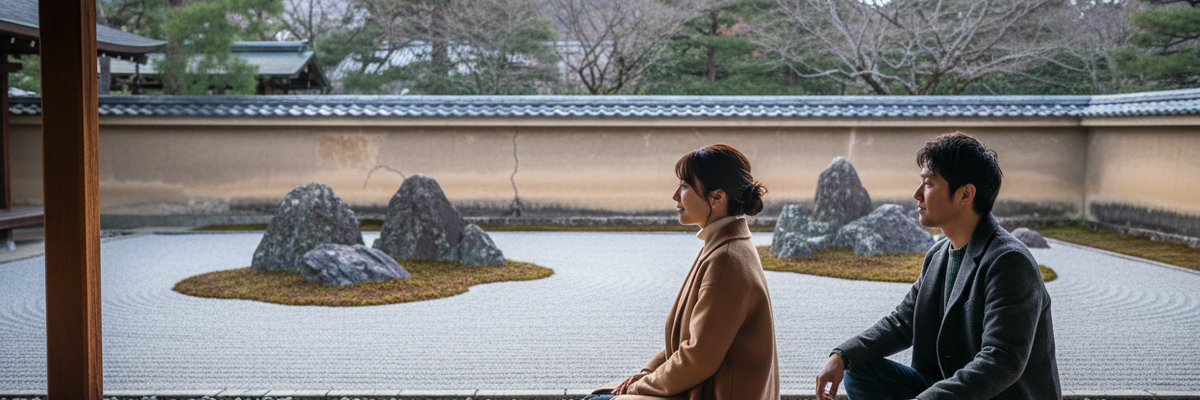
Imagine three different versions of romance, each tailored to a distinct personality. For the lifelong romantic, Paris is more than a cliché; it is early-morning croissants from a neighborhood boulangerie, a slow walk along the Seine when the city is still stretching awake, and the hushed grandeur of the Louvre Museum after hours. For the sun-chaser, Santorini offers whitewashed lanes above the Aegean Sea, cliffside suites where the horizon melts into your private plunge pool, and windswept beaches where the wind carries the scent of wild thyme and salt. For the aesthete and culture lover, Kyoto is all soft footfalls on tatami mats, the rustle of kimono silk, and the steam rising from a bowl of ramen in a tucked-away wooden townhouse near Gion.
Start by listing what your partner finds romantic in their everyday life rather than what the internet declares romantic. Do they adore long conversations over wine and candlelight? Think of cosmopolitan cities with celebrated dining scenes—perhaps a tucked-away wine bar in Le Marais in Paris, or a counter seat at a tiny omakase spot in Kyoto. Are they happiest in water, hair salty, skin sun-warmed? Then an island escape like Santorini, with boat trips to volcanic hot springs and hidden coves, is your north star. If they seem energized by art, literature, or history, prioritize destinations dense with museums, galleries, and heritage sites that you can weave into a story.
Once you have a short list—perhaps Paris, Santorini, and Kyoto—it is time for the secret research phase. Instead of generic top-ten attractions, dig for details that will make the experience feel one-of-one. Search for neighborhood guides, local blogs, and official tourism board suggestions that mention intimate experiences: a private Seine cruise at dusk, a rooftop terrace in Oia overlooking the caldera, a tea ceremony with an English-speaking host in Higashiyama. Picture your partner in each experience. Which one sets your imagination on fire?
Consider layering in one unforgettable centerpiece. In Paris, that might be a private or small-group after-hours tour of the Louvre Museum, where you move through the galleries with only a handful of other visitors, the polished floors echoing underfoot and the masterpieces unencumbered by crowds. In Santorini, imagine chartering a small boat at sunset, gliding across the caldera as the island turns rose-gold, the captain pouring local assyrtiko wine while you sit at the bow wrapped in a shared blanket. In Kyoto, perhaps it is an early-morning guided walk through Fushimi Inari Taisha before the crowds arrive, the vermilion torii gates glowing in the first light as the city yawns awake below.

Hidden gems are where a surprise trip elevates from special to unforgettable. Use the destination’s official tourism website as a starting point to identify lesser-known districts, walking routes, or seasonal events that align with your dates. Then, cross-reference with updated local blogs or social media accounts run by residents rather than influencers passing through. Look for things like a tiny family-run taverna perched above a quiet cove in Santorini, a riverside bookshop in Paris that stays open late on Fridays, or a traditional sweets shop in Kyoto where the owner shapes fresh mochi in the front window.
As you refine your choice, think through practicalities without sacrificing romance. Consider travel time, jet lag, and the length of your trip. A whirlwind weekend across the ocean might sound thrilling, but if your partner hates feeling rushed or exhausted, a closer, shorter flight to a domestic wine region or coastal town might capture the same magic with less strain. Romance is not measured in miles; it is measured in how deeply your partner can relax into the experience you created.
Finally, keep the destination a secret by disguising your research trail. Use incognito browser modes or a separate browser profile, and log out of shared streaming accounts before you go down a rabbit hole of Kyoto travel videos that might accidentally populate your partner’s recommendations. This is where the surprise begins: in the invisible choices you make long before you ever step on a plane.
Stealth Booking: Flights and Accommodations Undercover
Once you have selected the destination, the real espionage begins. Booking flights and accommodations for two, while one half of the duo is blissfully unaware, requires the digital equivalent of a double life. Begin by creating a dedicated email address solely for the trip. Keep it simple and unremarkable—no romantic hints—so that if your partner glimpses it in a dropdown menu later, it does not give the game away. Route all confirmation emails, loyalty program alerts, and booking changes to this inbox.
On any devices you share, disable email sync for this account and turn off push notifications. In app stores, ensure that travel apps you download are not automatically mirrored on your partner’s phone or tablet. If you use a shared password manager, temporarily pause auto-saving new logins. These small digital precautions protect the surprise as effectively as any elaborate plot twist.
When it comes to flights, flexibility is your silent ally. Search for fares that allow changes with minimal fees or come with built-in flexibility, particularly if your partner’s work schedule or family obligations can shift unexpectedly. Many airlines now offer at least one free date change on certain fare classes; read the fine print before you commit. If you are coordinating with your partner’s manager or colleagues to secure time off without raising suspicion, pad your departure and return dates by a day in case their workload changes at the last minute.
For accommodations, consider what atmosphere will feel most like a fantasy to your partner. In Paris, perhaps it is a boutique hotel on a quiet side street in Saint-Germain-des-Prés, with wrought-iron balconies and floor-to-ceiling windows that open onto the hum of café chatter below. In Santorini, it might be a cave suite carved into the cliff in Oia, with a private terrace and a plunge pool that glows cobalt at night. In Kyoto, you might opt for a traditional ryokan near Arashiyama, where you sleep on futons laid out by hand each evening and wake to a kaiseki-style breakfast of grilled fish, rice, and pickles served on lacquered trays.

Book directly with the hotel or ryokan when possible. This not only gives you a human point of contact but also opens the door to subtle upgrades and surprises. Reach out via email from your secret account and explain—discreetly—that you are planning a surprise romantic getaway. Ask whether they can arrange simple touches: rose petals on the bed, a small cake with a personalized note, or a reserved window table at their in-house restaurant. Many properties have romance or celebration packages that quietly include sparkling wine, late checkout, or breakfast in bed. Those extras, folded invisibly into the reservation, can transform an already beautiful stay into something extraordinary.
If your budget allows, look into surprise upgrades that can be unveiled in the moment. This might be quietly switching from economy to premium economy or business on the longest leg of the journey, so that when your partner scans the boarding pass, they suddenly notice a different cabin. Or it could mean upgrading from a standard room to a honeymoon suite with a view, arranged through a direct email with the hotel once you have secured the base booking at a lower rate.
To avoid financial breadcrumbs, consider how your partner typically interacts with shared banking information. If you share a joint account, large travel transactions may trigger questions. You can mitigate this by paying in smaller installments (deposit first, balance later), using a separate credit card for travel bookings, or redeeming airline miles and hotel points, which often leave fewer overt traces. If questioned, you can honestly say you are simply reorganizing finances or redeeming points while still shielding the surprise’s true shape.
Finally, guard your calendar. If you share digital calendars, create generic entries such as Personal appointment or Errand day instead of Trip to Paris. When confirming transportation to and from the airport—whether a rideshare, car service, or a friend doing you a favor—ensure messages and reminders are routed to your private email or personal phone only. The key is seamlessness: when the day comes, your partner should feel that events are unfolding naturally, not that a complex operation is being revealed.
Budgeting Bliss: Affording the Unexpected Romance
A surprise romantic getaway does not need to be extravagant to feel indulgent. What matters is how intentionally your resources are used. Begin by determining a realistic total budget, one that respects your current financial landscape and leaves room for life to continue comfortably when you return. Break that number down into rough categories: transportation, lodging, food and drink, experiences, and a discreet buffer for the unexpected.
To keep the planning joyful rather than stressful, invert the usual order of budget decisions. Instead of hunting for the cheapest possibility in every category, identify the one or two elements that will matter most to your partner and allocate a larger share of funds there. Perhaps that is splurging on a sea-view suite in Santorini while keeping daytime meals simple at beachfront tavernas, or reserving a Michelin-starred dinner in Paris while booking a more modest but charming hotel. In Kyoto, the unforgettable element might be a night or two at a high-end ryokan with an onsen, balanced by casual izakaya dinners the rest of the time.
Once you know your non-negotiables, look for strategic ways to save on everything else. Consider traveling in the shoulder or off-season, when crowds thin and prices soften. An April escape to Kyoto during peak cherry blossom season may be breathtaking but also punishing on the wallet—and packed. Pushing your dates into late March or mid-April, or visiting in the crimson glow of autumn foliage instead, can bring equally romantic scenery at gentler rates. Similarly, Santorini outside of high summer—think late May or early October—often offers warm days, swimmable seas, and discounted hotel rates.
Leverage travel rewards and loyalty programs quietly. Airline miles, credit card points, and hotel rewards can dramatically reduce costs, especially on long-haul flights or higher-end stays. If your partner has access to shared accounts, keep redemption activity as nondescript as possible, and avoid making large, out-of-character transfers that might prompt questions. Some programs allow you to book with mixed payment and points, helping you nudge an aspirational experience within reach.
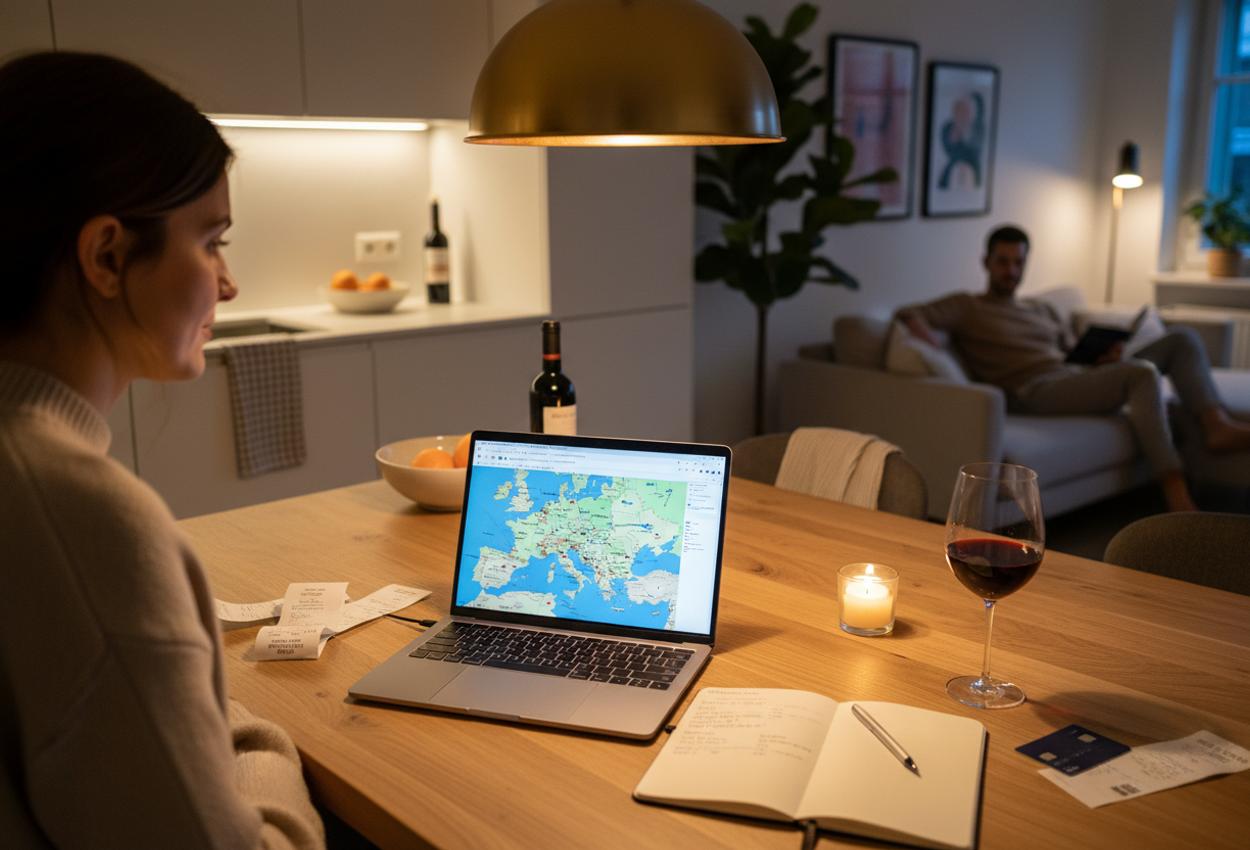
In your day-to-day life leading up to the trip, carve out a hidden savings stream earmarked just for the getaway. This could be a small automatic transfer to a separate savings account on each payday, cash quietly set aside, or rerouting discretionary spending—a few fewer takeout coffees, paused subscriptions, evenings in rather than out. Frame these decisions not as deprivation but as small acts of anticipation; each skipped impulse purchase becomes another cobblestone on the path to Paris or another sunset over the Aegean Sea.
Do not forget the quiet but crucial category: contingency funds. Travel, no matter how carefully orchestrated, tends to improvise. Flights are delayed, weather shifts, and sometimes the most memorable experiences are ones you did not foresee—a chamber music performance you stumble upon in a Paris church, a last-minute sake tasting in Kyoto, a spontaneous decision to rent a car and explore a remote village above Santorini’s caldera. Allocate at least ten to fifteen percent of your total budget as an emergency and spontaneity cushion. The psychological effect is simple but profound: when something unexpected arises, you will know you already planned for it.
As you book, track your expenses in a private spreadsheet or notes app, accessible only from your device. Update it each time you confirm a flight, hotel, transfer, or activity, and include currency conversions if you are traveling abroad. This real-time awareness keeps the trip from quietly expanding beyond your original intentions and gives you a clear picture of how much you still have for special touches—a surprise couple’s massage, an extra night in the city, or a final splurge dinner before flying home.
Remember that romance thrives in presence, not excess. A sunrise walk along the Seine, watching the city blush into day, costs nothing. Sharing a simple, perfect pastry on a bench in Kyoto or an afternoon wandering the backstreets of Oia hand-in-hand can be as powerful as any lavish tasting menu. By anchoring your budget in what will make your partner feel seen and cherished, you ensure that every dollar spent is in service of the story you are creating together.
Packing Puzzle: Preparing Without Tipping the Surprise
Few parts of a surprise getaway feel as logistically delicate as packing. You must somehow bring together everything your partner will need without revealing where you are going, how long you will be gone, or what you will be doing. The trick is to think in categories and climates rather than specifics, while building just enough narrative to keep them curious but unsuspecting.
Start with a simple, deliberately vague packing request a week or so before departure. Tell your partner to prepare a small selection of clothing using broad prompts like: comfortable travel outfit, one or two outfits nicely enough for a special dinner, and items for warmer or cooler weather depending on your actual destination. For a trip to Santorini, for instance, you might say we will be somewhere where layers are useful, and you may want something you would wear near water. This hints at a coastal or island setting without revealing which one.
Meanwhile, you maintain control over the master suitcase. Discreetly note their sizes for shoes and clothing if you plan to surprise them with anything new on the trip—a linen shirt for breezy evenings in Oia, perhaps, or a lightweight scarf for temple visits in Kyoto. Gradually, over days rather than hours, move items you know they will want to bring into a separate staging area: a seldom-used drawer, a storage bin, or even a suitcase tucked in a closet they rarely open. Rotate items like favorite jeans or a beloved sweater when they are in the laundry, slipping them into the suitcase instead of back into the usual drawer.
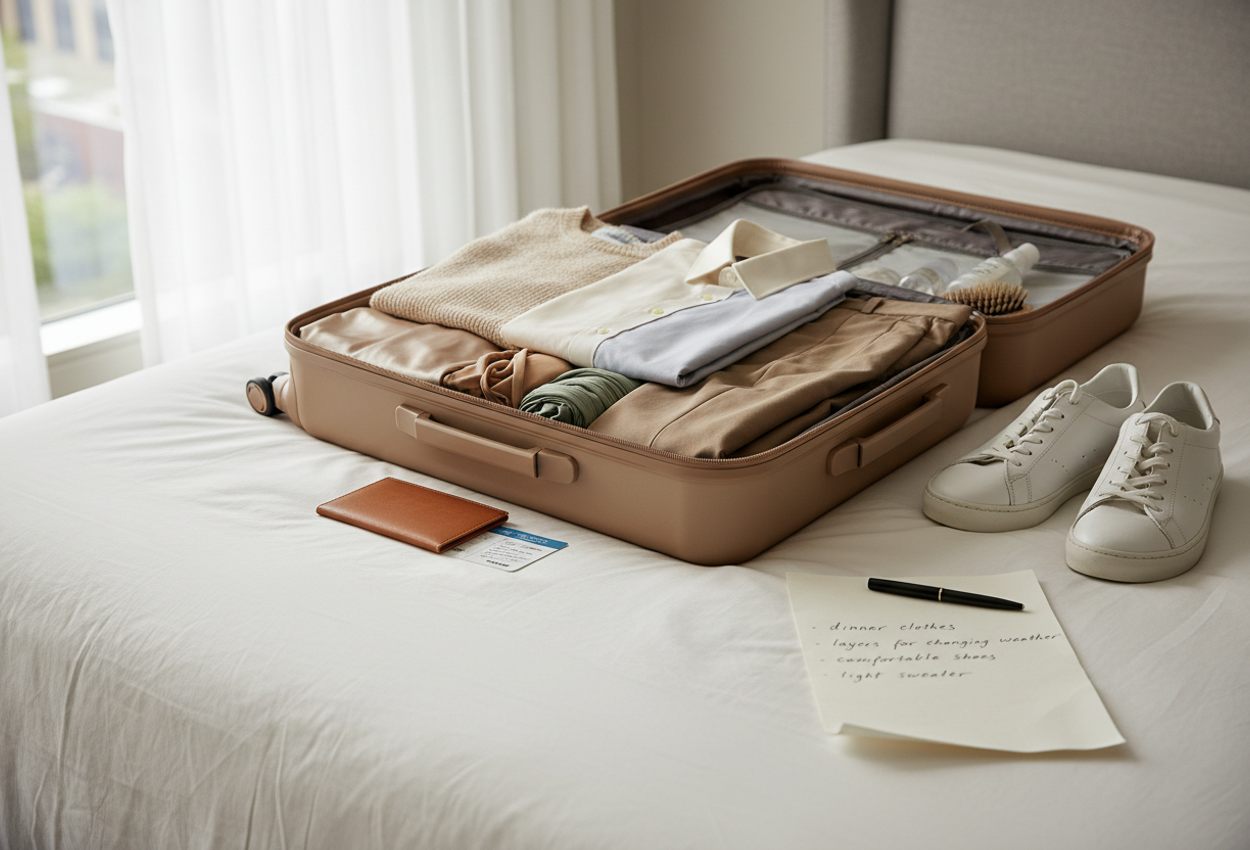
Focus first on universal essentials. No matter where you are going, your partner will need comfortable walking shoes, a pair of dressier shoes, undergarments, sleepwear, and a lightweight jacket or cardigan. Pack at least one full change of clothes in each person’s carry-on, along with basic toiletries in travel-size containers. Tuck necessary medications, a small first-aid kit, and any prescription documentation into a discreet pouch that you keep with you at all times. Identification, passports, and travel cards should be in a secure, easily reachable place—your personal item, not a shared backpack that your partner might rummage through.
Plan outfits that can flex between climates. For a mid-spring trip to Kyoto, think layers: breathable shirts, a light sweater, and a packable rain jacket in case of showers. For Paris, where evenings might cool quickly even after warm days, a tailored coat or trench layered over lighter pieces offers both practicality and style. In Santorini, sundresses or linen trousers paired with a scarf or shawl can transition from daytime boat trip to sunset dinner with ease. Stick to a muted, mix-and-match color palette so each item can work in multiple combinations.
When your partner presses for specifics—do I need hiking shoes? Is it cold? Are we going somewhere fancy?—offer just enough information to inspire excitement but not certainty. You might say Pack something you would wear if we ended up somewhere with beautiful views and at least one outfit that makes you feel incredible at dinner. Emphasize comfort and versatility. If the destination involves any non-negotiable clothing requirements, such as modest attire for temple visits in Kyoto or closed-toe shoes for certain activities, mention them in functional terms without naming exact places.
Local Tip: If you are worried your partner will overpack or underpack, frame the trip as a minimalist challenge or a fun experiment. Tell them you are trying carry-on only for a mystery reason, and that part of the adventure is seeing how much you can do with a compact wardrobe. This transforms constraint into a shared game—even if only one of you knows the destination.
Finally, pack a few small, romantic extras that will reveal their significance only once you arrive. For a Paris escape, this might be a slim volume of poetry you hand them on a bench by the Seine. For Santorini, perhaps a new swimsuit wrapped in tissue paper, presented just before you head to your private plunge pool. In Kyoto, it could be a delicate journal for them to sketch or write in as you move between temples and gardens. These items take up little space but carry emotional weight, anchoring the memory of the trip long after your suitcases are unpacked.
The Grand Reveal: Unveiling the Getaway with Flair
There is a particular electricity in the air at the moment a surprise is unveiled, a shimmer of realization as scattered clues suddenly align. The reveal of a romantic getaway is not just logistics finally coming to light; it is the first beat of the story you have orchestrated. To make it unforgettable, think beyond simply announcing We are going on a trip. Instead, design a reveal that mirrors the destination’s character and your partner’s personality.
Consider the joy of a tangible puzzle. For a Paris escape, you might gift a simple jigsaw or custom-made puzzle whose final image is the Eiffel Tower at dusk or a café-lined boulevard. Wrap it as if it were any other present, perhaps for a birthday or just because, and suggest putting it together over a glass of wine. As the picture emerges—cobblestones, wrought iron, the glint of the Seine—your partner will likely guess the city before the last piece is in place. Only then do you slide over an envelope with printed flight confirmations and a note that reads We leave in three days.
For Santorini, lean into touch and taste. Present a small wooden box filled with sand, tiny seashells, and a miniature blue-domed house, along with a chilled bottle of Greek assyrtiko wine from Santorini. Invite your partner to open the box and pour two glasses. When they look up—half-confused, half-delighted—hand them another box-within-a-box, each layer revealed with increasing clues: a postcard of Oia’s cliffs, a slip of paper with the word caldera, finally the reservation for your cave suite and boat tour printed on heavy cardstock.

If your destination is Kyoto, craft a reveal that feels meditative and layered. Prepare a simple Japanese-inspired tea at home—matcha whisked in a ceramic bowl, perhaps, or green tea served in small cups. Place a slim guidebook about Kyoto on the table, wrapped in plain paper and tied with twine. Ask your partner to open it slowly, then turn to a page you have discreetly marked with sticky notes highlighting places you will soon visit together: Fushimi Inari Taisha, Arashiyama Bamboo Grove, Gion. Tucked into the back, folded like a secret, are your plane tickets.
For those who love stories more than objects, the reveal can be experiential. Tell your partner you have planned a themed at-home date night and design each course as a clue. Begin with an amuse-bouche that hints at your destination—a tiny tart topped with brie and fig for Paris, olives and feta for Santorini, or edamame and miso soup for Kyoto. Between courses, share a short vignette about a city you once dreamed of visiting together. At dessert, present a small envelope under their plate. Inside: the words Pack a bag. We are going there.
Whatever form your reveal takes, build in space to savor the reaction. Have your phone or camera nearby—not shoved in your partner’s face, but ready to discreetly capture the moment their eyes widen or their hand flies to their mouth. These first few seconds of stunned delight, laughter, or even tears are part of the tapestry of the journey. Later, in a quiet moment in your hotel room or on a bench overlooking the sea, you can revisit that photo or short video and relive the spark that set everything in motion.
Hidden Gem Idea: If you live near an airport served by your chosen airline, you can stage the reveal en route. Tell your partner you are going on a simple day out, then drive to the airport with your bags already hidden in the trunk. Once parked, pop the trunk and show them the suitcases. Hand them their passport and a small card with only the departure time and gate written on it. Let them discover the destination from the departure board as you walk toward security together, watching the realization bloom in real time.
Above all, the reveal should feel like an extension of who you are as a couple. Whether quiet and intimate or playful and theatrical, your approach is less about spectacle and more about making your partner feel chosen, considered, and deeply loved.
Contingency Planning: Handling Travel Hiccups with Grace
Even the most carefully plotted romantic escape will encounter moments of unpredictability. A delayed connection, a sudden storm sweeping across the Aegean Sea, a misplaced suitcase in Paris, or a mild illness in Kyoto—these are not failures of planning; they are part of travel’s messy, human texture. What distinguishes a fraught trip from a resilient one is not the absence of problems but the presence of a calm, prepared mindset.
Your first line of defense is comprehensive travel insurance that covers trip interruptions, medical emergencies, and lost or delayed baggage. Purchase a policy shortly after booking your flights and accommodations, and store digital copies of the policy, along with your confirmation emails, in a secure folder accessible offline on your phone. Print a one-page summary with emergency phone numbers and coverage details and keep it in your travel wallet. In the event of an issue, you will not be frantically searching through emails while standing in a crowded terminal.
Equally essential is a small portfolio of critical documents. Before departure, scan or photograph passports, visas, driver’s licenses, and essential prescriptions. Save these to an encrypted cloud folder or a password-protected notes app. Print hard copies to store separately from the originals—perhaps in your partner’s bag, without elaborating on what they contain. Should a document be misplaced, having copies will significantly ease the process of contacting consulates, airlines, or local authorities.

When flights shift or cancel, your role is part advocate, part anchor. Download the relevant airline and travel apps in advance and enable notifications to your secret trip email or your phone only. These tools often update faster than departure boards and allow you to request rebooking, meal vouchers, or hotel rooms with a few taps. If delays threaten to erode your carefully orchestrated timing—a missed sunset in Santorini, a lost night in Kyoto—focus not on what is lost but on how to creatively reshape your plan. Perhaps you trade that first night’s dinner reservation for a spontaneous late-night walk and room-service picnic in your upgraded hotel room.
Pack your carry-on as if it might be all you have for twenty-four hours: a change of clothes, basic toiletries within regulations, medications, and a lightweight layer. This way, if your checked luggage wanders to a different airport, you and your partner can still shower, change, and step out into Paris or along the caldera in Santorini feeling refreshed rather than stranded. Keep a small stash of local currency on hand for taxis, snacks, or tips, especially if you arrive late at night when fewer services are open.
Health-wise, a modest but thoughtfully assembled kit goes a long way. Include pain relievers, motion sickness remedies, bandages, antiseptic wipes, any personal medications, and rehydration tablets. In destinations like Kyoto, where you may be walking for hours through temples and gardens, blister plasters can save the day. Research the location of nearby clinics or pharmacies before you travel, particularly if you or your partner have specific medical needs, and store this information offline in case of patchy service.
Perhaps the most important contingency tool, though, is your demeanor. When things go wrong—and at some point, they likely will—your partner will take their emotional cues from you. If you remain steady, playful even, and willing to improvise, the hiccup can transform into a shared story rather than a sore point. A delayed flight becomes an unexpected airport wine tasting; a sudden rainstorm in Paris turns into an excuse to linger in a tiny café, watching the city blur behind raindrop-streaked windows.
In these unscripted moments, the true romance of the trip often reveals itself. You did not just plan a flawless itinerary; you created a space where the two of you can navigate the world together, side by side, with grace. And when you finally return home, it will not only be the sunsets and rooftop views you remember, but the quiet triumph of handling whatever the journey placed in your path—together.
By the time your plane lands back in your everyday life, your surprise romantic getaway will have become a constellation of memories: the secret tabs and hidden emails, the carefully folded clothes, the heartbeat-quickening reveal, the first glimpse of a foreign skyline, and the small, tender choices you made when the plan bent and shifted. Long after the jet lag fades, the message endures. You loved them enough to imagine a world, and then, in secret, you built it.