

Dauphin Street (Mobile) Travel Guide - Free
Explore Dauphin Street in Mobile with Evendo's free guide. Find the best shops, historic streets, restaurants, and gems on web or mobile.


Dauphin Street in Mobile, Alabama, pairs antebellum architecture, Mardi Gras heritage, independent dining, live music, galleries and downtown Southern culture.
A Street Through Mobile’s Past
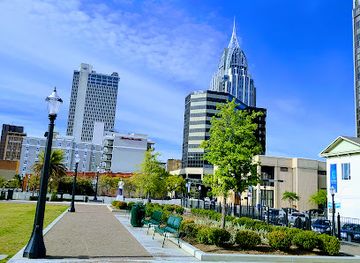
Dauphin Street runs through the historic centre of Mobile, Alabama, linking the formal civic spaces of the downtown core with the restaurants, bars, galleries and independent shops of Lower Dauphin, commonly shortened to LoDa. It is less a neatly bounded neighbourhood than a historic urban corridor, and its character changes from block to block. Around Bienville Square, broad pavements and mature trees frame nineteenth-century commercial buildings; farther west, colourful storefronts and evening venues give the street a more informal, social energy.Read more about Dauphin Street
Architecture and Everyday Life
Food, Music and Mardi Gras
Best attractions in Dauphin Street
Dauphin Street’s principal attraction is the experience of moving through a compact historic downtown rather than visiting a single enclosed sight. Bienville Square, bounded by Dauphin and several adjoining streets, provides a leafy pause among commercial buildings, while the Lower Dauphin Historic District offers a concentrated sequence of restored façades, galleries, restaurants and small shops. The Saenger Theatre on South Joachim Street, a historic cinema and performance venue close to Dauphin, adds an important cultural stop when programmes permit. Nearby museums, including the History Museum of Mobile and the Mobile Carnival Museum, explain the city’s maritime past, civic development and Mardi Gras traditions. Side streets such as Conti and Government reveal additional nineteenth-century architecture, historic houses and links towards the riverfront, making the corridor particularly rewarding for visitors who combine planned museum visits with unhurried walking.
-
Science museum
Exploreum Science Center & Poarch Band of Creek Indians Digital Dome Theater
Discover interactive science exhibits and immersive dome theater experiences at Mobile's premier science center, the Exploreum!
5 min walk · 0.4 km from neighbourhood centre
-
History museum
History Museum of Mobile
Explore 300 years of history in Mobile, Alabama, from its colonial roots to its vibrant modern culture.
5 min walk · 0.4 km from neighbourhood centre
-
Park
Cathedral Square
Discover Mobile's historic heart at Cathedral Square: a vibrant park where history, culture, and community converge in a beautiful downtown setting.
4 min walk · 0.3 km from neighbourhood centre

Best landmarks in Dauphin Street
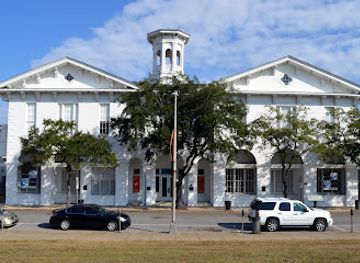
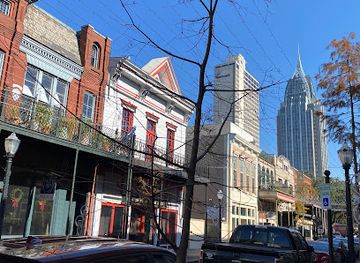
Dauphin Street’s landmarks are closely tied to Mobile’s nineteenth-century commercial prosperity and its preservation movement. Bienville Square is the most recognisable public space along the corridor, its mature planting and formal layout contrasting with the surrounding urban blocks. The Lower Dauphin Street Historic District is significant for the survival of cohesive commercial architecture, including brick buildings, ornate ironwork, projecting balconies and adapted upper floors. The Saenger Theatre nearby represents the grand cinema architecture once common in American downtowns and remains an important cultural building. The street also connects visually and historically with the wider group of civic, religious and commercial structures around Government, Royal and St Francis streets. Individual façades may have changed hands and uses many times, but together they record Mobile’s development as a Gulf port and regional trading centre.
-
 Park
Bienville Square
Discover history and tranquility in the heart of Mobile at Bienville Square, a vibrant park with a rich past and beautiful scenery.
1 min walk · 0.1 km from neighbourhood centre
-
History museum
History Museum of Mobile
Explore 300 years of history in Mobile's landmark Old City Hall, from Native American roots to Mardi Gras celebrations.
5 min walk · 0.4 km from neighbourhood centre
-
Park
Cathedral Square
Discover Mobile's historic heart at Cathedral Square: a vibrant park where history, culture, and community converge in a beautiful downtown setting.
4 min walk · 0.3 km from neighbourhood centre
-
Non-profit organization
Downtown Mobile
Explore the vibrant heart of Alabama's oldest city, where history, culture, and modern energy converge in a walkable downtown experience.
3 min walk · 0.2 km from neighbourhood centre


Explore Dauphin Street on the map
A handpicked selection of must-see spots in Dauphin Street, mapped for you.
Best hotels in Dauphin Street
Best restaurants in Dauphin Street
Dining on and around Dauphin Street reflects Mobile’s Gulf Coast setting and downtown revival. Seafood remains central, with oysters, shrimp and fish appearing alongside Southern comfort food and contemporary regional cooking. Established names such as Wintzell’s Oyster House sit alongside independent restaurants including The Noble South, NoJa and The Dumbwaiter, although visitors should confirm current opening arrangements before planning a meal. Lower Dauphin also supports cafés, bakeries, casual lunch spots, bars with substantial menus and late-evening food, creating a useful range within a walkable area. The city’s French, Spanish, African American, Gulf Coast and broader Southern influences are visible in the ingredients and cooking styles, while nearby markets and specialist food retailers add context. Dining rooms occupy adapted historic storefronts, so the setting is often as much a part of the experience as the menu.
-
Fine Dining
Dauphin’s Casual Fine-Dining
Discover exquisite seafood and steak at Dauphin’s Casual Fine-Dining in Mobile – where casual elegance meets culinary excellence.
1 min walk · 0.1 km from neighbourhood centre
-
Gastropub
Squid Ink Eclectic Eats and Drinks
Discover unique flavors at Squid Ink Eclectic Eats and Drinks, Mobile's premier gastropub with friendly service and an inviting atmosphere.
1 min walk · 0.1 km from neighbourhood centre
-
Grill
T.P. Crockmiers
Experience Southern hospitality at T.P. Crockmiers in Mobile - where delicious grilled dishes meet vibrant atmosphere.
2 min walk · 0.2 km from neighbourhood centre
-
Southern
The Noble South
Experience innovative Southern cuisine at The Noble South, where tradition meets modernity in every delicious dish.
1 min walk · 0.1 km from neighbourhood centre


Best bars in Dauphin Street
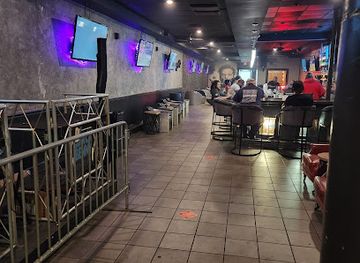
After dark, the Lower Dauphin section of Dauphin Street becomes one of central Mobile’s main clusters for drinks, music and socialising. Bars and beer gardens occupy converted historic shopfronts, with venues such as LoDa Bier Garten, The Haberdasher and Heroes associated with the broader downtown nightlife scene. The emphasis is generally on informal bars, cocktails, craft beer, dancing and live or recorded music rather than a large-scale club district, and the atmosphere varies significantly from one block to the next. Some restaurants remain important evening destinations, while theatres and cultural venues provide alternatives to bar-hopping when performances are scheduled. Weekend nights and festival periods can be busy, particularly around Mardi Gras activity, so visitors should expect pedestrian traffic, queues and occasional street restrictions without assuming that every venue operates on the same timetable.
-
Bar
Wet Willie's
Discover the vibrant vibes of Wet Willie's, Mobile's premier destination for frozen cocktails and delicious food in a tropical atmosphere.
1 min walk · 0.1 km from neighbourhood centre
-
Bar
The Haberdasher
Discover The Haberdasher, Mobile's premier bar, offering creative cocktails and a lively atmosphere in the heart of the city.
1 min walk · 0.1 km from neighbourhood centre
-
Bar
Hayley's Bar
Discover the lively spirit of Hayley's Bar in Mobile, AL, where great drinks, friendly faces, and unforgettable memories await.
3 min walk · 0.3 km from neighbourhood centre
-
Bar
Brickyard
Discover Brickyard: Mobile's lively bar offering craft cocktails and local brews in a vibrant and friendly atmosphere.
3 min walk · 0.2 km from neighbourhood centre


Best nightclubs in Dauphin Street
After dark, the Lower Dauphin section of Dauphin Street becomes one of central Mobile’s main clusters for drinks, music and socialising. Bars and beer gardens occupy converted historic shopfronts, with venues such as LoDa Bier Garten, The Haberdasher and Heroes associated with the broader downtown nightlife scene. The emphasis is generally on informal bars, cocktails, craft beer, dancing and live or recorded music rather than a large-scale club district, and the atmosphere varies significantly from one block to the next. Some restaurants remain important evening destinations, while theatres and cultural venues provide alternatives to bar-hopping when performances are scheduled. Weekend nights and festival periods can be busy, particularly around Mardi Gras activity, so visitors should expect pedestrian traffic, queues and occasional street restrictions without assuming that every venue operates on the same timetable.
-
Bar
Lit Cigar Lounge
Discover the inviting ambiance of Lit Cigar Lounge, Mobile's premier bar for cigar enthusiasts and social gatherings, offering a unique blend of relaxation and community.
3 min walk · 0.2 km from neighbourhood centre
-
Gay night club
B-Bob's Downtown
Experience vibrant nightlife and delicious cuisine at B-Bob's Downtown, Mobile's premier gay nightclub and restaurant.
3 min walk · 0.2 km from neighbourhood centre
-
Bar
Club Love
Experience the vibrant nightlife at Club Love in Mobile, Alabama, where great drinks and music create unforgettable moments.
2 min walk · 0.1 km from neighbourhood centre
-
Bar
The Electric Piano Parlor
Experience the vibrant nightlife at The Electric Piano Parlor in Mobile, where live piano music and delicious drinks create unforgettable moments.
3 min walk · 0.2 km from neighbourhood centre


Best shops in Dauphin Street
Shopping on Dauphin Street is concentrated in independent and specialist businesses rather than a large enclosed retail centre. Visitors can browse books at Bienville Books, pick up regional snacks and gifts at A&M Peanut Shop, and explore boutiques, galleries, antiques and locally oriented gift shops in the Lower Dauphin blocks. The selection changes as small businesses open, relocate or adapt their ranges, so the appeal lies more in browsing historic storefronts than in seeking predictable chain retail. Nearby Royal and Conti streets extend the walk through downtown’s independent commercial fabric, with additional galleries, heritage buildings and specialist retailers. Dauphin Street is also useful for finding Mobile-themed souvenirs and Mardi Gras-related objects, although stock varies. The compact layout makes it easy to combine shopping with architecture, museums, coffee and a meal without treating the street as a conventional high-street shopping district.
-
Candy store
A & M Peanut Shop
Experience the sweet charm of A & M Peanut Shop in Mobile, Alabama, where delectable peanut treats and nostalgic candies await every visitor.
2 min walk · 0.1 km from neighbourhood centre
-
Gift shop
Urban Emporium LLC
Discover Mobile's Urban Emporium: A charming boutique offering unique gifts, fashion accessories, and women's clothing in the heart of Alabama.
3 min walk · 0.2 km from neighbourhood centre
-
Souvenir store
Bienville Souvenir & Gifts
Explore the essence of Mobile at Bienville Souvenir & Gifts, where unique local treasures await every traveler.
3 min walk · 0.3 km from neighbourhood centre


Dauphin Street essentials
Getting There
Getting Around
Safety
Emergency Situations
Do's and Don'ts
Local Tips

From Eve
Local phrases worth knowing
You don't need to get them perfect. A few words go a long way, and locals appreciate the effort.
Basics
| English | Local | Say it |
|---|---|---|
| Hello | Hey y'all | [Hey y'all] |
| Goodbye | See y'all later | [See y'all later] |
| Yes | Yessir/Yes ma'am | [Yessir/Yes ma'am] |
| No | Nah | [Nah] |
| Please/You're welcome | Please/No problem | [Please/No problem] |
| Thank you | Thank ya | [Thank ya] |
| Excuse me/Sorry | Pardon me/My bad | [Pardon me/My bad] |
| How are you? | How y'all doin'? | [How y'all doin'?] |
| Fine. And you? | Fine. You? | [Fine. You?] |
| Do you speak English? | Y'all speak English? | [Y'all speak English?] |
| I don't understand | I ain't catchin' on | [I ain't catchin' on] |
Eating & Drinking
| English | Local | Say it |
|---|---|---|
| I'd like to see the menu, please | Can I see the menu, please | [Can I see the menu, please] |
| I don't eat meat | I don't eat no meat | [I don't eat no meat] |
| Cheers! | Cheers! | [Cheers!] |
| I would like to pay, please | Can I pay now, please | [Can I pay now, please] |
Emergencies
| English | Local | Say it |
|---|---|---|
| Help! | Help! | [Help!] |
| Go away! | Git outta here! | [Git outta here!] |
| Call the Police! | Call the cops! | [Call the cops!] |
| Call a doctor! | Get a doctor! | [Get a doctor!] |
| I'm lost | I'm turned around | [I'm turned around] |
| I'm ill | I'm feelin' sick | [I'm feelin' sick] |
Shopping
| English | Local | Say it |
|---|---|---|
| I'd like to buy... | I wanna buy... | [I wanna buy...] |
| I'm just looking | I'm just browsin' | [I'm just browsin'] |
| How much is it? | How much does it cost? | [How much does it cost?] |
| That's too expensive | That's too pricey | [That's too pricey] |
| Can you lower the price? | Can you do better on the price? | [Can you do better on the price?] |
Time & Numbers
| English | Local | Say it |
|---|---|---|
| What time is it? | What time is it? | [What time is it?] |
| It's one o'clock | It's one o'clock | [It's one o'clock] |
| Half past (10) | Half past ten | [Half past ten] |
| Morning | Mornin' | [Mornin'] |
| Afternoon | Afternoon | [Afternoon] |
| Evening | Evenin' | [Evenin'] |
| Yesterday | Yestiddy | [Yestiddy] |
| Today | Today | [Today] |
| Tomorrow | Tomorra | [Tomorra] |
| 1 | One | [One] |
| 2 | Two | [Two] |
| 3 | Three | [Three] |
| 4 | Four | [Four] |
| 5 | Five | [Five] |
| 6 | Six | [Six] |
| 7 | Seven | [Seven] |
| 8 | Eight | [Eight] |
| 9 | Nine | [Nine] |
| 10 | Ten | [Ten] |
Transport & Directions
| English | Local | Say it |
|---|---|---|
| Where's a/the...? | Where's a/the...? | [Where's a/the...?] |
| What's the address? | What's the address? | [What's the address?] |
| Can you show me (on the map)? | Can you show me (on the map)? | [Can you show me (on the map)?] |
| When's the next (bus)? | When's the next (bus)? | [When's the next (bus)?] |
| A ticket (to ....) | A ticket (to ....) | [A ticket (to ....)] |
History of Dauphin Street
Colonial Mobile and the Street’s Name
Mobile was established by the French in 1702 at the settlement now known as Twenty-seven Mile Bluff before the town moved to its present riverside site in 1711. The street later called Dauphin Street took its name from the French royal title dauphin, traditionally used for the heir to the throne. Mobile subsequently passed under French, British, Spanish and United States control, and the street remained part of the town’s central plan as the settlement developed around its port, river commerce and civic institutions.
A Commercial Street in the Port City
During the nineteenth century, Dauphin Street became one of Mobile’s principal commercial routes. Merchants, professional offices, hotels, restaurants and specialist shops occupied the blocks around the central squares and intersections, serving a port whose trade connected the Gulf Coast with inland Alabama and beyond. Brick commercial buildings, elaborate ironwork and upper-storey offices from this period still shape the street’s appearance. The built environment reflects both Mobile’s commercial prosperity and the repeated need to adapt buildings to heat, storms, changing businesses and evolving transport.
Mardi Gras and Civic Culture
Mobile’s organised Mardi Gras tradition developed through secret societies and public parades during the nineteenth century, making downtown streets such as Dauphin part of the city’s ceremonial landscape. The tradition survived periods of political and economic disruption and became a defining element of Mobile’s civic identity. Nearby institutions, including the Mobile Carnival Museum, preserve the costumes, floats and social history of the celebrations. Dauphin Street’s restaurants, bars and public spaces continue to participate in the broader downtown culture of parades, festivals and evening gatherings.
Historic Preservation and Lower Dauphin
As retail patterns shifted towards newer commercial areas in the twentieth century, parts of central Mobile experienced vacancy and deterioration. Preservation efforts later recognised the architectural value of the blocks around Lower Dauphin Street, which were placed on the National Register of Historic Places as the Lower Dauphin Street Historic District in 1979. Rehabilitation brought historic shopfronts back into use and encouraged restaurants, bars, galleries and independent retailers. The result is a district where restored heritage buildings coexist with contemporary businesses, while debates about redevelopment and the cost of maintaining an old downtown remain part of its changing identity.
Dauphin Street in Photos
Browse through our photo collection highlighting the charm and character of the destination.
Neighbourhoods near Dauphin Street
The closest neighbourhoods to Dauphin Street, if you have time for more than one stop.
-

-

-

-


Swipe for more neighbourhoods
Explore more

Explore more of Mobile
Mobile, Alabama blends Gulf Coast history, Mardi Gras tradition, Creole seafood, historic architecture and museums with easy access to bay and delta.
Explore Mobile