

Free Delvina Travel Guide & Mobile App
Explore Delvina with free travel guides. Discover regional history, expert tips, proposed trips, and audio guides on web or mobile app.


Explore Delvina in southern Albania for Ottoman heritage, hillside ruins, olive groves, villages and the remarkable Blue Eye spring.
Read more about Delvina
When is the best time to visit Delvina?
Best: May–June, September · 24–28°C| Month | High (°C) | Rainfall (mm) |
|---|---|---|
| January | 11 | 125 |
| February | 13 | 106 |
| March | 16 | 93 |
| April | 19 | 73 |
| May (best) | 24 | 61 |
| June (best) | 28 | 43 |
| July | 30 | 31 |
| August | 30 | 32 |
| September (best) | 26 | 56 |
| October | 21 | 86 |
| November | 17 | 110 |
| December | 13 | 118 |
Getting to and around Delvina
How to get there
Transportation
Top city travel guides in Delvina
The cities of Delvina, and the easiest places to base yourself.
-

-


Swipe for more cities
Destinations in Delvina
Resorts, valleys and scenic spots worth a trip of their own.

Swipe for more destinations
Best attractions in Delvina
Delvina’s attractions combine a modest historic town with a broad rural setting. Delvina Castle is the principal heritage site, occupying a defensible hill above the town and offering views across the surrounding valleys and olive groves. In town, the Gjin Aleks Mosque and surviving Ottoman-era elements provide an introduction to the area’s Islamic architectural heritage. The municipality’s villages are worthwhile for travellers interested in traditional settlement patterns, stone buildings, small churches, agricultural landscapes and the quieter rhythms of southern Albanian life. The Blue Eye, or Syri i Kaltër, is the region’s best-known natural attraction: a vivid karst spring near Muzinë, surrounded by wooded slopes and clear streams. Walkers and photographers can explore the countryside, although paths away from established access areas may be rough and should be approached with local advice. Delvina also makes a useful base for excursions to nearby archaeological and historic sites in Finiq and around Sarandë, but these lie outside Delvinë municipality and should not be confused with its own attractions.
-
Nature preserve
The Blue Eye
Discover the enchanting Blue Eye of Albania: a natural spring with mesmerizing beauty and captivating legends.
-
Castle
Castle of Gjirokastra
Explore the imposing Gjirokastra Castle, a Balkan fortress with a rich history, stunning views, and unique museums in the UNESCO-listed 'City of Stone'.
-
Tourist attraction
Berat Castle
Explore Berat Castle, a UNESCO World Heritage Site: a living fortress with ancient roots, stunning views, and a unique blend of history and culture.
-
Tourist attraction
Rozafa Castle
Explore Rozafa Castle in Shkodër: a historic fortress with stunning views, rich legends, and well-preserved ruins from Illyrian, Venetian, and Ottoman eras.


Best landmarks in Delvina
Delvina Castle is the defining landmark of the area, rising on a rocky hill above the town and marking the strategic routes between the Ionian coast and southern Albania’s inland valleys. Its surviving walls and scattered remains are more atmospheric than monumental, but the site’s elevated position makes its historical purpose immediately apparent. In the town below, the Gjin Aleks Mosque is an important Ottoman-period landmark and a reminder of Delvina’s former role as a regional administrative and commercial centre. The surrounding landscape supplies a different kind of landmark: the Blue Eye near Muzinë is recognised for the intense blue of its karst spring and the wooded gorge around it. Traditional stone houses, olive terraces and village churches add local character, though many are modest and require respectful observation rather than formal sightseeing. The ancient city of Phoenice and the Monastery of Saint Nicholas at Mesopotam are significant nearby landmarks, but both are outside Delvinë municipality in neighbouring Finiq and should be visited as separate excursions.
-
National park
Butrint National Archaeological Park
Explore ancient ruins and natural beauty at Butrint National Park, a UNESCO World Heritage site in Albania with Greek, Roman, and Venetian history.
-
Nature preserve
The Blue Eye
Explore the enchanting Blue Eye in Albania, a stunning natural spring with vibrant turquoise waters and rich wildlife, perfect for relaxation and photography.
-
Tourist attraction
Skanderbeg Square
Experience the vibrant heart of Albania in Tirana's Skanderbeg Square, a hub of history, culture, and modern life.
-
Castle
Castle of Gjirokastra
Explore Gjirokastra Castle: A Balkan fortress with centuries of history, stunning views, and unique Cold War relics.


Explore Delvina on the map
Plan your trip on one map. See where the top cities, national parks and sights are, and book hotels and experiences in a few clicks.
Best hotels in Delvina
Best restaurants in Delvina
Dining in Delvina is primarily local and informal, with small restaurants, cafés and family-run establishments serving the food of southern Albania. Expect olive oil, seasonal vegetables, beans, salads, grilled meat, dairy products, bread and herbs from the surrounding countryside. Tavë-style baked dishes and simple grilled preparations are common regional choices, while village meals may make greater use of locally produced yoghurt, cheese and preserves. The area’s inland position gives its cuisine a more agricultural character than the seafood-led restaurants of nearby Sarandë, although the coast is close enough for visitors to combine both traditions. Coffee remains an important part of daily social life, and simple cafés are often the most reliable places for a pause in town. Larger and more varied dining options are available in Sarandë, while rural venues may operate seasonally or accept cash only. Asking for the day’s available dishes can be more useful than expecting an extensive fixed menu.
-
Restaurant
Taverna Lani
Experience authentic Albanian flavors at Taverna Lani in Gjirokaster—where tradition meets taste in every dish.
-
Family-friendly
Taverna Joan
Experience authentic Albanian flavors at Taverna Joan in Saranda—where family-friendly dining meets stunning seaside views.
-
Restaurant
Taverna Labëria
Discover authentic Albanian flavors at Taverna Labëria in Sarandë – where tradition meets taste amidst stunning coastal views.
-
Restaurant
Balcony Restaurant
Experience breathtaking views and authentic Albanian cuisine at Balcony Restaurant in Sarandë - where every meal is a celebration.


Best bars in Delvina
Delvina has a quiet evening scene centred on cafés, traditional bars and restaurants rather than nightclubs. Residents commonly gather for coffee, conversation and televised sport, and the atmosphere is local and unhurried. A few venues may serve Albanian beer, raki and other drinks, but opening arrangements and seasonal activity can change. Visitors seeking live music, cocktails or late-night entertainment will find a wider choice in Sarandë, outside the municipality on the Ionian coast. In Delvina’s villages, evenings are generally oriented towards family life, informal gatherings and rural hospitality rather than organised nightlife. Raki is a traditional spirit, but it should be sampled responsibly and never treated as a requirement for participating in local culture. During summer, the coastal resort scene can be considerably busier than the inland town, making it practical to stay in Delvina for heritage and countryside visits while travelling elsewhere for a later evening.
-
Cocktail bar
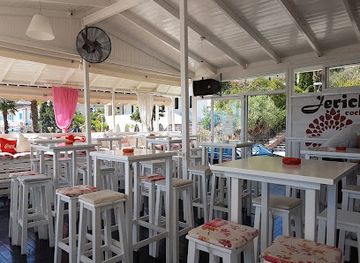
Jericho Cocktail Bar
Experience the vibrant nightlife of Sarandë at Jericho Cocktail Bar, where exquisite cocktails meet breathtaking seaside views.
-
Bar
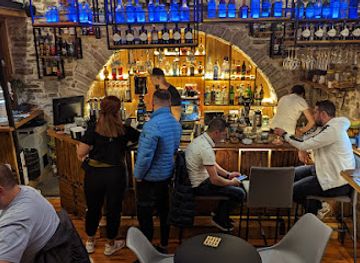
Hangover Cocktail Bar
Discover the lively Hangover Cocktail Bar in Gjirokaster, where innovative cocktails and a friendly atmosphere await you.
-
Cocktail bar
Tipsy drinks and more
Experience the vibrant nightlife of Sarandë at Tipsy Drinks and More, your go-to cocktail bar for creative drinks and a lively atmosphere.
-
Bar
Wine Bar Kristiano
Experience the rich flavors of Albanian wines at Wine Bar Kristiano, a cozy retreat in Sarandë, perfect for wine lovers and casual tourists alike.


Best nightclubs in Delvina
Delvina has a quiet evening scene centred on cafés, traditional bars and restaurants rather than nightclubs. Residents commonly gather for coffee, conversation and televised sport, and the atmosphere is local and unhurried. A few venues may serve Albanian beer, raki and other drinks, but opening arrangements and seasonal activity can change. Visitors seeking live music, cocktails or late-night entertainment will find a wider choice in Sarandë, outside the municipality on the Ionian coast. In Delvina’s villages, evenings are generally oriented towards family life, informal gatherings and rural hospitality rather than organised nightlife. Raki is a traditional spirit, but it should be sampled responsibly and never treated as a requirement for participating in local culture. During summer, the coastal resort scene can be considerably busier than the inland town, making it practical to stay in Delvina for heritage and countryside visits while travelling elsewhere for a later evening.
-
Club
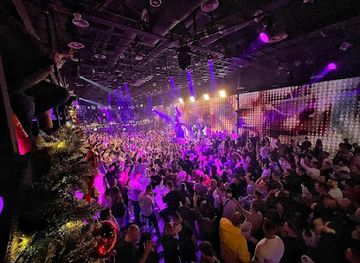
Orange Club Sarande
Dive into the vibrant nightlife at Orange Club Sarande, where the beats never stop and the views are breathtaking.
-
Cocktail bar
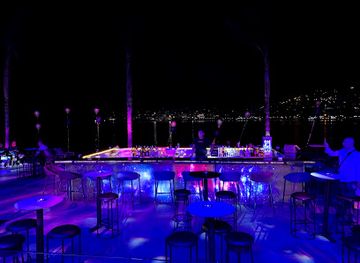
Hojza Lounge Terrace
Discover Hojza Lounge Terrace, a stunning rooftop cocktail bar in Saranda, Albania, offering breathtaking views and a vibrant atmosphere for all visitors.
-
Night club
Living Room Antik
Dive into the heart of Tirana's nightlife at Living Room Antik, a vibrant night club and beer hall where culture and entertainment come alive.
-
Night club
Cinco Cavalli Premium Club
Discover the vibrant nightlife at Cinco Cavalli Premium Club, the ultimate destination for unforgettable parties in Sauk, Albania.


Best shops in Delvina
Shopping in Delvina is practical and locally oriented rather than centred on large retail districts. Small shops and market-style businesses in town sell everyday goods, seasonal fruit and vegetables, dairy products, olives and other foods from the surrounding agricultural area. Visitors may find honey, preserves, herbs, olive oil and raki through local producers or informal rural sales, although quality, labelling and availability vary, so buy directly from established sellers where possible. Traditional woven goods, handicrafts and small religious or decorative objects may appear in village and town shops, but Delvina is not a major craft-shopping centre. Sarandë, outside the municipality, offers a broader selection of beachwear, souvenirs, groceries and tourist-oriented retail. For more distinctive Albanian products, look for properly labelled regional foods and handmade items rather than mass-produced souvenirs. Carry cash for small purchases, and remember that rural shops may have limited stock and irregular opening arrangements.
-
Nature preserve
The Blue Eye
Explore the captivating beauty of The Blue Eye, a stunning natural spring in Albania known for its vibrant turquoise waters and serene landscapes.
-
Souvenir store
Gjirokastra Bazaar
Discover the vibrant Gjirokastra Bazaar in Albania, where local craftsmanship meets cultural heritage in a delightful shopping experience.
-
Supermarket
Gjinika Supermarket
Discover local flavors and essentials at Gjinika Supermarket in Sarandë, Albania, your go-to destination for groceries and more.
-
Tobacco shop
Tabacco Shop & more
Experience the essence of Sarandë at Tabacco Shop & More, where local culture and quality tobacco come together in a vibrant atmosphere.



Get your free copy of our complete guide to Delvina, delivered straight to you.
Everything on this page, from attractions and restaurants to essentials and local phrases, in one PDF you can read offline, print or share.
Already have an account? Sign in
Your Delvina guide is ready.
We'll send it to · Not you? Sign out

Getting your guide ready…
We are putting together a fresh copy of the Delvina guide. This can take up to a minute.
This can take a few moments. If your browser asks, choose Allow so the download can start. You'll find the guide in your Downloads folder.
Nothing happened? Download it again
Sorry, the guide is taking longer than usual. Please try again in a minute, or get it by email instead.
Delvina essentials
Currency and Payment
Safety
Emergency Situations
Do's and Don'ts
Local Tips
From Eve
Local phrases worth knowing
You don't need to get them perfect. A few words go a long way, and locals appreciate the effort.
Basics
| English | Local | Say it |
|---|---|---|
| Hello | Përshëndetje | [Per-shen-deh-tye] |
| Goodbye | Mirupafshim | [Mee-roo-paf-sheem] |
| Yes | Po | [Poh] |
| No | Jo | [Yoh] |
| Please/You're welcome | Të lutem/Faleminderit | [Te loo-tem/Fah-leh-meen-deh-rit] |
| Thank you | Faleminderit | [Fah-leh-meen-deh-rit] |
| Excuse me/Sorry | Më falni | [Meh fahl-nee] |
| How are you? | Si jeni? | [See yeh-nee?] |
| Fine. And you? | Mirë. Dhe ti? | [Meer. Dhe tee?] |
| Do you speak English? | A flisni anglisht? | [Ah flees-nee an-glisht?] |
| I don't understand | Nuk kuptoj | [Nook koop-toy] |
Eating & Drinking
| English | Local | Say it |
|---|---|---|
| I'd like to see the menu, please | Do doja të shoh menunë, ju lutem | [Doh doh-yah te show men-oon-eh, yoo loo-tem] |
| I don't eat meat | Nuk ha mish | [Nook hah meesh] |
| Cheers! | Gëzuar! | [Guh-zoo-ar!] |
| I would like to pay, please | Do doja të paguaj, ju lutem | [Doh doh-yah te pah-goo-ah-y, yoo loo-tem] |
Emergencies
| English | Local | Say it |
|---|---|---|
| Help! | Ndihmë! | [Ndee-meh!] |
| Go away! | Shko larg! | [Sh-koh lar-g!] |
| Call the Police! | Thirrni policinë! | [Theer-nee poh-lee-cheen-eh!] |
| Call a doctor! | Thirrni një mjek! | [Theer-nee nyeh mee-ek!] |
| I'm lost | Jam i humbur | [Yahm ee hoom-boor] |
| I'm ill | Jam i sëmurë | [Yahm ee suh-moor-eh] |
Shopping
| English | Local | Say it |
|---|---|---|
| I'd like to buy... | Do doja të blej... | [Doh doh-yah te bleh...] |
| I'm just looking | Po shikoj vetëm | [Poh shee-koy veh-tem] |
| How much is it? | Sa kushton? | [Sah koosh-ton?] |
| That's too expensive | Kjo është shumë e shtrenjtë | [Kyo esht shoom eh shtren-tay] |
| Can you lower the price? | A mund të uleni çmimin? | [Ah moond te oo-leni chmee-neen?] |
Time & Numbers
| English | Local | Say it |
|---|---|---|
| What time is it? | Sa është ora? | [Sah esht oh-rah?] |
| It's one o'clock | Është një orë | [Esht nyeh oh-rah] |
| Half past (10) | Gjysmë pas (10) | [Jee-smeh pahs (deesh)] |
| Morning | Mëngjes | [Men-jes] |
| Afternoon | Pasdite | [Pahs-dee-teh] |
| Evening | Mbrëmje | [M-brem-yeh] |
| Yesterday | Dje | [Dyeh] |
| Today | Sot | [Sote] |
| Tomorrow | Nesër | [Neh-ser] |
| 1 | Një | [Nyeh] |
| 2 | Dy | [Dee] |
| 3 | Tre | [Tre] |
| 4 | Katër | [Kah-tur] |
| 5 | Pesë | [Pe-seh] |
| 6 | Gjashtë | [Jah-sht] |
| 7 | Shtatë | [Shta-teh] |
| 8 | Tetë | [Te-teh] |
| 9 | Nëntë | [Nuhn-teh] |
| 10 | Dhjetë | [Dhee-yeh] |
Transport & Directions
| English | Local | Say it |
|---|---|---|
| Where's a/the...? | Ku është një...? | [Koo esht nyeh...?] |
| What's the address? | Cila është adresa? | [Tsee-lah esht ah-dreh-sah?] |
| Can you show me (on the map)? | A mund të më tregoni (në hartë)? | [Ah moond te meh treh-goh-nee (neh hahr-teh)?] |
| When's the next (bus)? | Kur është autobuzi tjetër? | [Koor esht ow-toh-boo-zee tee-eht-er?] |
| A ticket (to ....) | Një biletë (për ....) | [Nyeh bee-leh-tah (pur ....)] |
History of Delvina
Ancient Chaonia and the Epirus Borderland
Delvina lies within the historical landscape associated with Chaonia, an ancient region of Epirus whose communities occupied the valleys and uplands of southern Albania and north-western Greece. The area was connected to nearby settlements and routes rather than isolated from the Ionian coast. Archaeological remains across the wider region, including the important ancient city of Phoenice outside Delvinë municipality, show the political and commercial significance of southern Epirus. Delvina’s later development was shaped by this long-standing position between coastal Albania, inland valleys and the Greek-speaking world.
Medieval Fortifications and Christian Traditions
During the medieval period, southern Albania was influenced by Byzantine, local Epirote and later Serbian and Angevin powers. The hilltop fortification at Delvina reflects the strategic need to supervise routes between the coast and the interior, although the visible remains represent several phases of occupation and alteration. Medieval Christian traditions also left a durable mark on the surrounding villages, where churches and religious sites formed the focus of local communities. Political control changed repeatedly, but the region retained its importance as a passage through the southern Albanian landscape.
Ottoman Delvina and the Rise of a Regional Centre
The Ottoman conquest brought Delvina into a new administrative and commercial system linking southern Albania with Epirus and the wider empire. The town developed as a regional centre, and its historic fabric acquired mosques, houses, religious foundations and market functions associated with Ottoman urban life. Delvina’s mixed religious and linguistic environment was characteristic of the southern borderlands. The Gjin Aleks Mosque is among the clearest surviving reminders of this period, while the castle and old settlement patterns suggest the town’s continuing strategic role.
Trade, Agriculture and Local Elites in the Ottoman Era
For several centuries, Delvina’s economy depended on agriculture, livestock, olive cultivation and exchange between inland settlements and the Ionian coast. Local landholders, religious institutions and merchants helped shape the town and its villages, while roads connected the area with Sarandë, Gjirokastër and settlements in Epirus. The landscape was not defined by a single industry; instead, household farming and regional trade supported a dispersed rural society. Many surviving stone houses, terraces and olive groves belong to this broader historical pattern of land use.
National Awakening and the Formation of Modern Albania
In the late nineteenth and early twentieth centuries, the southern Albanian lands became part of debates over language, education, religion and political allegiance that accompanied the Albanian national movement. Delvina’s location near the Greek border made these questions especially complex, as Albanian- and Greek-speaking communities shared the same wider region. The establishment of the Albanian state in 1912 brought new administrative boundaries and institutions, while the town continued to function as a local centre for its surrounding villages.
War, Social Transformation and the Communist Period
The region experienced the upheavals of the twentieth century, including the Balkan conflicts, the Second World War and the establishment of communist rule after 1944. Under communism, land and productive organisations were brought under state control, religious institutions were closed or restricted, and rural life was reorganised through state farms and collective agriculture. These changes altered Delvina’s social structure and relationship with its religious heritage. After the fall of communism, migration and economic restructuring reduced the population of many villages, while tourism and private agriculture became increasingly important.
Delvina in Photos
Browse through our photo collection highlighting the charm and character of the destination.
Neighbouring regions of Delvina
The closest regions to Delvina, if you have time for more than one.
-

-

-

-

-


Swipe for more regions
Explore more

Explore more of Albania
Discover Albania: A land of untamed beauty, rich history, and warm hospitality, offering stunning beaches, rugged mountains, and vibrant cities.
Explore Albania