

Arizona State University (Tempe) Travel Guide - Free
Explore Arizona State University in Tempe with Evendo's free guide. Find the best shops, historic streets, restaurants, and gems on web or mobile.


Arizona State University in Tempe blends desert campus life, Frank Lloyd Wright architecture, student culture, arts, dining and easy access to Mill Avenue.
A University Set in the Sonoran Desert
Arizona State University’s Tempe campus occupies a broad, walkable district in the centre of Tempe, where palm-lined paths, modern academic buildings and desert light create a distinctive university landscape. The campus is not a formally bounded neighbourhood, but it functions as one in everyday life: a large network of quads, lecture halls, museums, performance spaces, student facilities and public routes linking central Tempe with Mill Avenue, Tempe Town Lake and the slopes of Hayden Butte.Read more about Arizona State University
Architecture, Art and Public Space
Campus Life and Central Tempe
Best attractions in Arizona State University
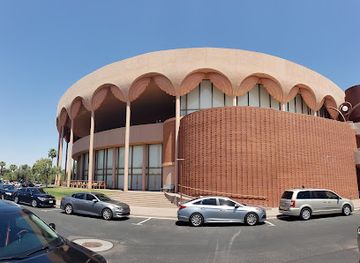
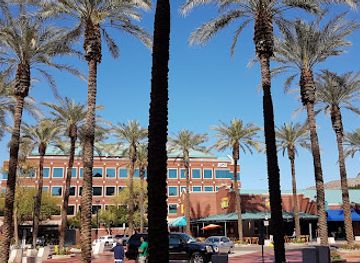
Arizona State University’s Tempe campus offers a varied circuit of cultural, architectural and public attractions rather than a single visitor centre. Old Main, the university’s oldest surviving building, provides a historical starting point, while Palm Walk links shaded planting, student activity and several of the campus’s best-known views. The ASU Art Museum presents changing exhibitions in a purpose-built contemporary setting, and the nearby Nelson Fine Arts Center connects visual art with the university’s teaching environment. Gammage Memorial Auditorium is a major attraction in its own right, combining Frank Lloyd Wright’s design with a programme of theatre, dance and music. Sun Devil Stadium dominates the eastern campus and becomes especially significant during university sporting events. Beyond the university boundary, Mill Avenue, Tempe Town Lake and Hayden Butte add commercial, waterfront and desert landscapes to a visit rooted in campus life.
-
Performing arts theater
ASU Gammage
Discover the exquisite architecture and vibrant performances at ASU Gammage, a Frank Lloyd Wright masterpiece in Tempe, Arizona.
16 min walk · 1.3 km from neighbourhood centre
-
Park
Rio Salado Park
Explore the natural beauty and recreational activities at Rio Salado Park, a serene escape in Tempe, Arizona for tourists and nature lovers alike.
18 min walk · 1.4 km from neighbourhood centre
-
Tourist attraction
Downtown Tempe
Explore the dynamic charm of Downtown Tempe, where culture, dining, and scenic views along the Rio Salado come together for an unforgettable experience.
16 min walk · 1.3 km from neighbourhood centre
-
Park
James Turrell ASU Skyspace: Air Apparent
Experience the breathtaking interplay of light and nature at James Turrell ASU Skyspace: Air Apparent in Tempe, Arizona.
7 min walk · 0.5 km from neighbourhood centre


Best landmarks in Arizona State University
The most important landmark within Arizona State University’s Tempe district is Old Main, whose late-nineteenth-century presence points to the campus’s beginnings as a territorial teacher-training school. Palm Walk is less a single monument than a defining linear feature, linking major parts of the university through mature planting and a recognisable pedestrian route. Gammage Memorial Auditorium, designed by Frank Lloyd Wright and completed in 1964, is the campus’s most distinctive architectural statement, with its monumental circular mass and theatrical interior. Sun Devil Stadium is the university’s principal sporting structure and an important symbol of campus identity, while the ASU Art Museum represents the institution’s public commitment to contemporary art. Hayden Butte, just beyond the southern campus edge, provides a prominent geological and cultural landmark for central Tempe rather than belonging wholly to the university grounds.
-
Performing arts theater
ASU Gammage
A Frank Lloyd Wright masterpiece and vibrant performing arts center in the heart of Tempe, Arizona, hosting Broadway shows, concerts, and more.
16 min walk · 1.3 km from neighbourhood centre
-
University
Arizona State University Tempe Campus
Explore a vibrant blend of history, academics, and culture at ASU's Tempe campus, home to iconic architecture and a dynamic university atmosphere.
2 min walk · 0.1 km from neighbourhood centre
-
Tourist attraction
Downtown Tempe
Experience the energy of Arizona! Downtown Tempe: where ASU meets vibrant nightlife, dining, arts, and Tempe Town Lake.
16 min walk · 1.3 km from neighbourhood centre
-
Mountain peak
Tempe Butte
Hike Tempe Butte, an iconic landmark with panoramic views, rich history, and a touch of ASU spirit. A must-see Tempe destination!
11 min walk · 0.8 km from neighbourhood centre

Explore Arizona State University on the map
A handpicked selection of must-see spots in Arizona State University, mapped for you.
Best hotels in Arizona State University
Best restaurants in Arizona State University
Dining around Arizona State University reflects the scale and changing population of a major urban campus. The Memorial Union and other university facilities provide convenient food options for students and visitors during operating periods, while the strongest concentration of independent restaurants, cafés, dessert shops and casual eateries begins along Mill Avenue immediately west of campus. The surrounding streets offer a broad mixture of American, Mexican, Asian and contemporary fast-casual cooking, shaped by Tempe’s student population and metropolitan setting rather than by one singular local cuisine. Coffee shops and quick meals are particularly practical between campus visits, while restaurants near the university and stadium can become busy during performances, games and graduation events. Visitors should distinguish the university’s internal dining facilities from the commercial businesses of central Tempe, since access, hours and availability differ between the two areas.
-
American
Culinary Dropout
Experience the best of American cuisine at Culinary Dropout in Tempe, where great food meets live music in an inviting atmosphere.
5 min drive · 1.6 km from neighbourhood centre
-
Hamburger
The Chuckbox
Experience the ultimate burger delight at The Chuckbox in Tempe - where quality meets affordability in a family-friendly setting.
10 min walk · 0.8 km from neighbourhood centre
-
Restaurant
Postino Annex
Experience the flavors of Postino Annex in Tempe: Delightful brunches, exquisite wines, and a warm atmosphere await you.
8 min walk · 0.6 km from neighbourhood centre
-
American
Perfect Pear Bistro
Discover the culinary delights at Perfect Pear Bistro in Tempe, AZ - where fresh ingredients meet innovative American cuisine.
5 min drive · 1.8 km from neighbourhood centre


Best bars in Arizona State University
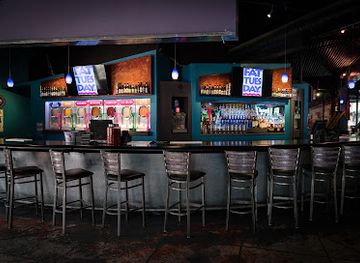
After dark, Arizona State University has two overlapping but distinct scenes: campus events and the commercial nightlife of Mill Avenue. The university hosts performances at Gammage Memorial Auditorium, concerts, lectures and sporting events, producing an evening atmosphere that changes with the academic and events calendar. Immediately west of campus, Mill Avenue is Tempe’s principal concentration of bars, late-opening restaurants, live entertainment and student-oriented venues, although it is a city street rather than part of the university itself. The area can be particularly busy around Sun Devils fixtures, concerts and major campus occasions. Away from Mill Avenue and event venues, much of the campus becomes quieter, with residential and academic areas better suited to walking than spontaneous nightlife. Visitors should check individual venue and university arrangements rather than assume that all facilities operate late.
-
Sports bar
Devil's Advocate Sports Grill
Discover Devil's Advocate Sports Grill: Tempe's ultimate sports bar and gastropub, where great food meets an electrifying atmosphere.
6 min walk · 0.4 km from neighbourhood centre
-
Bar
Fat Tuesday
Discover the lively spirit of Fat Tuesday in Tempe, where delicious frozen cocktails and vibrant nightlife await every visitor.
14 min walk · 1.1 km from neighbourhood centre
-
Bar
Alibi
Experience Tempe's nightlife at Alibi, a vibrant bar known for its craft cocktails, lively ambiance, and delicious bites.
12 min walk · 0.9 km from neighbourhood centre
-
Grill
Sunbar Tempe
Discover the lively ambiance and delectable cuisine at Sunbar Tempe, a premier grill and event venue in the heart of Arizona.
15 min walk · 1.2 km from neighbourhood centre


Best nightclubs in Arizona State University
After dark, Arizona State University has two overlapping but distinct scenes: campus events and the commercial nightlife of Mill Avenue. The university hosts performances at Gammage Memorial Auditorium, concerts, lectures and sporting events, producing an evening atmosphere that changes with the academic and events calendar. Immediately west of campus, Mill Avenue is Tempe’s principal concentration of bars, late-opening restaurants, live entertainment and student-oriented venues, although it is a city street rather than part of the university itself. The area can be particularly busy around Sun Devils fixtures, concerts and major campus occasions. Away from Mill Avenue and event venues, much of the campus becomes quieter, with residential and academic areas better suited to walking than spontaneous nightlife. Visitors should check individual venue and university arrangements rather than assume that all facilities operate late.
-
Bar
Fat Tuesday
Experience the vibrant nightlife of Tempe at Fat Tuesday, a cocktail bar known for its festive atmosphere and creative drinks.
14 min walk · 1.1 km from neighbourhood centre
-
Night club
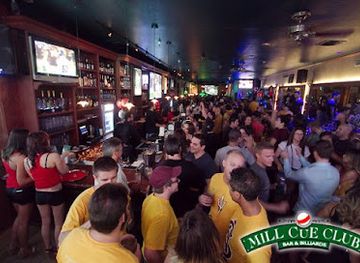
Mill Cue Club
Discover the vibrant nightlife at Mill Cue Club in Tempe, Arizona - where fun, pool, and good vibes come together in an unforgettable experience.
13 min walk · 1.1 km from neighbourhood centre
-
Lounge
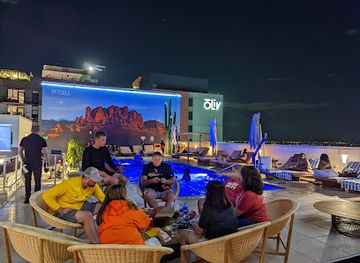
Skysill Rooftop Lounge
Discover the ultimate rooftop experience at Skysill Lounge in Tempe, where stunning views, delicious cocktails, and a vibrant atmosphere await.
13 min walk · 1.0 km from neighbourhood centre
-
Night club
University Club At ASU
Experience the vibrant atmosphere of the University Club at ASU, a premier destination for nightlife and events in Tempe, Arizona.
8 min walk · 0.6 km from neighbourhood centre

Best shops in Arizona State University
Shopping within Arizona State University is primarily functional and campus-oriented, with university bookstores, convenience services and outlets serving students rather than a traditional high street. The more varied retail experience begins on Mill Avenue immediately west of the campus, where independent shops, fashion retailers, specialist businesses, cafés and food outlets occupy a compact central-Tempe corridor. Stock and individual businesses change over time, but the area is generally more suitable for browsing gifts, clothing, books and everyday items than the academic core. Event days can bring temporary merchandise and heavier footfall around the stadium and performance venues. Visitors should also distinguish Mill Avenue’s commercial streets from the university’s internal facilities, which may have different access arrangements and schedules. For a broader shopping trip, larger retail centres elsewhere in the Phoenix metropolitan area are more extensive than the university district.
-
Shopping mall
Centerpoint on Mill
Discover Tempe's shopping paradise at Centerpoint on Mill, a vibrant hub for retail, dining, and entertainment in Arizona.
15 min walk · 1.2 km from neighbourhood centre
-
Gift shop
Sun Devil Campus Store - Tempe
Visit the Sun Devil Campus Store in Tempe for a unique shopping experience blending gifts, clothing, and books, celebrating Arizona State University's vibrant spirit.
10 min walk · 0.8 km from neighbourhood centre
-
Shopping mall
Broadway Marketplace
Explore Broadway Marketplace in Tempe, Arizona – a vibrant shopping mall offering diverse retail, dining, and entertainment options for every visitor.
6 min drive · 2.0 km from neighbourhood centre
-
Shopping mall
Mill Avenue Shops
Discover the eclectic mix of boutiques, eateries, and art at Mill Avenue Shops in Tempe, Arizona – a shopper's paradise and cultural hub.
14 min walk · 1.1 km from neighbourhood centre

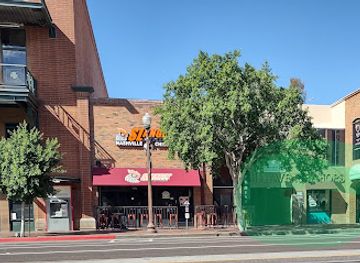
Arizona State University essentials
Getting There
Getting Around
Safety
Emergency Situations
Do's and Don'ts
Local Tips

From Eve
Local phrases worth knowing
You don't need to get them perfect. A few words go a long way, and locals appreciate the effort.
Basics
| English | Local | Say it |
|---|---|---|
| Hello | Howdy | [haw-dee] |
| Goodbye | See ya | [see yuh] |
| Yes | Yep | [yep] |
| No | Nope | [nohp] |
| Please/You're welcome | Please/You're welcome | [pleez/yor wel-kuhm] |
| Thank you | Thanks | [thanks] |
| Excuse me/Sorry | Excuse me/Sorry | [eks-kyoos mee/sor-ee] |
| How are you? | How you doin'? | [how yoo doo-in] |
| Fine. And you? | Good. How 'bout you? | [good. how bout yoo] |
| Do you speak English? | Y'all speak English? | [yawl speak ing-glish] |
| I don't understand | I ain't got a clue | [I aint got uh kloo] |
Eating & Drinking
| English | Local | Say it |
|---|---|---|
| I'd like to see the menu, please | Can I check out the menu? | [kan eye chek out thuh men-yoo] |
| I don't eat meat | I don't do meat | [I dont doh meet] |
| Cheers! | Cheers! | [cheers] |
| I would like to pay, please | I'll settle up now, thanks | [I'll set-ul up now, thanks] |
Emergencies
| English | Local | Say it |
|---|---|---|
| Help! | Help! | [help] |
| Go away! | Get lost! | [get lost] |
| Call the Police! | Ring the cops! | [ring thuh cops] |
| Call a doctor! | Call a doc! | [call uh doc] |
| I'm lost | I'm turned around | [I'm turned uh-round] |
| I'm ill | I'm feelin' rough | [I'm feelin' ruff] |
Shopping
| English | Local | Say it |
|---|---|---|
| I'd like to buy... | I wanna pick up... | [I wanna pik up] |
| I'm just looking | Just browsin' | [just brow-zin] |
| How much is it? | How much? | [how much] |
| That's too expensive | That's a bit steep | [that's uh bit steep] |
| Can you lower the price? | Can ya cut the cost? | [can ya cut thuh cost] |
Time & Numbers
| English | Local | Say it |
|---|---|---|
| What time is it? | What's the time? | [whats thuh time] |
| It's one o'clock | It's one | [its one] |
| Half past (10) | Ten-thirty | [ten-thur-tee] |
| Morning | Mornin' | [mornin] |
| Afternoon | Afternoon | [af-ter-noon] |
| Evening | Evenin' | [evenin] |
| Yesterday | Yest'day | [yes-tuh-day] |
| Today | Today | [to-day] |
| Tomorrow | Tomorrow | [to-mor-row] |
| 1 | One | [wun] |
| 2 | Two | [too] |
| 3 | Three | [three] |
| 4 | Four | [four] |
| 5 | Five | [five] |
| 6 | Six | [six] |
| 7 | Seven | [sev-en] |
| 8 | Eight | [ate] |
| 9 | Nine | [nine] |
| 10 | Ten | [ten] |
Transport & Directions
| English | Local | Say it |
|---|---|---|
| Where's a/the...? | Where's the... at? | [wheres thuh at] |
| What's the address? | What's the addy? | [whats thuh add-ee] |
| Can you show me (on the map)? | Can you point it out (on the map)? | [can yu point it out on thuh map] |
| When's the next (bus)? | When's the next (bus) rollin' by? | [whens thuh next bus roll-in by] |
| A ticket (to ....) | A pass (to ....) | [uh pass to] |
History of Arizona State University
A Territorial Normal School
Arizona State University began in 1885 as the Tempe Normal School, established by the Arizona Territorial Legislature to train teachers for the developing territory. Its first building stood in the small agricultural community of Tempe, and the institution’s early purpose shaped the area’s identity for decades: education, public service and professional training were central to local life. Old Main, completed in 1894, is the surviving architectural reminder of this formative period. The campus grew gradually around it as Tempe developed from a settlement supported by irrigation and farming into a more connected urban community.
From Teachers College to State University
The institution changed names as its educational remit expanded, becoming Tempe Normal School of Arizona, Tempe State Teachers College and Arizona State Teachers College before it was known as Arizona State College from 1945. In 1958, voters approved the change to Arizona State University, recognising a broader mission extending beyond teacher education. This transition brought new academic disciplines, larger enrolment and a substantial programme of campus construction. Buildings, laboratories, libraries and student facilities increasingly spread beyond the historic core, turning the institution into one of the principal forces shaping Tempe’s growth.
A Modernist Cultural Campus
Post-war expansion transformed the Tempe campus into a major centre for research, performance and the arts. Frank Lloyd Wright’s Gammage Memorial Auditorium, completed in 1964 after Wright’s death, introduced a bold circular form and dramatic interior to the university landscape. The building was commissioned as a civic and cultural venue as well as a university auditorium, reflecting the institution’s increasingly public role. Later construction added museums, galleries, libraries and specialised academic buildings, producing the mixture of historic structures, mid-century modernism and contemporary architecture visible across campus today.
The Contemporary University District
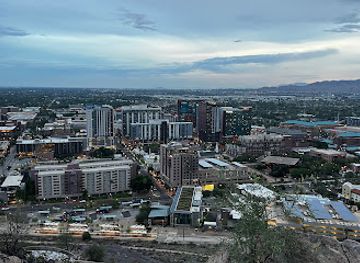
In recent decades, Arizona State University has continued to reshape central Tempe through new academic facilities, research initiatives, student housing and public-facing cultural programmes. The campus now works as part of a larger urban network that includes Mill Avenue, Tempe Town Lake and the Valley Metro light-rail corridor. This development has intensified the area’s role as a regional centre for higher education, arts and innovation while also changing the relationship between university life and surrounding city streets. The result is a district where historic campus buildings, large-scale events and everyday student activity coexist with Tempe’s established commercial centre.
Arizona State University in Photos
Browse through our photo collection highlighting the charm and character of the destination.
Neighbourhoods near Arizona State University
The closest neighbourhoods to Arizona State University, if you have time for more than one stop.
-

-


Swipe for more neighbourhoods
Explore more
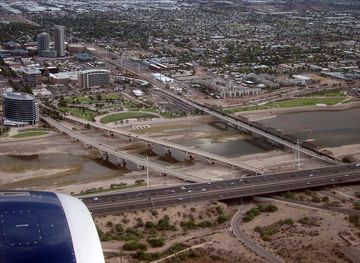
Explore more of Tempe
Tempe, Arizona combines ASU culture, desert landscapes, Tempe Town Lake, historic Mill Avenue, arts, dining and outdoor experiences near Phoenix.
Explore Tempe