

Ouachita National Forest, Arkansas Travel Guide
Discover the breathtaking landscapes and rich history of Ouachita National Forest, a must-visit destination for nature lovers and adventure seekers in Arkansas.
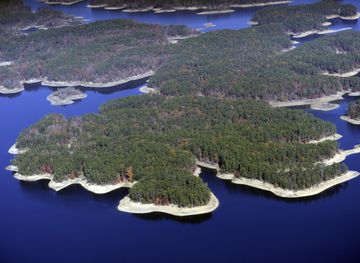
Ouachita National Forest is a vast expanse of natural beauty located in the heart of Arkansas. Spanning over 1.8 million acres, this national forest offers a unique blend of rugged mountains, serene lakes, and dense woodlands. It is a paradise for those who love the great outdoors and offers a wide range of activities for visitors to enjoy. Hiking enthusiasts will find an extensive network of trails that cater to all levels of experience. The Ouachita National Recreation Trail, stretching over 223 miles, is a must-visit for those seeking a challenging yet rewarding adventure. For those looking for a more leisurely experience, there are shorter trails that offer breathtaking views of the forest's diverse flora and fauna. The forest is also home to numerous lakes and rivers, making it an ideal spot for fishing, kayaking, and canoeing. Lake Ouachita, one of the largest man-made lakes in the United States, is a popular destination for water activities and is known for its crystal-clear waters and excellent fishing opportunities. Visitors can also enjoy camping at one of the many well-maintained campgrounds scattered throughout the forest. In addition to its natural attractions, Ouachita National Forest has a rich cultural history. The forest is dotted with historic sites and landmarks, including remnants of old mining operations and Native American artifacts. Exploring these sites provides a fascinating glimpse into the region's past and adds an educational dimension to any visit.

Know before you go
Hi, I'm Eve. Here are a few practical things to know before exploring Ouachita National Forest.
- Check the weather before heading out, as conditions can change rapidly in the forest.
- Bring plenty of water and snacks, as amenities can be sparse in remote areas.
- Wear sturdy footwear suitable for hiking on uneven terrain.
- Visit during the fall to experience the stunning foliage.
- Pick up a map from a ranger station to help navigate the extensive trail system.
Explore Ouachita National Forest: Things to Do, Places to Eat, Hotels & More
Handpicked recommendations for top attractions, local dining, accommodations, and more

Best attractions in Ouachita National Forest
Top-rated picks
Best Attractions

Poison Springs Battleground State Park
Discover the historic Poison Springs Battleground State Park, where nature meets the echoes of the Civil War in beautiful Arkansas.

Blanchard Springs Caverns
Discover a breathtaking underground world at Blanchard Springs Caverns, featuring stunning formations and guided tours in the Ozark National Forest.

Hawksbill Crag/Whitaker Point
Hike to Hawksbill Crag for breathtaking views of the Ozark Mountains, a natural wonder and iconic Arkansas landmark.

Crystal Ridge Distillery
Experience the history and craft of moonshine at Crystal Ridge Distillery, located in Hot Springs' historic F.C. Stearns warehouse.

Best landmarks in Ouachita National Forest
Top-rated picks
Best Landmarks

Ozark - St. Francis National Forest
Uncover the natural beauty and outdoor adventures of Ozark - St. Francis National Forest, a paradise for nature lovers in Arkansas.

US Forest Service - Ouachita National Forest
Explore the breathtaking landscapes and rich wildlife of Ouachita National Forest, a premier destination for outdoor enthusiasts in Arkansas.

Best restaurants in Ouachita National Forest
Top-rated picks
Best Restaurants

Waffle House
Experience the warmth of Southern hospitality at Waffle House in Arkadelphia—your go-to spot for delicious breakfast served all day!

US Forest Service - Ouachita National Forest
Discover breathtaking landscapes and outdoor adventures at Ouachita National Forest in Arkansas – a true haven for nature lovers.

Best bars in Ouachita National Forest
Top-rated picks
Best Bars

Bubba Brews - On Lake Hamilton
Discover Bubba Brews - a charming lakeside American restaurant offering delicious food, stunning views, and a relaxing atmosphere perfect for all visitors.

Copper Penny Pub
Discover the heart of Hot Springs with craft beers and delicious eats at Copper Penny Pub, a local favorite for a casual dining experience.

The Porterhouse
Experience the best of Hot Springs dining at The Porterhouse, where succulent steaks and fresh seafood meet vibrant ambiance.

Crystal Ridge Distillery
Experience the finest handcrafted spirits at Crystal Ridge Distillery in Hot Springs, Arkansas - a true taste of local craftsmanship.

Best shops in Ouachita National Forest
Top-rated picks
Best Shops

Ouachita National Forest
Discover the breathtaking beauty of Ouachita National Forest, a paradise for outdoor enthusiasts in Arkansas, filled with trails, lakes, and diverse wildlife.

Real Earth Creations
Explore Real Earth Creations in Mt. Ida, Arkansas, a unique rock shop offering beautiful gifts, handcrafted jewelry, and natural wonders.

Yellow Store
Discover the delightful flavors of Yellow Store, a charming deli in Pencil Bluff, Arkansas, offering fresh sandwiches and a welcoming atmosphere.

Jay's Crystal Bonanza
Explore the enchanting world of crystals and fossils at Jay's Crystal Bonanza, a must-visit rock shop in Mt. Ida, Arkansas, perfect for nature lovers and collectors.

Explore Ouachita National Forest on the Map
A handpicked selection of must-see spots in Ouachita National Forest, mapped for you.
Ouachita National Forest Essentials
-
Ouachita National Forest is located in western Arkansas and southeastern Oklahoma. The nearest major city is Little Rock, Arkansas, which has the closest international airport, Clinton National Airport (LIT). From Little Rock, you can drive approximately 1.5 to 2 hours to reach the forest. Alternatively, you can fly into Fort Smith Regional Airport (FSM) and drive for about an hour. Car rentals are available at both airports, providing a convenient way to explore the forest.
-
Having a car is the most practical way to navigate Ouachita National Forest, as public transportation options within the forest are limited. The forest is vast, and many of its attractions are spread out. Local car rental services are available in nearby towns like Hot Springs and Mena. For those who prefer not to drive, guided tours are available and can provide transportation to key sites and trails.
-
The official currency is the United States Dollar (USD). Credit and debit cards are widely accepted in nearby towns and at major attractions within the forest. However, it is advisable to carry some cash, especially when visiting more remote areas or smaller establishments where card payment may not be an option. ATMs are available in nearby towns like Hot Springs and Mena.
-
Ouachita National Forest is generally a safe destination for tourists. However, it is important to take standard precautions such as keeping your belongings secure and being aware of your surroundings. Avoid leaving valuables in plain sight in your vehicle. While the forest is safe, always stay on marked trails and be cautious of wildlife. There are no specific high-crime areas targeting tourists, but it is always best to exercise general caution.
-
In case of an emergency, dial 911 for immediate assistance. There are ranger stations and visitor centers throughout the forest where you can seek help. It is recommended to have travel insurance that covers medical emergencies. Carry a basic first aid kit and be familiar with the location of the nearest medical facilities in towns like Hot Springs and Mena. For minor health issues, there are pharmacies in these towns where you can purchase over-the-counter medications.
-
Fashion: Do wear comfortable and weather-appropriate clothing, including sturdy hiking boots if you plan to explore the trails. Avoid wearing open-toed shoes. Religion: While there are no specific religious sites within the forest, always respect local customs and the natural environment. Public Transport: As public transport is limited, do plan your trips in advance if you are not driving. Greetings: Do greet fellow hikers and locals with a friendly wave or nod. Eating & Drinking: Do bring plenty of water and snacks, especially when hiking. Don't leave trash behind; always follow the 'Leave No Trace' principles.
-
To experience Ouachita National Forest like a local, visit during the fall when the foliage is breathtakingly beautiful. Don't miss the Hot Springs National Park nearby, known for its natural hot springs. Explore the Talimena Scenic Drive for stunning views of the forest and the Ouachita Mountains. Engage with locals in nearby towns to learn about the best hiking trails and hidden spots. Fishing and boating are popular activities in Lake Ouachita, so consider renting a boat for a day on the water.
When is the best time to visit Ouachita National Forest?
Useful Local Phrases for Ouachita National Forest
You don't need to speak the language perfectly. Even learning a few simple words can make conversations warmer—and locals usually appreciate the effort.
— Eve

Here are the phrases I use most often in Ouachita National Forest. Try a few—you'll be surprised how far they go! 😊
❤️
-
- HelloHowdy
[hah-dee] - GoodbyeSee ya
[see yuh] - YesYep
[yep] - NoNah
[nah] - Please/You're welcomePlease/You're welcome
[please/yur welcome] - Thank youThank ya
[thank yuh] - Excuse me/SorryPardon me
[pahr-dun me] - How are you?How ya doin'?
[how yuh doin'] - Fine. And you?Fine. And you?
[fine. and yuh?] - Do you speak English?Ya speak English?
[yuh speak ing-glish?] - I don't understandI don't git it
[I don't git it]
- HelloHowdy
-
- I'd like to see the menu, pleaseI'd like to see the menu, please
[I'd like to see the menu, please] - I don't eat meatI don't eat meat
[I don't eat meat] - Cheers!Cheers!
[Cheers!] - I would like to pay, pleaseI would like to pay, please
[I would like to pay, please]
- I'd like to see the menu, pleaseI'd like to see the menu, please
-
- Help!Help!
[Help!] - Go away!Git!
[Git!] - Call the Police!Call the Sheriff!
[Call the Sheriff!] - Call a doctor!Call a doc!
[Call a doc!] - I'm lostI'm lost
[I'm lost] - I'm illI'm sick
[I'm sick]
- Help!Help!
-
- I'd like to buy...I'd like to buy...
[I'd like to buy...] - I'm just lookingI'm just lookin'
[I'm just lookin'] - How much is it?How much is it?
[How much is it?] - That's too expensiveThat's too pricey
[That's too pricey] - Can you lower the price?Can ya lower the price?
[Can yuh lower the price?]
- I'd like to buy...I'd like to buy...
-
- What time is it?What time is it?
[What time is it?] - It's one o'clockIt's one o'clock
[It's one o'clock] - Half past (10)Half past ten
[Half past ten] - MorningMornin'
[Mornin'] - AfternoonAfternoon
[Afternoon] - EveningEvenin'
[Evenin'] - YesterdayYesterday
[Yesterday] - TodayToday
[Today] - TomorrowTomorrow
[Tomorrow] - 1One
[One] - 2Two
[Two] - 3Three
[Three] - 4Four
[Four] - 5Five
[Five] - 6Six
[Six] - 7Seven
[Seven] - 8Eight
[Eight] - 9Nine
[Nine] - 10Ten
[Ten]
- What time is it?What time is it?
-
- Where's a/the...?Where's a/the...?
[Where's a/the...?] - What's the address?What's the address?
[What's the address?] - Can you show me (on the map)?Can you show me (on the map)?
[Can you show me (on the map)?] - When's the next (bus)?When's the next (bus)?
[When's the next (bus)?] - A ticket (to ....)A ticket (to ....)
[A ticket (to ....)]
- Where's a/the...?Where's a/the...?
History of Ouachita National Forest
-
The Ouachita National Forest has been inhabited by humans for thousands of years. Archaeological evidence suggests that Native American tribes such as the Caddo and Osage once roamed these lands. These tribes utilized the forest's abundant resources for hunting, gathering, and shelter. The area's rich cultural heritage is still evident today through artifacts, petroglyphs, and other archaeological sites scattered throughout the forest.
-
In the 16th and 17th centuries, European explorers like Hernando de Soto ventured into what is now the Ouachita National Forest. French trappers and traders followed, establishing trade routes and relationships with the native tribes. By the early 19th century, settlers began to move in, drawn by the promise of fertile land and abundant resources, leading to the establishment of small communities and towns in the region.
-
The Ouachita National Forest region became part of the United States through the Louisiana Purchase in 1803. This monumental land acquisition doubled the size of the nation and opened up vast territories, including the Ouachita Mountains, for exploration and settlement. The purchase marked the beginning of a new era of American expansion and development in the area.
-
During the American Civil War, the Ouachita Mountains served as a strategic location for both Union and Confederate forces. The dense forest and rugged terrain provided cover and resources for soldiers. Several skirmishes and battles took place in and around the forest, leaving behind a legacy of Civil War history that can still be explored today through various historical markers and preserved sites.
-
The Ouachita National Forest was officially established in 1907, making it one of the oldest national forests in the southern United States. President Theodore Roosevelt's administration recognized the need to conserve the forest's natural resources and protect its unique ecosystem. The establishment of the national forest laid the groundwork for sustainable forestry practices and the preservation of the area's natural beauty.
-
Throughout the 20th century, the Ouachita National Forest saw significant development in terms of recreational opportunities. The Civilian Conservation Corps (CCC) played a crucial role during the 1930s, constructing trails, campgrounds, and other facilities that are still in use today. The forest now offers a wide range of outdoor activities, including hiking, camping, fishing, and wildlife viewing, attracting visitors from all over the country.
-
Today, the Ouachita National Forest remains a vital part of Arkansas's cultural and natural heritage. Efforts to conserve its diverse ecosystems and protect its historical sites continue to be a priority. Organizations and volunteers work tirelessly to maintain the forest's trails, preserve its wildlife habitats, and educate the public about its rich history and cultural significance. The forest stands as a testament to the enduring relationship between humans and the natural world.
Cities in Ouachita National Forest
Browse our curated selection of top destinations, scenic points, and must-visit spots in the area.


Neighbouring destination travel guides
Browse our curated selection of top destinations, scenic points, and must-visit spots in the area.



Your all‑in‑one travel companion app
Explore expert travel guides, compare and book tours, experiences, hotels, and more—all from the palm of your hand. Download now for seamless trip planning wherever your wanderlust takes you.


Explore More of Arkansas Valley

Looking beyond Ouachita National Forest? Discover Arkansas Valley for broader travel guides, local hot-spots, and regional highlights.
Explore Arkansas ValleyExplore More of Arkansas

Looking beyond Ouachita National Forest? Discover Arkansas for broader travel guides, local hot-spots, and regional highlights.
Explore ArkansasOuachita National Forest in Photos
Browse through our photo collection highlighting the charm and character of the destination.




Ouachita National Forest: A Natural Wonderland in Arkansas
Ouachita National Forest is a vast expanse of natural beauty located in the heart of Arkansas. Spanning over 1.8 million acres, this national forest offers a unique blend of rugged mountains, serene lakes, and dense woodlands. It is a paradise for those who love the great outdoors and offers a wide range of activities for visitors to enjoy. Hiking enthusiasts will find an extensive network of trails that cater to all levels of experience. The Ouachita National Recreation Trail, stretching over 223 miles, is a must-visit for those seeking a challenging yet rewarding adventure. For those looking for a more leisurely experience, there are shorter trails that offer breathtaking views of the forest's diverse flora and fauna. The forest is also home to numerous lakes and rivers, making it an ideal spot for fishing, kayaking, and canoeing. Lake Ouachita, one of the largest man-made lakes in the United States, is a popular destination for water activities and is known for its crystal-clear waters and excellent fishing opportunities. Visitors can also enjoy camping at one of the many well-maintained campgrounds scattered throughout the forest. In addition to its natural attractions, Ouachita National Forest has a rich cultural history. The forest is dotted with historic sites and landmarks, including remnants of old mining operations and Native American artifacts. Exploring these sites provides a fascinating glimpse into the region's past and adds an educational dimension to any visit.