

Cape Tribulation Travel Guide - Free Web & App
Your ultimate guide to Cape Tribulation. Discover top landmarks, proposed trips, and local tips. Free on the web or via the Evendo companion app.


Cape Tribulation, Australia, brings together Daintree rainforest, coral reefs, Indigenous culture, wild beaches and guided nature experiences in the Wet Tropics.
Rainforest, Reef and River
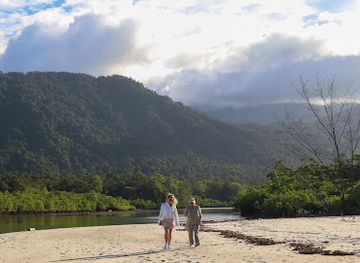
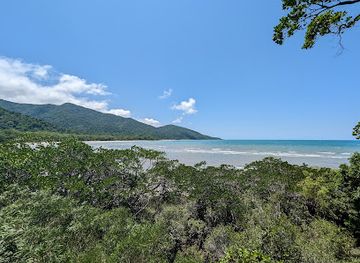
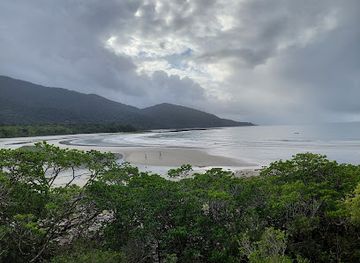
Cape Tribulation lies on the far north Queensland coast, within the Daintree rainforest and the Wet Tropics World Heritage Area. The destination is reached by crossing the Daintree River by ferry and following the coastal road through dense lowland rainforest, open forest and mangrove-fringed waterways. At Cape Tribulation, rainforest extends almost to the shoreline, with beaches such as Myall Beach and Cape Tribulation Beach facing the Coral Sea and the Great Barrier Reef offshore.Read more about Cape Tribulation
A Landscape of Exceptional Diversity
Kuku Yalanji Country
When is the best time to visit Cape Tribulation?
Best: June–August · 26–27°C| Month | High (°C) | Rainfall (mm) |
|---|---|---|
| January | 31 | 500 |
| February | 31 | 450 |
| March | 31 | 400 |
| April | 30 | 350 |
| May | 28 | 300 |
| June (best) | 27 | 250 |
| July (best) | 26 | 250 |
| August (best) | 27 | 300 |
| September | 28 | 350 |
| October | 30 | 400 |
| November | 31 | 450 |
| December | 31 | 500 |
Getting to and around Cape Tribulation
How to get there
Transportation
Best attractions in Cape Tribulation
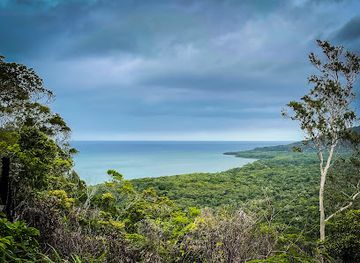
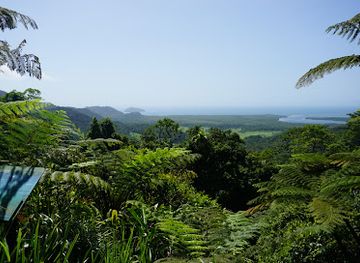
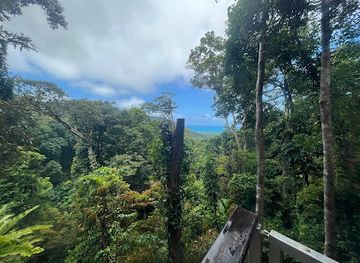
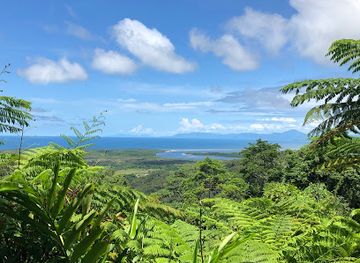
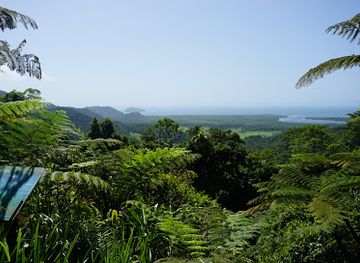
The principal attractions of Cape Tribulation lie in the close meeting of rainforest and coast. Dubuji Boardwalk passes through lowland forest and mangrove habitats, while Marrdja Boardwalk follows a route through rainforest beside Noah Creek; Jindalba Boardwalk provides another accessible introduction to the forest near Cow Bay. Myall Beach, Cape Tribulation Beach and Thornton Beach offer broad coastal views, though swimming requires careful attention to local crocodile and marine-stinger advice. The Daintree River is central to the journey, with wildlife cruises and guided outings available from operators in the wider area rather than from every part of the destination. Mount Sorrow dominates the skyline and is associated with a challenging, steep walk requiring preparation and current conditions advice. Guided walks led by Eastern Kuku Yalanji hosts add cultural understanding of the forest, coast and reef, while lookout points along the Alexandra Range reveal the extraordinary sweep of rainforest towards the Coral Sea.
-
National park
Noah Beach camping area, Daintree National Park
Explore the captivating Noah Beach camping area in Daintree National Park for a perfect mix of adventure and relaxation amidst stunning natural beauty.
-
Hiking area
Kulki Boardwalk
Discover panoramic rainforest and ocean views on this accessible boardwalk in Cape Tribulation, where two World Heritage areas meet.
-
Tourist attraction
Cowie Beach
Discover the serene beauty of Cowie Beach in Cape Tribulation, where the rainforest meets the reef in a secluded tropical paradise.
-
National park
Daintree Secrets Rainforest Sanctuary
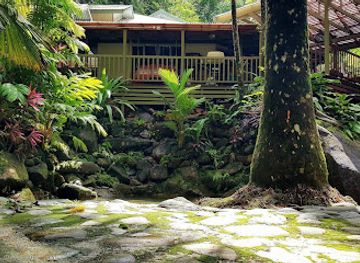
Discover the breathtaking beauty of Daintree Secrets Rainforest Sanctuary, a serene escape in the heart of Queensland's ancient rainforest.
Best landmarks in Cape Tribulation
Cape Tribulation's defining landmark is the meeting of the Daintree rainforest with the Coral Sea, a relationship visible from Cape Tribulation Beach and the surrounding coastal tracks. Mount Sorrow and Thornton Peak form prominent mountain landmarks behind the lowland forest, while the Daintree River marks the principal southern approach and an important ecological boundary between rainforest, estuary and coast. The Alexandra Range lookout provides a broad view over the forest and sea, although weather can obscure the panorama. Dubuji, Marrdja and Jindalba boardwalks are notable constructed access points because they reveal mangroves, creek margins and rainforest without requiring visitors to leave designated routes. The area also carries cultural significance as Eastern Kuku Yalanji Country, so its landmarks are understood through continuing Indigenous relationships with plants, animals, waterways and coastal places as well as through European exploration history.
-
Ecological park
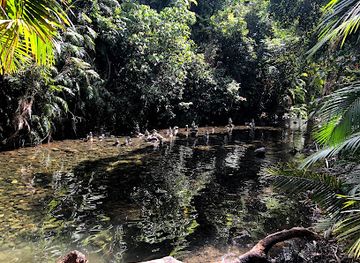
Daintree Rainforest
Discover the ancient beauty and rich biodiversity of Daintree Rainforest, a UNESCO World Heritage site in Queensland, Australia, perfect for nature enthusiasts and adventurers alike.
-
Tourist attraction
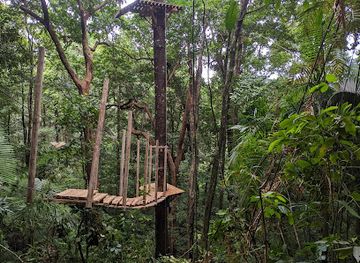
Treetops Adventure Cape Tribulation
Discover the thrill of zip lining through the breathtaking Daintree Rainforest at Treetops Adventure Cape Tribulation, a must-visit for adventure enthusiasts.
-
Hotel
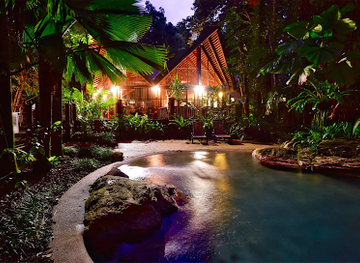
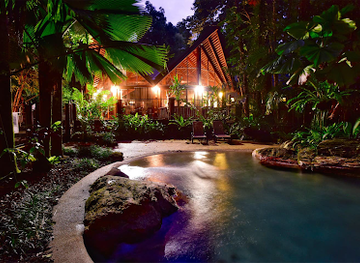
Ferntree Rainforest Hotel
Experience the serene beauty of the Daintree Rainforest at Ferntree Rainforest Hotel, your gateway to adventure and relaxation in Queensland.
-
Restaurant
WHET Cafe Bar Restaurant
Experience the vibrant flavors and breathtaking views at WHET Cafe Bar Restaurant in Cape Tribulation, Queensland's stunning paradise.
Explore Cape Tribulation on the map
Plan your trip on one map. See where the top attractions, landmarks, restaurants and hotels are, and book hotels and experiences in a few clicks.
Best hotels in Cape Tribulation
Best restaurants in Cape Tribulation
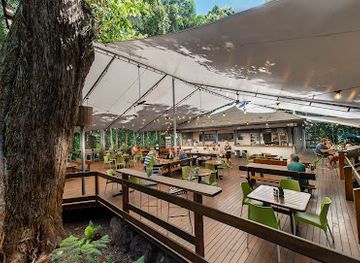
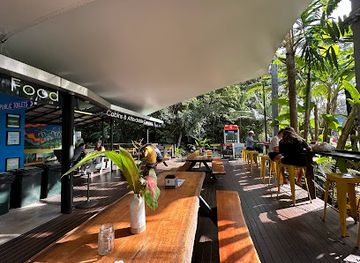
Dining in Cape Tribulation is small-scale and closely tied to accommodation providers, cafés, licensed eateries and general stores rather than a concentrated restaurant district. Options are found around Cape Tribulation, Cow Bay and Thornton Beach, with a limited choice compared with Port Douglas or Cairns. Menus commonly reflect tropical North Queensland through ingredients such as seafood, seasonal fruit and locally grown produce, although particular dishes and availability vary between businesses. Visitors staying in self-catering cabins or holiday homes often buy supplies before crossing the Daintree River, since selection north of the ferry is limited. Mossman and Port Douglas provide a broader range of restaurants, cafés, bakeries and takeaway food, making them useful for stocking up or dining before and after a visit. Indigenous food knowledge is best explored through an established Kuku Yalanji cultural experience rather than assumed from a conventional restaurant menu.
-
Tourist attraction
Cape Tribulation
Explore Cape Tribulation: Where Ancient Rainforests Meet Stunning Beaches in Queensland's Natural Paradise.
-
Ecological park
Daintree Rainforest
Discover the breathtaking beauty of Daintree Rainforest - a UNESCO World Heritage site rich in biodiversity and adventure.
-
Hotel
Ferntree Rainforest Hotel
Discover tranquility and adventure at Ferntree Rainforest Hotel, nestled within Queensland's breathtaking rainforest and near pristine beaches.
-
Restaurant
WHET Cafe Bar Restaurant
Experience delightful dining at WHET Cafe Bar Restaurant in Cape Tribulation - where local flavors meet stunning rainforest views.



Best bars in Cape Tribulation
Cape Tribulation has no substantial nightclub or late-night entertainment scene. Evenings are generally quiet, with hospitality centred on the bars, restaurants and licensed areas attached to local accommodation and small visitor businesses around Cape Tribulation and Cow Bay. The appeal after dark is the rainforest atmosphere, subdued coastal setting and chance to join an organised nocturnal nature walk, provided a reputable local provider is operating. Visitors seeking a wider choice of pubs, bars, live music and evening dining should base themselves in Port Douglas or Cairns, both outside Cape Tribulation, or plan their evening around a return journey rather than expecting late transport. Rural roads, darkness, wildlife and limited services make careful planning important, and businesses may operate seasonally or with restricted hours.
-
Hotel
Ferntree Rainforest Hotel
Discover the enchanting Ferntree Rainforest Hotel, your gateway to the Great Barrier Reef and Daintree Rainforest's natural wonders.
-
Restaurant
WHET Cafe Bar Restaurant
Discover the vibrant flavors of WHET Cafe Bar Restaurant in Cape Tribulation, where local ingredients meet stunning tropical scenery.
-
 Camping Ground
Cape Tribulation Camping
Discover the enchanting beauty of Cape Tribulation Camping, where adventure meets relaxation in the heart of Queensland's stunning rainforest.
-
Bar
Cape Trib Beach House
Discover the tranquility of Cape Trib Beach House, where rainforest meets the sea in breathtaking harmony, offering a unique retreat in Queensland.


Best nightclubs in Cape Tribulation
Cape Tribulation has no substantial nightclub or late-night entertainment scene. Evenings are generally quiet, with hospitality centred on the bars, restaurants and licensed areas attached to local accommodation and small visitor businesses around Cape Tribulation and Cow Bay. The appeal after dark is the rainforest atmosphere, subdued coastal setting and chance to join an organised nocturnal nature walk, provided a reputable local provider is operating. Visitors seeking a wider choice of pubs, bars, live music and evening dining should base themselves in Port Douglas or Cairns, both outside Cape Tribulation, or plan their evening around a return journey rather than expecting late transport. Rural roads, darkness, wildlife and limited services make careful planning important, and businesses may operate seasonally or with restricted hours.
-
Hotel
Ferntree Rainforest Hotel
Discover tranquility amidst nature at Ferntree Rainforest Hotel in Cape Tribulation, where adventure meets serenity in the heart of Daintree Rainforest.
-
Bar
Cape Trib Beach House
Discover the tropical paradise of Cape Trib Beach House, where stunning nature meets vibrant hospitality in Queensland's rainforest.
-
Cafe
Turtle Rock Cafe
Experience the taste of Far North Queensland at Turtle Rock Cafe, where fresh ingredients and a relaxed atmosphere create the perfect dining escape.
-
Cafe
Masons Café
Discover the flavors of Cape Tribulation at Masons Café, where delicious coffee and gourmet hamburgers await amidst stunning natural beauty.
Best shops in Cape Tribulation
Shopping in Cape Tribulation is limited to small general stores, food outlets, local produce and practical supplies rather than a conventional retail centre. Visitors should purchase fuel, substantial groceries, medication and other essentials in Mossman, Port Douglas or Cairns before travelling north, while checking the availability of supplies locally. Regional products may include tropical fruit, preserves, coffee, art and handmade goods associated with the wider Daintree and Far North Queensland area, but stock varies between businesses and seasons. Indigenous art and cultural products should be bought through reputable galleries, cultural centres or authorised sellers, with attention to authenticity and respect for Eastern Kuku Yalanji cultural property. Port Douglas offers the broadest nearby selection of galleries, boutiques and food retailers, although it lies outside Cape Tribulation itself.
-
Tourist attraction
Cape Tribulation
Explore the stunning landscapes of Cape Tribulation, where the Daintree Rainforest meets the Great Barrier Reef in Queensland, Australia.
-
Tourist attraction
Treetops Adventure Cape Tribulation
Discover the thrill of zip-lining and treetop adventures at Treetops Adventure Cape Tribulation, where nature and excitement meet.
-
Boat tour agency
Ocean Safari
Experience the breathtaking beauty of the Great Barrier Reef with Ocean Safari, the premier boat tour agency in Cape Tribulation, Queensland.
-
Resort hotel
Cape Trib Beach House
Experience the breathtaking beauty of Cape Tribulation at Cape Trib Beach House, where the rainforest meets the reef in a perfect tropical getaway.


Get your free copy of our complete guide to Cape Tribulation, delivered straight to you.
Everything on this page, from attractions and restaurants to essentials and local phrases, in one PDF you can read offline, print or share.
Already have an account? Sign in
Your Cape Tribulation guide is ready.
We'll send it to · Not you? Sign out

Getting your guide ready…
We are putting together a fresh copy of the Cape Tribulation guide. This can take up to a minute.
This can take a few moments. If your browser asks, choose Allow so the download can start. You'll find the guide in your Downloads folder.
Nothing happened? Download it again
Sorry, the guide is taking longer than usual. Please try again in a minute, or get it by email instead.
Cape Tribulation essentials
Currency and Payment
Safety
Emergency Situations
Do's and Don'ts
Local Tips
From Eve
Local phrases worth knowing
You don't need to get them perfect. A few words go a long way, and locals appreciate the effort.
Basics
| English | Local | Say it |
|---|---|---|
| Hello | G'day | [g'day] |
| Goodbye | See ya mate | [see ya mate] |
| Yes | Yeah | [yeah] |
| No | Nah | [nah] |
| Please/You're welcome | No worries | [no worries] |
| Thank you | Cheers | [cheers] |
| Excuse me/Sorry | Sorry mate | [sorry mate] |
| How are you? | How ya going? | [how ya going] |
| Fine. And you? | Good. You? | [good. you] |
| Do you speak English? | You speak English? | [you speak English] |
| I don't understand | I don't get ya | [I don't get ya] |
Eating & Drinking
| English | Local | Say it |
|---|---|---|
| I'd like to see the menu, please | Show us the menu, mate | [show us the menu, mate] |
| I don't eat meat | I'm vego | [I'm vego] |
| Cheers! | Cheers mate! | [cheers mate] |
| I would like to pay, please | I'll settle up, cheers | [I'll settle up, cheers] |
Emergencies
| English | Local | Say it |
|---|---|---|
| Help! | Help me out! | [help me out] |
| Go away! | Piss off! | [piss off] |
| Call the Police! | Get the cops! | [get the cops] |
| Call a doctor! | Get a doc! | [get a doc] |
| I'm lost | I'm all turned around | [I'm all turned around] |
| I'm ill | I'm crook | [I'm crook] |
Shopping
| English | Local | Say it |
|---|---|---|
| I'd like to buy... | I wanna buy... | [I wanna buy] |
| I'm just looking | Just browsing, mate | [just browsing, mate] |
| How much is it? | How much, mate? | [how much, mate] |
| That's too expensive | Bit steep, mate | [bit steep, mate] |
| Can you lower the price? | Can you do it cheaper? | [can you do it cheaper] |
Time & Numbers
| English | Local | Say it |
|---|---|---|
| What time is it? | What's the time? | [what's the time] |
| It's one o'clock | It's one | [it's one] |
| Half past (10) | Half ten | [half ten] |
| Morning | Mornin' | [mornin'] |
| Afternoon | Arvo | [arvo] |
| Evening | Evenin' | [evenin'] |
| Yesterday | Yesty | [yesty] |
| Today | Today | [today] |
| Tomorrow | Tomorra | [tomorra] |
| 1 | One | [one] |
| 2 | Two | [two] |
| 3 | Three | [three] |
| 4 | Four | [four] |
| 5 | Five | [five] |
| 6 | Six | [six] |
| 7 | Seven | [seven] |
| 8 | Eight | [eight] |
| 9 | Nine | [nine] |
| 10 | Ten | [ten] |
Transport & Directions
| English | Local | Say it |
|---|---|---|
| Where's a/the...? | Where's the...? | [where's the] |
| What's the address? | What's the addy? | [what's the addy] |
| Can you show me (on the map)? | Can ya show me (on the map)? | [can ya show me on the map] |
| When's the next (bus)? | When's the next (bus)? | [when's the next bus] |
| A ticket (to ....) | A ticket (to ....) | [a ticket to] |
History of Cape Tribulation
An Ancient Tropical Landscape
The rainforests around Cape Tribulation occupy part of the Wet Tropics of Queensland, a landscape shaped by very long geological and climatic change. The region's plant communities preserve lineages associated with the ancient forests of Gondwana, although the present rainforest has developed through changing sea levels, rainfall patterns and mountain formation over immense timescales. The meeting of coastal lowlands, steep ranges, waterways and offshore reef creates the distinctive environmental setting that defines Cape Tribulation today.
Eastern Kuku Yalanji Country
The coastal rainforest, rivers and reefs around Cape Tribulation are part of the traditional Country of the Eastern Kuku Yalanji people. Their relationship with the area is expressed through knowledge of seasonal plants, animals, waterways and coastal resources, as well as through stories and cultural responsibilities passed between generations. This is not simply a historical association: Eastern Kuku Yalanji people remain active custodians and cultural authorities in the region, including through Indigenous-guided visitor experiences and contemporary management of Country.
Cook and the Coast
Lieutenant James Cook's Endeavour sailed along this coast in 1770 during the first voyage of European maritime exploration in eastern Australia. After the ship struck the Great Barrier Reef, the crew spent several weeks repairing it near the mouth of the Endeavour River farther north. Cook named Cape Tribulation after the difficulties encountered on the voyage, while nearby features received names associated with the expedition. European naming changed the map but did not replace the much older Eastern Kuku Yalanji cultural geography of the coast.
Settlement, Roads and Tourism
For much of the modern period, the Daintree coast remained difficult to reach, with access shaped by rivers, rough tracks and the surrounding rainforest. Timber getting, farming and small settlements affected parts of the lowland landscape before tourism increasingly focused attention on its ecological importance. The opening and improvement of roads brought more visitors, but also exposed the tension between access and conservation. The ferry crossing and the limited road network still influence how people move through the area and help preserve its relatively low-density character.
Conservation and Living Country
The Wet Tropics received World Heritage recognition in 1988, acknowledging the international significance of its rainforest ecosystems and associated landscapes. Conservation has since operated alongside the rights and responsibilities of Traditional Owners, with the Daintree coast increasingly understood as living Country rather than scenery alone. Boardwalks, controlled access and guided experiences help visitors encounter sensitive habitats while reducing pressure on the forest floor and wildlife. Contemporary tourism therefore sits within a continuing story of cultural authority, environmental protection and carefully managed access.
Cape Tribulation in Photos
Browse through our photo collection highlighting the charm and character of the destination.
Neighbouring destination travel guides
The closest destinations to Cape Tribulation, if you have time for more than one.
-

-

-

-

-


Swipe for more destinations
Explore more

Explore more of Far North Queensland
Explore Far North Queensland: Home to the Great Barrier Reef, Daintree Rainforest, and vibrant coastal towns like Cairns and Port Douglas.
Explore Far North Queensland
Explore more of Australia
Discover the diverse landscapes, vibrant cities, and unique wildlife of Australia, a captivating destination offering endless adventures and unforgettable experiences.
Explore Australia