

Free Cairns Travel Guide & Mobile App
Plan your Cairns trip with Evendo. Get free guides to top attractions, restaurants, hotels, and bars. Web access or download the mobile app.


Cairns combines Great Barrier Reef adventures, Wet Tropics rainforest, Indigenous culture and tropical Queensland history in one easygoing coastal city.
A Tropical Queensland Base
Cairns lies on the narrow coastal plain between the Coral Sea and the forested ranges of Far North Queensland. Its low-rise centre, lined with palms and shaped by a relaxed tropical rhythm, serves as a practical base for exploring two internationally recognised natural environments: the Great Barrier Reef offshore and the Wet Tropics rainforests inland. The Cairns Esplanade, with its lagoon, boardwalk and broad lawns, is the city's social centre, while the marina provides access to reef cruises and island excursions.Read more about Cairns
City, Coast and Culture
When is the best time to visit Cairns?
Best: July–September · 26–29°C| Month | High (°C) | Rainfall (mm) |
|---|---|---|
| January | 32 | 428 |
| February | 32 | 414 |
| March | 31 | 387 |
| April | 30 | 196 |
| May | 28 | 87 |
| June | 27 | 44 |
| July (best) | 26 | 34 |
| August (best) | 27 | 30 |
| September (best) | 29 | 17 |
| October | 30 | 17 |
| November | 31 | 64 |
| December | 32 | 236 |
Getting to and around Cairns
How to get there
Transportation
Best attractions in Cairns
Cairns's principal attractions reflect its position between the Coral Sea and the Wet Tropics. The Cairns Esplanade is the city's most accessible promenade, with a saltwater lagoon, lawns, public art and walking beside the tidal foreshore. Nearby, the Cairns Aquarium provides an accessible introduction to North Queensland's freshwater, rainforest and marine ecosystems, while the Cairns Botanic Gardens displays tropical plants in a leafy setting. The Cairns Museum and Cairns Art Gallery add cultural and historical context in the city centre. At the marina, visitors can join reef and island excursions, while the Cairns Art Gallery and Munro Martin Parklands offer quieter urban diversions. The city's attractions also work as starting points for wider experiences: the Kuranda Scenic Railway and Skyrail lead towards the rainforest ranges, while the northern beaches offer a coastal change of pace without leaving the Cairns region.
-
Mountain cable car
Skyrail Rainforest Cableway
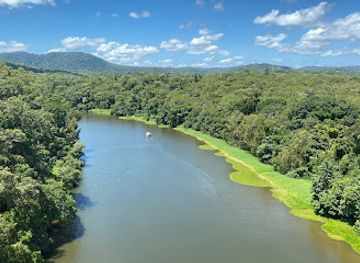
Soar above the lush landscapes of Queensland's Daintree Rainforest on the Skyrail Rainforest Cableway, an unforgettable natural adventure.
32 min drive · 12 km from city centre
-
Aquarium
Cairns Aquarium
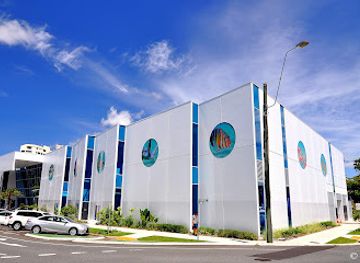
Explore the wonders of the Great Barrier Reef and Wet Tropics Rainforest at Cairns Aquarium, a world-class aquatic experience.
6 min walk · 0.4 km from city centre
-
Public swimming pool
Cairns Esplanade Lagoon
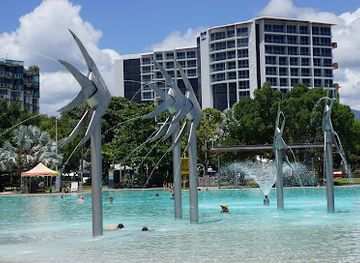
Discover the beauty of Cairns Esplanade Lagoon, a tropical paradise perfect for relaxation and family fun in the heart of Cairns City.
5 min walk · 0.4 km from city centre
-
Tourist attraction
Hartley's Crocodile Adventures
Discover Australia's unique wildlife at Hartley's Crocodile Adventures, where thrilling encounters and natural beauty await every visitor.
56 min drive · 36 km from city centre


Best landmarks in Cairns
The Cairns Esplanade is both a civic landmark and a record of the city's relationship with its tidal foreshore, combining public lawns, memorials, paths and the lagoon where the shoreline itself is not suitable for ordinary swimming. Cairns City Hall, built in the early twentieth century, represents the city's growth as a regional administrative centre, while the Cairns Museum occupies the former School of Arts building and interprets local social and maritime history. St Monica's Cathedral is notable for its large stained-glass windows depicting the natural world of Far North Queensland. The Cairns War Memorial on the Esplanade commemorates local military service, and the restored Cairns railway station remains associated with the inland rail connection that helped establish the city's commercial importance. Together these places trace Cairns's civic, religious, military and transport development.
-
Mountain cable car
Skyrail Rainforest Cableway
Explore the majestic beauty of Queensland's rainforest from above with Skyrail Rainforest Cableway, an unforgettable aerial adventure.
32 min drive · 12 km from city centre
-
Public swimming pool
Cairns Esplanade Lagoon
Experience the Cairns Esplanade Lagoon, a free tropical swimming paradise featuring sandy beaches and lush landscapes for relaxation and fun.
5 min walk · 0.4 km from city centre
-
Aquarium
Cairns Aquarium
Explore the vibrant underwater worlds of the Great Barrier Reef at the Cairns Aquarium, a premier tourist attraction in Cairns, Australia.
6 min walk · 0.4 km from city centre
-
Market
Cairns Night Markets
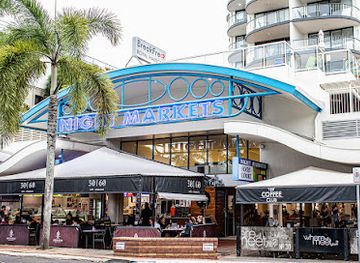
Discover the lively Cairns Night Markets, where you can indulge in local cuisine, shop for unique crafts, and enjoy nightly entertainment in a vibrant setting.
2 min walk · 0.2 km from city centre
Explore Cairns on the map
Plan your Cairns trip on one map. See where the top attractions, landmarks, restaurants, bars and hotels are, find what's near where you're staying, and book hotels and experiences in a few clicks.
Neighbourhoods in Cairns
-

-

-


Swipe for more neighbourhoods
Best hotels in Cairns
Best restaurants in Cairns
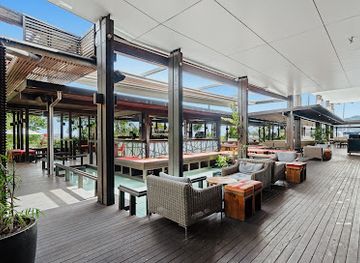
Cairns's dining scene draws on tropical Queensland produce, a strong Asian influence and the region's access to reef and hinterland ingredients. Restaurants and casual eateries around the city centre and Esplanade serve seafood, Australian produce and contemporary dishes, while Asian cuisines reflect the multicultural character of Far North Queensland. Rusty's Markets are an important food stop, especially for tropical fruit, fresh juices, prepared meals and ingredients associated with Cairns's diverse communities. Cafés provide relaxed breakfasts and coffee, and evening dining ranges from informal meals to more polished waterfront settings. Local menus may feature prawns, barramundi, mud crab and native ingredients, but availability is seasonal and not every seafood dish is locally caught. The city's tropical climate also suits fruit-led desserts, cold drinks and outdoor dining, particularly around the central waterfront.
-
Modern Australian
Salt House
Experience modern Australian cuisine with breathtaking marina views at Salt House in Cairns - a must-visit culinary gem.
8 min walk · 0.7 km from city centre
-
Seafood
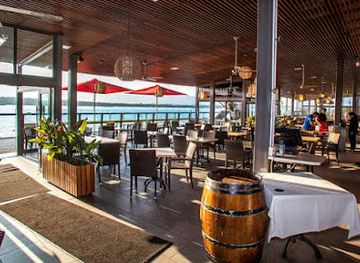
Dundees on the Waterfront
Experience exquisite seafood and Australian cuisine with stunning waterfront views at Dundees on the Waterfront in Cairns.
7 min walk · 0.5 km from city centre
-
Indian
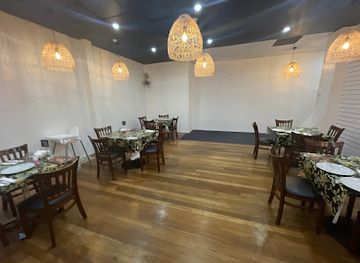
Indian Brothers Restaurant
Experience authentic Indian flavors at Indian Brothers Restaurant in Cairns – where every meal is a culinary journey through India.
2 min walk · 0.2 km from city centre
-
Steak
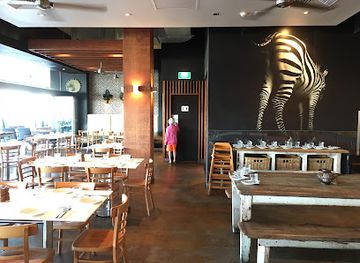
Waterbar & Grill Steakhouse
Experience the finest steaks at Waterbar & Grill Steakhouse in Cairns – where flavor meets waterfront views.
7 min walk · 0.6 km from city centre
Best bars in Cairns
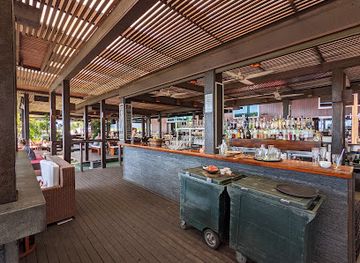
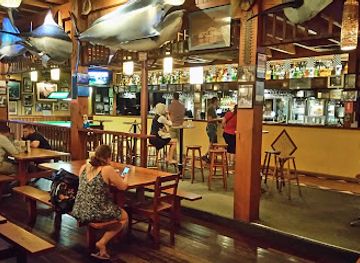
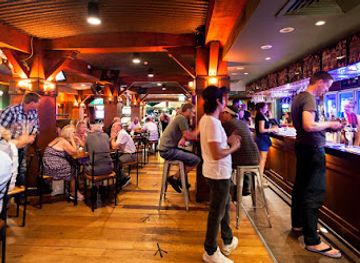
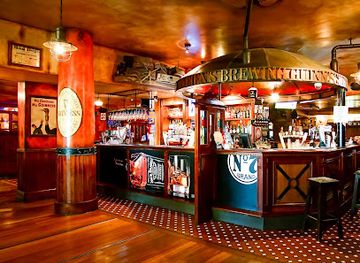
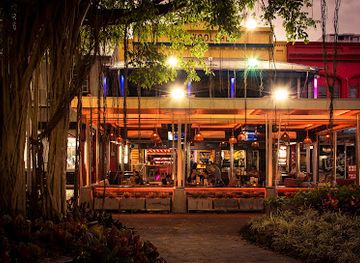
Cairns's evening life is concentrated around the Esplanade, marina and central streets, where pubs, casual bars, cocktail venues and live-music spaces serve a mixture of residents and visitors. The atmosphere is generally sociable and informal rather than metropolitan, with outdoor terraces and waterfront settings making the most of the warm climate. Nightlife can range from a quiet drink after a reef excursion to late venues serving a younger crowd, while hotel bars and restaurants offer more restrained evenings. Live music and occasional cultural performances add variety beyond drinking, and cinemas and theatre programmes provide alternative entertainment. Conditions and opening patterns vary, especially outside peak visitor periods, so the central area is the most reliable place to find several evening options within walking distance. Visitors should arrange transport carefully for late journeys beyond the centre.
-
Bar
Salt House
Experience exquisite modern Australian cuisine and stunning marina views at Salt House, Cairns' premier dining and nightlife destination.
8 min walk · 0.7 km from city centre
-
Pub
Cock & Bull
Discover Cock & Bull, a lively pub and steakhouse in Cairns North, where delicious meals and a vibrant atmosphere await tourists exploring Queensland.
19 min walk · 1.5 km from city centre
-
Grill
Rattle n Hum Cairns
Experience the vibrant atmosphere and mouthwatering grill dishes at Rattle n Hum Cairns, a top dining destination on the Esplanade.
3 min walk · 0.2 km from city centre
-
Irish pub
P.J.O'Brien's Irish Pub
Discover the heart of Irish culture in Cairns at P.J.O'Brien's, a lively pub offering traditional cuisine, local brews, and live music.
1 min walk · 0.1 km from city centre
Best nightclubs in Cairns
Cairns's evening life is concentrated around the Esplanade, marina and central streets, where pubs, casual bars, cocktail venues and live-music spaces serve a mixture of residents and visitors. The atmosphere is generally sociable and informal rather than metropolitan, with outdoor terraces and waterfront settings making the most of the warm climate. Nightlife can range from a quiet drink after a reef excursion to late venues serving a younger crowd, while hotel bars and restaurants offer more restrained evenings. Live music and occasional cultural performances add variety beyond drinking, and cinemas and theatre programmes provide alternative entertainment. Conditions and opening patterns vary, especially outside peak visitor periods, so the central area is the most reliable place to find several evening options within walking distance. Visitors should arrange transport carefully for late journeys beyond the centre.
-
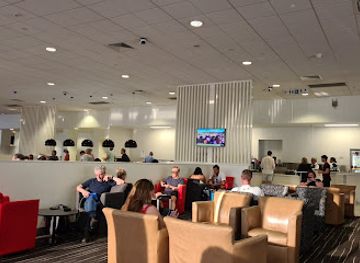
Travel lounge
Qantas Club Cairns
Experience the ultimate travel lounge at Qantas Club Cairns, where relaxation meets premium amenities for discerning travelers.
16 min drive · 5.4 km from city centre
-
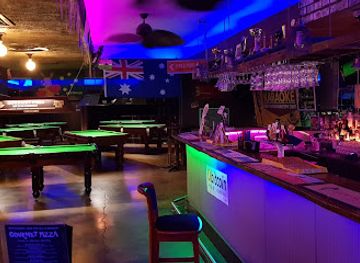
Bar
The Downunder Bar
Discover The Downunder Bar: Cairns' vibrant nightlife hub with karaoke, delicious food, and a welcoming atmosphere for all.
1 min walk · 0.1 km from city centre
-
Night club
The Cotton Club
Experience Cairns' nightlife at The Cotton Club, a dynamic venue featuring a bar, restaurant, and disco club atmosphere perfect for tourists.
1 min walk · 0.1 km from city centre
-
Bar
BAR36
Experience the vibrant atmosphere of BAR36 in Cairns, where exquisite drinks and stunning views create the perfect nightlife getaway.
5 min walk · 0.4 km from city centre

Best shops in Cairns
Shopping in Cairns is centred on the city grid, the Cairns Central shopping centre and the Esplanade and marina precincts. The city's most distinctive retail experience is Rusty's Markets, where stalls sell tropical produce, flowers, prepared food and goods reflecting the region's multicultural communities. Independent galleries and souvenir shops offer Aboriginal and Torres Strait Islander art, locally made crafts and nature-themed products, but buyers should seek clear information about provenance and artist attribution. Retailers also specialise in reef and outdoor equipment, practical clothing and regional food items. Cairns Central provides mainstream shops and everyday services, while the city streets have smaller gift, art and jewellery businesses aimed at visitors. Shopping here is less about a single historic bazaar than about combining fresh-market culture, Indigenous art, tropical produce and practical supplies for outdoor travel.
-
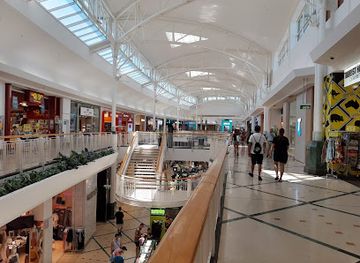
Shopping mall
Cairns Central Shopping Centre
Discover the vibrant shopping scene at Cairns Central Shopping Centre, featuring over 200 stores and diverse dining options in the heart of Queensland.
7 min walk · 0.6 km from city centre
-
Shopping mall
The Pier, Cairns
Discover the perfect blend of shopping, dining, and stunning views at The Pier in Cairns - a vibrant destination for all!
7 min walk · 0.6 km from city centre
-
Market
Rusty's Markets
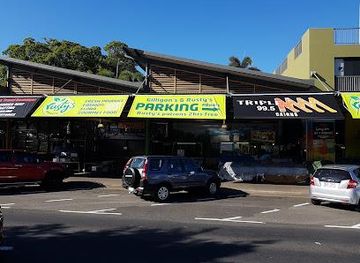
Discover the heart of Cairns at Rusty's Markets, where local produce, artisan goods, and vibrant culture come together in a bustling atmosphere.
4 min walk · 0.3 km from city centre
-
Gift shop
Myer Cairns
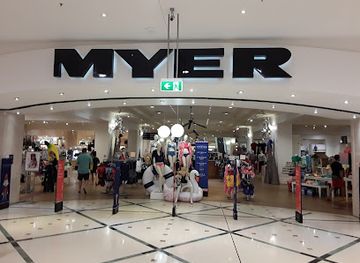
Explore Myer Cairns for an exceptional shopping experience, featuring fashion, homewares, and unique gifts in the heart of Queensland.
6 min walk · 0.5 km from city centre
Get your free copy of our complete guide to Cairns, delivered straight to you.
Everything on this page, from attractions and restaurants to essentials and local phrases, in one PDF you can read offline, print or share.
Already have an account? Sign in
Your Cairns guide is ready.
We'll send it to · Not you? Sign out

Getting your guide ready…
We are putting together a fresh copy of the Cairns guide. This can take up to a minute.
This can take a few moments. If your browser asks, choose Allow so the download can start. You'll find the guide in your Downloads folder.
Nothing happened? Download it again
Sorry, the guide is taking longer than usual. Please try again in a minute, or get it by email instead.
Cairns essentials
Currency and Payment
Safety
Emergency Situations
Do's and Don'ts
Local Tips
From Eve
Local phrases worth knowing
You don't need to get them perfect. A few words go a long way, and locals appreciate the effort.
Basics
| English | Local | Say it |
|---|---|---|
| Hello | G'day | [g'day] |
| Goodbye | Catch ya later | [catch ya later] |
| Yes | Yeah | [yeah] |
| No | Nah | [nah] |
| Please/You're welcome | No worries | [no worries] |
| Thank you | Cheers | [cheers] |
| Excuse me/Sorry | Sorry mate | [sorry mate] |
| How are you? | How's it going? | [how's it going] |
| Fine. And you? | Good. You? | [good. you] |
| Do you speak English? | You speak English? | [you speak English] |
| I don't understand | I'm lost mate | [I'm lost mate] |
Eating & Drinking
| English | Local | Say it |
|---|---|---|
| I'd like to see the menu, please | Can I have a squiz at the menu? | [can I have a squiz at the menu] |
| I don't eat meat | I'm vego | [I'm vego] |
| Cheers! | Cheers! | [cheers] |
| I would like to pay, please | Can I pay now? | [can I pay now] |
Emergencies
| English | Local | Say it |
|---|---|---|
| Help! | Help! | [help] |
| Go away! | Piss off! | [piss off] |
| Call the Police! | Ring the cops! | [ring the cops] |
| Call a doctor! | Get the doc! | [get the doc] |
| I'm lost | I'm lost | [I'm lost] |
| I'm ill | I'm crook | [I'm crook] |
Shopping
| English | Local | Say it |
|---|---|---|
| I'd like to buy... | I wanna grab... | [I wanna grab] |
| I'm just looking | Just browsing | [just browsing] |
| How much is it? | How much? | [how much] |
| That's too expensive | Too dear | [too dear] |
| Can you lower the price? | Can you do me a better price? | [can you do me a better price] |
Time & Numbers
| English | Local | Say it |
|---|---|---|
| What time is it? | What's the time? | [what's the time] |
| It's one o'clock | It's one | [it's one] |
| Half past (10) | Half ten | [half ten] |
| Morning | Mornin' | [mornin] |
| Afternoon | Arvo | [arvo] |
| Evening | Evenin' | [evenin] |
| Yesterday | Yesty | [yesty] |
| Today | Today | [today] |
| Tomorrow | Tomorra | [tomorra] |
| 1 | One | [one] |
| 2 | Two | [two] |
| 3 | Three | [three] |
| 4 | Four | [four] |
| 5 | Five | [five] |
| 6 | Six | [six] |
| 7 | Seven | [seven] |
| 8 | Eight | [eight] |
| 9 | Nine | [nine] |
| 10 | Ten | [ten] |
Transport & Directions
| English | Local | Say it |
|---|---|---|
| Where's a/the...? | Where's the...? | [where's the] |
| What's the address? | What's the addy? | [what's the addy] |
| Can you show me (on the map)? | Can you show me (on the map)? | [can you show me (on the map)] |
| When's the next (bus)? | When's the next (bus)? | [when's the next (bus)] |
| A ticket (to ....) | A ticket (to ....) | [a ticket (to ....)] |
History of Cairns
Gimuy-Walubarra Yidi Country
The Cairns district is the traditional country of the Gimuy-walubarra Yidi people, whose relationship with the coast, freshwater, wetlands and surrounding rainforest extends across countless generations. Their knowledge of seasonal foods, marine environments and land management remains part of the cultural identity of Far North Queensland. The coastal plain was not an empty landscape when colonial settlement began: it was a lived and travelled country with established cultural responsibilities and connections. Today, Indigenous perspectives are increasingly represented through cultural interpretation, art and guided experiences, while place names and institutions acknowledge the enduring presence of Traditional Owners.
Colonial Foundation and Goldfields
European settlement developed rapidly after the discovery of gold on the Hodgkinson Field west of the Great Dividing Range. Cairns was established in 1876 as a port and supply point, and was named after William Wellington Cairns, then Governor of Queensland. The new settlement faced difficult terrain, flooding and disputes over the best route into the interior, but its harbour gave it an advantage in serving the goldfields. Roads, wharves and government services followed, transforming a coastal landing place into the administrative and commercial centre of the region.
Railways, Sugar and Urban Growth
The railway to the inland mining settlements helped secure Cairns's future, reaching the Atherton Tableland and connecting the port with agricultural districts. As gold production declined, sugar became increasingly important on the coastal plain, supported by immigrant labour and the expansion of plantations and mills. The Kuranda Scenic Railway, whose construction through the Barron Gorge country was completed in the late nineteenth century, remains a visible reminder of the engineering ambition that linked the coast with the hinterland. Trade, agriculture and public works gradually gave Cairns a more settled urban form.
War in the Far North
During the Second World War, Cairns became a significant Allied base because of its proximity to the Pacific theatre. The harbour, airfield and local infrastructure supported military logistics, training and movements through northern Australia and towards New Guinea. The wartime population and strategic importance accelerated development, while military activity altered the city's relationship with its waterfront and transport networks. Surviving memorials and heritage structures, together with local museum collections, preserve aspects of this period, although much of the wartime landscape has since been absorbed into the modern city.
Tourism and the Tropical City
After the war, Cairns increasingly shifted from a regional port and agricultural service centre towards a tourism economy based on the reef, rainforest and tropical climate. Improved aviation, road links and marine infrastructure broadened access to the region, while the declaration and international recognition of the Great Barrier Reef and Wet Tropics strengthened Cairns's global profile. The city continues to balance tourism with port activity, conservation and the needs of surrounding communities. Its contemporary identity is therefore shaped by both visitor access to exceptional environments and the long cultural history of the people who belong to them.
Travel experiences inspired by this city


Swipe for more travel diaries
Cairns in Photos
Browse through our photo collection highlighting the charm and character of the destination.
Cities near Cairns
The closest cities to Cairns, if you have time for more than one stop.
-

-

-

-

-


Swipe for more cities

