

Fraser Island Travel Guide - Free Web & App
Your ultimate guide to Fraser Island. Discover top landmarks, proposed trips, and local tips. Free on the web or via the Evendo companion app.


K'gari (Fraser Island), Australia, combines vast beaches, rainforests, clear lakes, dingo habitats and four-wheel-drive adventures in a World Heritage landscape.
A World of Sand and Water
Known officially as K'gari since 2021, Fraser Island lies off Queensland's south-eastern coast between Hervey Bay and Rainbow Beach. It is the world's largest sand island and forms the principal landmass of the K'gari (Fraser Island) World Heritage Area. Its long eastern beach is both a striking coastal highway and a landing strip for aircraft, while inland, shifting dunes support rainforests, heathland, freshwater lakes and tannin-stained streams.Read more about Fraser Island
Rainforest, Lakes and Wildlife
Exploring K'gari
When is the best time to visit Fraser Island?
Best: May–June, September · 22–24°C| Month | High (°C) | Rainfall (mm) |
|---|---|---|
| January | 30 | 127 |
| February | 30 | 123 |
| March | 30 | 102 |
| April | 27 | 67 |
| May (best) | 24 | 37 |
| June (best) | 22 | 28 |
| July | 21 | 27 |
| August | 21 | 30 |
| September (best) | 24 | 48 |
| October | 26 | 76 |
| November | 28 | 99 |
| December | 29 | 118 |
Getting to and around Fraser Island
How to get there
Transportation
Best attractions in Fraser Island
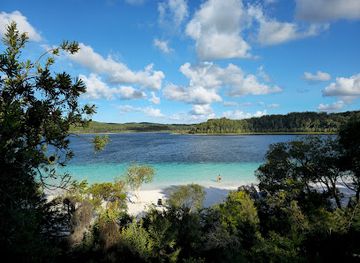
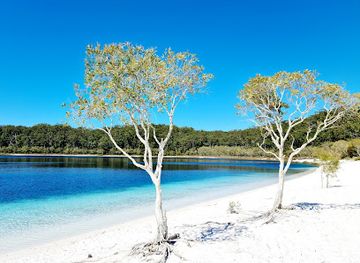
K'gari's attractions are spread across a large, predominantly sandy island. Lake McKenzie is the best-known freshwater lake, with clear water and white silica sand, while Lake Wabby presents a contrasting landscape where a high sand dune meets deep green water. At Central Station, boardwalks and forest tracks pass through rainforest and towering trees in Pile Valley, demonstrating how complex vegetation can grow on sand. Eli Creek reaches the eastern beach through a clear, fast-moving channel, and the Maheno, a rusting former ocean liner wreck, remains a prominent coastal landmark. The eastern beach also provides access to Indian Head, officially known as Tuchkawarr, and the Champagne Pools, although conditions and access should be checked locally. The western shore offers calmer coastal scenery, mangroves and sunset views, while inland tracks lead through heath, woodland and dune country inhabited by dingoes and varied birdlife.
-
Tourist attraction
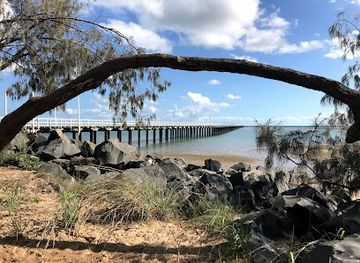
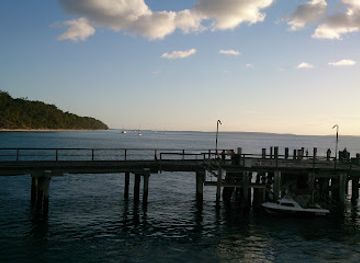
Urangan Pier
Experience the breathtaking beauty and rich history of Urangan Pier, a must-see tourist attraction in Queensland's Great Sandy Strait.
-
Tourist attraction
Urangan Pier
Experience the beauty and history of Urangan Pier, a stunning coastal attraction in Queensland’s Great Sandy Strait, perfect for nature lovers and adventurers alike.
-
Tourist attraction
Lake McKenzie
Discover the crystal-clear waters and dazzling white sands of Lake McKenzie on K'gari (Fraser Island), a natural wonder of Queensland.
-
Tourist attraction
Hervey Bay Botanic Gardens
Discover a diverse collection of native flora and tranquil landscapes at Hervey Bay's beautiful Botanic Gardens.


Best landmarks in Fraser Island
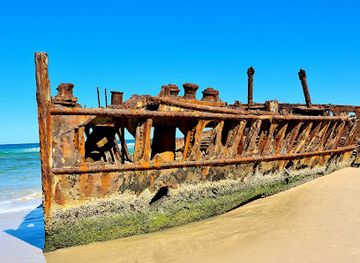
K'gari's principal landmarks are natural features shaped by sand, water and coastal processes. Lake McKenzie and Lake Wabby represent two contrasting freshwater environments, while the long eastern beach forms a defining geographic edge and a practical travel route. The Maheno wreck, lying near the beach north of Eli Creek, is an evocative reminder of the island's maritime history, although visitors should keep clear of unstable metal and surf conditions. Indian Head, known in Butchulla language as Tuchkawarr, is a prominent coastal headland with elevated views, and the Champagne Pools are rock pools exposed to ocean swell rather than a conventional swimming beach. Central Station and Pile Valley are important landscape landmarks because rainforest grows there on deep sand, a feature that contributes to the island's World Heritage significance.
-
Tourist attraction
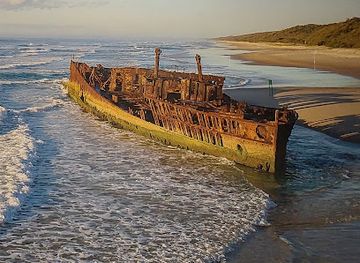
S.S. Maheno
Discover the haunting beauty of the S.S. Maheno shipwreck on Fraser Island, a captivating blend of history and stunning coastal landscapes.
-
Island
K'gari
Explore K'gari, Australia's largest sand island, rich in stunning landscapes, unique wildlife, and vibrant Aboriginal culture.
-
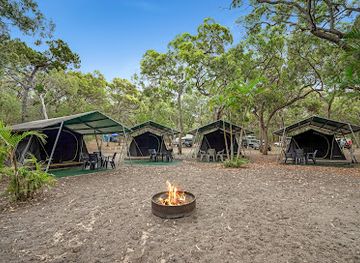
Camping Ground
Cathedrals on Fraser
Experience the stunning natural beauty and tranquility of Cathedrals on Fraser, a premier camping destination on K'gari Island, surrounded by breathtaking landscapes.
-
Tour operator
Fraser Island Adventure Tours
Discover the breathtaking beauty of K'gari with Fraser Island Adventure Tours, where stunning landscapes and unforgettable experiences await every traveler.
Explore Fraser Island on the map
Plan your trip on one map. See where the top attractions, landmarks, restaurants and hotels are, and book hotels and experiences in a few clicks.
Best hotels in Fraser Island
Best restaurants in Fraser Island
Dining on K'gari is concentrated in accommodation hubs rather than distributed through a network of independent villages. Kingfisher Bay Resort and nearby facilities provide the island's broadest choice of prepared meals, while Eurong has food outlets and provisions suited to visitors travelling along the eastern beach. Campsite users usually bring supplies from Hervey Bay, Maryborough, Rainbow Beach or other mainland departure points and cook within the rules of their authorised camping area. Fresh food, drinking water and fuel should not be assumed at every island stop. The wider Fraser Coast is associated with Queensland produce, seafood and relaxed café and pub dining, with Hervey Bay and Rainbow Beach offering the most dependable range before or after a K'gari visit.
-
Steak
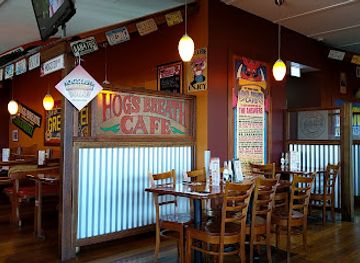
Hog's Breath Cafe Hervey Bay
Experience mouth-watering steaks and family-friendly dining at Hog's Breath Cafe in Hervey Bay - where every meal feels like a celebration.
-
Restaurant
The Sand Bar
Experience delightful dining at The Sand Bar in Kingfisher Bay Resort - savor local flavors amidst stunning coastal views on K'gari.
-
Restaurant
DUNE Restaurant and Rainforest Bar
Experience exceptional dining at DUNE Restaurant and Rainforest Bar amidst the stunning rainforest backdrop of K'gari.
-
Restaurant
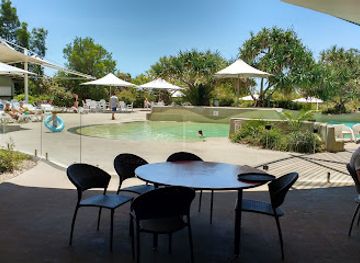
McKenzie's Restaurant
Experience fresh Australian coastal cuisine at McKenzie's Restaurant inside Eurong Beach Resort on beautiful Fraser Island.
Best bars in Fraser Island
K'gari is not a nightlife destination, and evenings are shaped more by wilderness, camp routines and resort hospitality than by clubs or late-night venues. Kingfisher Bay Resort provides the island's most established setting for an evening drink or meal, while Eurong offers a smaller range of visitor facilities. At campsites, visitors should follow current park rules concerning alcohol, fires, noise, food storage and wildlife, and should not create disturbances in shared areas. Hervey Bay has a broader selection of pubs, bars and evening restaurants on the mainland, with additional casual venues in Rainbow Beach, but access to them requires returning from the island by ferry and road. Evening conditions can be very dark away from developed accommodation, making torches and careful campsite organisation useful.
-
 Pub
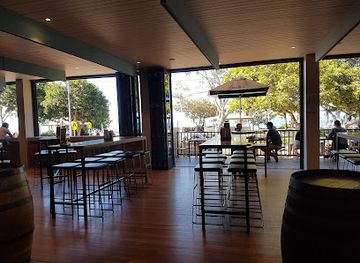
PubKondari Hotel
Discover the perfect blend of relaxation and local culture at Kondari Hotel, a vibrant pub and bistro in Urangan, Queensland.
-
Bar
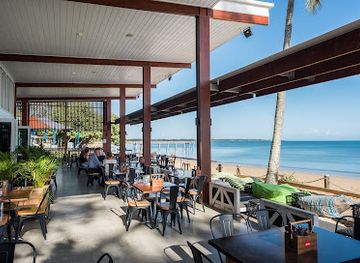
Enzo's on the Beach
Experience the perfect blend of delectable cuisine and breathtaking ocean views at Enzo's on the Beach in Hervey Bay.
-
Bar
Beach House Hotel
Experience the perfect blend of relaxation and entertainment at Beach House Hotel, your go-to destination in Scarness, Queensland.
-
Bar
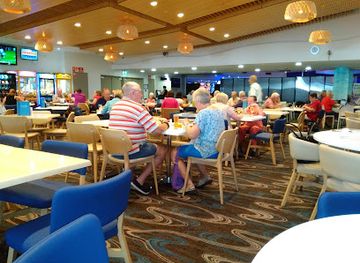
Hervey Bay R.S.L
Experience the vibrant culture and lively entertainment at Hervey Bay R.S.L, the perfect spot for relaxation and local flavors in Queensland.
Best nightclubs in Fraser Island
K'gari is not a nightlife destination, and evenings are shaped more by wilderness, camp routines and resort hospitality than by clubs or late-night venues. Kingfisher Bay Resort provides the island's most established setting for an evening drink or meal, while Eurong offers a smaller range of visitor facilities. At campsites, visitors should follow current park rules concerning alcohol, fires, noise, food storage and wildlife, and should not create disturbances in shared areas. Hervey Bay has a broader selection of pubs, bars and evening restaurants on the mainland, with additional casual venues in Rainbow Beach, but access to them requires returning from the island by ferry and road. Evening conditions can be very dark away from developed accommodation, making torches and careful campsite organisation useful.
-
Pub
Kondari Hotel
Experience the allure of Urangan at Kondari Hotel, where great food, refreshing drinks, and stunning views come together in a vibrant pub atmosphere.
-
RSL Club
Hervey Bay R.S.L
Experience the lively atmosphere of Hervey Bay R.S.L, where dining, live music, and local culture come together in a vibrant community hub.
-
Pub
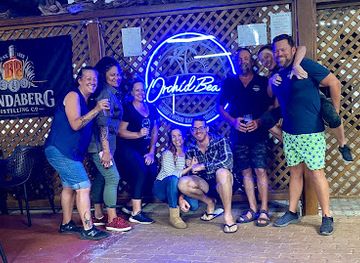
Orchid Beach Trading Post and Driftwood Bar
Experience the vibrant atmosphere at Orchid Beach Trading Post and Driftwood Bar, where local flavors meet stunning coastal views in K'gari.
-
Bar
Fraser Island Retreat
Discover the tranquility and adventure at Fraser Island Retreat, where nature meets comfort on the stunning K'gari coastline.

Best shops in Fraser Island
Shopping on K'gari is limited and practical rather than extensive. Island accommodation hubs such as Kingfisher Bay and Eurong provide selected food, drinks, camping essentials and visitor supplies, but travellers should obtain most provisions, fuel and specialised equipment in Hervey Bay, Maryborough or Rainbow Beach before crossing. The mainland Fraser Coast offers local produce, seafood, artworks and small-scale crafts through independent businesses, galleries, markets and farm-related outlets, although markets and product ranges vary by place and date. Outdoor equipment and vehicle-supply shops around the gateway towns are particularly useful for remote camping and four-wheel-drive travel. K'gari itself is better suited to responsible nature experiences than souvenir retail, and collecting shells, sand, timber or other natural materials is inappropriate in a protected cultural landscape.
-
Grocery store
IGA Fraser Shores
Explore IGA Fraser Shores, a local gem in Urraween, offering fresh produce and quality groceries perfect for your culinary adventures.
-
Camping Ground
Cathedrals on Fraser
Experience the beauty of Fraser Island at Cathedrals on Fraser, a premier camping ground with stunning landscapes and essential amenities.
-
Hotel
Fraser Island Retreat
Experience the beauty of K'gari at Fraser Island Retreat, a perfect blend of comfort and adventure amidst nature's splendor.
-
Gift shop
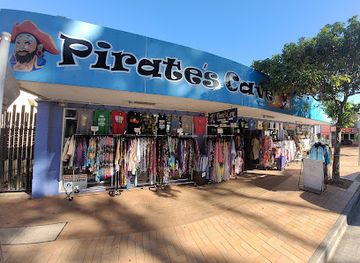
Pirates Cave Souvenirs & Gifts
Discover unique artisanal treasures and coastal souvenirs at Pirates Cave Souvenirs & Gifts in Torquay, Queensland, a must-visit for every traveler.
Get your free copy of our complete guide to Fraser Island, delivered straight to you.
Everything on this page, from attractions and restaurants to essentials and local phrases, in one PDF you can read offline, print or share.
Already have an account? Sign in
Your Fraser Island guide is ready.
We'll send it to · Not you? Sign out

Getting your guide ready…
We are putting together a fresh copy of the Fraser Island guide. This can take up to a minute.
This can take a few moments. If your browser asks, choose Allow so the download can start. You'll find the guide in your Downloads folder.
Nothing happened? Download it again
Sorry, the guide is taking longer than usual. Please try again in a minute, or get it by email instead.
Fraser Island essentials
Currency and Payment
Safety
Emergency Situations
Do's and Don'ts
Local Tips
From Eve
Local phrases worth knowing
You don't need to get them perfect. A few words go a long way, and locals appreciate the effort.
Basics
| English | Local | Say it |
|---|---|---|
| Hello | G'day | [g'day] |
| Goodbye | See ya | [see ya] |
| Yes | Yeah | [yeah] |
| No | Nah | [nah] |
| Please/You're welcome | Please/No worries | [please/no worries] |
| Thank you | Cheers | [cheers] |
| Excuse me/Sorry | Sorry | [sorry] |
| How are you? | How ya going? | [how ya going] |
| Fine. And you? | Good. You? | [good. you] |
| Do you speak English? | Speak English? | [speak english] |
| I don't understand | I don't get ya | [i don't get ya] |
Eating & Drinking
| English | Local | Say it |
|---|---|---|
| I'd like to see the menu, please | Menu please | [menu please] |
| I don't eat meat | No meat | [no meat] |
| Cheers! | Cheers! | [cheers] |
| I would like to pay, please | Pay please | [pay please] |
Emergencies
| English | Local | Say it |
|---|---|---|
| Help! | Help! | [help] |
| Go away! | Bugger off! | [bugger off] |
| Call the Police! | Police! | [police] |
| Call a doctor! | Doctor! | [doctor] |
| I'm lost | Lost | [lost] |
| I'm ill | Sick | [sick] |
Shopping
| English | Local | Say it |
|---|---|---|
| I'd like to buy... | Buy... | [buy] |
| I'm just looking | Just looking | [just looking] |
| How much is it? | How much? | [how much] |
| That's too expensive | Too pricey | [too pricey] |
| Can you lower the price? | Lower price? | [lower price] |
Time & Numbers
| English | Local | Say it |
|---|---|---|
| What time is it? | What's the time? | [what's the time] |
| It's one o'clock | It's one | [it's one] |
| Half past (10) | Half ten | [half ten] |
| Morning | Mornin' | [mornin'] |
| Afternoon | Arvo | [arvo] |
| Evening | Evenin' | [evenin'] |
| Yesterday | Yest'day | [yest'day] |
| Today | Today | [today] |
| Tomorrow | Tomorra | [tomorra] |
| 1 | One | [one] |
| 2 | Two | [two] |
| 3 | Three | [three] |
| 4 | Four | [four] |
| 5 | Five | [five] |
| 6 | Six | [six] |
| 7 | Seven | [seven] |
| 8 | Eight | [eight] |
| 9 | Nine | [nine] |
| 10 | Ten | [ten] |
Transport & Directions
| English | Local | Say it |
|---|---|---|
| Where's a/the...? | Where's the...? | [where's the] |
| What's the address? | Address? | [address] |
| Can you show me (on the map)? | Show me (on map)? | [show me (on map)] |
| When's the next (bus)? | Next (bus)? | [next (bus)] |
| A ticket (to ....) | Ticket (to ....) | [ticket (to)] |
History of Fraser Island
Butchulla Country
K'gari is the traditional Country of the Butchulla people, whose cultural knowledge, stories, place names and continuing connections give the island an identity that predates European exploration by many thousands of years. The name K'gari, restored as the island's official name in 2021, is associated with a creation story concerning the island's origin. Butchulla relationships with freshwater, forest, coast and marine environments remain central to understanding the landscape, and visitors are encouraged to recognise that the island is a living cultural place rather than an empty wilderness.
European Exploration and Naming
Captain James Cook observed the island's coast during his voyage along eastern Australia in 1770, and Matthew Flinders charted parts of the region in the early nineteenth century. The name Fraser Island became established after the 1836 wreck of the Stirling Castle and the subsequent account associated with Eliza Fraser. That account was shaped by colonial interpretations and has long been regarded as a deeply problematic version of events involving Butchulla people. The modern use of K'gari acknowledges the island's older cultural identity.
Timber, Fisheries and Industry
European commercial activity expanded during the nineteenth and twentieth centuries. Timber harvesting became an important industry, with the island's forests supplying valuable hardwoods and supporting settlements, tracks and loading points. Fisheries and small-scale resource use also formed part of the island's changing economy. Forestry left a visible mark on some landscapes, although large areas of forest remained difficult to exploit because of the island's terrain, isolation and shifting sands.
Mining and Protected Landscapes
Sand mining took place on parts of the island during the twentieth century, including the extraction of minerals from coastal deposits. Public concern about the effects of mining, logging and road development contributed to stronger conservation measures. Great Sandy National Park was established in 1971, covering substantial areas of the island, while the K'gari (Fraser Island) World Heritage Area was inscribed in 1992 for its outstanding natural values, including dune development, freshwater systems and rainforest growing on sand.
A Changing Visitor Identity
Tourism developed around the island's beaches, lakes, forests and distinctive vehicle access, with ferries, four-wheel-drive tours, campsites and resort facilities making longer visits possible. Management has increasingly focused on protecting fragile dunes, limiting inappropriate vehicle use, managing camping and reducing conflict between people and dingoes. The official return to the name K'gari in 2021 formed part of a broader recognition of Butchulla culture and the continuing custodianship of Country.
Fraser Island in Photos
Browse through our photo collection highlighting the charm and character of the destination.
Neighbouring destination travel guides
The closest destinations to Fraser Island, if you have time for more than one.
-

-

-

-

-


Swipe for more destinations
Explore more

Explore more of Fraser Coast
Discover the Fraser Coast: From the world's largest sand island to whale watching in Hervey Bay, this coastal gem in Queensland offers unmatched natural beauty and adventure.
Explore Fraser Coast
Explore more of Australia
Discover the diverse landscapes, vibrant cities, and unique wildlife of Australia, a captivating destination offering endless adventures and unforgettable experiences.
Explore Australia