

Free Port Douglas Travel Guide & Mobile App
Plan your Port Douglas trip with Evendo. Get free guides to top attractions, restaurants, hotels, and bars. Web access or download the mobile app.


Port Douglas blends Great Barrier Reef adventures, Daintree rainforest, Four Mile Beach and tropical Queensland history with an easygoing coastal atmosphere.
Reef and Rainforest
Port Douglas occupies a narrow tropical peninsula on the coast of Far North Queensland, where the Coral Sea meets the landscapes of the Great Barrier Reef and the Wet Tropics. Its compact centre is arranged around Macrossan Street, a leafy avenue of cafés, galleries, boutiques and restaurants leading towards a sandy foreshore. Four Mile Beach stretches north from the town, backed by palms and low coastal vegetation, while offshore waters provide access to one of the world's most celebrated marine environments.Read more about Port Douglas
A Small Town with a Deep Past
Life Along the Waterfront
When is the best time to visit Port Douglas?
Best: June–August · 25–26°C| Month | High (°C) | Rainfall (mm) |
|---|---|---|
| January | 33 | 300 |
| February | 34 | 280 |
| March | 32 | 260 |
| April | 30 | 240 |
| May | 28 | 220 |
| June (best) | 26 | 200 |
| July (best) | 25 | 180 |
| August (best) | 26 | 180 |
| September | 27 | 200 |
| October | 29 | 220 |
| November | 31 | 240 |
| December | 32 | 260 |
Getting to and around Port Douglas
How to get there
Transportation
Best attractions in Port Douglas
Port Douglas's principal attractions are shaped by its position between tropical coast and rainforest. Four Mile Beach offers a long, open shoreline for walking and views towards the forested ranges, while the marina is the departure point for many Great Barrier Reef excursions. In the centre, the Sunday markets at Market Park bring together produce, crafts and small local businesses, and the historic St Mary's by the Sea provides a quiet glimpse of the town's nineteenth-century past. The nearby Port Douglas Court House Museum interprets local settlement and social history in a former courthouse building. Wildlife Habitat Port Douglas presents native Australian animals in landscaped environments, with a focus on education and conservation. Beyond town, Mossman Gorge and the Daintree Rainforest offer markedly wilder settings, but both are regional excursions rather than attractions within Port Douglas itself.
-
Wildlife Sanctuary
Wildlife Habitat
Discover Australia’s unique wildlife at Wildlife Habitat in Port Douglas, a premier sanctuary for conservation and immersive animal encounters.
14 min drive · 4.8 km from city centre
-
Marina
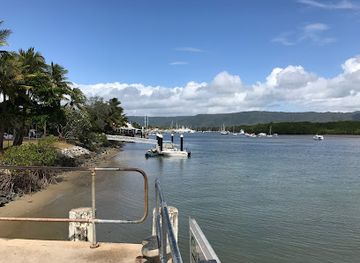
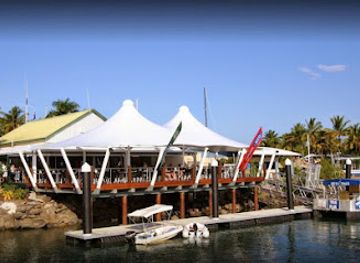
Crystalbrook Superyacht Marina
Experience the luxurious charm of Crystalbrook Superyacht Marina in Port Douglas, a gateway to stunning adventures and unforgettable waterfront dining.
6 min walk · 0.5 km from city centre
-
Boat tour agency
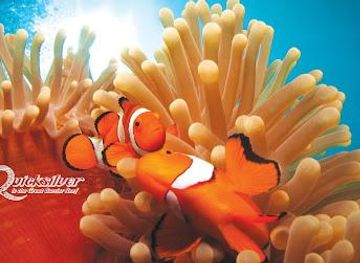
Quicksilver Cruises
Experience the Great Barrier Reef like never before with Quicksilver Cruises—an unforgettable adventure awaits in Port Douglas, Queensland.
7 min walk · 0.5 km from city centre
-
Tourist attraction
Wavelength Reef Cruises
Explore the vibrant marine life and coral wonders of the Great Barrier Reef with Wavelength Reef Cruises, an unforgettable adventure awaits.
1 min walk · 0.1 km from city centre


Best landmarks in Port Douglas
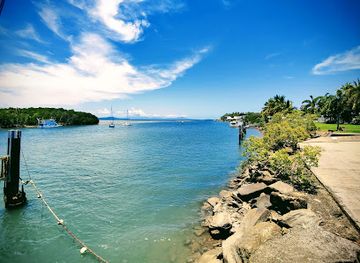
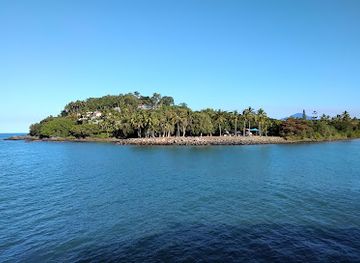
St Mary's by the Sea is Port Douglas's best-known historic landmark, a small timber church set beside the water and associated with the town's early settlement. The former Port Douglas Court House, now housing the Port Douglas Court House Museum, reflects the civic infrastructure that accompanied the nineteenth-century port. The old Sugar Wharf and waterfront area recall the movement of goods through the harbour, while the town's historic streetscape preserves a low-rise tropical character rather than monumental urban architecture. Rex Smeal Park, at the headland by the inlet, is a prominent public viewpoint with broad views across the water and towards the surrounding coast. The marina, although modern, is also central to Port Douglas's identity because it connects the town with the Great Barrier Reef and the maritime geography that continues to shape local life.
-
Wildlife Sanctuary
Wildlife Habitat
Experience the beauty and diversity of Australia's wildlife at Wildlife Habitat, a premier nature sanctuary in Port Douglas, Queensland.
14 min drive · 4.8 km from city centre
-
Grill
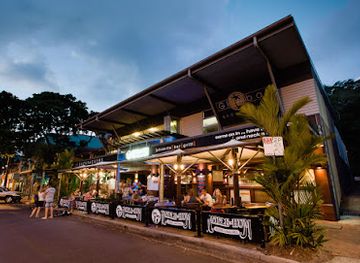
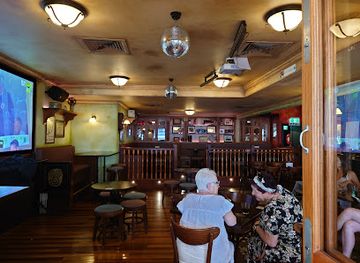
Rattle n Hum Port Douglas
Experience the vibrant atmosphere at Rattle n Hum in Port Douglas, where delicious grill and pub fare meets a lively beer garden.
1 min walk · 0.1 km from city centre
-
Marina
Crystalbrook Superyacht Marina
Discover the elegance of Crystalbrook Superyacht Marina, where luxury meets nature in the heart of Port Douglas.
6 min walk · 0.5 km from city centre
-
Boat tour agency
Quicksilver Cruises
Experience the breathtaking Great Barrier Reef with Quicksilver Cruises in Port Douglas, offering unforgettable boat tours and SCUBA diving adventures.
7 min walk · 0.5 km from city centre
Explore Port Douglas on the map
Plan your Port Douglas trip on one map. See where the top attractions, landmarks, restaurants, bars and hotels are, find what's near where you're staying, and book hotels and experiences in a few clicks.
Best hotels in Port Douglas
Best restaurants in Port Douglas
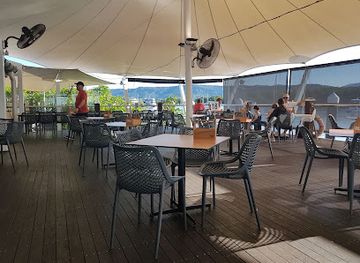
Port Douglas has one of Far North Queensland's most developed resort dining scenes, with restaurants and cafés concentrated along Macrossan Street, around the marina and near the waterfront. Menus draw on tropical produce, Queensland seafood, mud crab, prawns, barramundi and locally grown fruit, alongside Australian, Asian and European influences. Casual cafés suit early starts before reef trips, while evening restaurants range from relaxed modern dining to more polished kitchens serving seasonal regional ingredients. The Sunday markets add baked goods, tropical produce and prepared foods, although the selection varies between market days. Indigenous food traditions and local ecological knowledge are increasingly represented through cultural experiences rather than a single standardised Port Douglas cuisine. Visitors should distinguish local specialities from ingredients sourced more broadly across Queensland, as the town's dining identity is contemporary and internationally influenced.
-
Grill
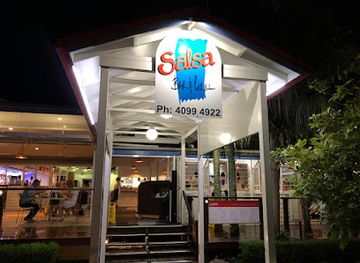
Salsa Bar and Grill
Experience modern Australian cuisine at Salsa Bar and Grill in Port Douglas—where fresh flavors meet tropical elegance.
5 min walk · 0.4 km from city centre
-
Restaurant
Tin Shed - Douglas Community & Sports Club Inc.
Discover vibrant dining and community spirit at Tin Shed - your go-to spot for great food, drinks, and local experiences in Port Douglas.
6 min walk · 0.5 km from city centre
-
Grill
Rattle n Hum Port Douglas
Experience delightful dining at Rattle n Hum Port Douglas, where grilled specialties meet a lively beer garden in an unforgettable coastal atmosphere.
1 min walk · 0.1 km from city centre
-
Restaurant
The Court House Hotel
Experience exceptional dining at The Court House Hotel in Port Douglas—where delicious seafood meets perfectly grilled steaks in a vibrant setting.
5 min walk · 0.4 km from city centre


Best bars in Port Douglas
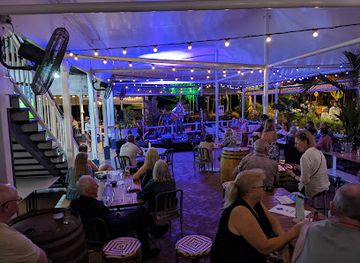
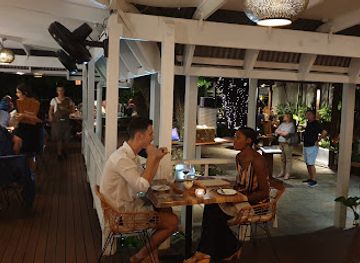
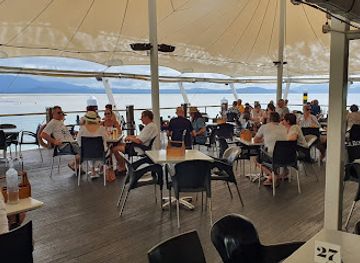
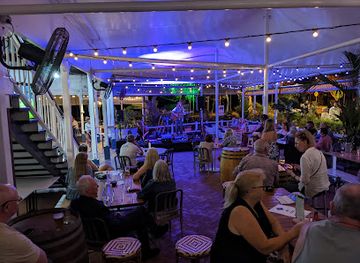
Evenings in Port Douglas are generally sociable and relaxed rather than centred on large nightclubs. Macrossan Street and the marina precinct contain the main concentration of hotel bars, casual pubs, cocktail lounges and restaurants where visitors gather after reef trips or dinner. The atmosphere shifts from early evening drinks and live acoustic music to quieter wine or cocktail settings, with occasional performances and community events adding variety. Port Douglas's resort hotels may provide their own bars and entertainment, while larger cultural or music events tend to be seasonal rather than nightly. The town is compact, making it relatively easy to move between central venues on foot, but the surrounding area becomes quiet beyond the main streets. Tropical weather can also affect outdoor events and evening plans.
-
Grill
Salsa Bar and Grill
Discover the essence of modern Australian cuisine at Salsa Bar and Grill in Port Douglas, where every meal is a celebration of fresh, local ingredients.
5 min walk · 0.4 km from city centre
-
Bar
Tin Shed - Douglas Community & Sports Club Inc.
Discover the vibrant community at Tin Shed - a unique blend of bar, restaurant, and social club in Port Douglas, perfect for relaxation and local culture.
6 min walk · 0.5 km from city centre
-
Grill
Rattle n Hum Port Douglas
Experience the vibrant flavors of Rattle n Hum in Port Douglas, where delicious grilled meals and craft beers meet a lively atmosphere.
1 min walk · 0.1 km from city centre
-
Pub
The Court House Hotel
Experience the heart of Port Douglas at The Court House Hotel, where delicious seafood and steaks meet a vibrant atmosphere and community spirit.
5 min walk · 0.4 km from city centre

Best nightclubs in Port Douglas
Evenings in Port Douglas are generally sociable and relaxed rather than centred on large nightclubs. Macrossan Street and the marina precinct contain the main concentration of hotel bars, casual pubs, cocktail lounges and restaurants where visitors gather after reef trips or dinner. The atmosphere shifts from early evening drinks and live acoustic music to quieter wine or cocktail settings, with occasional performances and community events adding variety. Port Douglas's resort hotels may provide their own bars and entertainment, while larger cultural or music events tend to be seasonal rather than nightly. The town is compact, making it relatively easy to move between central venues on foot, but the surrounding area becomes quiet beyond the main streets. Tropical weather can also affect outdoor events and evening plans.
-
Grill
Salsa Bar and Grill
Experience the flavors of modern Australian cuisine at Salsa Bar and Grill in Port Douglas, where vibrant atmosphere meets culinary excellence.
5 min walk · 0.4 km from city centre
-
Social club
Tin Shed - Douglas Community & Sports Club Inc.
Experience the vibrant community spirit at The Tin Shed, Port Douglas' premier social club offering dining, entertainment, and leisure activities.
6 min walk · 0.5 km from city centre
-
Bar
IronBar
Experience the lively atmosphere of IronBar in Port Douglas, where delicious food, live music, and a family-friendly vibe create unforgettable moments.
4 min walk · 0.4 km from city centre
-
Irish pub
Paddy's Irish Pub & Grill
Discover the vibrant spirit of Ireland at Paddy's Irish Pub & Grill, where delicious food, refreshing drinks, and live music create unforgettable moments.
4 min walk · 0.3 km from city centre

Best shops in Port Douglas
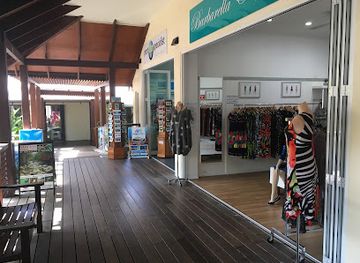
Shopping in Port Douglas is concentrated along Macrossan Street and the adjoining central streets, where independent boutiques, galleries, jewellery shops, art spaces and resort-wear retailers occupy a largely walkable precinct. The Sunday markets at Market Park offer handmade crafts, prints, clothing, soaps, local produce and small-batch foods, with the exact mix changing from week to week. Galleries commonly showcase north Queensland landscapes, contemporary Australian art and Indigenous works, but provenance and artist information matter when purchasing Indigenous art. Visitors may also find tropical food products, locally made skincare and practical beachwear rather than a highly specialised traditional craft industry. The marina and waterfront add smaller retail and gallery spaces, while supermarkets and service shops cater to everyday needs. Retail hours can vary, particularly outside peak visitor periods.
-
Traditional market
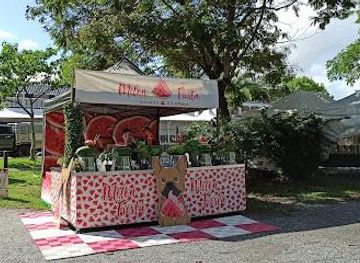
Port Douglas Markets
Explore the Port Douglas Markets for a taste of local culture, crafts, and fresh produce in a picturesque tropical setting.
6 min walk · 0.5 km from city centre
-
Shopping mall
Port Village Shopping Centre
Experience the vibrant shopping scene at Port Village Shopping Centre in Port Douglas, where retail meets local charm and delicious dining options.
4 min walk · 0.3 km from city centre
-
Book Shop
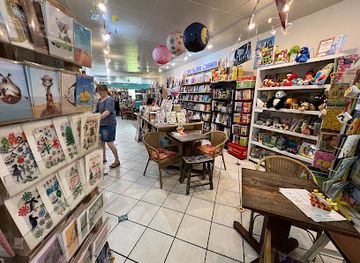
Whileaway Bookshop and Cafe
Experience the perfect blend of literature and coffee at Whileaway Bookshop and Cafe in Port Douglas—your serene escape in Queensland.
1 min walk · 0.1 km from city centre
-
Shopping mall
Portico Shopping Centre
Explore Portico Shopping Centre: A vibrant shopping haven in Port Douglas offering a variety of local treasures and unique finds.
2 min walk · 0.2 km from city centre

Get your free copy of our complete guide to Port Douglas, delivered straight to you.
Everything on this page, from attractions and restaurants to essentials and local phrases, in one PDF you can read offline, print or share.
Already have an account? Sign in
Your Port Douglas guide is ready.
We'll send it to · Not you? Sign out

Getting your guide ready…
We are putting together a fresh copy of the Port Douglas guide. This can take up to a minute.
This can take a few moments. If your browser asks, choose Allow so the download can start. You'll find the guide in your Downloads folder.
Nothing happened? Download it again
Sorry, the guide is taking longer than usual. Please try again in a minute, or get it by email instead.
Port Douglas essentials
Currency and Payment
Safety
Emergency Situations
Do's and Don'ts
Local Tips
From Eve
Local phrases worth knowing
You don't need to get them perfect. A few words go a long way, and locals appreciate the effort.
Basics
| English | Local | Say it |
|---|---|---|
| Hello | G'day | [g'day] |
| Goodbye | See ya | [see ya] |
| Yes | Yeah | [yeah] |
| No | Nah | [nah] |
| Please/You're welcome | Please/No worries | [please/no worries] |
| Thank you | Cheers | [cheers] |
| Excuse me/Sorry | Sorry | [sorry] |
| How are you? | How ya goin'? | [how ya goin'] |
| Fine. And you? | Good. You? | [good. you?] |
| Do you speak English? | Y' speak English? | [y' speak english?] |
| I don't understand | I'm lost | [i'm lost] |
Eating & Drinking
| English | Local | Say it |
|---|---|---|
| I'd like to see the menu, please | Can I check the menu, mate? | [can i check the menu, mate?] |
| I don't eat meat | I'm a vego | [i'm a vego] |
| Cheers! | Cheers! | [cheers!] |
| I would like to pay, please | Can I settle the bill, thanks | [can i settle the bill, thanks] |
Emergencies
| English | Local | Say it |
|---|---|---|
| Help! | Help! | [help!] |
| Go away! | Bugger off! | [bugger off!] |
| Call the Police! | Ring the cops! | [ring the cops!] |
| Call a doctor! | Get a doc! | [get a doc!] |
| I'm lost | I'm lost | [i'm lost] |
| I'm ill | I'm crook | [i'm crook] |
Shopping
| English | Local | Say it |
|---|---|---|
| I'd like to buy... | I'm keen to buy... | [i'm keen to buy...] |
| I'm just looking | Just browsing, mate | [just browsing, mate] |
| How much is it? | How much does it cost? | [how much does it cost?] |
| That's too expensive | That's a rip-off | [that's a rip-off] |
| Can you lower the price? | Can you do it cheaper? | [can you do it cheaper?] |
Time & Numbers
| English | Local | Say it |
|---|---|---|
| What time is it? | What's the time? | [what's the time?] |
| It's one o'clock | It's one o'clock | [it's one o'clock] |
| Half past (10) | Half past ten | [half past ten] |
| Morning | Mornin' | [mornin'] |
| Afternoon | Arvo | [arvo] |
| Evening | Evenin' | [evenin'] |
| Yesterday | Yesty | [yesty] |
| Today | Today | [today] |
| Tomorrow | Tomorrow | [tomorrow] |
| 1 | One | [one] |
| 2 | Two | [two] |
| 3 | Three | [three] |
| 4 | Four | [four] |
| 5 | Five | [five] |
| 6 | Six | [six] |
| 7 | Seven | [seven] |
| 8 | Eight | [eight] |
| 9 | Nine | [nine] |
| 10 | Ten | [ten] |
Transport & Directions
| English | Local | Say it |
|---|---|---|
| Where's a/the...? | Where's the...? | [where's the...?] |
| What's the address? | What's the addy? | [what's the addy?] |
| Can you show me (on the map)? | Can you show me (on the map)? | [can you show me (on the map)?] |
| When's the next (bus)? | When's the next (bus)? | [when's the next (bus)?] |
| A ticket (to ....) | A ticket (to ....) | [a ticket (to ....)] |
History of Port Douglas
Eastern Kuku Yalanji Country
The Port Douglas area lies within the traditional country of the Eastern Kuku Yalanji people, whose relationship with the coast, rivers, rainforest and offshore waters extends across generations. Country is understood not simply as scenery but as a living network of places, species, stories and responsibilities. The coastal environment supplied fish and shellfish, while rainforest plants and animals formed part of established knowledge systems and seasonal practices. Today, Eastern Kuku Yalanji cultural organisations and Indigenous guides continue to share aspects of this heritage, although visitors encounter only a small part of a much deeper cultural landscape. Respect for Country includes following access guidance, protecting wildlife and recognising that some cultural knowledge and places are not intended for public display.
The Port of the Goldfields
Port Douglas was established in 1877 as a port serving the Hodgkinson River goldfields inland from the coast. Its early growth reflected the practical needs of a frontier economy: goods, mining equipment and people moved through the harbour, while stores and services developed around the settlement. The town was named Port Douglas in honour of John Douglas, who was Premier of Queensland when the port was founded. During its early decades it competed with other north Queensland ports for trade and influence. The tropical climate, difficult overland routes and dependence on mining traffic shaped a settlement that was commercially important but vulnerable to changes in regional transport and economic fortunes.
Railways and Decline
Port Douglas's prominence diminished after the railway reached the inland mining districts from Cairns in the late nineteenth century. The Cairns railway route reduced the importance of shipping through Port Douglas, and the town entered a quieter period as larger regional centres absorbed commercial activity. The old port continued to serve local needs, but the boom associated with the goldfields did not last. Buildings and street patterns from the early settlement period provide reminders of this transition, while the broad waterfront and modest scale of the town reflect its nineteenth-century origins rather than the layout of a major modern city.
A Tropical Town Reimagined
For much of the twentieth century, Port Douglas remained a small coastal settlement with an economy tied to local agriculture, fishing and regional services. Its later transformation came through the growth of tourism in the 1980s, when improved roads, new accommodation and the wider recognition of the Great Barrier Reef and Wet Tropics helped make the area an international holiday destination. The development of resorts and the marina changed the local economy and brought a more cosmopolitan population, while the town's compact centre and Four Mile Beach remained defining features. Tourism also increased the importance of managing fragile coastal, marine and rainforest environments.
Heritage and Conservation Today
Port Douglas's contemporary identity is shaped by the coexistence of visitor infrastructure and protected natural environments. St Mary's by the Sea, the old Sugar Wharf precinct and surviving nineteenth-century streetscape elements recall the port's earlier history, while the Great Barrier Reef and Wet Tropics World Heritage areas frame its modern significance. The region has also become a place where Indigenous cultural interpretation, conservation science and tourism increasingly meet. Cyclones and coastal weather remain part of life in tropical Queensland, requiring buildings, roads and businesses to adapt to seasonal conditions. Modern Port Douglas therefore reflects both a historic port town and a carefully managed gateway to internationally important ecosystems.
Travel experiences inspired by this city
-
 14 Day Trip
Solo Exploration in the Daintree Rainforest
Embark on a solo adventure to the Daintree Rainforest for an immersive experience in one of Earth's oldest ecosystems.
 10 Apr 2026
By Georgios Sideropoulos -
 11 Day Trip
Solo Exploration in the Daintree Rainforest
Join Daniel Young as he embarks on a solo journey to the Daintree Rainforest, uncovering the wonders of one of the world's oldest ecosystems.
 10 Jan 2026
By Daniel Young
Swipe for more travel diaries
Port Douglas in Photos
Browse through our photo collection highlighting the charm and character of the destination.
Cities near Port Douglas
The closest cities to Port Douglas, if you have time for more than one stop.
-

-

-

-

-


Swipe for more cities
Explore more

Explore more of Australia
Discover the diverse landscapes, vibrant cities, and unique wildlife of Australia, a captivating destination offering endless adventures and unforgettable experiences.
Explore Australia