

Leopoldstadt (Vienna) Travel Guide - Free
Explore Leopoldstadt in Vienna with Evendo's free guide. Find the best shops, historic streets, restaurants, and gems on web or mobile.




Leopoldstadt in Vienna combines the Prater, Danube canals, Jewish heritage, Karmelitermarkt, museums, green avenues, local dining and evening culture.
Between the Danube and the Inner City
Leopoldstadt occupies Vienna’s broad second district on the low-lying island between the Danube Canal and the main river. Its geography gives it a character unlike the compact historic centre: long avenues open towards water and woodland, while urban quarters gather around railway arches, market streets and local squares. The district is easily reached from central Vienna, yet its rhythm often feels more spacious and residential.Read more about Leopoldstadt
Prater, Parks and Public Life
A District of Layered Cultures
Best attractions in Leopoldstadt
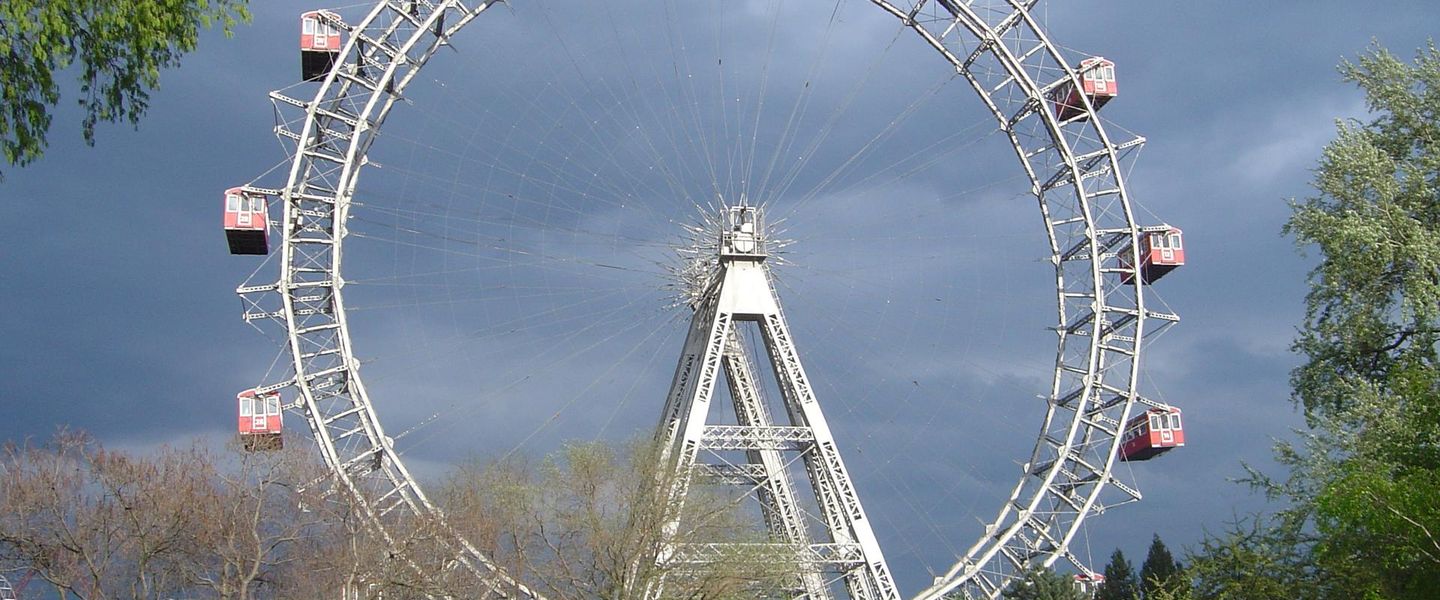
Leopoldstadt’s attractions range from the theatrical spectacle of the Wiener Prater to the calmer landscapes of the Hauptallee and Augarten. The Riesenrad provides the district’s most recognisable elevated view, while the amusement park below offers rides, cafés and long-established fairground entertainment. The Prater woodland is a genuine walking destination in its own right, with broad avenues and shaded paths extending beyond the rides. Near the Danube Canal, Karmelitermarkt and the surrounding Karmeliterviertel combine food stalls, cafés, small businesses and streets associated with the district’s Jewish history. The baroque Augarten includes formal gardens, the Augarten Porcelain Manufactory and the Vienna Boys’ Choir’s MuTh concert hall on its edge. Messe Wien and the Prater’s event spaces add a modern, exhibition-oriented dimension, while canal embankments provide a more informal route between urban quarters.
-
Tourist attraction
Madame Tussauds Vienna
Meet Austrian icons & international stars at Vienna's Madame Tussauds. Interactive exhibits, photo ops, and fun for all ages in the Prater!
12 min walk · 1.0 km from neighbourhood centre
-
Tourist attraction
Prater Turm
Experience Vienna from above! Soar on the Prater Turm for breathtaking panoramic views and an exhilarating swing ride in the heart of the historic Wiener Prater.
7 min walk · 0.5 km from neighbourhood centre
-
Tourist attraction
Tegetthoff-Denkmal
A tribute to Admiral Tegetthoff, this monument at Praterstern showcases Vienna's maritime history and 19th-century artistry.
18 min walk · 1.4 km from neighbourhood centre


Best landmarks in Leopoldstadt
The Riesenrad is Leopoldstadt’s defining structure, its steel wheel linking the modern district with the Prater’s long history as a public leisure ground. The Prater’s Hauptallee, lined with mature trees, is another landmark in the broader sense: a historic urban promenade that reveals how Vienna preserved open recreational space within a growing city. Karmelitermarkt and the surrounding streets are significant for their association with Leopoldstadt’s Jewish community and continuing neighbourhood commerce, while the nearby Stadttempel lies outside the district in the first district and should not be confused with a Leopoldstadt site. Augarten contributes baroque garden walls, formal avenues and the historic porcelain tradition of the Augarten Porcelain Manufactory. Modern landmarks include the Messe Wien exhibition complex and the U-Bahn infrastructure around Praterstern, marking the district’s continuing role in Vienna’s transport and event network.
-
Amusement park
Prater
Experience Vienna's iconic amusement park and green space: Thrilling rides, historical charm, and natural beauty await at the Prater.
8 min walk · 0.7 km from neighbourhood centre
-
Tourist attraction
Viennese Giant Ferris Wheel
Experience Vienna from Above: The Viennese Giant Ferris Wheel offers breathtaking panoramic views of the city and a journey through history in the heart of the Prater amusement park.
12 min walk · 1.0 km from neighbourhood centre
-
Tourist attraction
Hundertwasser House
Explore Vienna's iconic Hundertwasser House: a vibrant, eco-friendly architectural masterpiece that embodies art and nature in perfect harmony.
16 min walk · 1.2 km from neighbourhood centre
-
Wax museum
Madame Tussauds Vienna
Meet lifelike wax figures of celebrities, historical icons, and Austrian legends at Vienna's Madame Tussauds in the Prater amusement park.
12 min walk · 1.0 km from neighbourhood centre


Explore Leopoldstadt on the map
A handpicked selection of must-see spots in Leopoldstadt, mapped for you.
Best hotels in Leopoldstadt
Best restaurants in Leopoldstadt
Leopoldstadt’s food scene is concentrated in a few contrasting areas rather than spread evenly across the whole district. Karmelitermarkt is the clearest starting point, with stalls, bakeries, cafés and casual places to eat around a market square used by local residents as well as visitors. The surrounding Karmeliterviertel offers a broad mix of Viennese cooking, Middle Eastern and Mediterranean influences, contemporary cafés and small independent restaurants, reflecting the district’s long history of migration and commerce. Around Praterstern and the amusement park, food is more closely tied to quick meals, fairground snacks and traditional Prater restaurants, while the Danube Canal brings seasonal riverside venues and informal drinking spots. Leopoldstadt is also home to classic coffeehouse culture and neighbourhood bakeries, but opening patterns and individual businesses change, so the district is better approached as a collection of local dining streets than a single restaurant quarter.
-
Restaurant
MOZAIK Cafe & Restaurant Vienna
Savor the essence of modern Austrian cuisine at MOZAIK Cafe & Restaurant in Vienna's vibrant Leopoldstadt district.
10 min walk · 0.8 km from neighbourhood centre
-
Restaurant
Stuwer - Neues Wiener Beisl
Discover authentic Viennese flavors at Stuwer - Neues Wiener Beisl in Leopoldstadt; your gateway to traditional Austrian cuisine.
8 min walk · 0.6 km from neighbourhood centre
-
Austrian
Zum Mährischen Spatzen
Savor traditional Austrian flavors at Zum Mährischen Spatzen, where every meal is a celebration of Viennese culinary heritage.
14 min walk · 1.1 km from neighbourhood centre
-
Restaurant
Zazatam
Discover authentic Austrian flavors at Zazatam in Vienna's Leopoldstadt—where tradition meets modern culinary excellence.
10 min walk · 0.8 km from neighbourhood centre


Best bars in Leopoldstadt
After dark, Leopoldstadt divides between the amusement lights of the Prater, the bars and restaurants around Karmeliterviertel, and seasonal venues along the Danube Canal. The Prater provides theatrical evening entertainment, with rides and long-established establishments creating a very different atmosphere from the residential streets nearby. Around Karmelitermarkt and Taborstraße, cafés, wine bars and small restaurants tend to support a local night out rather than a concentrated club scene. The canal attracts relaxed summer gatherings and music-oriented venues, although activity varies by season and weather. Messe Wien and the Prater may bring larger organised events, while much of the district remains quiet once residents have returned home. Visitors should follow venue-specific age, entry and closing arrangements, and use the well-connected U-Bahn corridors when travelling between evening areas.
-
Bar
fritz von stuwer
Discover fritz von stuwer, a cozy bar in Vienna's Leopoldstadt, offering exquisite drinks and a vibrant atmosphere for a memorable night out.
7 min walk · 0.6 km from neighbourhood centre
-
Cocktail bar
Franz Joseph Bar & Lounge
Experience the best of Vienna's nightlife at Franz Joseph Bar & Lounge, where expertly crafted cocktails meet a cozy and elegant atmosphere.
13 min walk · 1.0 km from neighbourhood centre
-
Bar
Bier und Zeit
Discover the vibrant ambiance and extensive beer selection at Bier und Zeit, a quintessential bar experience in the heart of Vienna.
16 min walk · 1.3 km from neighbourhood centre


Best nightclubs in Leopoldstadt
After dark, Leopoldstadt divides between the amusement lights of the Prater, the bars and restaurants around Karmeliterviertel, and seasonal venues along the Danube Canal. The Prater provides theatrical evening entertainment, with rides and long-established establishments creating a very different atmosphere from the residential streets nearby. Around Karmelitermarkt and Taborstraße, cafés, wine bars and small restaurants tend to support a local night out rather than a concentrated club scene. The canal attracts relaxed summer gatherings and music-oriented venues, although activity varies by season and weather. Messe Wien and the Prater may bring larger organised events, while much of the district remains quiet once residents have returned home. Visitors should follow venue-specific age, entry and closing arrangements, and use the well-connected U-Bahn corridors when travelling between evening areas.
-
Disco club
Flucc
Discover Vienna's nightlife at Flucc, a lively disco club offering diverse music, unique events, and an electrifying atmosphere for unforgettable nights.
15 min walk · 1.2 km from neighbourhood centre
-
Night club
Safari Studio
Dive into the exhilarating nightlife of Vienna at Safari Studio, where great music and vibrant energy create unforgettable memories.
11 min walk · 0.9 km from neighbourhood centre
-
Night club
Club 9 Club
Experience the vibrant nightlife of Vienna at Club 9 Club, where music, dance, and fun come together in an unforgettable atmosphere.
14 min walk · 1.1 km from neighbourhood centre
-
Night club
Madame Bar
Discover the vibrant nightlife at Madame Bar in Vienna, where electrifying music and stylish ambiance create the perfect party destination.
17 min walk · 1.4 km from neighbourhood centre


Best shops in Leopoldstadt
Shopping in Leopoldstadt is most distinctive around Karmelitermarkt, where food stalls and specialist traders create a market atmosphere rooted in everyday local use rather than a grand retail boulevard. The surrounding streets contain independent cafés, bakeries, delicatessens and small businesses, with products reflecting the district’s Viennese, Jewish and international influences. Taborstraße provides a mixed local shopping street of practical retailers, services and places to eat, while Praterstraße connects the area towards the city centre with a broader urban selection. Near the Prater, retail is more closely tied to amusement, souvenirs and refreshments than to independent fashion or design. Visitors interested in craft and heritage products can look for Augarten porcelain, made by the historic manufactory associated with Augarten, but should regard the district primarily as a food-and-neighbourhood shopping area rather than Vienna’s main destination for luxury retail.
-
Souvenir store
SPASSILISK
Explore SPASSILISK, a charming souvenir store in Vienna, offering a unique collection of gifts that capture the essence of this historic city.
13 min walk · 1.1 km from neighbourhood centre
-
Store
Fanfan Boutique
Explore the unique fashion and charm of Fanfan Boutique in the heart of Vienna's Leopoldstadt district, where style meets creativity.
14 min walk · 1.1 km from neighbourhood centre


Leopoldstadt essentials
Getting There
Getting Around
Safety
Emergency Situations
Do's and Don'ts
Local Tips

From Eve
Local phrases worth knowing
You don't need to get them perfect. A few words go a long way, and locals appreciate the effort.
Basics
| English | Local | Say it |
|---|---|---|
| Hello | Servus | [Sair-voos] |
| Goodbye | Auf Wiedersehen | [Owf Vee-der-zay-en] |
| Yes | Ja | [Yah] |
| No | Nein | [Nine] |
| Please/You're welcome | Bitte | [Bit-tuh] |
| Thank you | Danke | [Dahn-kuh] |
| Excuse me/Sorry | Entschuldigung | [Ent-shul-di-gung] |
| How are you? | Wie geht's? | [Vee gates] |
| Fine. And you? | Gut. Und du? | [Goot. Oond doo] |
| Do you speak English? | Sprichst du Englisch? | [Shprikhst doo Eng-lish] |
| I don't understand | Ich verstehe nicht | [Ikh fair-shtay-uh nikht] |
Eating & Drinking
| English | Local | Say it |
|---|---|---|
| I'd like to see the menu, please | Ich hätte gerne die Speisekarte, bitte | [Ikh hate gehr-neh dee Shpie-zuh-kahr-tuh, bit-tuh] |
| I don't eat meat | Ich esse kein Fleisch | [Ikh ess-uh kine Fly-sh] |
| Cheers! | Prost! | [Prost] |
| I would like to pay, please | Ich möchte bitte zahlen | [Ikh merk-tuh bit-tuh tsah-len] |
Emergencies
| English | Local | Say it |
|---|---|---|
| Help! | Hilfe! | [Hil-fuh] |
| Go away! | Geh weg! | [Gay veg] |
| Call the Police! | Rufen Sie die Polizei! | [Roo-fen Zee dee Po-li-tsay] |
| Call a doctor! | Rufen Sie einen Arzt! | [Roo-fen Zee eye-nen Arts] |
| I'm lost | Ich habe mich verirrt | [Ikh hah-buh meekh fair-eert] |
| I'm ill | Ich bin krank | [Ikh been krank] |
Shopping
| English | Local | Say it |
|---|---|---|
| I'd like to buy... | Ich möchte ... kaufen | [Ikh merk-tuh ... kow-fen] |
| I'm just looking | Ich schaue nur | [Ikh shou-uh noor] |
| How much is it? | Wie viel kostet das? | [Vee feel kostet dahs] |
| That's too expensive | Das ist zu teuer | [Dahs ist tso toy-er] |
| Can you lower the price? | Können Sie den Preis senken? | [Kern-en Zee den prise sen-ken] |
Time & Numbers
| English | Local | Say it |
|---|---|---|
| What time is it? | Wie spät ist es? | [Vee shpate ist es] |
| It's one o'clock | Es ist ein Uhr | [Es ist iyn oor] |
| Half past (10) | Halb (zehn) | [Halb (tsayn)] |
| Morning | Morgen | [Mor-gen] |
| Afternoon | Nachmittag | [Nahk-mit-tahk] |
| Evening | Abend | [Ah-bent] |
| Yesterday | Gestern | [Ges-tern] |
| Today | Heute | [Hoy-teh] |
| Tomorrow | Morgen | [Mor-gen] |
| 1 | Eins | [Iyns] |
| 2 | Zwei | [Tzvey] |
| 3 | Drei | [Dry] |
| 4 | Vier | [Feer] |
| 5 | Fünf | [Fuhnf] |
| 6 | Sechs | [Zeks] |
| 7 | Sieben | [Zee-ben] |
| 8 | Acht | [Akht] |
| 9 | Neun | [Noy-n] |
| 10 | Zehn | [Tsayn] |
Transport & Directions
| English | Local | Say it |
|---|---|---|
| Where's a/the...? | Wo ist ein/der...? | [Voh ist iyn/dehr] |
| What's the address? | Was ist die Adresse? | [Vahs ist dee Ah-dreh-suh] |
| Can you show me (on the map)? | Können Sie mir das zeigen (auf der Karte)? | [Kern-en Zee meer dahs tsee-gen (owf der Kar-teh)] |
| When's the next (bus)? | Wann kommt der nächste (Bus)? | [Vann kohmt dehr nehk-stuh (Boos)] |
| A ticket (to ....) | Eine Fahrkarte (nach ....) | [Iyn-uh Fahr-kahr-tuh (nahkh ....)] |
History of Leopoldstadt
From Floodplain to Imperial Recreation Ground
The area now known as Leopoldstadt developed on low-lying land between Vienna and the Danube, historically exposed to flooding and divided by watercourses. Its name honours Emperor Leopold I, and the settlement grew as the city expanded beyond its medieval core. The Prater, once an imperial hunting ground, was opened to the public in 1766 by Joseph II, establishing a recreational tradition that remains central to the district’s identity. For centuries, access was shaped by bridges, ferries and changing river channels, while the area’s open land distinguished it from the dense inner city.
Jewish Leopoldstadt and Urban Expansion
From the seventeenth century, Leopoldstadt became an important centre of Jewish life in Vienna, although Jewish residents faced periods of expulsion and legal restriction. In the nineteenth century, population growth and industrialisation transformed the district into a dense urban quarter of tenements, workshops, shops and religious institutions. The area around today’s Karmeliterviertel became particularly associated with Jewish residents, commerce and community life. Major city improvements, including the regulation of the Danube and the construction of new bridges and rail connections, strengthened Leopoldstadt’s links with the expanding capital while also reshaping its waterfront and open spaces.
The Prater Becomes a Public Spectacle
Leopoldstadt’s public image changed markedly during the nineteenth century as the Prater developed from woodland and promenade into a combination of leisure ground, exhibition site and entertainment district. The Vienna World’s Fair of 1873 brought international attention to the area and encouraged new transport connections and urban development. The Wiener Riesenrad, built in 1896 by Harry Lime and Eduard Presper, later became the Prater’s most recognisable landmark. Alongside large events and attractions, the district retained everyday residential quarters, markets and working neighbourhoods, producing the mixture of spectacle and ordinary urban life visible today.
War, Persecution and Reconstruction
The Jewish community that had shaped Leopoldstadt was devastated by National Socialist persecution, deportation and murder during the Second World War. Synagogues, businesses and communal institutions were destroyed or lost, and the district’s social fabric was permanently altered. Wartime damage and post-war reconstruction introduced new housing, roads and institutional buildings, while the Prater and Augarten continued as important public landscapes. Later memorials and museums, including the Museum of Jewish History at Judenplatz nearby and local commemorative sites, form part of Vienna’s effort to acknowledge the district’s Jewish history, though the former community cannot be reduced to its destruction.
A Diverse Contemporary District
Late twentieth- and early twenty-first-century Leopoldstadt saw renewed investment around transport hubs, the Messe Wien exhibition complex, the Prater and the Danube Canal. New housing and offices appeared alongside long-established streets, while Karmeliterviertel gained a reputation for independent food businesses, cafés and cultural activity. The opening and development of venues around the canal and Praterstern added new layers to the district without erasing its varied residential character. Today Leopoldstadt remains a formally defined Vienna district containing distinct local quarters, from the market-oriented streets near the canal to the wooded Prater and the more modern areas around the exhibition grounds.
Leopoldstadt in Photos
Browse through our photo collection highlighting the charm and character of the destination.
Neighbourhoods near Leopoldstadt
The closest neighbourhoods to Leopoldstadt, if you have time for more than one stop.
-

-

-

-

-


Swipe for more neighbourhoods
Explore more

Explore more of Vienna
Vienna blends imperial palaces, classical music, grand coffeehouses and contemporary culture in Austria’s elegant capital, rich in history, art and architecture.
Explore Vienna