

Free Bridgetown Travel Guide & Mobile App
Plan your Bridgetown trip with Evendo. Get free guides to top attractions, restaurants, hotels, and bars. Web access or download the mobile app.


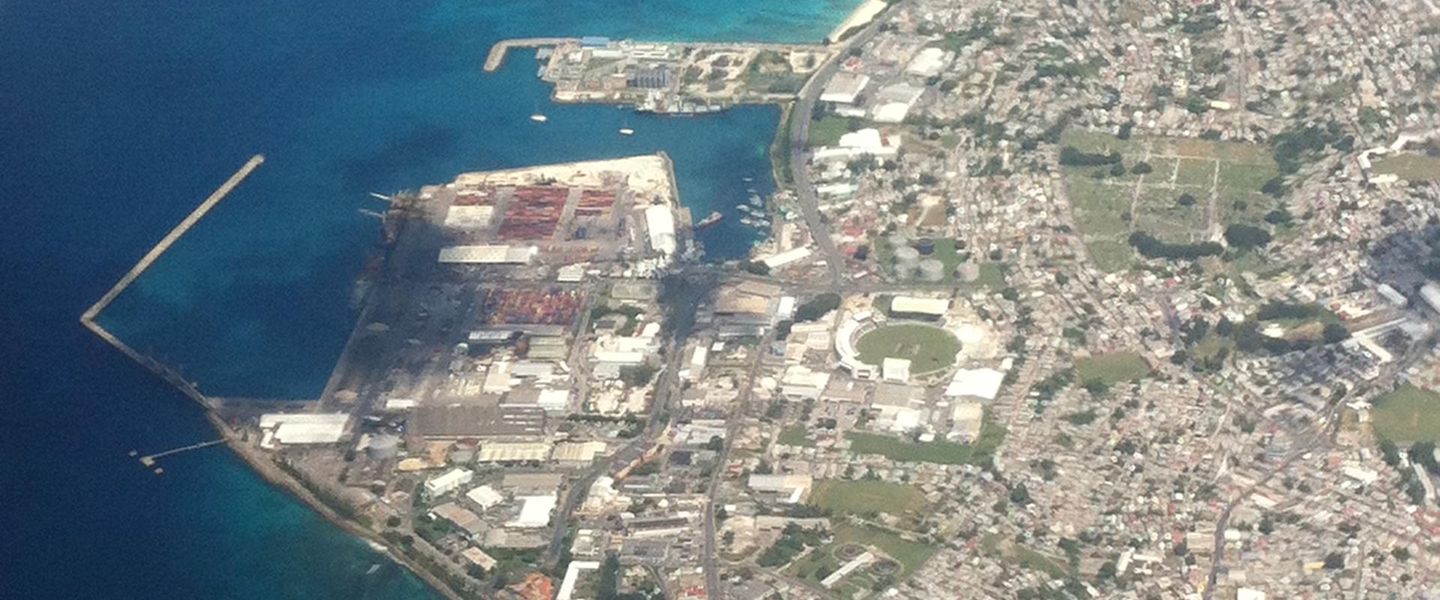


Bridgetown, Barbados pairs colonial heritage, Caribbean history, waterfront walks, UNESCO landmarks, rum culture and lively markets with island architecture and flavours.
Harbour, History and Island Life
Bridgetown occupies a sheltered curve on Barbados’s south-western coast, where the Constitution River reaches Carlisle Bay. The capital is compact enough to explore on foot, yet its streets reveal several centuries of maritime trade, British colonial rule, emancipation, parliamentary government and Caribbean exchange. The historic centre and its Garrison form a UNESCO World Heritage Site, bringing together civic buildings, churches, military architecture and commercial streets within a walkable urban landscape.Read more about Bridgetown
Streets of the Historic Centre
Coast, Culture and Contemporary Bridgetown
When is the best time to visit Bridgetown?
Best: February–April · 29–30°C| Month | High (°C) | Rainfall (mm) |
|---|---|---|
| January | 29 | 60 |
| February (best) | 29 | 50 |
| March (best) | 29 | 45 |
| April (best) | 30 | 45 |
| May | 31 | 55 |
| June | 31 | 60 |
| July | 31 | 60 |
| August | 31 | 65 |
| September | 31 | 70 |
| October | 31 | 85 |
| November | 30 | 90 |
| December | 30 | 85 |
Getting to and around Bridgetown
How to get there
Transportation
Best attractions in Bridgetown
Bridgetown’s principal attractions are concentrated within an easily explored historic core and its adjoining Garrison. National Heroes Square introduces the civic centre, with the Parliament Buildings, the Careenage and the Chamberlain Bridge offering contrasting views of government, commerce and the water. The Nidhe Israel Synagogue and Museum provides insight into one of the oldest surviving synagogues in the Western Hemisphere and Barbados’s Jewish history, while the nearby George Washington House connects the capital with the young George Washington’s visit to the island. The Barbados Museum & Historical Society, within the Garrison, places the island’s social and natural history in a former military setting. Carlisle Bay adds a coastal dimension, with beaches, clear shallows and maritime activities close to town, while Cheapside Market reveals the everyday energy of local food trading. The combination of museums, civic streets, military heritage, markets and the sea gives Bridgetown its particular sightseeing rhythm.
-
Racecourse
Garrison Savannah
Experience the thrill of horse racing and explore Barbados' rich history at the Garrison Savannah, a UNESCO World Heritage Site since 1845.
8 min drive · 2.5 km from city centre
-
Tourist attraction
Mount Gay Visitors' Centre
Experience the heritage of the world's oldest rum at the Mount Gay Visitors' Centre, a true taste of Barbadian culture and history.
5 min drive · 1.7 km from city centre
-
Cricket ground
Kensington Oval
Experience the electric atmosphere and rich history of Kensington Oval, the 'Mecca' of West Indies cricket, a must-visit landmark in the heart of Barbados.
11 min walk · 0.8 km from city centre
-
Dinner theater
Harbour Lights Barbados
Experience the ultimate Bajan night out at Harbour Lights Barbados: beachfront dining, electrifying entertainment, and vibrant nightlife under the stars on beautiful Carlisle Bay.
17 min walk · 1.4 km from city centre


Best landmarks in Bridgetown
The most defining landmarks of Bridgetown belong to the historic relationship between port, government and empire. National Heroes Square, formerly Trafalgar Square, forms the civic heart, with the statue of Admiral Horatio Nelson and the surrounding Parliament Buildings expressing different stages of Barbados’s colonial and national history. The Chamberlain Bridge crosses the Careenage and has become one of the city’s recognisable urban views. St Michael’s Cathedral represents the Anglican institution that developed alongside colonial Bridgetown, while the Nidhe Israel Synagogue and its cemetery testify to the long-standing Jewish presence on the island. South of the centre, the Garrison Savannah and its surrounding military buildings reveal Bridgetown’s strategic role in the British Atlantic world. Together these places form part of Historic Bridgetown and its Garrison, whose protected character rests on the relationship between individual buildings and the wider urban setting.
-
Beach club
The Boatyard Beach Club
Experience the best of Barbados at The Boatyard Beach Club: pristine beaches, thrilling water sports, vibrant nightlife in beautiful Carlisle Bay.
11 min walk · 0.9 km from city centre
-
Boat tour agency
Tiami Catamaran Cruises
Experience the best of Barbados: snorkel with turtles, savor Bajan cuisine, and relax on a luxurious catamaran cruise with Tiami.
16 min walk · 1.2 km from city centre
-
Racecourse
Garrison Savannah
Experience the thrill of horse racing and explore a UNESCO World Heritage Site at the Garrison Savannah, the heart of Barbadian sport and history since 1845.
8 min drive · 2.5 km from city centre
-
Grill
Blakey's Bar & Restaurant
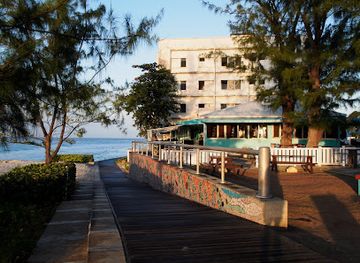
Experience the vibrant flavors and rhythms of Barbados at Blakey's Bar & Restaurant, where coastal dining meets live entertainment on the scenic Hastings Boardwalk.
11 min drive · 3.6 km from city centre
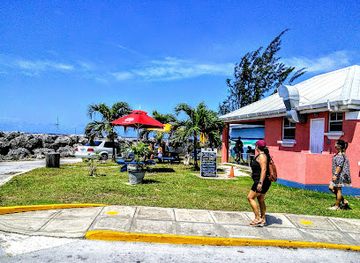
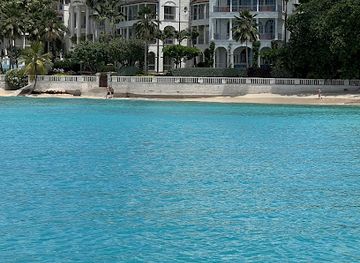
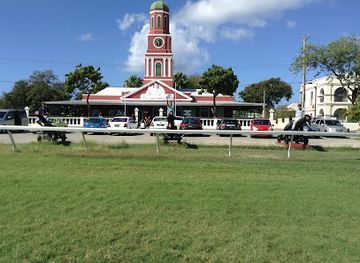
Explore Bridgetown on the map
Plan your Bridgetown trip on one map. See where the top attractions, landmarks, restaurants, bars and hotels are, find what's near where you're staying, and book hotels and experiences in a few clicks.
Best hotels in Bridgetown
Best restaurants in Bridgetown
Bridgetown’s food culture is grounded in Barbadian cooking, known locally as Bajan cuisine, with flying fish and cou-cou among its best-known dishes. Cou-cou, made traditionally with cornmeal and okra, reflects the island’s African and Caribbean culinary inheritance, while fish cakes, macaroni pie, pudding and souse, pepperpot and fresh seafood appear in homes, casual eateries and traditional restaurants. Rum is woven into both social life and the island’s commercial history, and rum shops offer an informal setting for drinks and conversation. The city’s dining options range from cafés and bakeries around the centre to seafood restaurants near the waterfront and casual food stalls serving quick local plates. Cheapside Market is valuable for seeing the ingredients behind Barbadian cooking, including fruit, vegetables and fish, while Broad Street and surrounding lanes provide more contemporary restaurants alongside long-established local businesses.
-
Seafood
Oistins Fish Market
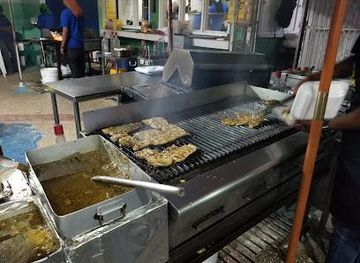
Barbados' ultimate Fish Fry: fresh grilled seafood, pulsing calypso beats, beachfront dancing, and raw Bajan energy every Friday night in Oistins.
27 min drive · 8.9 km from city centre
-
Restaurant
Champers Restaurant Barbados
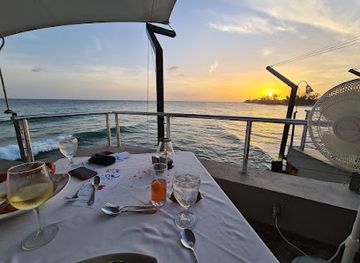
Experience exquisite dining at Champers Restaurant in Barbados—where culinary artistry meets breathtaking ocean views.
13 min drive · 4.5 km from city centre
-
Tapas
Tapas
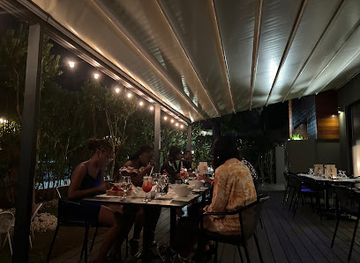
Experience the vibrant flavors of Barbados at Tapas in Bridgetown – where culinary excellence meets stunning ocean views.
11 min drive · 3.8 km from city centre
-
Italian
Buzo Osteria Italiana
Discover authentic Italian cuisine at Buzo Osteria Italiana in Bridgetown - where every meal is a celebration of flavor!
9 min drive · 3.2 km from city centre

Best bars in Bridgetown
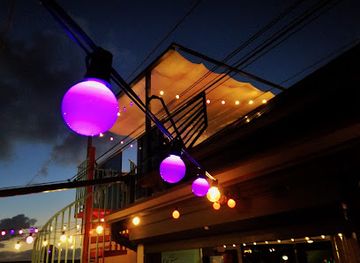
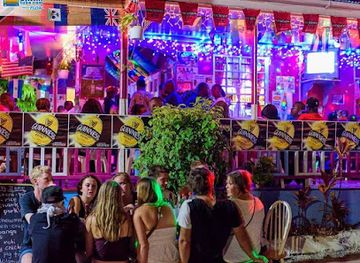
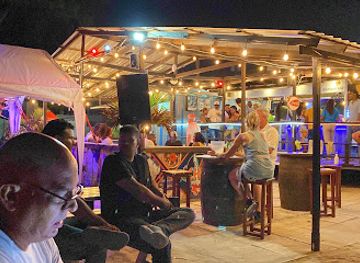
Bridgetown’s evening life is centred more on convivial bars, waterfront drinks, live music and cultural events than on a dense concentration of nightclubs. The Careenage and nearby central streets offer places for a relaxed rum punch, local beer or conversation after the working day, while the waterfront and Carlisle Bay area are associated with sunset gatherings and music-led entertainment. Calypso, soca and reggae may feature in live performances and seasonal events, and cricket or other sport can draw lively audiences to informal bars. The Garrison and surrounding south-western districts add further evening options, though the city itself generally becomes quieter than Barbados’s resort corridors after business hours. Visitors should arrange transport for later journeys, respect residential areas and check current venue information rather than assuming that every establishment operates nightly.
-
Cocktail bar
Cocktail Kitchen
Experience the vibrant nightlife of Barbados at Cocktail Kitchen, where expertly crafted cocktails meet a lively atmosphere in St. Lawrence Gap.
17 min drive · 5.7 km from city centre
-
Grill
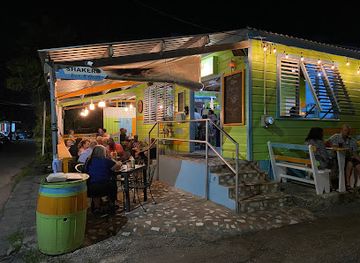
Shaker's Bar & Grill
Experience the vibrant flavors of the Caribbean at Shaker's Bar & Grill in Bridgetown, where great food meets a lively atmosphere.
11 min drive · 3.7 km from city centre
-
Bar
Flash Zone Bar & Variety
Discover the heart of Barbados nightlife at Flash Zone Bar & Variety, where vibrant atmosphere meets delicious local drinks.
12 min drive · 3.9 km from city centre
-
Grill
Chill Café Bar & Grill
Experience the vibrant atmosphere and delicious Caribbean grill dishes at Chill Café Bar & Grill in Bridgetown, Barbados.
11 min drive · 3.7 km from city centre
Best nightclubs in Bridgetown
Bridgetown’s evening life is centred more on convivial bars, waterfront drinks, live music and cultural events than on a dense concentration of nightclubs. The Careenage and nearby central streets offer places for a relaxed rum punch, local beer or conversation after the working day, while the waterfront and Carlisle Bay area are associated with sunset gatherings and music-led entertainment. Calypso, soca and reggae may feature in live performances and seasonal events, and cricket or other sport can draw lively audiences to informal bars. The Garrison and surrounding south-western districts add further evening options, though the city itself generally becomes quieter than Barbados’s resort corridors after business hours. Visitors should arrange transport for later journeys, respect residential areas and check current venue information rather than assuming that every establishment operates nightly.
-
Cocktail bar
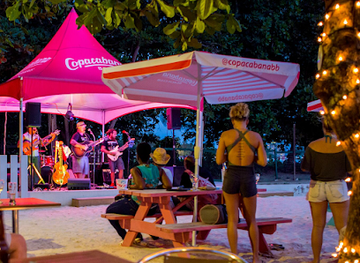
Copacabana Beach Club
Discover the vibrant atmosphere and unique flavors at Copacabana Beach Club, a must-visit beachside cocktail bar in beautiful Barbados.
14 min walk · 1.1 km from city centre
-
Night club
Harbour Lights Barbados
Discover the ultimate nightlife experience at Harbour Lights Barbados, where dining, dancing, and live entertainment meet the beauty of the Caribbean.
17 min walk · 1.4 km from city centre
-
Disco club
Club Rehab
Experience the pulsating nightlife at Club Rehab in Bridgetown, where electrifying beats and vibrant energy come together for an unforgettable night.
9 min walk · 0.7 km from city centre
-
Night club
McBride's Music Pub & Night Club
Dive into the vibrant nightlife of Oistins at McBride's Music Pub & Night Club, where live music and a lively atmosphere await.
17 min drive · 5.8 km from city centre


Best shops in Bridgetown
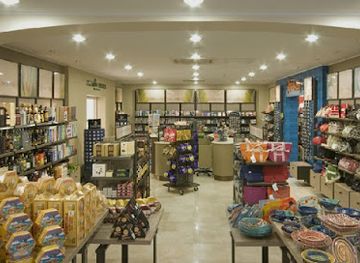
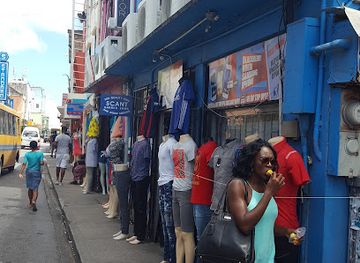
Shopping in Bridgetown ranges from everyday market trading to established central retailers. Broad Street is the traditional commercial axis, with banks, department-style shops, jewellers and other businesses occupying the city centre, while Swan Street has a more pedestrian-friendly, locally oriented character. Cheapside Market is the key place to see fresh produce, fish and household trading rather than a purely souvenir-focused retail scene. Visitors will also find Bajan food products, Mount Gay rum and other island-made goods in shops serving residents and travellers, alongside crafts, textiles, art and small gifts connected with Barbadian culture. Pelican Village, near the harbour and south of the central streets, is associated with local arts and crafts in a setting close to the cruise terminal. Compare provenance and quality when buying handmade items, and remember that market hours and individual shop schedules can vary.
-
Department store
Bridgetown Duty Free Broad Street
Discover luxury shopping at Bridgetown Duty Free on Broad Street, a must-visit for tourists seeking unique Barbadian treasures and high-end products.
4 min walk · 0.3 km from city centre
-
Shopping mall
Limegrove Lifestyle Centre
Experience luxury shopping, fine dining, and entertainment at Limegrove Lifestyle Centre in beautiful Holetown, Barbados.
30 min drive · 9.8 km from city centre
-
Shopping mall
City Centre Mall
Discover the heart of shopping in Bridgetown at City Centre Mall, where local culture meets international flair.
3 min walk · 0.2 km from city centre
-
Clothing store
Fusionz Boutique
Discover unique fashion choices at Fusionz Boutique, a stylish clothing store in the heart of Bridgetown, Barbados.
1 min walk · 0.1 km from city centre
Get your free copy of our complete guide to Bridgetown, delivered straight to you.
Everything on this page, from attractions and restaurants to essentials and local phrases, in one PDF you can read offline, print or share.
Already have an account? Sign in
Your Bridgetown guide is ready.
We'll send it to · Not you? Sign out

Getting your guide ready…
We are putting together a fresh copy of the Bridgetown guide. This can take up to a minute.
This can take a few moments. If your browser asks, choose Allow so the download can start. You'll find the guide in your Downloads folder.
Nothing happened? Download it again
Sorry, the guide is taking longer than usual. Please try again in a minute, or get it by email instead.
Bridgetown essentials
Currency and Payment
Safety
Emergency Situations
Do's and Don'ts
Local Tips
From Eve
Local phrases worth knowing
You don't need to get them perfect. A few words go a long way, and locals appreciate the effort.
Basics
| English | Local | Say it |
|---|---|---|
| Hello | Hey | [Hey] |
| Goodbye | Laters | [Lay-ters] |
| Yes | Yeah | [Yeh] |
| No | Nah | [Nah] |
| Please/You're welcome | Please | [Please] |
| Thank you | Thanks | [Thanks] |
| Excuse me/Sorry | Sorry | [Sor-ry] |
| How are you? | How you doing? | [How yuh doin?] |
| Fine. And you? | I good. You? | [I good. You?] |
| Do you speak English? | You speak English? | [Yuh speak English?] |
| I don't understand | I don't get it | [I don't get it] |
Eating & Drinking
| English | Local | Say it |
|---|---|---|
| I'd like to see the menu, please | Lemme see de menu, please | [Lem-mi see de menu, please] |
| I don't eat meat | I don't eat meat | [I don't eat meat] |
| Cheers! | Cheers! | [Cheers!] |
| I would like to pay, please | Lemme pay, please | [Lem-mi pay, please] |
Emergencies
| English | Local | Say it |
|---|---|---|
| Help! | Help! | [Help!] |
| Go away! | Move from me! | [Move from me!] |
| Call the Police! | Call de police! | [Call de police!] |
| Call a doctor! | Call de doctor! | [Call de doctor!] |
| I'm lost | I lost | [I lost] |
| I'm ill | I feel sick | [I feel sick] |
Shopping
| English | Local | Say it |
|---|---|---|
| I'd like to buy... | I lookin' to buy... | [I lookin' to buy...] |
| I'm just looking | I just lookin' | [I just lookin'] |
| How much is it? | How much dis is? | [How much dis is?] |
| That's too expensive | Dat too dear | [Dat too dear] |
| Can you lower the price? | Could yuh drop de price? | [Could yuh drop de price?] |
Time & Numbers
| English | Local | Say it |
|---|---|---|
| What time is it? | What time is it? | [What time is it?] |
| It's one o'clock | It's one o'clock | [It's one o'clock] |
| Half past (10) | Half past ten | [Half past ten] |
| Morning | Morning | [Morning] |
| Afternoon | Afternoon | [Afternoon] |
| Evening | Evening | [Evening] |
| Yesterday | Yesterday | [Yesterday] |
| Today | Today | [Today] |
| Tomorrow | Tomorrow | [Tomorrow] |
| 1 | One | [One] |
| 2 | Two | [Two] |
| 3 | Three | [Three] |
| 4 | Four | [Four] |
| 5 | Five | [Five] |
| 6 | Six | [Six] |
| 7 | Seven | [Seven] |
| 8 | Eight | [Eight] |
| 9 | Nine | [Nine] |
| 10 | Ten | [Ten] |
Transport & Directions
| English | Local | Say it |
|---|---|---|
| Where's a/the...? | Where de...? | [Where de...?] |
| What's the address? | What's de address? | [What's de address?] |
| Can you show me (on the map)? | Could yuh show me (on de map)? | [Could yuh show me (on de map)?] |
| When's the next (bus)? | When de next (bus)? | [When de next (bus)?] |
| A ticket (to ....) | A ticket (to ....) | [A ticket (to ....)] |
History of Bridgetown
Indigenous Settlement and English Beginnings
Before European colonisation, Barbados was inhabited by Indigenous peoples including communities associated with the Arawakan and Kalinago worlds, although the island’s early settlement history is complex and archaeological evidence continues to shape understanding. English settlers established a permanent colony in the 1620s, developing the settlement around the river and harbour now associated with Bridgetown. The town was initially known as the Town of Saint Michael and later Bridgetown, a name linked to the early bridge across the waterway. Its coastal position made it a practical base for shipping, administration and the movement of people and goods throughout the eastern Caribbean.
Sugar, Slavery and Colonial Growth
During the seventeenth and eighteenth centuries, Barbados became one of England’s most important Caribbean colonies as sugar cultivation expanded. The plantation economy depended on the forced labour of enslaved Africans, whose work, resistance, family life and cultural traditions profoundly shaped Barbadian society. Bridgetown grew as the island’s principal port and commercial centre, handling sugar, molasses and imported goods while merchants, officials and artisans built a dense urban district. Warehouses, churches and civic buildings reflected colonial prosperity, but that prosperity rested on severe exploitation. The city’s later heritage must therefore be read alongside the history of enslavement and the African-Barbadian communities who formed the majority of the island’s population.
The Garrison and Imperial Barbados
Bridgetown’s strategic importance increased as Britain and other European powers competed for influence in the Caribbean. The Garrison, established and enlarged over several centuries south of the town, became one of Britain’s largest military complexes in the region. Its surviving buildings, parade ground and defensive context illustrate the relationship between imperial power, maritime trade and plantation society. Within the wider town, merchants and institutions developed around the port, while the Careenage served as an important point for boats and cargo. The military and commercial landscape visible today is a physical record of Barbados’s role in Britain’s Atlantic empire.
Emancipation and Social Transformation
The abolition of slavery in the British Empire took effect in Barbados in 1834, followed by a period of apprenticeship before full freedom in 1838. Emancipation transformed social relations but did not remove economic inequality, as many formerly enslaved people remained tied to plantation labour under difficult conditions. Bridgetown became a focus for education, trade, religious life and political debate as Black Barbadians built institutions and communities. The city’s churches, meeting places, markets and streets reflect this gradual social transformation. The development of trade unions and organised political movements in the twentieth century continued the struggle for greater representation and living standards.
Towards Self-Government
Barbados underwent constitutional reform during the twentieth century, with universal adult suffrage introduced in 1951 and internal self-government preceding independence. Bridgetown was central to these changes as the seat of government, political organisation and public debate. The city’s parliamentary precinct, including the Parliament Buildings around National Heroes Square, remains a visible expression of the island’s civic life. Barbados became independent from Britain on 30 November 1966, while retaining membership of the Commonwealth. The capital consequently came to represent both the inherited structures of colonial administration and the political aspirations of an independent Caribbean nation.
A Capital with World Heritage Status
In the modern era, Bridgetown has remained Barbados’s administrative, commercial and cultural centre while tourism, international business and services have reshaped the waterfront and surrounding districts. Historic Bridgetown and its Garrison were inscribed on the UNESCO World Heritage List in 2011, recognising the town’s planned and evolved urban form, port history and military architecture. Conservation has brought renewed attention to buildings such as the Nidhe Israel Synagogue, St Michael’s Cathedral and the Parliament Buildings, while markets and small businesses continue to keep the centre in daily use. The contemporary capital is therefore neither a museum district nor a purely modern business centre, but a lived urban landscape shaped by layered histories.
Travel experiences inspired by this city
-
 11 Day Trip
Bathsheba Bound: An 11-Day East Coast Escape in Barbados
Explore Bathsheba’s rugged Atlantic coast from The Atlantis Historic Inn—surf vistas, tide pools, hikes, Bajan flavors, and sustainable, culture-rich travel.
11 Day Trip
Bathsheba Bound: An 11-Day East Coast Escape in Barbados
Explore Bathsheba’s rugged Atlantic coast from The Atlantis Historic Inn—surf vistas, tide pools, hikes, Bajan flavors, and sustainable, culture-rich travel.
 27 Jul 2026
By David Smith -
 11 Day Trip
Homecoming to Bathsheba: 11-Day Family Escape on Barbados' Wild East Coast
Family return to Barbados: 11 days in Bathsheba to surf Soup Bowl, hike dramatic East Coast trails, and unwind in eco-conscious comfort at ECO Lifestyle & Lodge.
11 Day Trip
Homecoming to Bathsheba: 11-Day Family Escape on Barbados' Wild East Coast
Family return to Barbados: 11 days in Bathsheba to surf Soup Bowl, hike dramatic East Coast trails, and unwind in eco-conscious comfort at ECO Lifestyle & Lodge.
 20 Jul 2026
By David Clarke -
 8 Day Trip
Family Adventure to Harrison's Cave in Barbados
Discover the natural wonders of Harrison's Cave, Barbados, with your family. Explore stunning caves and enjoy the vibrant culture and cuisine.
8 Day Trip
Family Adventure to Harrison's Cave in Barbados
Discover the natural wonders of Harrison's Cave, Barbados, with your family. Explore stunning caves and enjoy the vibrant culture and cuisine.
 10 Sep 2025
By David Clarke
Swipe for more travel diaries
Bridgetown in Photos
Browse through our photo collection highlighting the charm and character of the destination.
Cities near Bridgetown
The closest cities to Bridgetown, if you have time for more than one stop.
-

-

-

-

-


Swipe for more cities
Explore more

Explore more of Barbados
Discover Barbados: Pristine beaches, rich history, and vibrant culture await in this Caribbean paradise. Perfect for adventure, relaxation, and culinary delights.
Explore Barbados