

Free Mullins Travel Guide & Mobile App
Plan your Mullins trip with Evendo. Get free guides to top attractions, restaurants, hotels, and bars. Web access or download the mobile app.


Mullins, Barbados blends a calm west-coast beach, warm Caribbean waters and easy access to Speightstown, island history, local food and sunset sightseeing.
West-Coast Setting
Mullins is a small coastal community in Saint Peter on Barbados’s settled west coast, centred on the sheltered curve of Mullins Beach. The sand is compact rather than expansive, but its clear, generally calm water and gently sloping shore make the bay a popular place for swimming, floating and relaxed seaside days. A narrow coastal road links Mullins with nearby Holetown to the south and Speightstown to the north, while the surrounding landscape combines villas, guest accommodation, tropical gardens and remnants of the island’s agricultural past.Read more about Mullins
Beach Life and Local Connections
Exploring the Northern West Coast
When is the best time to visit Mullins?
Best: January–March · 28–29°C| Month | High (°C) | Rainfall (mm) |
|---|---|---|
| January (best) | 28 | 57 |
| February (best) | 28 | 46 |
| March (best) | 29 | 49 |
| April | 30 | 44 |
| May | 31 | 45 |
| June | 31 | 58 |
| July | 32 | 60 |
| August | 32 | 67 |
| September | 32 | 85 |
| October | 31 | 96 |
| November | 30 | 100 |
| December | 29 | 86 |
Getting to and around Mullins
How to get there
Transportation
Best attractions in Mullins
Mullins Beach is the community’s central attraction, offering a sheltered west-coast setting for swimming, floating, paddleboarding and relaxed time beside the Caribbean Sea. Its compact shoreline is easy to combine with a drive or bus journey to Speightstown, where the Arlington House Museum presents Barbados’s social and maritime history in a restored historic building and the waterfront preserves the character of one of the island’s early ports. In Saint Peter’s interior, St Nicholas Abbey provides plantation-era architecture, gardens and interpretation of the island’s sugar history, while Farley Hill offers elevated woodland scenery and broad views across Barbados. These latter sites lie beyond Mullins rather than within the settlement, but their proximity makes them natural additions to a northern west-coast itinerary. The appeal of the area lies in this contrast between an easy beach day, a historic town and the rural landscapes that reveal the island beyond its shoreline.
-
Tourist attraction
Animal Flower Cave & Restaurant
Discover Barbados' northernmost point: Explore the geological wonders of Animal Flower Cave, swim in natural pools, and savor breathtaking Atlantic Ocean views from the cliff-top restaurant.
31 min drive · 11 km from city centre
-
Tourist attraction
Harrison's Cave Eco-Adventure Park
Explore the stunning underground world of Harrison's Cave Eco-Adventure Park, a must-visit destination in Barbados for nature lovers and adventure seekers alike.
28 min drive · 9.3 km from city centre
-
Tourist attraction
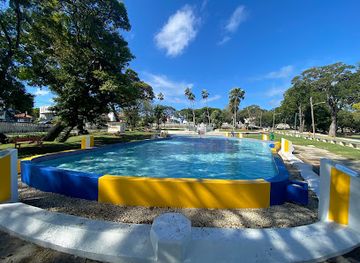
Queen's Park
Discover tranquility and history at Queen's Park in Bridgetown, Barbados, a national park with lush greenery, a giant baobab tree, and a vibrant cultural scene, offering a serene escape.
36 min drive · 16 km from city centre
-
Tourist attraction
Atlantis Submarines
Embark on an unforgettable undersea voyage with Atlantis Submarines in Barbados, exploring vibrant coral reefs, marine life, and shipwrecks in a real submarine, creating lasting memories.
34 min drive · 14 km from city centre



Best landmarks in Mullins
Mullins itself is defined more by its bay and coastal landscape than by a concentration of monumental buildings. Nearby Speightstown’s Arlington House is one of the most useful historical landmarks in the area, occupying a restored eighteenth-century building and interpreting the town’s maritime, commercial and social past. St Peter’s Parish Church, near the older settlement of Speightstown, represents the enduring importance of parish institutions in Barbados and reflects the island’s long Anglican heritage. Inland, St Nicholas Abbey is a distinguished plantation house associated with the island’s sugar economy, while its surrounding grounds preserve elements of the former estate landscape. Farley Hill, also in the wider northern area, is valued for its elevated setting and views rather than for an intact grand building. Together these places provide architectural and historical context for a coastal community whose modern identity is primarily recreational.
-
Tourist attraction
Animal Flower Cave & Restaurant
Discover Barbados' northernmost point: Explore the geological wonder of Animal Flower Cave, swim in its pools, dine cliffside, and witness breathtaking ocean views where the Atlantic meets the Caribbean.
31 min drive · 11 km from city centre
-
Tourist attraction
Harrison's Cave Eco-Adventure Park
Discover Barbados' geological wonders! Explore stunning caverns, enjoy thrilling adventures, and immerse yourself in the island's natural beauty.
28 min drive · 9.3 km from city centre
-
Tourist attraction
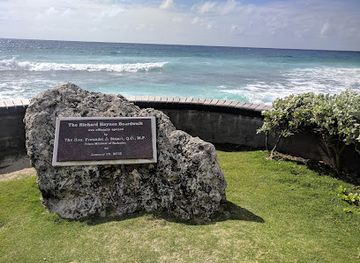
The Richard Haynes Boardwalk
Experience the beauty of Barbados on the Richard Haynes Boardwalk: a scenic coastal promenade with stunning views, vibrant culture, and tranquil relaxation.
39 min drive · 19 km from city centre
-
Scenic spot
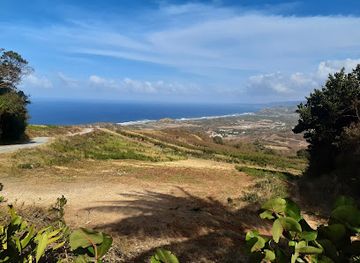
Cherry Tree Hill Reserve
Experience breathtaking panoramic views of Barbados' Scotland District and Atlantic coast from Cherry Tree Hill, a historic and scenic gem in St. Andrew.
23 min drive · 7.5 km from city centre

Explore Mullins on the map
Plan your Mullins trip on one map. See where the top attractions, landmarks, restaurants, bars and hotels are, find what's near where you're staying, and book hotels and experiences in a few clicks.
Best hotels in Mullins
Best restaurants in Mullins
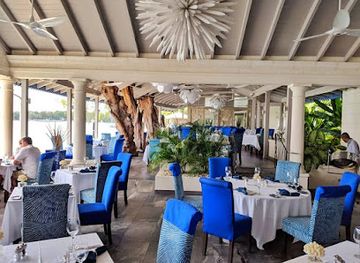
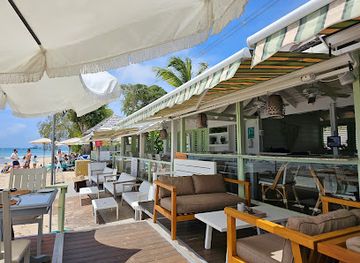
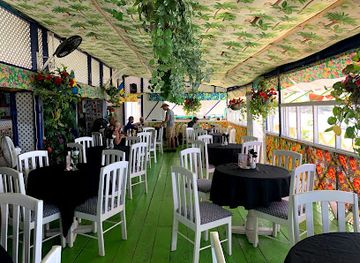
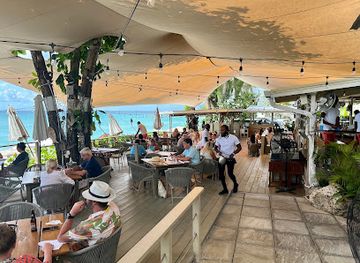
Mullins has a small-scale dining scene shaped by its beach setting, nearby villas and proximity to Speightstown rather than by a dense restaurant district. Casual seafood, grilled fish, sandwiches and Caribbean-influenced plates are natural choices along the coast, while rum, fresh fruit, rice, vegetables and seasoned meats reflect wider Barbadian cooking. The national dish, cou-cou with flying fish, may appear on menus around the island, alongside fish cakes, macaroni pie, cutters and pepper sauces. For a broader range of cafés, bakeries, takeaways and local meals, Speightstown is the nearest useful centre, with dining linked to its waterfront and town streets. Visitors should distinguish informal beach food from polished resort dining, and expect menus, opening patterns and payment methods to vary between small independent businesses and larger hospitality venues.
-
Fine Dining
The Tides Barbados
Discover fine dining at its best at The Tides Barbados—where exquisite seafood meets breathtaking ocean views.
17 min drive · 5.8 km from city centre
-
Seafood
Fish Pot
Discover exquisite seafood dishes at Fish Pot in Barbados, where ocean views meet exceptional flavors in an unforgettable dining experience.
12 min drive · 4.0 km from city centre
-
Restaurant
Fisherman's Pub
Experience delicious seafood and refreshing cocktails at Fisherman's Pub in Speightstown, Barbados – where every meal comes with stunning sea views.
5 min drive · 1.6 km from city centre
-
Restaurant
Sea Shed Restaurant
Experience exquisite seafood dining with breathtaking ocean views at Sea Shed Restaurant in beautiful Barbados.
4 min walk · 0.3 km from city centre
Best bars in Mullins
Mullins is not a major nightlife district, and evenings are generally centred on relaxed beachside drinks, informal dining and the social atmosphere of west-coast accommodation rather than large clubs. Speightstown provides a wider selection of modest bars, rum-based drinks and waterfront evenings, while larger entertainment venues are more commonly found farther south around Holetown and Bridgetown. Live music, especially settings influenced by calypso, soca and Barbadian popular music, may form part of the island’s evening culture, although specific performances vary. The west coast is well suited to sunset viewing and unhurried conversation, but visitors should not expect continuous late-night activity along the Mullins road. Use a taxi after dark if walking feels uncomfortable, and drink responsibly in the heat.
-
Bar
Fisherman's Pub
Discover the vibrant flavors of Barbados at Fisherman's Pub, where fresh seafood meets a lively atmosphere in Speightstown.
5 min drive · 1.6 km from city centre
-
Restaurant
Sea Shed Restaurant
Discover the charm of Sea Shed Restaurant in Barbados, where fresh seafood meets stunning ocean views for an unforgettable dining experience.
4 min walk · 0.3 km from city centre
-
Bar
Little Bristol Beach Bar
Experience the vibrant atmosphere and stunning ocean views at Little Bristol Beach Bar, a must-visit destination in Speightstown, Barbados.
5 min drive · 1.6 km from city centre
-
Seafood
JuJu's Beach bar
Discover JuJu's Beach Bar in Mount Standfast: An essential stop for seafood lovers seeking vibrant local flavors along the Caribbean coast.
10 min drive · 3.5 km from city centre

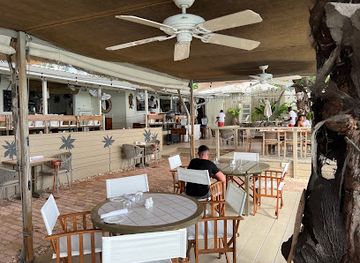


Best nightclubs in Mullins
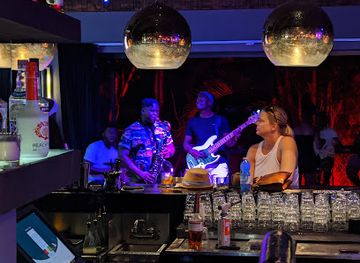
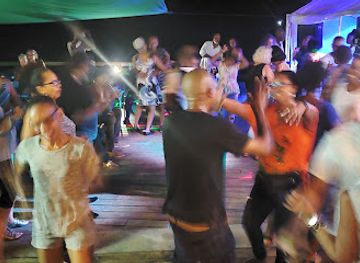
Mullins is not a major nightlife district, and evenings are generally centred on relaxed beachside drinks, informal dining and the social atmosphere of west-coast accommodation rather than large clubs. Speightstown provides a wider selection of modest bars, rum-based drinks and waterfront evenings, while larger entertainment venues are more commonly found farther south around Holetown and Bridgetown. Live music, especially settings influenced by calypso, soca and Barbadian popular music, may form part of the island’s evening culture, although specific performances vary. The west coast is well suited to sunset viewing and unhurried conversation, but visitors should not expect continuous late-night activity along the Mullins road. Use a taxi after dark if walking feels uncomfortable, and drink responsibly in the heat.
-
Night club
Red Door Lounge
Discover the rhythmic energy and exotic flavors at Red Door Lounge, Holetown's premier night club and bar for an unforgettable night out.
16 min drive · 5.5 km from city centre
-
Bar
Little Bristol Beach Bar
Experience the vibrant atmosphere of Little Bristol Beach Bar in Speightstown, where refreshing cocktails and live music await you.
5 min drive · 1.6 km from city centre
-
Bar
John Moore Bar
Discover the laid-back charm of John Moore Bar, where refreshing drinks and a relaxing atmosphere await you in beautiful Saint James, Barbados.
6 min drive · 2.1 km from city centre
-
Bar
TML One Love Bar
Discover the vibrant atmosphere of TML One Love Bar in Holetown, where refreshing drinks and lively entertainment come together for an unforgettable experience.
16 min drive · 5.5 km from city centre


Best shops in Mullins
Shopping in Mullins is limited and local in character, with beach vendors and small businesses offering refreshments, practical items and informal souvenirs rather than a substantial retail district. Speightstown is the nearest place for a broader everyday selection, including convenience shops, small retailers, galleries and businesses serving residents as well as visitors. Throughout Barbados, useful purchases include rum, island-made food products, sauces, spices, snacks, crafts and locally designed gifts, though provenance and production methods vary and should be checked. Holetown and Bridgetown provide more extensive shopping, from department-style and lifestyle stores to jewellery, fashion and larger supermarkets, but they are outside Mullins. The most characterful retail experience near the community is often found in the combination of a town visit, a market-style purchase and conversation with local sellers rather than in a dedicated shopping centre.
-
Shopping mall
Limegrove Lifestyle Centre
Discover luxury shopping, exquisite dining, and entertainment at Limegrove Lifestyle Centre in Holetown, Barbados.
17 min drive · 5.5 km from city centre
-
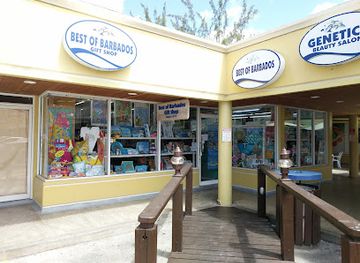
Gift shop
Best of Barbados Quayside Gift shop
Explore the vibrant selection of handcrafted souvenirs at the Best of Barbados Quayside Gift Shop in Bridgetown, where every piece tells a story.
39 min drive · 19 km from city centre
-
Dollar store
Dollarwise Plus (Speightstown)
Explore Dollarwise Plus in Speightstown for unbeatable prices on essentials and unique local souvenirs during your Barbados getaway.
16 min walk · 1.3 km from city centre
-
Grocery store
Hillside Variety Store
Discover the charm of Hillside Variety Store, a local grocery haven in Orange Hill, Barbados, offering fresh produce and unique local products.
15 min drive · 5.2 km from city centre


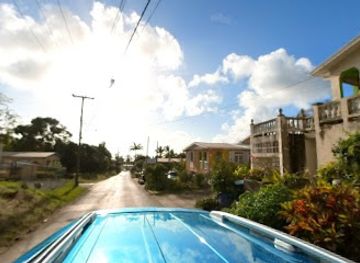
Get your free copy of our complete guide to Mullins, delivered straight to you.
Everything on this page, from attractions and restaurants to essentials and local phrases, in one PDF you can read offline, print or share.
Already have an account? Sign in
Your Mullins guide is ready.
We'll send it to · Not you? Sign out

Getting your guide ready…
We are putting together a fresh copy of the Mullins guide. This can take up to a minute.
This can take a few moments. If your browser asks, choose Allow so the download can start. You'll find the guide in your Downloads folder.
Nothing happened? Download it again
Sorry, the guide is taking longer than usual. Please try again in a minute, or get it by email instead.
Mullins essentials
Currency and Payment
Safety
Emergency Situations
Do's and Don'ts
Local Tips
From Eve
Local phrases worth knowing
You don't need to get them perfect. A few words go a long way, and locals appreciate the effort.
Basics
| English | Local | Say it |
|---|---|---|
| Hello | Hey | [hey] |
| Goodbye | Later | [lay-ter] |
| Yes | Yeah | [yah] |
| No | Nah | [nah] |
| Please/You're welcome | Please | [pleez] |
| Thank you | Tank yuh | [tank yuh] |
| Excuse me/Sorry | Sarry | [sah-ree] |
| How are you? | How yuh doin? | [how yuh doin] |
| Fine. And you? | Ahright. An yuh? | [ah-rite. an yuh] |
| Do you speak English? | Yuh speak English? | [yuh speak English] |
| I don't understand | I doan get yuh | [I doan get yuh] |
Eating & Drinking
| English | Local | Say it |
|---|---|---|
| I'd like to see the menu, please | Lemme see de menu, please | [lem-mi see deh menu, please] |
| I don't eat meat | I doan eat meat | [I doan eat meat] |
| Cheers! | Cheers! | [Cheers] |
| I would like to pay, please | I would like to pay, please | [I would like to pay, please] |
Emergencies
| English | Local | Say it |
|---|---|---|
| Help! | Help! | [Help] |
| Go away! | Geh way! | [Geh way] |
| Call the Police! | Call de Police! | [Call de Police] |
| Call a doctor! | Call a doctor! | [Call a doctor] |
| I'm lost | I los | [I los] |
| I'm ill | I sick | [I sick] |
Shopping
| English | Local | Say it |
|---|---|---|
| I'd like to buy... | I want dis... | [I want dis] |
| I'm just looking | I jus lookin | [I jus lookin] |
| How much is it? | How much dis is? | [How much dis is] |
| That's too expensive | Dat too dear | [Dat too dear] |
| Can you lower the price? | Yuh cud drop de price? | [Yuh cud drop de price] |
Time & Numbers
| English | Local | Say it |
|---|---|---|
| What time is it? | Wuh time it is? | [Wuh time it is] |
| It's one o'clock | It one o'clock | [It one o'clock] |
| Half past (10) | Half ten | [Half ten] |
| Morning | Mawnin | [Mawnin] |
| Afternoon | Afternoon | [Afternoon] |
| Evening | Evenin | [Evenin] |
| Yesterday | Yestadeh | [Yestadeh] |
| Today | Today | [Today] |
| Tomorrow | Tomorra | [Tomorra] |
| 1 | One | [One] |
| 2 | Two | [Two] |
| 3 | Tree | [Tree] |
| 4 | Fo' | [Fo'] |
| 5 | Fife | [Fife] |
| 6 | Six | [Six] |
| 7 | Seven | [Seven] |
| 8 | Eight | [Eight] |
| 9 | Nine | [Nine] |
| 10 | Ten | [Ten] |
Transport & Directions
| English | Local | Say it |
|---|---|---|
| Where's a/the...? | Wuh de... | [Wuh de...] |
| What's the address? | Wuh de address? | [Wuh de address] |
| Can you show me (on the map)? | Yuh cud show me (on de map)? | [Yuh cud show me (on de map)] |
| When's the next (bus)? | When de nex (bus)? | [When de nex (bus)] |
| A ticket (to ....) | A ticket (to ....) | [A ticket (to ....)] |
History of Mullins
First Peoples of Barbados
Long before European settlement, Barbados was visited and occupied by Indigenous peoples, including communities associated with the Saladoid-Barrancoid tradition and later Kalinago presence. Archaeological evidence from across the island records villages, tools and pottery, although the surviving historical record says comparatively little about the people who lived specifically around present-day Mullins. The west coast’s sheltered bays, freshwater access and marine resources would have formed part of the wider human geography of northern Barbados. European arrival in the sixteenth century brought disease, displacement and profound demographic change, leaving the island’s Indigenous history less visible in the landscape than the later plantation heritage.
English Settlement and Saint Peter
English colonisation began in 1627, and Barbados soon developed into one of England’s most important Caribbean possessions. Saint Peter became one of the island’s eleven parishes, with settlement spreading through coastal districts and inland estates. Early colonists cleared woodland for agriculture, established roads and built parish institutions, while the west coast acquired a role in maritime trade and plantation society. Mullins emerged within this rural and coastal framework rather than as a separately planned town. Its present name reflects the layered history of local estates, landholding and roads, although detailed evidence for the community’s early development is limited compared with the better-documented histories of Speightstown and Bridgetown.
Sugar, Slavery and Estate Society
From the seventeenth century, sugar transformed Barbados’s economy and physical appearance. Plantations occupied much of the island, and their prosperity depended on the forced labour of enslaved Africans brought through the Atlantic slave trade. Saint Peter’s estates formed part of this system, linking fields, mills, ports and merchant communities such as Speightstown. The coastal area around Mullins was shaped by this plantation economy even where no major surviving estate complex defines the modern settlement. Enslaved people created families, religious practices, foodways and cultural traditions under coercive conditions, foundations that remain central to Barbadian identity. The abolition of slavery in 1834, followed by full emancipation in 1838, altered labour and landholding without immediately removing economic inequality.
From Plantation Colony to Nation
After emancipation, Barbados remained deeply dependent on sugar, but changing labour arrangements, migration and social organisation gradually reshaped island life. Roads and coastal connections strengthened links between parish communities, market towns and Bridgetown. Speightstown continued to serve northern Barbados as a commercial and maritime centre, while smaller coastal settlements remained associated with fishing, farming and local travel. During the twentieth century, education, trade-union activity and constitutional reform expanded political participation. Barbados achieved independence from Britain in 1966. The institutions and parish boundaries visible today belong to this longer transition from plantation colony to independent nation, while the island’s African heritage and British colonial legacy continue to coexist in language, law, architecture and public life.
The West Coast’s Tourism Era
Tourism became increasingly important in the twentieth century, adding hotels, villas, restaurants and water-based recreation to a west coast previously dominated by agriculture and local commerce. Mullins Beach benefited from Barbados’s reputation for warm seas and coastal scenery, yet it retained the scale of a small community rather than becoming a separate urban centre. Nearby Speightstown developed heritage and cultural attractions, while Saint Peter’s former plantation properties became part of the island’s historical tourism landscape. Modern Mullins therefore reflects several eras at once: Indigenous settlement remembered through archaeology, colonial and plantation development recorded in parish institutions and estates, and a contemporary economy shaped by leisure, hospitality and residential life.
Travel experiences inspired by this city
-
 11 Day Trip
Bathsheba Bound: An 11-Day East Coast Escape in Barbados
Explore Bathsheba’s rugged Atlantic coast from The Atlantis Historic Inn—surf vistas, tide pools, hikes, Bajan flavors, and sustainable, culture-rich travel.
11 Day Trip
Bathsheba Bound: An 11-Day East Coast Escape in Barbados
Explore Bathsheba’s rugged Atlantic coast from The Atlantis Historic Inn—surf vistas, tide pools, hikes, Bajan flavors, and sustainable, culture-rich travel.
 27 Jul 2026
By David Smith -
 11 Day Trip
Homecoming to Bathsheba: 11-Day Family Escape on Barbados' Wild East Coast
Family return to Barbados: 11 days in Bathsheba to surf Soup Bowl, hike dramatic East Coast trails, and unwind in eco-conscious comfort at ECO Lifestyle & Lodge.
11 Day Trip
Homecoming to Bathsheba: 11-Day Family Escape on Barbados' Wild East Coast
Family return to Barbados: 11 days in Bathsheba to surf Soup Bowl, hike dramatic East Coast trails, and unwind in eco-conscious comfort at ECO Lifestyle & Lodge.
 20 Jul 2026
By David Clarke -
 8 Day Trip
Family Adventure to Harrison's Cave in Barbados
Discover the natural wonders of Harrison's Cave, Barbados, with your family. Explore stunning caves and enjoy the vibrant culture and cuisine.
8 Day Trip
Family Adventure to Harrison's Cave in Barbados
Discover the natural wonders of Harrison's Cave, Barbados, with your family. Explore stunning caves and enjoy the vibrant culture and cuisine.
 10 Sep 2025
By David Clarke
Swipe for more travel diaries
Mullins in Photos
Browse through our photo collection highlighting the charm and character of the destination.
Cities near Mullins
The closest cities to Mullins, if you have time for more than one stop.
-

-

-

-

-


Swipe for more cities
Explore more

Explore more of Barbados
Discover Barbados: Pristine beaches, rich history, and vibrant culture await in this Caribbean paradise. Perfect for adventure, relaxation, and culinary delights.
Explore Barbados