

Free Holetown Travel Guide & Mobile App
Plan your Holetown trip with Evendo. Get free guides to top attractions, restaurants, hotels, and bars. Web access or download the mobile app.


Holetown, Barbados blends colonial history, west-coast beaches, coral reefs, local food, shopping and relaxed island culture in St James for first-time visitors.
England’s First Barbados Settlement
Holetown occupies a small stretch of Barbados’s west coast in the parish of Saint James, where a sheltered inlet and calm Caribbean waters helped shape the town’s early development. In 1625, English sailors led by John Powell made landfall here, and the settlement became the first English foothold on the island. A monument near the waterfront marks that moment, while the town’s name recalls the ‘hole’ or channel through which ships entered the coast. The historic association remains central to Holetown’s identity, particularly during the annual Holetown Festival.Read more about Holetown
Beach Life and Local Character
Shopping, Food and West-Coast Evenings
When is the best time to visit Holetown?
Best: February–April · 28°C| Month | High (°C) | Rainfall (mm) |
|---|---|---|
| January | 28 | 60 |
| February (best) | 28 | 40 |
| March (best) | 28 | 35 |
| April (best) | 28 | 35 |
| May | 29 | 55 |
| June | 29 | 60 |
| July | 29 | 65 |
| August | 29 | 75 |
| September | 29 | 85 |
| October | 29 | 95 |
| November | 28 | 95 |
| December | 28 | 75 |
Getting to and around Holetown
How to get there
Transportation
Best attractions in Holetown
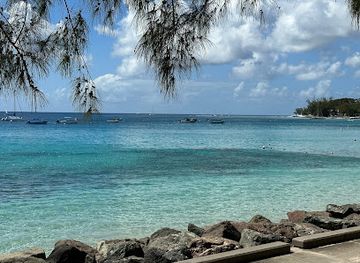
Holetown’s attractions combine coastal recreation with a compact layer of history and shopping. The Holetown Monument marks the site associated with John Powell’s 1625 English landfall, while the nearby waterfront and Holetown Lagoon provide an easy introduction to the town’s seafront character. Along the coast, sandy beaches and sheltered-looking bays invite swimming and sunbathing, although conditions should always be checked locally. Folkestone Marine Park, just north of Holetown, offers opportunities for snorkelling and observing Barbados’s marine environment, with its reef and underwater life forming a contrast to the developed shore. Inland, the Chattel Village presents colourful shops inspired by traditional Barbadian house forms, and Limegrove Lifestyle Centre adds galleries, restaurants, retail and entertainment. A short journey beyond the centre brings visitors to parish churches, historic estates and other west-coast communities, making Holetown a useful starting point for exploring Saint James rather than a place defined only by its beach.
-
Tourist attraction
Animal Flower Cave & Restaurant
Experience the natural beauty and culinary delights at Animal Flower Cave & Restaurant, a must-visit destination in St. Lucy, Barbados.
37 min drive · 17 km from city centre
-
Tourist attraction
Harrison's Cave Eco-Adventure Park
Explore the breathtaking beauty of Harrison's Cave Eco-Adventure Park in Barbados, where nature's wonders await beneath the surface in stunning underground caverns.
21 min drive · 6.9 km from city centre
-
Racecourse
Garrison Savannah
Experience the thrill of horse racing and Barbadian heritage at the Garrison Savannah, a UNESCO World Heritage Site offering a unique blend of sport, culture, and history.
32 min drive · 12 km from city centre
-
Tourist attraction
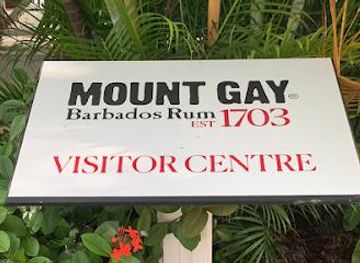
Mount Gay Visitors' Centre
Explore the rich heritage of Barbadian rum at Mount Gay Visitors' Centre, the world's oldest rum distillery, located in Bridgetown, Barbados.
25 min drive · 8.4 km from city centre


Best landmarks in Holetown
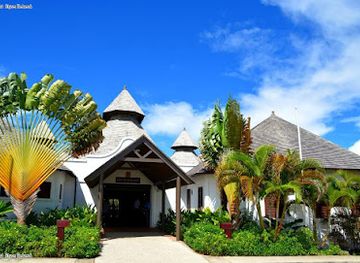
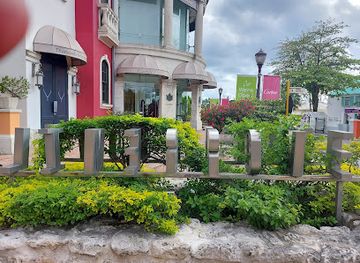
The Holetown Monument is the town’s defining civic landmark, commemorating the 1625 arrival of John Powell and the beginning of English settlement in Barbados. Its location near the coast connects the physical landscape with the island’s colonial history and explains why Holetown is often described as Barbados’s first English settlement. Saint James Parish Church, on the western side of the island, represents the importance of Anglican parish life and the long continuity of colonial-era institutions, although the present structure is a nineteenth-century building rather than the original church. The Chattel Village is a commercial landmark rather than an ancient monument, but its brightly painted shop buildings draw on the visual language of Barbadian chattel houses. Nearby historic estates and plantation landscapes place Holetown within the wider architectural and agricultural history of Saint James.
-
Tourist attraction
Harrison's Cave Eco-Adventure Park
Discover Barbados' geological heart at Harrison's Cave Eco-Adventure Park: Explore stunning caverns, enjoy thrilling activities, and immerse yourself in the island's natural beauty.
21 min drive · 6.9 km from city centre
-
Shopping mall
Limegrove Lifestyle Centre
Experience luxury redefined at Limegrove Lifestyle Centre in Barbados. Discover high-end shopping, gourmet dining, and vibrant entertainment in an elegant, open-air setting on the Platinum Coast.
3 min walk · 0.2 km from city centre
-
Fine Dining
The Tides Barbados
Experience exquisite seafood, stunning ocean views, and vibrant art at The Tides Barbados, a premier fine dining destination in Holetown.
4 min walk · 0.3 km from city centre
-
Garden
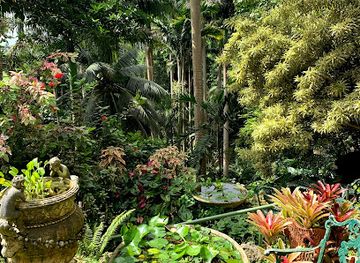
Hunte's Gardens
Discover a hidden paradise in Barbados: Hunte's Gardens, a breathtaking botanical sanctuary created by Anthony Hunte, showcasing exotic flora and tranquil beauty in a unique gully setting.
28 min drive · 9.4 km from city centre
Explore Holetown on the map
Plan your Holetown trip on one map. See where the top attractions, landmarks, restaurants, bars and hotels are, find what's near where you're staying, and book hotels and experiences in a few clicks.
Best hotels in Holetown
Best restaurants in Holetown
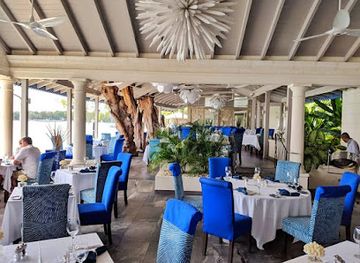
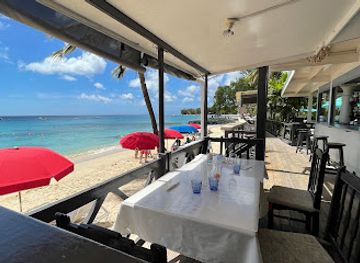
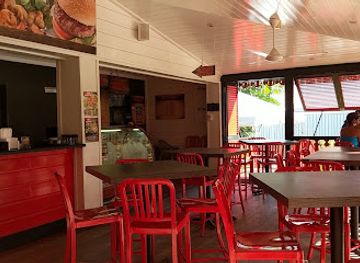
Holetown’s dining scene reflects both Barbadian cooking and the international tastes brought by the west coast’s long tourism history. Local specialities include flying fish, fish cakes, cou-cou made with cornmeal and okra, macaroni pie, rice and peas, and savoury cutters served in bread rolls. Fresh fish and seafood feature prominently, while casual food stalls and cafés provide an approachable way to encounter island flavours without a formal meal. Restaurants around the centre, the waterfront and First and Second Streets range from relaxed lunches to more polished evening dining, with Caribbean, British, European and other influences represented. Rum is woven into the island’s culinary culture, appearing in drinks, desserts and tasting experiences. Visitors should distinguish between traditional Bajan dishes and the broader international menu offered by resort-oriented restaurants, as both are part of Holetown’s contemporary food culture.
-
Fine Dining
The Tides Barbados
Experience culinary excellence at The Tides Barbados, where fresh seafood meets stunning ocean views in an unforgettable fine dining setting.
4 min walk · 0.3 km from city centre
-
Restaurant
Zaccios
Experience authentic Barbadian cuisine at Zaccios in Holetown—where fresh seafood meets stunning Caribbean views.
3 min walk · 0.2 km from city centre
-
Grill
Just Grillin' Sunset Crest
Experience delicious grilled cuisine at Just Grillin' Sunset Crest - a culinary gem in Holetown, Barbados offering local flavors and vibrant atmosphere.
5 min walk · 0.4 km from city centre
-
Caribbean
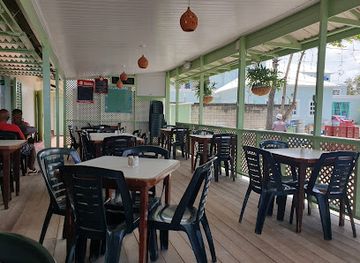
Surfside Restaurant & Bar
Discover the vibrant taste of Barbados at Surfside Restaurant & Bar - where fresh seafood meets Caribbean hospitality.
2 min walk · 0.1 km from city centre
Best bars in Holetown
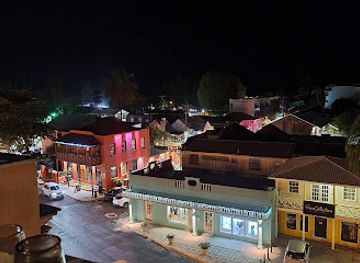
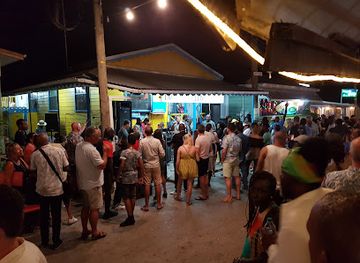
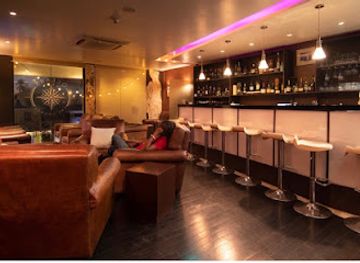
Holetown’s evenings are sociable rather than dominated by large nightclubs. Restaurants and bars around the centre, First Street, Second Street and the waterfront provide settings for rum-based drinks, local beer, conversation and live music, while hotels along the west coast often host evening entertainment. Calypso, reggae, soca and acoustic performances may feature in seasonal programmes or informal venues, reflecting Barbados’s strong musical culture. The town’s nightlife tends to build gradually, with visitors moving between dinner, music and drinks rather than following a single concentrated club district. Limegrove adds a more contemporary option with restaurants, cinema and evening entertainment. For a quieter night, a seafront bar or a venue with live Barbadian music offers a better sense of Holetown’s relaxed pace than expecting a major city-style club scene.
-
Bar
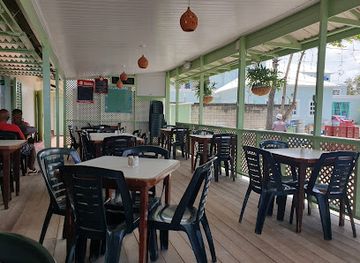
Surfside Restaurant & Bar
Experience the vibrant flavors of the Caribbean at Surfside Restaurant & Bar, a seafood haven in Holetown, Barbados, perfect for every traveler.
2 min walk · 0.1 km from city centre
-
Bar
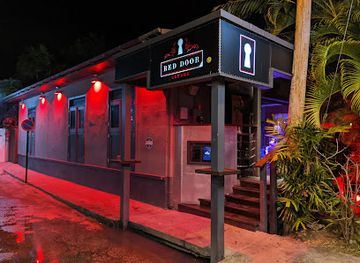
Red Door Lounge
Discover the vibrant nightlife of Barbados at Red Door Lounge, a premier bar and nightclub in Holetown offering a mix of relaxation and excitement.
2 min walk · 0.1 km from city centre
-
Restaurant
Fusion Rooftop
Discover the flavors of Fusion Rooftop, a culinary oasis in Holetown, Saint James, offering breathtaking views and exquisite dishes.
3 min walk · 0.2 km from city centre
-
Restaurant
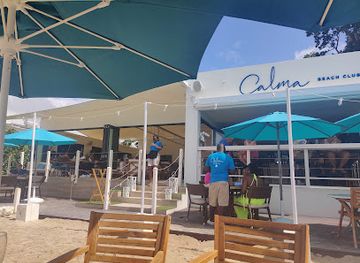
Calma Beach Club
Discover the serene beauty and exquisite flavors of Calma Beach Club, the ultimate dining destination in Holetown, Barbados.
1 min walk · 0.1 km from city centre
Best nightclubs in Holetown
Holetown’s evenings are sociable rather than dominated by large nightclubs. Restaurants and bars around the centre, First Street, Second Street and the waterfront provide settings for rum-based drinks, local beer, conversation and live music, while hotels along the west coast often host evening entertainment. Calypso, reggae, soca and acoustic performances may feature in seasonal programmes or informal venues, reflecting Barbados’s strong musical culture. The town’s nightlife tends to build gradually, with visitors moving between dinner, music and drinks rather than following a single concentrated club district. Limegrove adds a more contemporary option with restaurants, cinema and evening entertainment. For a quieter night, a seafront bar or a venue with live Barbadian music offers a better sense of Holetown’s relaxed pace than expecting a major city-style club scene.
-
Night club
Red Door Lounge
Discover the vibrant nightlife and exquisite dining experience at Red Door Lounge in Barbados, where every night is a celebration.
2 min walk · 0.1 km from city centre
-
Cocktail bar
Drift Ocean Terrace Lounge
Experience the perfect blend of cocktails and coastal views at Drift Ocean Terrace Lounge in Holetown, Barbados.
5 min walk · 0.4 km from city centre
-
Bar
TML One Love Bar
Experience the vibrant Caribbean spirit at TML One Love Bar in Holetown, a perfect spot for drinks, dancing, and unforgettable memories.
1 min walk · 0.1 km from city centre
-
Sports bar
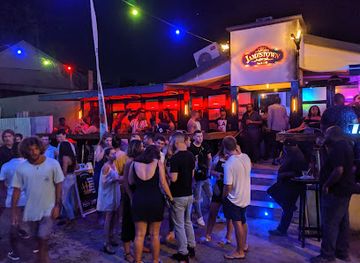
Jamestown Bar & Grill
Experience the vibrant nightlife of Holetown at Jamestown Bar & Grill, where great food, cocktails, and live sports create an unforgettable atmosphere.
2 min walk · 0.1 km from city centre


Best shops in Holetown
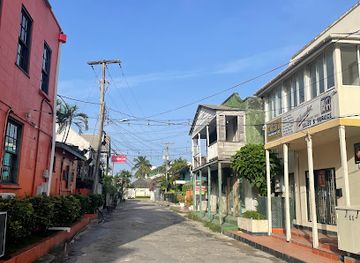
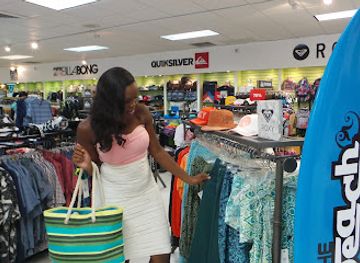
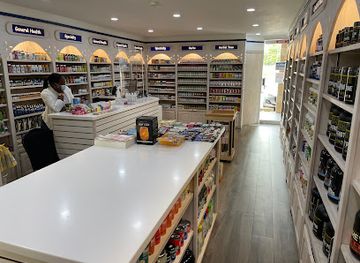
Shopping in Holetown ranges from locally styled craft retail to polished contemporary centres. The Chattel Village is the most recognisably Barbadian setting, with small colourful shops selling clothing, jewellery, artwork, souvenirs and island-inspired gifts. Limegrove Lifestyle Centre offers a more modern environment with fashion, beauty, dining, galleries and other retail, while smaller shops around the town provide everyday goods and locally produced items. Visitors may find rum, spices, sauces, woven products, ceramics, paintings and textiles that reflect Barbados’s food culture and craft traditions, although provenance and quality vary between sellers. The area’s shopping is concentrated around the central commercial district rather than spread across a large pedestrian quarter. Holetown is also close to other west-coast communities, allowing visitors to compare its resort-oriented retail with smaller local shops and markets elsewhere on the island.
-
Shopping mall
Limegrove Lifestyle Centre
Discover the perfect blend of luxury shopping, gourmet dining, and vibrant entertainment at Limegrove Lifestyle Centre in Holetown, Barbados.
3 min walk · 0.2 km from city centre
-
Shopping mall
Bridgetown Duty Free Sunset Crest Shopping Mall
Explore the vibrant Bridgetown Duty Free Sunset Crest Shopping Mall, your premier shopping destination in Barbados, offering a wide range of international and local brands.
12 min walk · 0.9 km from city centre
-
Cigar shop
Platinum Coast Cigars Ltd
Experience luxury at Platinum Coast Cigars in Holetown, Barbados, where premium cigars and expert guidance meet in a sophisticated setting.
3 min walk · 0.2 km from city centre
-
Health food store
Nature's Discount - Holetown
Explore Nature's Discount in Holetown for a wide range of organic products and supplements, perfect for health-conscious travelers in Barbados.
11 min walk · 0.9 km from city centre
Get your free copy of our complete guide to Holetown, delivered straight to you.
Everything on this page, from attractions and restaurants to essentials and local phrases, in one PDF you can read offline, print or share.
Already have an account? Sign in
Your Holetown guide is ready.
We'll send it to · Not you? Sign out

Getting your guide ready…
We are putting together a fresh copy of the Holetown guide. This can take up to a minute.
This can take a few moments. If your browser asks, choose Allow so the download can start. You'll find the guide in your Downloads folder.
Nothing happened? Download it again
Sorry, the guide is taking longer than usual. Please try again in a minute, or get it by email instead.
Holetown essentials
Currency and Payment
Safety
Emergency Situations
Do's and Don'ts
Local Tips
From Eve
Local phrases worth knowing
You don't need to get them perfect. A few words go a long way, and locals appreciate the effort.
Basics
| English | Local | Say it |
|---|---|---|
| Hello | Good morning | [Gud mawnin] |
| Goodbye | Goodbye | [Gudbai] |
| Yes | Yes | [Yeh] |
| No | No | [Noh] |
| Please/You're welcome | Please | [Pliz] |
| Thank you | Thank you | [Tank yuh] |
| Excuse me/Sorry | Sorry | [Sari] |
| How are you? | How are you? | [How ah yuh?] |
| Fine. And you? | I'm good. And you? | [Ah gud. And yuh?] |
| Do you speak English? | Do you speak English? | [Yuh speak English?] |
| I don't understand | I don't understand | [Ah doh undastand] |
Eating & Drinking
| English | Local | Say it |
|---|---|---|
| I'd like to see the menu, please | I'd like to see the menu, please | [Ah wud like tuh see de menu, pliz] |
| I don't eat meat | I don't eat meat | [Ah doh eat meat] |
| Cheers! | Cheers! | [Cheers!] |
| I would like to pay, please | I would like to pay, please | [Ah wud like tuh pay, pliz] |
Emergencies
| English | Local | Say it |
|---|---|---|
| Help! | Help! | [Help!] |
| Go away! | Go away! | [Go aweh!] |
| Call the Police! | Call the Police! | [Call de Police!] |
| Call a doctor! | Call a doctor! | [Call ah doctah!] |
| I'm lost | I'm lost | [Ah loss] |
| I'm ill | I'm ill | [Ah ill] |
Shopping
| English | Local | Say it |
|---|---|---|
| I'd like to buy... | I'd like to buy... | [Ah wud like tuh buy...] |
| I'm just looking | I'm just looking | [Ah jes lookin] |
| How much is it? | How much is it? | [How much is it?] |
| That's too expensive | That's too expensive | [Dat too expensive] |
| Can you lower the price? | Can you lower the price? | [Can yuh lowa de price?] |
Time & Numbers
| English | Local | Say it |
|---|---|---|
| What time is it? | What time is it? | [Wat time is it?] |
| It's one o'clock | It's one o'clock | [It's one o'clock] |
| Half past (10) | Half past ten | [Half past ten] |
| Morning | Morning | [Mawnin] |
| Afternoon | Afternoon | [Aftanoon] |
| Evening | Evening | [Evenin] |
| Yesterday | Yesterday | [Yesterday] |
| Today | Today | [Today] |
| Tomorrow | Tomorrow | [Tomorra] |
| 1 | 1 | [One] |
| 2 | 2 | [Two] |
| 3 | 3 | [Tree] |
| 4 | 4 | [Four] |
| 5 | 5 | [Five] |
| 6 | 6 | [Six] |
| 7 | 7 | [Seven] |
| 8 | 8 | [Eight] |
| 9 | 9 | [Nine] |
| 10 | 10 | [Ten] |
Transport & Directions
| English | Local | Say it |
|---|---|---|
| Where's a/the...? | Where's the...? | [Where's de...?] |
| What's the address? | What's the address? | [What's de address?] |
| Can you show me (on the map)? | Can you show me (on the map)? | [Can yuh show me (on de map)?] |
| When's the next (bus)? | When's de next (bus)? | [When's de next (bus)?] |
| A ticket (to ....) | A ticket (to ....) | [A ticket (to ....)] |
History of Holetown
The First English Landfall
Before European colonisation, Barbados was known to Indigenous peoples, although the island had no permanent Indigenous population when the English established their settlement in the seventeenth century. In 1625, Captain John Powell and his crew came ashore on the west coast at the place now called Holetown and claimed Barbados for England. The sheltered waterway made the location a practical landing place, and the early settlement was known for a time as Jamestown. A monument near the coast commemorates the event, which gave Holetown a lasting place in the island’s colonial history.
Jamestown Becomes Holetown
English colonists began settling Barbados from 1627, and the west-coast landing place developed as a small port and community. The name Jamestown gradually gave way to Holetown, a reference to the channel or ‘hole’ used by vessels approaching the shore. Its position made the area useful for communication and trade, while nearby land was converted to plantation agriculture. As Barbados’s sugar economy expanded, the town became part of a wider network of estates, ports and parish institutions rather than an isolated settlement. The annual Holetown Festival later emerged as a public commemoration of the island’s first English settlement.
Plantation Barbados and Parish Life
For much of the colonial period, Holetown’s fortunes were connected to the sugar plantations that dominated Barbados. Enslaved Africans formed the majority of the island’s labour force and sustained the plantation economy, while merchants, planters, sailors and craftspeople supported commerce along the coast. Saint James Parish Church, whose origins lie in the early colonial period although the present building dates from the nineteenth century, reflects the importance of parish institutions in Barbados. The surrounding landscape and settlement pattern still bear traces of this era, even as later tourism transformed the coast.
From Port to Resort Coast
After emancipation in 1834, Barbados experienced gradual social and economic change, although sugar remained central for generations. Holetown retained its small-town and coastal character while improvements in roads, communications and public services linked it more closely to Bridgetown and other settlements. During the twentieth century, the west coast became increasingly associated with leisure travel. Hotels, guesthouses, restaurants and beach facilities grew around established communities, creating the visitor economy that now defines much of Holetown. This development did not erase the older settlement: the town’s historic monument, parish connections and street pattern remain important reminders of its earlier role.
A Contemporary West-Coast Community
Modern Holetown is shaped by the meeting of local residential life, international visitors and long-established Barbadian traditions. Its tourism economy expanded particularly from the mid-twentieth century, bringing accommodation, restaurants, retail centres and water-based recreation to the west coast. The town’s identity is expressed through events such as the Holetown Festival, which combines historical remembrance with music, food, crafts and community celebration. Commercial centres such as Limegrove coexist with smaller shops and older buildings, while the coast continues to provide the geographical setting that first made Holetown an important landing place.
Travel experiences inspired by this city
-
 11 Day Trip
Bathsheba Bound: An 11-Day East Coast Escape in Barbados
Explore Bathsheba’s rugged Atlantic coast from The Atlantis Historic Inn—surf vistas, tide pools, hikes, Bajan flavors, and sustainable, culture-rich travel.
11 Day Trip
Bathsheba Bound: An 11-Day East Coast Escape in Barbados
Explore Bathsheba’s rugged Atlantic coast from The Atlantis Historic Inn—surf vistas, tide pools, hikes, Bajan flavors, and sustainable, culture-rich travel.
 27 Jul 2026
By David Smith -
 11 Day Trip
Homecoming to Bathsheba: 11-Day Family Escape on Barbados' Wild East Coast
Family return to Barbados: 11 days in Bathsheba to surf Soup Bowl, hike dramatic East Coast trails, and unwind in eco-conscious comfort at ECO Lifestyle & Lodge.
11 Day Trip
Homecoming to Bathsheba: 11-Day Family Escape on Barbados' Wild East Coast
Family return to Barbados: 11 days in Bathsheba to surf Soup Bowl, hike dramatic East Coast trails, and unwind in eco-conscious comfort at ECO Lifestyle & Lodge.
 20 Jul 2026
By David Clarke -
 8 Day Trip
Family Adventure to Harrison's Cave in Barbados
Discover the natural wonders of Harrison's Cave, Barbados, with your family. Explore stunning caves and enjoy the vibrant culture and cuisine.
8 Day Trip
Family Adventure to Harrison's Cave in Barbados
Discover the natural wonders of Harrison's Cave, Barbados, with your family. Explore stunning caves and enjoy the vibrant culture and cuisine.
 10 Sep 2025
By David Clarke
Swipe for more travel diaries
Holetown in Photos
Browse through our photo collection highlighting the charm and character of the destination.
Cities near Holetown
The closest cities to Holetown, if you have time for more than one stop.
-

-

-

-

-


Swipe for more cities
Explore more

Explore more of Barbados
Discover Barbados: Pristine beaches, rich history, and vibrant culture await in this Caribbean paradise. Perfect for adventure, relaxation, and culinary delights.
Explore Barbados