
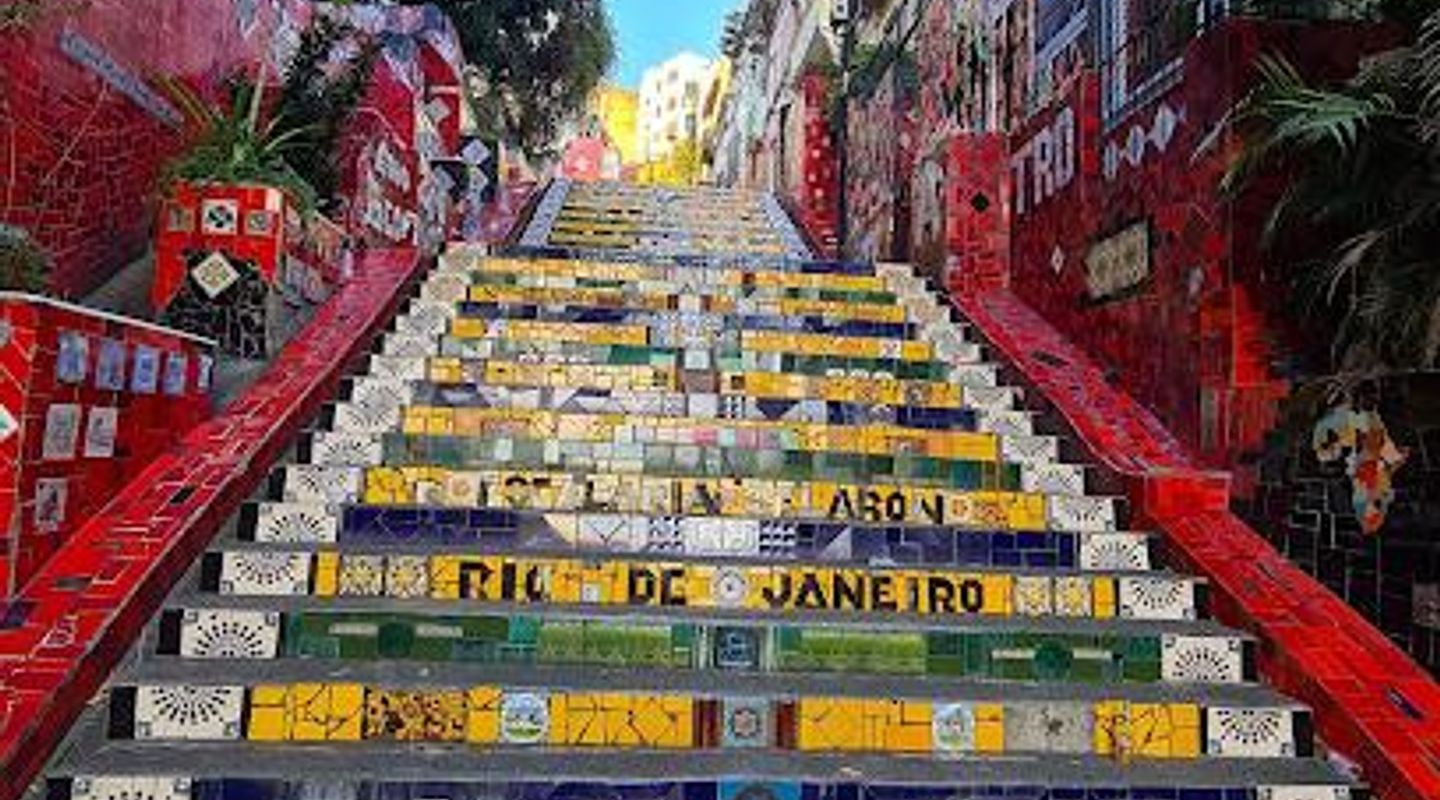
Escadaria Selarón, Rio De Janeiro Travel Guide
Discover Rio's vibrant soul at Escadaria Selarón, a stunning mosaic stairway connecting Lapa and Santa Teresa with art from around the world.
The Escadaria Selarón, also known as the 'Lapa Steps,' is a vibrant and ever-evolving public artwork in Rio de Janeiro, created by Chilean artist Jorge Selarón. This iconic staircase, adorned with thousands of tiles from around the world, connects the Lapa and Santa Teresa neighborhoods, offering a unique glimpse into the city's artistic heart.
A brief summary to Escadaria Selarón
- R. Manuel Carneiro, Rio de Janeiro, Santa Teresa, State of Rio de Janeiro, 20241-120, BR
- Click to display

Know before you go
Hi, I'm Eve. Here are a few practical things to know before exploring Escadaria Selarón.
- Visit early in the morning to avoid crowds and capture the best photos.
- Wear comfortable shoes, as you'll be walking up and down the steps.
- Be mindful of your belongings, as the area can be crowded and attract pickpockets.
- Take your time to explore the different tiles and discover hidden gems from around the world.
- Combine your visit with a stroll through the charming Santa Teresa neighborhood or the lively Lapa district.
Do you manage this location?
Take control to get all the benefits, like improved information, better appearance, and stronger visibility across AI-powered discovery. Learn more about listing your business on Evendo
Activate your presenceOther nearby places you may find interesting
The closest places of the same kind, if this one is not quite what you had in mind.


Explore Escadaria Selarón on the Map
A handpicked selection of must-see spots near Escadaria Selarón, mapped for you.
Unlock the Best of Escadaria Selarón
Buy tickets
-
No tickets available
Book tours with entry


Getting There
-
Walking
If you are in the Lapa or Santa Teresa neighborhood, walking to the Escadaria Selarón is straightforward. From the Arcos da Lapa, walk uphill on Rua Joaquim Silva. The steps will be on your left, connecting to Rua Manuel Carneiro in Santa Teresa. The walk is short but uphill, so wear comfortable shoes.
-
Public Transport
The easiest way to reach Escadaria Selarón via public transport is by taking the metro to Cinelândia station. From there, it's approximately a 15-minute walk to the steps. Alternatively, numerous buses stop near the steps; check Google Maps for the best route from your location. A single metro ticket costs around R$7.50 , and a bus fare is approximately R$4.70. Consider purchasing a RioCard Mais for easy access to all public transport options.
-
Taxi/Ride-Share
Taxis and ride-sharing services like Uber are readily available in Rio de Janeiro. Simply ask your driver to take you to Escadaria Selarón in Santa Teresa. Most drivers will likely drop you off at the bottom of the steps on Rua Joaquim Silva. A short taxi ride within the city center will typically cost between R$15 and R$30, depending on traffic and distance. Be sure the driver turns on the meter, or agree on a fare beforehand.
Discover more about Escadaria Selarón













Your all‑in‑one travel companion app
Explore expert travel guides, compare and book tours, experiences, hotels, and more—all from the palm of your hand. Download now for seamless trip planning wherever your wanderlust takes you.


Explore More of Rio De Janeiro

Looking beyond Escadaria Selarón? Discover Rio De Janeiro for broader travel guides, local hot-spots, and regional highlights.
Explore Rio De Janeiro
Experience authentic Brazilian music and culture at Bar Carioca da Gema, a vibrant Lapa hotspot with live samba, delicious cocktails, and a lively atmosphere.

Experience authentic samba and vibrant Carioca culture at Beco do Rato, Lapa's iconic music sanctuary.
