

Free San Pedro de Atacama Travel Guide & Mobile App
Plan your San Pedro de Atacama trip with Evendo. Get free guides to top attractions, restaurants, hotels, and bars. Web access or download the mobile app.


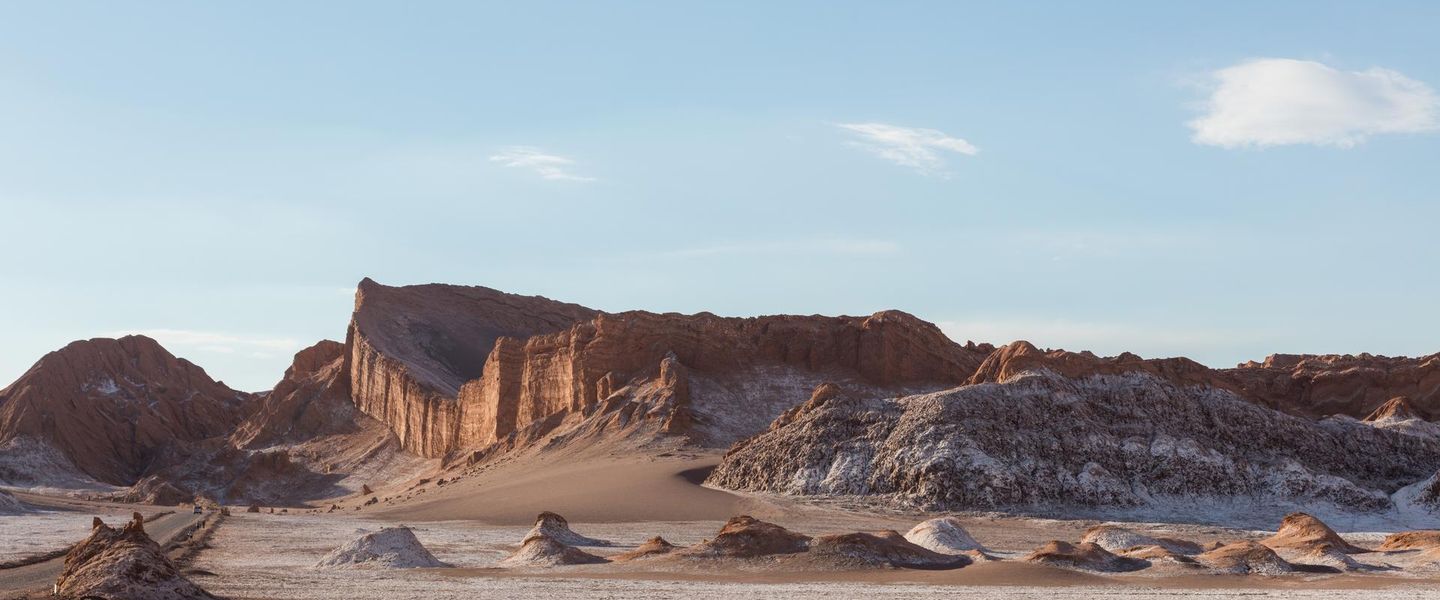


San Pedro de Atacama pairs desert landscapes, ancient Likan Antai heritage, star-filled skies and remarkable excursions from Chile’s high plateau.
Desert Town at High Altitude
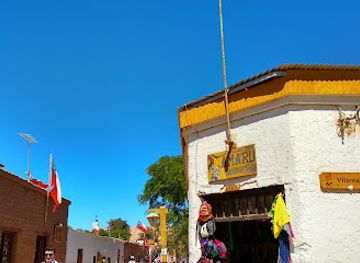
San Pedro de Atacama stands at roughly 2,400 metres above sea level on the edge of the world’s driest non-polar desert. Its low adobe buildings, dusty lanes and whitewashed church gather around a shady central plaza, while beyond the settlement the Atacama unfolds in extraordinary forms: salt flats, volcanic peaks, wind-carved valleys and high-altitude lagoons. The town is in the Antofagasta Region of northern Chile, close to the Bolivian border and surrounded by landscapes that change colour with the sun.Read more about San Pedro de Atacama
Likan Antai Heritage
Exploration Under Exceptional Skies
When is the best time to visit San Pedro de Atacama?
Best: December–February · 20°C| Month | High (°C) | Rainfall (mm) |
|---|---|---|
| January (best) | 20 | 0 |
| February (best) | 20 | 0 |
| March | 20 | 0 |
| April | 16 | 0 |
| May | 12 | 0 |
| June | 11 | 0 |
| July | 11 | 0 |
| August | 12 | 0 |
| September | 14 | 0 |
| October | 17 | 0 |
| November | 19 | 0 |
| December (best) | 20 | 0 |
Getting to and around San Pedro de Atacama
How to get there
Transportation
Best attractions in San Pedro de Atacama
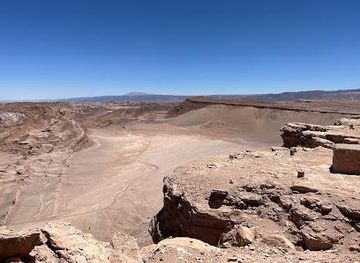
San Pedro de Atacama is a base for exploring a sequence of landscapes rather than a city filled with conventional museums and monuments. Valle de la Luna, in the Cordillera de la Sal, combines wind-carved ridges, salt deposits and broad sunset views, while nearby Valle de la Muerte offers stark formations and desert silence. Pukará de Quitor, north of the oasis, introduces the region’s pre-Hispanic settlement history through terraces and hillside ruins. Further afield, El Tatio is known for dawn fumaroles and geothermal activity, and the high-altitude lagoons of the Atacama plateau bring vivid water, volcanoes and birdlife into the scene. In town, the Church of San Pedro, the plaza and the collections associated with the Gustavo Le Paige Museum provide cultural context. Specialist astronomy excursions take advantage of exceptionally dry, dark skies and form another major attraction.
-
Tourist attraction
Mirador de Kari - Piedra del Coyote
Experience the stunning landscapes and mesmerizing sunsets at Mirador de Kari - Piedra del Coyote in San Pedro de Atacama, Chile.
16 min drive · 5.5 km from city centre
-
Tourist attraction
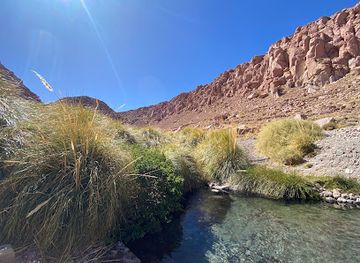
Puritama
Experience the rejuvenating thermal waters of Puritama Hot Springs, a serene oasis amidst the stunning landscapes of San Pedro de Atacama.
47 min drive · 27 km from city centre
-
Park
Laguna Chaxa Park
Discover the breathtaking landscapes and vibrant wildlife at Laguna Chaxa Park in the Atacama Desert, a must-visit for nature lovers and adventurers alike.
1 h 2 min drive · 42 km from city centre
-
Tourist attraction
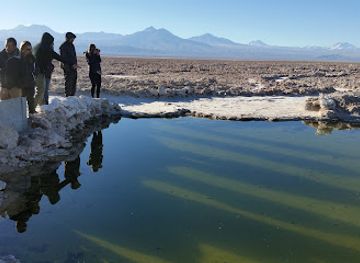
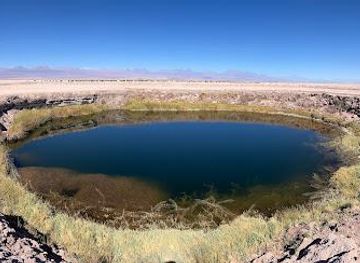
Ojos del Salar
Discover the surreal beauty of Ojos del Salar, San Pedro de Atacama, where crystal-clear pools meet the stark desert landscape.
45 min drive · 25 km from city centre
Best landmarks in San Pedro de Atacama
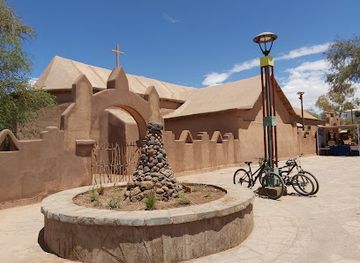
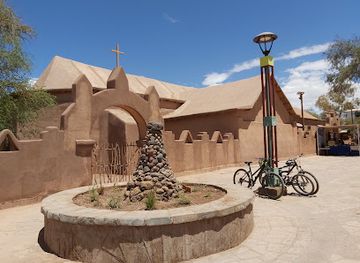
The Church of San Pedro is San Pedro de Atacama’s principal historic landmark, an adobe structure whose whitewashed walls, timber details and earthen setting reflect the materials and building traditions of the oasis. The central plaza, shaded by mature trees, forms the civic heart of the settlement and is bordered by low buildings that preserve the town’s restrained scale. Pukará de Quitor, on a hillside north of the village, is a significant archaeological landmark associated with pre-Hispanic Likan Antai settlement and regional defence. Beyond built heritage, the Licancabur volcano is the area’s dominant natural silhouette and an enduring reference point in the Atacama landscape. The Cordillera de la Sal, with its folded ridges and mineral surfaces, gives the surrounding region an equally distinctive geological identity.
-
Park
Plaza de San Pedro de Atacama
Discover the vibrant Plaza de San Pedro de Atacama, a cultural haven filled with local crafts, delicious food, and stunning desert views.
2 min walk · 0.2 km from city centre
-
Tourist attraction
Mirador de Kari - Piedra del Coyote
Experience breathtaking panoramic views of the Valle de la Luna and the Atacama Desert from this iconic viewpoint, especially magical at sunset.
16 min drive · 5.5 km from city centre
-
Catholic church
Iglesia San Pedro
Discover the historic Iglesia San Pedro, a captivating Catholic church in San Pedro de Atacama, blending rich culture with stunning architecture.
2 min walk · 0.1 km from city centre
-
Chilean
Adobe
Experience the essence of Chilean cuisine at Adobe in San Pedro de Atacama, where every dish tells a story of tradition and flavor.
1 min walk · 0.1 km from city centre
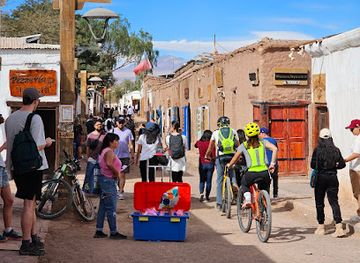
Explore San Pedro de Atacama on the map
Plan your San Pedro de Atacama trip on one map. See where the top attractions, landmarks, restaurants, bars and hotels are, find what's near where you're staying, and book hotels and experiences in a few clicks.
Best hotels in San Pedro de Atacama
Best restaurants in San Pedro de Atacama
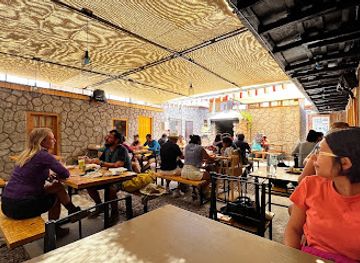
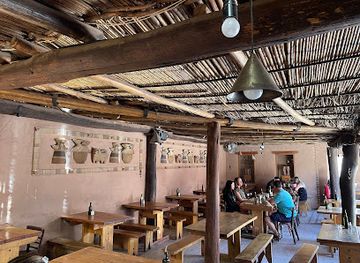
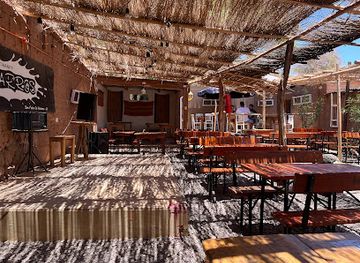
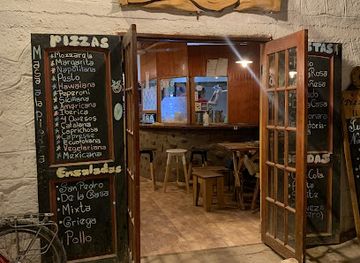
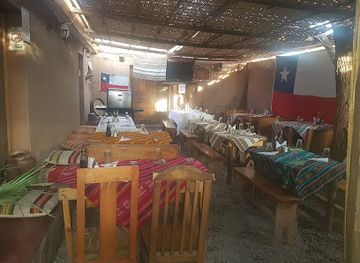
San Pedro’s dining scene reflects both the Indigenous and Andean food traditions of northern Chile and the demands of a remote international tourism centre. Menus may include quinoa, maize, potatoes, vegetables, llama and goat, alongside Chilean staples such as empanadas and pastel de choclo; chañar and rica-rica appear in some drinks, desserts and regional interpretations. Small cafés and casual eateries around the centre suit early departures and relaxed midday meals, while restaurants along and near Caracoles Street offer broader Chilean, Andean and international cooking. The town’s markets and bakeries provide simple provisions for excursions, though opening patterns can be seasonal. Dining prices and payment practices vary, so carrying pesos remains useful. The character is generally informal, with busy evenings shaped by tour schedules and early starts for the desert.
-
Chilean
La Picada Del Indio
Experience authentic Chilean cuisine at La Picada Del Indio in San Pedro de Atacama – where tradition meets taste.
2 min walk · 0.1 km from city centre
-
Chilean
Adobe
Experience authentic Chilean cuisine at Adobe in San Pedro de Atacama, where tradition meets flavor in an inviting atmosphere.
1 min walk · 0.1 km from city centre
-
Chilean
Barros Restaurante
Experience the essence of Chilean gastronomy at Barros Restaurante, where every dish tells a story of tradition and flavor.
3 min walk · 0.3 km from city centre
-
Chilean
Mal de Puna
Experience the essence of Chilean cuisine at Mal de Puna, where traditional flavors meet modern hospitality in San Pedro de Atacama.
4 min walk · 0.3 km from city centre

Best bars in San Pedro de Atacama
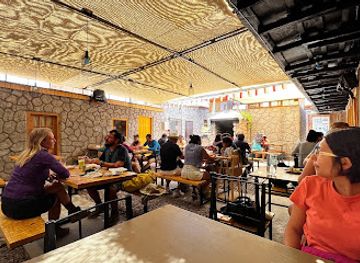
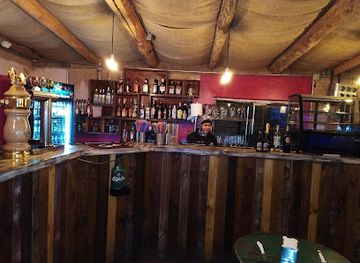
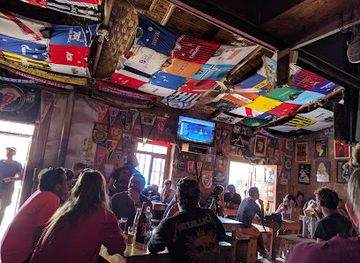
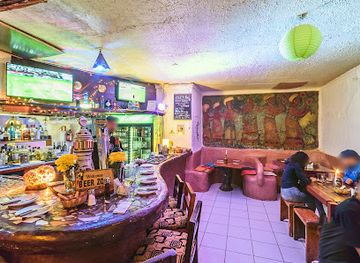
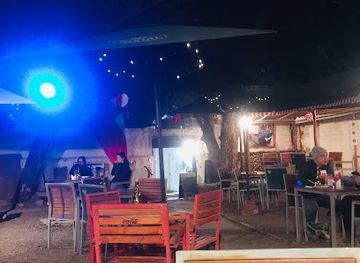
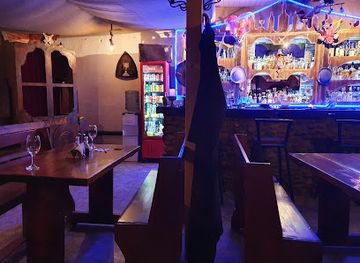
San Pedro’s nightlife is modest and concentrated around the centre rather than organised as a large club scene. Restaurants and small bars around Caracoles Street and the plaza provide places for a drink or an unhurried evening meal, with Chilean wine, beer and pisco-based drinks commonly available. Some venues use music and outdoor seating to create a sociable atmosphere, but the town’s remote setting, visitor mix and strict controls on activity in the surrounding desert mean that late-night entertainment is limited compared with Santiago or coastal resort cities. Astronomy excursions are a defining evening alternative, taking visitors away from artificial light for guided observation of planets, nebulae and the Milky Way. Early departures to El Tatio also encourage practical, relatively quiet evenings.
-
Chilean
La Picada Del Indio
Discover La Picada Del Indio, where authentic Chilean cuisine meets a vibrant atmosphere in the heart of San Pedro de Atacama.
2 min walk · 0.1 km from city centre
-
Chilean
Mal de Puna
Discover the essence of Chilean cuisine at Mal de Puna in San Pedro de Atacama, where authentic flavors meet a warm atmosphere.
4 min walk · 0.3 km from city centre
-
Pizza
Pizzería El Charrúa
Discover the vibrant flavors of Pizzería El Charrúa in San Pedro de Atacama, where delicious wood-fired pizzas await amidst breathtaking desert scenery.
1 min walk · 0.1 km from city centre
-
Chilean
Sol Inti
Discover the rich flavors of Chile and Peru at Sol Inti, a unique dining experience in the heart of San Pedro de Atacama.
1 min walk · 0.1 km from city centre
Best nightclubs in San Pedro de Atacama
San Pedro’s nightlife is modest and concentrated around the centre rather than organised as a large club scene. Restaurants and small bars around Caracoles Street and the plaza provide places for a drink or an unhurried evening meal, with Chilean wine, beer and pisco-based drinks commonly available. Some venues use music and outdoor seating to create a sociable atmosphere, but the town’s remote setting, visitor mix and strict controls on activity in the surrounding desert mean that late-night entertainment is limited compared with Santiago or coastal resort cities. Astronomy excursions are a defining evening alternative, taking visitors away from artificial light for guided observation of planets, nebulae and the Milky Way. Early departures to El Tatio also encourage practical, relatively quiet evenings.
-
Bar
ChelaCabur
Discover the vibrant nightlife of San Pedro de Atacama at ChelaCabur, where refreshing drinks and lively ambiance await you.
1 min walk · 0.1 km from city centre
-
Restaurant
Lola's
Discover Lola's: A vibrant restaurant in San Pedro de Atacama offering a unique culinary experience with local flavors and a lively atmosphere.
2 min walk · 0.1 km from city centre
-
Gastropub
El Toconar
Experience the vibrant flavors of Chile at El Toconar, a top gastropub in San Pedro de Atacama, known for its local ingredients and lively atmosphere.
1 min walk · 0.1 km from city centre
-
Brewpub
Cervecería St. Peter
Experience the best of local craft beers at Cervecería St. Peter, a brewpub that embodies the spirit of San Pedro de Atacama.
2 min walk · 0.2 km from city centre
Best shops in San Pedro de Atacama
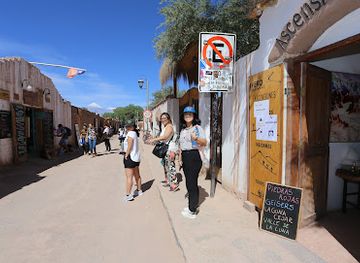
Shopping in San Pedro centres on practical outdoor goods, locally inspired crafts and small independent businesses rather than large retail complexes. Caracoles Street and the lanes near the plaza contain artisan shops, cafés and tour-related stores, while market stalls and craft outlets sell woven textiles, alpaca garments, jewellery, ceramics and carved objects. Travellers may also find Chilean food products, herbal infusions and souvenirs drawing on desert colours and Andean motifs. Quality and provenance vary, so ask about materials and production rather than assuming that every item is locally made. Purchases connected with Indigenous culture deserve particular sensitivity, and archaeological artefacts should never be bought. The town’s retail character is closely linked to its role as a gateway to the high plateau and its distinctive local environment.
-
Handicraft
Craft village
Discover the Craft Village in San Pedro de Atacama, where local artisans bring the rich culture of the desert to life through beautiful handicrafts.
8 min walk · 0.6 km from city centre
-
Supermarket
Valimport Supermarket
Discover local flavors and essentials at Valimport Supermarket in San Pedro de Atacama, your go-to shopping destination for travelers.
4 min walk · 0.3 km from city centre
-
Shopping mall
Centro San Pedro Atacama
Discover local handicrafts, delicious cuisine, and vibrant culture at Centro San Pedro Atacama, a must-visit shopping destination in the heart of San Pedro.
2 min walk · 0.1 km from city centre
-
Grocery store
Eca Supermarket
Discover local flavors and essentials at Eca Supermarket in San Pedro de Atacama, your go-to grocery destination while exploring the Atacama Desert.
8 min walk · 0.6 km from city centre
Get your free copy of our complete guide to San Pedro de Atacama, delivered straight to you.
Everything on this page, from attractions and restaurants to essentials and local phrases, in one PDF you can read offline, print or share.
Already have an account? Sign in
Your San Pedro de Atacama guide is ready.
We'll send it to · Not you? Sign out

Getting your guide ready…
We are putting together a fresh copy of the San Pedro de Atacama guide. This can take up to a minute.
This can take a few moments. If your browser asks, choose Allow so the download can start. You'll find the guide in your Downloads folder.
Nothing happened? Download it again
Sorry, the guide is taking longer than usual. Please try again in a minute, or get it by email instead.
San Pedro de Atacama essentials
Currency and Payment
Safety
Emergency Situations
Do's and Don'ts
Local Tips
From Eve
Local phrases worth knowing
You don't need to get them perfect. A few words go a long way, and locals appreciate the effort.
Basics
| English | Local | Say it |
|---|---|---|
| Hello | Küsü | [KOO-soo] |
| Goodbye | Tata | [TAH-tah] |
| Yes | Ewe | [EH-weh] |
| No | Man | [MAHN] |
| Please/You're welcome | Machika | [mah-CHEE-kah] |
| Thank you | Machi | [MAH-chee] |
| Excuse me/Sorry | Yatiri | [yah-TEE-ree] |
| How are you? | Imalla? | [ee-MAH-yah] |
| Fine. And you? | Alli. Imalla? | [AH-lee. ee-MAH-yah] |
| Do you speak English? | Inglishmi parlari? | [ing-GLEESH-mee pahr-LAH-ree] |
| I don't understand | Munayki mana rimanakuy | [moo-NYE-kee MAH-nah ree-mah-NAH-koo-ee] |
Eating & Drinking
| English | Local | Say it |
|---|---|---|
| I'd like to see the menu, please | Menu chusiykita munayki | [MEH-noo choo-SEEK-ee-tah moo-NAI-kee-tah] |
| I don't eat meat | Karne manam uqallani | [KAHR-nay MAH-nahm oo-kahl-LAH-nee] |
| Cheers! | Sullpayki! | [SOOL-pie-kee] |
| I would like to pay, please | Saqillayki, munayki | [sah-KEE-yai-kee, moo-NAI-kee] |
Emergencies
| English | Local | Say it |
|---|---|---|
| Help! | Yanapay! | [yah-NAH-pie] |
| Go away! | Rikuray! | [ree-koo-RAI] |
| Call the Police! | Polis llamay! | [poh-LEES yah-MAI] |
| Call a doctor! | Yachachiq llamay! | [yah-cha-CHEEK yah-MAI] |
| I'm lost | Kuyuni | [koo-YOO-nee] |
| I'm ill | Munayki sananchani | [moo-NYE-kee sah-nahn-CHAH-nee] |
Shopping
| English | Local | Say it |
|---|---|---|
| I'd like to buy... | Quchani munayki... | [koo-CHAH-nee moo-NAI-kee] |
| I'm just looking | Qallaripyki | [kah-yah-ree-pee-kee] |
| How much is it? | Kaynata? | [KAI-nah-tah] |
| That's too expensive | Kaynata kachan | [KAI-nah-tah kah-CHAN] |
| Can you lower the price? | Chaynata munayki | [chai-NAH-tah moo-NAI-kee] |
Time & Numbers
| English | Local | Say it |
|---|---|---|
| What time is it? | Iman sutiyki? | [ee-MAHN soo-TEE-kee] |
| It's one o'clock | Jujuy | [HOO-hooee] |
| Half past (10) | Iskay paru | [ees-KAI pah-ROO] |
| Morning | P'unchay | [POON-chai] |
| Afternoon | Ch'aski | [CHAH-skee] |
| Evening | Tinku | [TEEN-koo] |
| Yesterday | Qayna | [KAI-nah] |
| Today | Kunan | [KOO-nahn] |
| Tomorrow | Ñawpa | [NYOW-pah] |
| 1 | Huk | [HOOK] |
| 2 | Iskay | [ees-KAI] |
| 3 | Kimsa | [KEEM-sah] |
| 4 | Tawa | [TAH-wah] |
| 5 | Pichqa | [PEECH-kah] |
| 6 | Soqta | [SOHK-tah] |
| 7 | Qanchis | [KAN-chees] |
| 8 | Pusaq | [POO-sahk] |
| 9 | Isqun | [ees-KOON] |
| 10 | Chunka | [CHOON-kah] |
Transport & Directions
| English | Local | Say it |
|---|---|---|
| Where's a/the...? | Maypi... | [MAI-pee] |
| What's the address? | Sutin? | [SOO-teen] |
| Can you show me (on the map)? | Kani kani munayki? | [KAH-nee KAH-nee moo-NAI-kee] |
| When's the next (bus)? | Maypi chiqata? | [MAI-pee chee-KAH-tah] |
| A ticket (to ....) | Tikiti (pa ...) | [tee-KEE-tee (pah ...)] |
History of San Pedro de Atacama
Likan Antai Oasis Communities
The oasis around San Pedro de Atacama has been inhabited for thousands of years by Likan Antai communities, also known in older sources as Atacameño people. Reliable water from the San Pedro River supported agriculture in an otherwise arid environment, while irrigation channels and cultivated terraces helped produce crops such as maize. The settlement also occupied an important position in networks crossing the Andes, linking desert communities with the altiplano and lands farther south. Archaeological evidence from cemeteries, villages and rock art records changing technologies, beliefs and patterns of exchange. This long relationship with water, cultivation and highland travel remains central to the cultural character of the Atacama oasis.
Pukará de Quitor and Regional Power
Pukará de Quitor, a fortified settlement north of present-day San Pedro, reflects the political and defensive organisation of pre-Hispanic communities in the oasis. Built on a steep hillside overlooking the river valley, it combined houses, terraces and defensive advantages with access to routes through the desert. During the fifteenth century, the expanding Inca state incorporated the Atacama region into its wider imperial system, bringing new administrative and trading connections without erasing local traditions. The archaeological remains visible today are therefore part of a layered history rather than evidence of a single civilisation. They show how the oasis was shaped by local settlement and long-distance Andean interaction.
Spanish Conquest and Colonial Mission
Spanish forces entered the Atacama during the sixteenth century, extending colonial authority into a region already connected to the wider Andean world. San Pedro became associated with colonial administration, evangelisation and routes linking settlements across northern Chile and the high plateau. The Church of San Pedro, traditionally dated to the colonial period and built with adobe and local materials, is a surviving expression of that transformation. Christianity was introduced through missions, but religious life developed through interaction with established Likan Antai practices and seasonal traditions. The town’s modest scale, earthen construction and agricultural oasis setting still reveal aspects of this colonial landscape.
Republican Borders and Desert Networks
After Chilean independence, the Atacama became part of a borderland whose political geography was reshaped by nineteenth-century conflicts and the expansion of mining economies. The War of the Pacific, fought between Chile, Peru and Bolivia from 1879 to 1884, changed national boundaries across the wider desert, although San Pedro itself remained an oasis settlement rather than a major industrial city. Trade, mule routes and links with mining centres continued to connect the town with surrounding plateaus. These changes brought new administrative relationships while leaving agriculture, pastoralism and local community life important to the oasis.
Archaeology, Tourism and Cultural Continuity
In the twentieth century, archaeological research drew increasing attention to San Pedro’s settlements, burial sites and material culture, particularly through the work associated with Belgian-born Jesuit Gustavo Le Paige. The resulting collections helped establish the town as a centre for understanding northern Chile’s ancient communities, though the display and interpretation of Indigenous heritage remain matters requiring respect and care. From the late twentieth century onwards, tourism expanded around desert excursions, astronomy and adventure travel. San Pedro’s contemporary identity therefore combines a service economy with enduring Likan Antai cultural presence, agricultural traditions and a landscape whose environmental limits remain unmistakable.
Travel experiences inspired by this city
-
 11 Day Trip
Solo Expedition to the Valle de la Luna: A Journey Through Chile's Mystical Desert
Discover the mystical landscapes of Valle de la Luna on a solo adventure, exploring Chile's breathtaking desert scenery and geological wonders.
11 Day Trip
Solo Expedition to the Valle de la Luna: A Journey Through Chile's Mystical Desert
Discover the mystical landscapes of Valle de la Luna on a solo adventure, exploring Chile's breathtaking desert scenery and geological wonders.
 15 Apr 2026
By Ivan Zubčić -
 9 Day Trip
Exploring the Mystical Valle de la Luna: A Solo Journey
Join me on a solo adventure to Valle de la Luna, Chile, where I'll explore lunar landscapes and embrace the solitude of the desert.
9 Day Trip
Exploring the Mystical Valle de la Luna: A Solo Journey
Join me on a solo adventure to Valle de la Luna, Chile, where I'll explore lunar landscapes and embrace the solitude of the desert.
 15 Mar 2026
By Róisín Boyle -
 16 Day Trip
Exploring the Mystical Landscapes of Valle de la Luna with Friends
Join me and friends on a 16-day adventure to Valle de la Luna, Chile. Discover surreal landscapes, hike dramatic formations, and camp under the stars.
16 Day Trip
Exploring the Mystical Landscapes of Valle de la Luna with Friends
Join me and friends on a 16-day adventure to Valle de la Luna, Chile. Discover surreal landscapes, hike dramatic formations, and camp under the stars.
 1 Sep 2025
By Mette Møller -
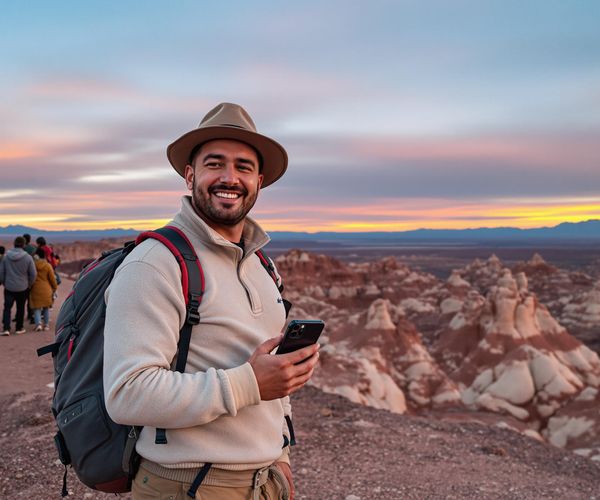 15 Day Trip
Exploring the Wonders of San Pedro de Atacama with Friends
Join me as I explore the stunning landscapes of San Pedro de Atacama, from desert adventures to cultural discoveries, all with friends by my side.
15 Day Trip
Exploring the Wonders of San Pedro de Atacama with Friends
Join me as I explore the stunning landscapes of San Pedro de Atacama, from desert adventures to cultural discoveries, all with friends by my side.
 15 Apr 2025
By Juan Diaz
Swipe for more travel diaries
San Pedro de Atacama in Photos
Browse through our photo collection highlighting the charm and character of the destination.
Cities near San Pedro de Atacama
The closest cities to San Pedro de Atacama, if you have time for more than one stop.
-

-

-

-

-


Swipe for more cities
Explore more

Explore more of Chile
Discover Chile: From the Atacama Desert to Patagonia's Glaciers, Experience Diverse Landscapes, Rich Culture, and World-Class Wine in This South American Gem.
Explore Chile