

Trap Pond State Park Travel Guide - Free Web & App
Your ultimate guide to Trap Pond State Park. Discover top landmarks, proposed trips, and local tips. Free on the web or via the Evendo companion app.


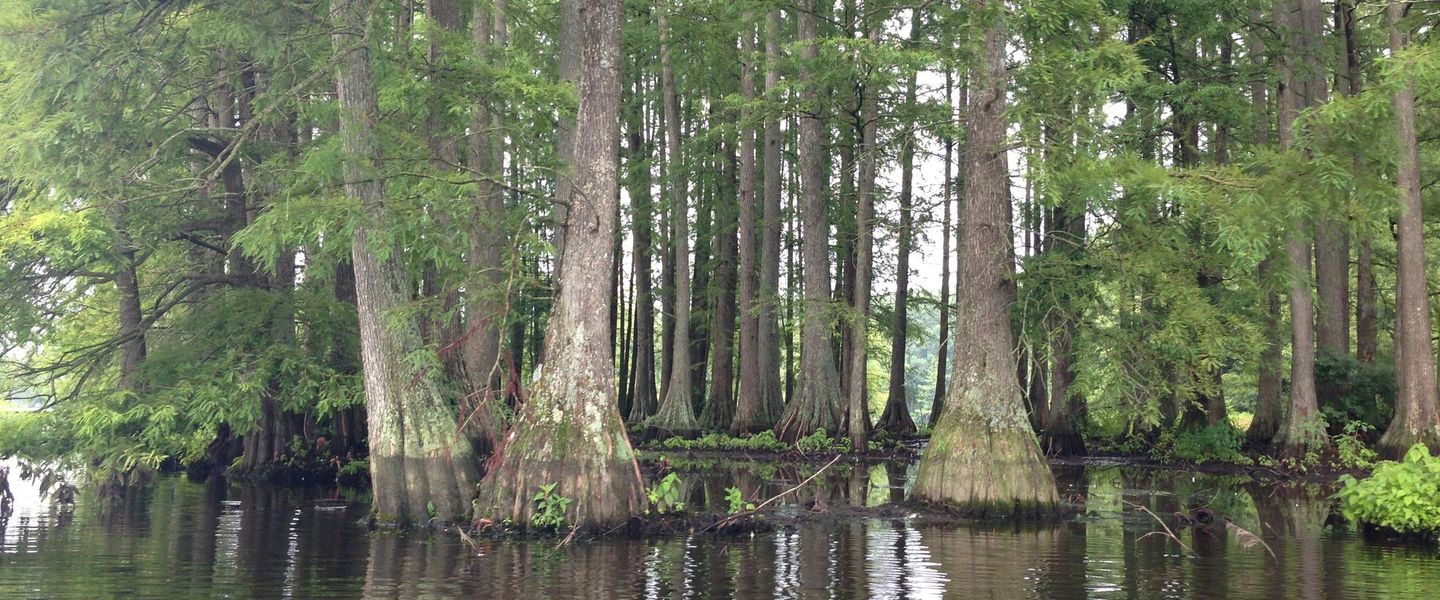


Trap Pond State Park in Delaware offers cypress-lined water, woodland trails, camping, paddling, birdwatching and peaceful escapes near Laurel.
A Southern Delaware Water Landscape
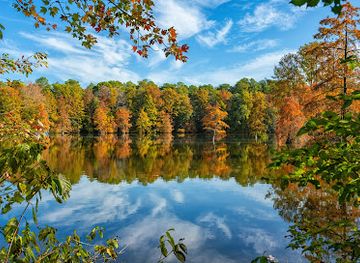
Trap Pond State Park lies in Sussex County near Laurel, where a broad freshwater pond occupies a wooded landscape of wetlands, pine forest and gently rolling low country. Its defining feature is the stand of bald cypress rising from the water and shoreline, a tree more commonly associated with the southern United States. Reflections, knees and spreading crowns give the pond a distinctly southern character, while boardwalks, footpaths and quiet coves reveal the close relationship between open water and swamp habitat.Read more about Trap Pond State Park
Exploring the Park
Laurel and the Lower Delaware Landscape
When is the best time to visit Trap Pond State Park?
Best: May, September–October · 20–27°C| Month | High (°C) | Rainfall (mm) |
|---|---|---|
| January | 5 | 84 |
| February | 7 | 76 |
| March | 13 | 97 |
| April | 19 | 82 |
| May (best) | 24 | 94 |
| June | 29 | 104 |
| July | 31 | 110 |
| August | 30 | 104 |
| September (best) | 27 | 99 |
| October (best) | 20 | 83 |
| November | 13 | 88 |
| December | 8 | 93 |
Getting to and around Trap Pond State Park
How to get there
Transportation
Best attractions in Trap Pond State Park
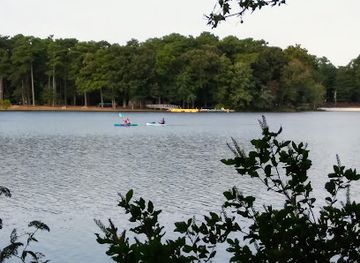
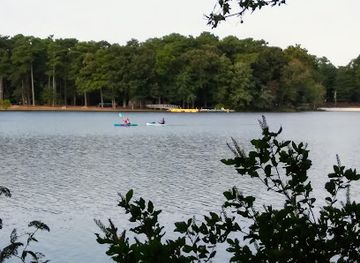
Trap Pond itself is the park's central attraction, with open water, wooded coves and bald cypress standing along the shoreline and in shallow wetland areas. The Boundary Trail and other park paths offer close views of the pond environment, forest and seasonal vegetation, while picnic areas provide simple vantage points for family visits and quiet observation. Baldcypress Nature Center adds an interpretive dimension, explaining the ecology of the swamp, local wildlife and the park's environmental setting. Campers can explore the landscape over several days, and visitors with appropriate equipment may enjoy boating or fishing where current rules allow. The surrounding countryside near Laurel contributes a broader Lower Delaware experience of farms, woodland and small communities, although it is separate from the park's protected facilities. Trap Pond is especially rewarding for birdwatchers, photographers and visitors interested in wetland habitats rather than for those seeking a concentrated collection of built attractions.
-
State park
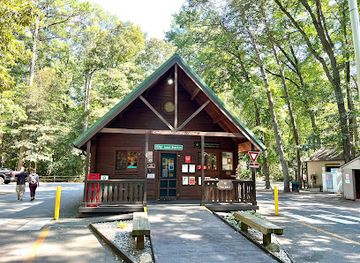
Baldcypress Nature Center
Explore the wonders of Trap Pond's baldcypress swamp at this informative nature center in Laurel, Delaware.
-
Boat rental service
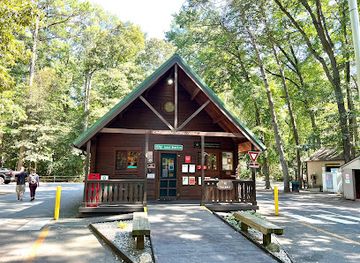
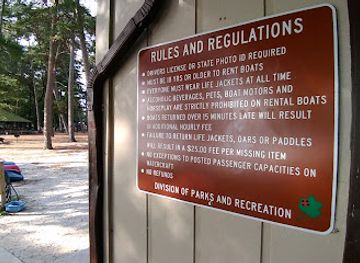
Trap Pond Boat Rental
Explore the northernmost baldcypress swamp in the U.S. by boat at Trap Pond State Park in Laurel, Delaware. A unique paddling adventure!
-
Lake
Trap Pond
Explore Trap Pond, a serene lake in Delaware with stunning cypress trees and abundant wildlife, perfect for outdoor adventures and nature lovers.
Explore Trap Pond State Park on the map
Plan your trip on one map. See where the top attractions, landmarks, restaurants and hotels are, and book hotels and experiences in a few clicks.
Best hotels in Trap Pond State Park
Best bars in Trap Pond State Park
Evenings at Trap Pond State Park are oriented towards camping, conversation and the sounds of the woodland rather than nightlife. The park does not function as a bar or club district, and visitors should expect entertainment infrastructure to be limited within its boundaries. Traditional pubs, casual bars and evening dining can be found in Laurel and larger nearby towns, although venues are dispersed and are generally more easily reached by car than on foot from the park. Seasonal park programmes may provide educational or community-oriented evening activities, but these should be checked in advance rather than assumed. After dark, the pond and forest offer a quiet outdoor atmosphere; visitors should observe campsite rules, minimise noise and use a torch carefully without disturbing neighbouring campers or wildlife.
-
Campground
Trap Pond
Explore Trap Pond: A serene campground in Delaware, perfect for outdoor activities like kayaking, hiking, and wildlife observation amidst stunning natural beauty.
-
State park
Trap Pond Camp Store
Embrace nature at Trap Pond Camp Store, your gateway to outdoor adventures and serene landscapes in Delaware's stunning state park.
-
Boat rental service
Trap Pond Boat Rental
Discover the beauty of Delaware's Trap Pond with serene boat rentals amidst stunning natural surroundings, perfect for all outdoor enthusiasts.
Best nightclubs in Trap Pond State Park
Evenings at Trap Pond State Park are oriented towards camping, conversation and the sounds of the woodland rather than nightlife. The park does not function as a bar or club district, and visitors should expect entertainment infrastructure to be limited within its boundaries. Traditional pubs, casual bars and evening dining can be found in Laurel and larger nearby towns, although venues are dispersed and are generally more easily reached by car than on foot from the park. Seasonal park programmes may provide educational or community-oriented evening activities, but these should be checked in advance rather than assumed. After dark, the pond and forest offer a quiet outdoor atmosphere; visitors should observe campsite rules, minimise noise and use a torch carefully without disturbing neighbouring campers or wildlife.
-
 Disc golf course
Trap Pond State Park Disc Golf Course
Experience the beauty of nature and the excitement of disc golf at Trap Pond State Park, Delaware's premier outdoor adventure spot.
Best shops in Trap Pond State Park
Shopping within Trap Pond State Park is limited to the practical needs of visitors and does not resemble a town shopping centre. Campers should obtain groceries, fuel, medicines and specialist outdoor supplies in Laurel or a larger Sussex County community before travelling to the park. In the surrounding region, farm stands and local food retailers may offer seasonal produce, while independent businesses in nearby towns provide everyday goods and occasional locally made items. Souvenirs and educational material may be available through state park facilities when operating, but visitors should check current arrangements rather than depend on them. The most characteristic purchases associated with a visit are therefore regional food provisions, camping supplies and nature-related items, not a specialised craft or luxury retail scene concentrated around the pond.
-
State park
Trap Pond State Park
Explore Trap Pond State Park: A Natural Haven for Outdoor Enthusiasts and Nature Lovers in Delaware.
-
Campground
Trap Pond
Explore Trap Pond, Delaware's serene campground for nature lovers, offering kayaking, hiking, and stunning landscapes for an unforgettable outdoor experience.
-
State park
Baldcypress Nature Center
Experience the tranquility and richness of biodiversity at Baldcypress Nature Center, a state park that educates and inspires outdoor enthusiasts.
-
State park
Trap Pond Camp Store
Explore Trap Pond Camp Store: Your gateway to outdoor adventures and serene nature in Delaware.
Get your free copy of our complete guide to Trap Pond State Park, delivered straight to you.
Everything on this page, from attractions and restaurants to essentials and local phrases, in one PDF you can read offline, print or share.
Already have an account? Sign in
Your Trap Pond State Park guide is ready.
We'll send it to · Not you? Sign out

Getting your guide ready…
We are putting together a fresh copy of the Trap Pond State Park guide. This can take up to a minute.
This can take a few moments. If your browser asks, choose Allow so the download can start. You'll find the guide in your Downloads folder.
Nothing happened? Download it again
Sorry, the guide is taking longer than usual. Please try again in a minute, or get it by email instead.
Trap Pond State Park essentials
Currency and Payment
Safety
Emergency Situations
Do's and Don'ts
Local Tips
From Eve
Local phrases worth knowing
You don't need to get them perfect. A few words go a long way, and locals appreciate the effort.
Basics
| English | Local | Say it |
|---|---|---|
| Hello | Howdy | [haw-dee] |
| Goodbye | See ya | [see yuh] |
| Yes | Yup | [yuhp] |
| No | Nah | [nuh] |
| Please/You're welcome | Please/No problem | [pleez/no pro-blem] |
| Thank you | Thanks | [thanks] |
| Excuse me/Sorry | Pardon me/My bad | [par-dn mee/my bad] |
| How are you? | How you doin'? | [how yuh doin] |
| Fine. And you? | Good. How 'bout you? | [good. how 'bout yuh] |
| Do you speak English? | Ya speak English? | [ya speak ing-glish] |
| I don't understand | I ain't catchin' on | [I aint ketch-in on] |
Eating & Drinking
| English | Local | Say it |
|---|---|---|
| I'd like to see the menu, please | Can I check out the menu? | [can eye chek out the menu] |
| I don't eat meat | I'm vegetarian | [im ve-juh-tear-ee-an] |
| Cheers! | Cheers! | [cheers] |
| I would like to pay, please | I'll settle up now, please | [eye-ul set-ul up now please] |
Emergencies
| English | Local | Say it |
|---|---|---|
| Help! | Help! | [help] |
| Go away! | Get lost! | [get lost] |
| Call the Police! | Call the cops! | [call the cops] |
| Call a doctor! | Get a doctor! | [get a doctor] |
| I'm lost | I'm turned around | [im turned uh-round] |
| I'm ill | I'm feelin' sick | [im feelin sick] |
Shopping
| English | Local | Say it |
|---|---|---|
| I'd like to buy... | I wanna buy... | [I wanna buy] |
| I'm just looking | I'm just browsin' | [im just brow-sin] |
| How much is it? | How much does it cost? | [how much does it cost] |
| That's too expensive | That's too pricey | [thats too pry-see] |
| Can you lower the price? | Can ya bring the price down? | [can ya bring the price down] |
Time & Numbers
| English | Local | Say it |
|---|---|---|
| What time is it? | What's the time? | [whats the time] |
| It's one o'clock | It's one | [its one] |
| Half past (10) | 10:30 | [ten-thur-tee] |
| Morning | Mornin' | [mornin] |
| Afternoon | Afternoon | [after-noon] |
| Evening | Evenin' | [evenin] |
| Yesterday | Yest'day | [yes-tuh-day] |
| Today | Today | [to-day] |
| Tomorrow | Tomorrer | [tom-or-er] |
| 1 | One | [wun] |
| 2 | Two | [too] |
| 3 | Three | [three] |
| 4 | Four | [four] |
| 5 | Five | [five] |
| 6 | Six | [six] |
| 7 | Seven | [seven] |
| 8 | Eight | [ate] |
| 9 | Nine | [nine] |
| 10 | Ten | [ten] |
Transport & Directions
| English | Local | Say it |
|---|---|---|
| Where's a/the...? | Where's the...? | [wheres the] |
| What's the address? | What's the addy? | [whats the addy] |
| Can you show me (on the map)? | Can ya point it out (on the map)? | [can ya point it out on the map] |
| When's the next (bus)? | When's the next (bus)? | [whens the next bus] |
| A ticket (to ....) | A ticket (to ....) | [a ticket to] |
History of Trap Pond State Park
A Lowland Wetland Landscape
Trap Pond belongs to the low, water-shaped landscape of southern Delaware, where slow drainage, streams and wet woodland have long influenced settlement and land use. The pond's bald cypress are an important regional feature because they represent a northern occurrence of a tree strongly associated with the swamps of the southeastern United States. Their presence reflects the warm, wet character of the Delmarva Peninsula and gives the park a distinctive ecological identity. The cypress swamp is not simply scenery: it is part of a habitat shaped by standing water, fluctuating levels and the gradual accumulation of organic material.
Mills, Timber and Settlement
Before becoming a state park, the Trap Pond area formed part of a settled rural landscape in which waterways supported farming, timber work and small-scale industry. The pond was associated with a mill, and its name is generally linked to the trapping or impounding of water for that purpose. Such water-powered enterprises were characteristic of early communities in Sussex County, where forests and streams supplied raw materials and energy. Roads, farms and scattered settlements around Laurel gradually connected the wetland to the wider agricultural economy of southern Delaware, while the pond remained a prominent local water feature.
Creation of Delaware's First State Park
Trap Pond became Delaware's first state park in 1951, marking an important step in the state's development of public recreation and protected landscapes. The park's creation placed the pond, cypress swamp and surrounding woodland within a managed setting where visitors could picnic, camp, walk and experience a landscape that might otherwise have been treated mainly as a working resource. Facilities and recreational opportunities have changed over time, but the central idea remains consistent: public access is balanced with care for wetland habitats and the plant and animal communities they support.
Conservation and Interpretation
Modern Trap Pond State Park combines recreation with environmental interpretation. The Baldcypress Nature Center helps explain the pond's ecology, the role of wetlands and the seasonal life of the surrounding forest, while trails and water access allow visitors to encounter the landscape at a measured pace. Park management must accommodate camping, boating, fishing and public gatherings without compromising shoreline and swamp habitats. The result is a protected landscape that preserves both a significant natural feature and a visible chapter in Delaware's history of state parks, outdoor recreation and conservation.
Trap Pond State Park in Photos
Browse through our photo collection highlighting the charm and character of the destination.
Neighbouring destination travel guides
The closest destinations to Trap Pond State Park, if you have time for more than one.
-

-

-

-

-


Swipe for more destinations
Explore more
Explore more of Sussex County
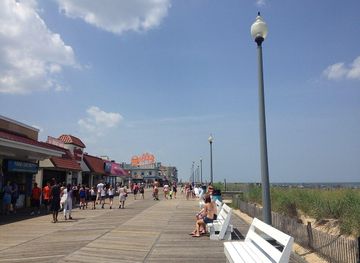
Explore Sussex County, Delaware, for Atlantic beaches, historic Lewes, coastal parks, wildlife refuges, farm country and distinctive local seafood.
Explore Sussex County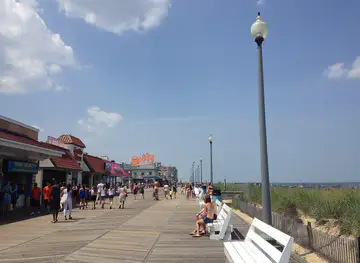
Explore more of Delaware
Discover Delaware: From historic sites and serene beaches to culinary delights and scenic parks, this small state offers big experiences for every traveler.
Explore Delaware