

Black Diamond, Copenhagen Travel Guide
Free Guide: A gleaming granite monolith on Copenhagen’s harbour, the Black Diamond fuses cutting‑edge architecture, library life, exhibitions and concerts in one cultural hub.


A brief summary of Black Diamond
A gleaming granite monolith on Copenhagen’s harbour, the Black Diamond fuses cutting‑edge architecture, library life, exhibitions and concerts in one cultural hub.
The Black Diamond is the dramatic waterfront extension of the Royal Danish Library, a gleaming block of polished black granite leaning over Copenhagen Harbour. Inside this cultural hub you’ll find soaring atriums, waterside balconies, exhibitions, the National Museum of Photography, the Queen’s Hall concert venue, reading rooms, a café and a bookshop. It’s both a working library and one of the city’s most striking modern landmarks, linking seamlessly to the historic 1906 library and its tranquil garden.
On-site amenities
 Restrooms
 Drink options
 Drinking water
 Food options
 Seating areas
 Sheltered areas
 Trash bins
 Information boards
 Visitor centre
- Address
- Søren Kierkegaards Pl. 1, 1221 København
- Website
Getting there
Metro and short walk
S‑train and walk
City bus to Slotsholmen area
Bicycle from central districts
Discover more about Black Diamond
A sculpted shard on Copenhagen’s harbourfront
The Black Diamond rises from the edge of Copenhagen Harbour like a faceted monolith, its prismatic form tilting slightly towards the water. Clad in thousands of square metres of polished black granite, the eight‑storey extension to the Royal Danish Library catches every shift of Nordic light, reflecting ripples on the canal and the skyline beyond. Completed in 1999 by Danish architects Schmidt Hammer Lassen, it was the first of a new wave of cultural buildings that reshaped the city’s inner waterfront.From a distance the structure appears almost opaque, a solid block sliced diagonally by a wedge of glass. As you draw closer, the scale becomes clear: this is a vast cultural machine housing archives, art, music and study spaces, yet its ground floor opens generously towards the public quay. The nickname “Black Diamond” nods to both the building’s sharp geometry and the way its granite skin seems to glitter on bright days, like a giant cut stone set on the harbour edge.
Inside the luminous atrium
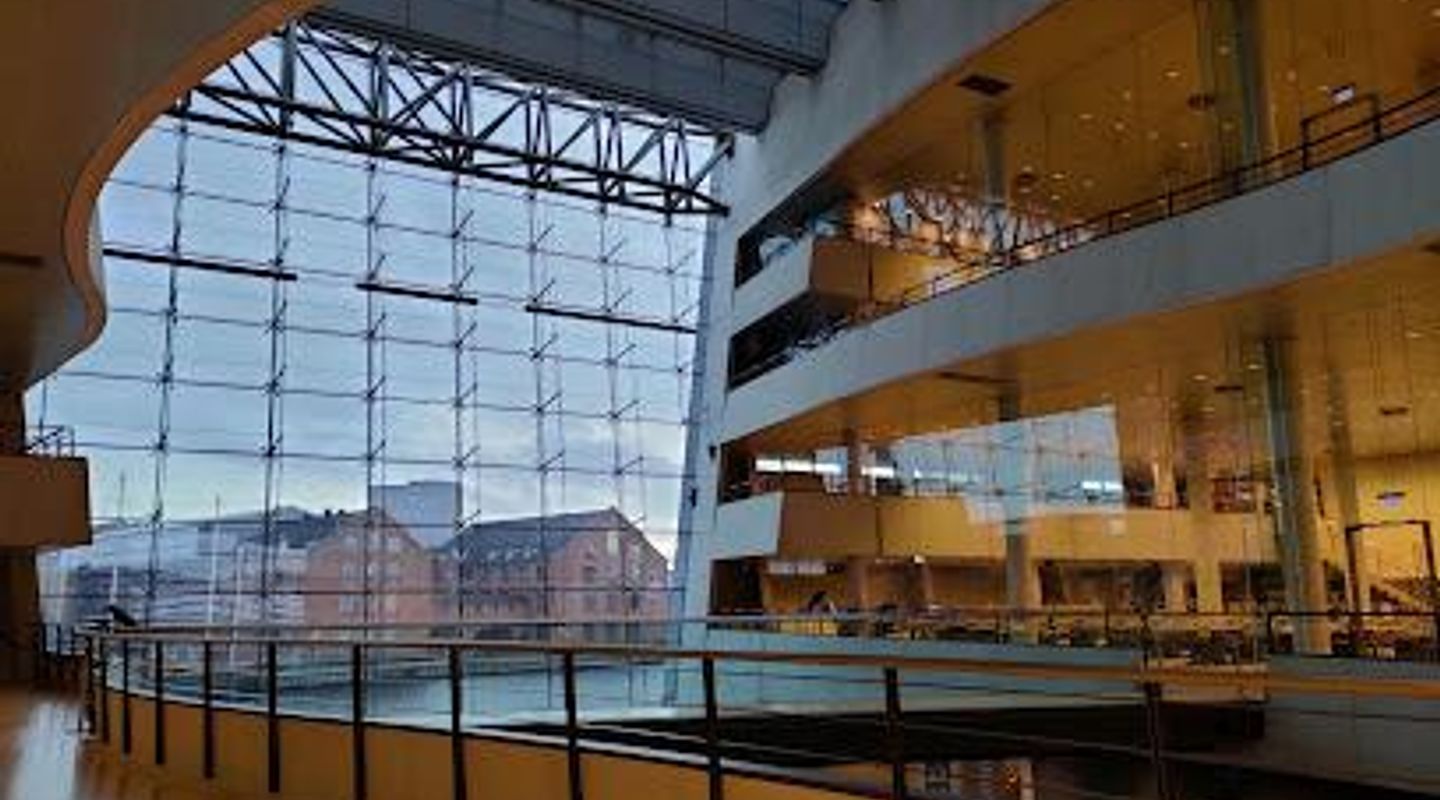
Step through the revolving doors and the dark exterior gives way to a spectacular light‑filled atrium soaring more than 20 metres high. A slanted glass wall frames continuous views of the harbour, while curving concrete balconies ripple along the sides like waves frozen in motion. Overhead, walkways criss‑cross the void, linking reading rooms, exhibition spaces and offices in a complex but surprisingly legible spatial choreography.Escalators glide through the centre of the space, carrying you past hanging bridges and up towards the older library building beyond. From the café and seating areas at ground level, you can linger over coffee while watching boats glide past and cyclists trace the harbourfront. At set times, specially composed sound art fills the atrium for a few minutes, transforming the building into a temporary instrument as tones resonate off stone, glass and steel.
Gateway to knowledge and culture
Behind the dramatic public spaces, the Black Diamond functions as the modern heart of the Royal Danish Library. Its stacks and reading rooms hold vast collections ranging from historical manuscripts to contemporary research, serving students and scholars from across Denmark. Yet the building is equally designed for casual visitors, with regularly changing exhibitions that draw on the library’s cultural treasures, especially photography, literature and visual culture.A highlight is the National Museum of Photography, whose shows use intimate gallery spaces to explore everything from early plates to cutting‑edge image‑making. The Queen’s Hall, tucked within the upper levels, is renowned for its warm acoustics and plywood‑lined interior, hosting chamber concerts, talks and literary events. Between floors, a subtly lit bridge leads into the 1906 library; look up to see Per Kirkeby’s richly coloured ceiling painting spanning the connection between old and new.
Linking history, city and quiet green refuge
The Black Diamond is part of a larger architectural ensemble on Slotsholmen. Move through its upper levels and you arrive in the historic library building, all classic proportions, tall windows and traditional detailing. From there, passages lead towards the secluded library garden, a century‑old courtyard planted with trees and flowerbeds, where a central fountain adds gentle background sound. It is hard to imagine that this calm green oasis sits just a short walk from the busy harbour quays.Beyond its walls, the Black Diamond anchors a stretch of the Copenhagen Cultural District. Through the harbour‑side glass you can scan to the Circle Bridge by Olafur Eliasson, the contemporary volumes of BLOX and the Danish Architecture Center, and the towers of Christiansborg Palace. In this context, the Black Diamond operates as both a landmark and a hinge, connecting civic institutions, public space and the waterfront promenade into a single walkable cultural landscape.
A daily rhythm of study, events and everyday life
For many Copenhageners, the Black Diamond is part of everyday routines as much as it is a destination. Mornings bring a quiet flow of researchers and students settling into reading rooms and study zones. Later in the day, exhibition visitors, families and architecture enthusiasts mingle in the atrium, browsing the bookshop or pausing on the balconies to photograph the views. Even on grey days the glass wedge funnels soft daylight deep into the interior, making the building feel active but rarely overwhelming.As evening approaches, the mood changes again. Lights glow behind the granite façade, and the glass wedge becomes a lantern for walkers along the harbour. On concert nights, guests gather beneath the sloping walls before filtering upstairs to the Queen’s Hall. Whether you come for a quick coffee with a view, an in‑depth research session or a performance, the Black Diamond offers a layered experience of Copenhagen’s cultural life in a single, striking piece of architecture.
Evendo Review Centre
 Google
Guest reviews
Best time to go
Quietest: Jan, Feb & Mar · before 7am or at 9pm
Busy times are Evendo estimates for a typical year, to help you plan. Actual crowds vary with events, school holidays and the weather.
Explore Black Diamond on the map
A handpicked selection of must-see spots near Black Diamond, mapped for you.
Get your free copy of our complete guide to Black Diamond, delivered straight to you.
Everything on this page, from opening hours and how to get there to Eve’s tips and the best time to go, in one PDF you can read offline, print or share.
Already have an account? Sign in
Your Black Diamond guide is ready.
We'll send it to · Not you? Sign out

Getting your guide ready…
We are putting together a fresh copy of the Black Diamond guide. This can take up to a minute.
This can take a few moments. If your browser asks, choose Allow so the download can start. You'll find the guide in your Downloads folder.
Nothing happened? Download it again
Sorry, the guide is taking longer than usual. Please try again in a minute, or get it by email instead.
Unlock the best of Black Diamond
Skip-the-line tickets, guided tours with entry, and walking tours of the area, booked in a few clicks.


 Tour
TourCastle Island’s Royal History: A Self-Guided Audio Tour of Slotsholmen
from $8.54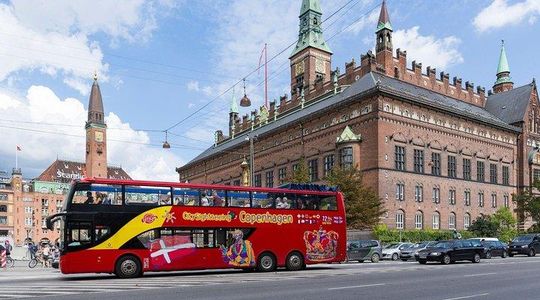 Tour
TourCity Sightseeing Copenhagen HOHO Bus Tour + Optional Boat Add-On
from $40.35 Tour
TourChristianshavn Walking Tour Copenhagen Bohemian Life and History
from $42.47 Tour
Tour2.5 Hours E-Bike Christmas Tour in Copenhagen
from $78.18
Other nearby places you may find interesting
The closest places of the same kind, if this one is not quite what you had in mind.
-
Copenhagen Zoo Explore 4,000+ animals across continents without leaving Copenhagen—year-round indoor and outdoor wildlife adventure.
-
 National Aquarium Denmark
Northern Europe’s largest aquarium, where striking whirlpool architecture, sharks, sea otters and a lush indoor rainforest bring the world’s oceans to Copenhagen’s shoreline.
National Aquarium Denmark
Northern Europe’s largest aquarium, where striking whirlpool architecture, sharks, sea otters and a lush indoor rainforest bring the world’s oceans to Copenhagen’s shoreline.
-
Magstræde One of Copenhagen’s oldest cobbled lanes, Magstræde is a colorful, time‑worn shortcut through the city’s medieval heart and everyday modern life.
-
Kastellet A perfectly preserved 17th‑century star fortress where red barracks, a windmill and grassy ramparts create a quiet green refuge beside Copenhagen’s harbour.
-
Rosenborg castle A compact Renaissance palace of kings, crowns and stories, Rosenborg Castle pairs glittering Crown Jewels with tranquil gardens in the very heart of Copenhagen.
Swipe for more places
More to explore near Black Diamond

 Best experiences near Black Diamond
 Best hotels near Black Diamond
 Best landmarks near Black Diamond
 Best attractions near Black Diamond
 Best shops near Black Diamond
 Best restaurants near Black Diamond
 Best bars near Black Diamond
Do you manage this location?
Take control to get all the benefits, like improved information, better appearance, and stronger visibility across AI-powered discovery.
Explore more

Explore more of Copenhagen
Discover Copenhagen: A perfect blend of history, modernity, and vibrant culture, where picturesque canals, stunning architecture, and world-class dining await you.
Explore Copenhagen
Explore more of Denmark
Discover Denmark: A perfect blend of history, modern design, and the cozy concept of hygge. Explore vibrant cities, serene landscapes, and world-class cuisine.
Explore Denmark
