

Dronning Louises Bro, Copenhagen Travel Guide
Free Guide: An elegant 1887 granite bridge over Copenhagen’s inner lakes, Dronning Louises Bro is both historic gateway and lively urban hangout linking the old town with Nørrebro.


A brief summary of Dronning Louises Bro
An elegant 1887 granite bridge over Copenhagen’s inner lakes, Dronning Louises Bro is both historic gateway and lively urban hangout linking the old town with Nørrebro.
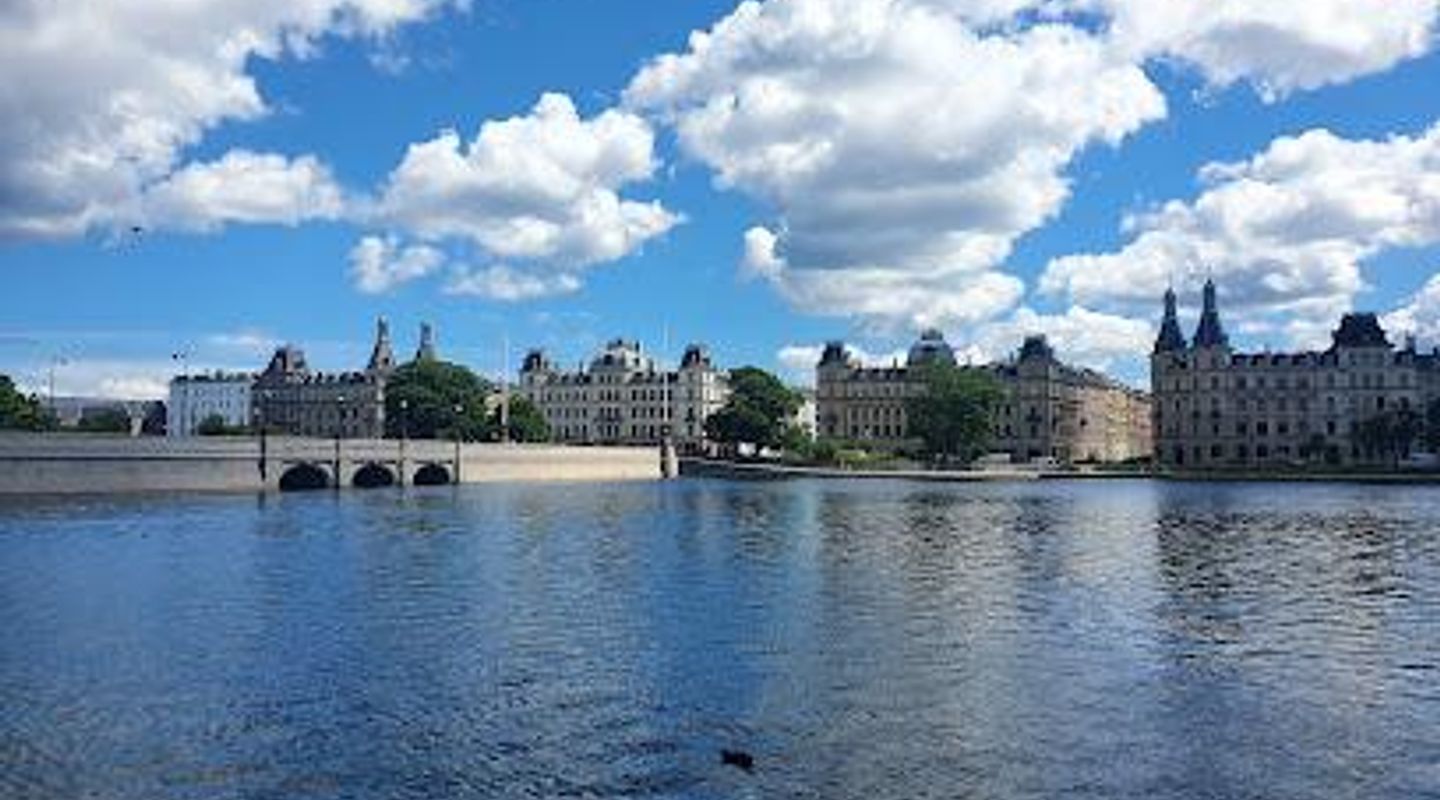
Dronning Louises Bro is an elegant 19th-century granite bridge spanning Copenhagen’s inner lakes, linking the historic city center with bohemian Nørrebro. Completed in 1887 and named after Queen Louise, it combines French Empire–inspired architecture with broad pavements now famed as one of the city’s most beloved urban hangouts, where cyclists, commuters, and friends linger over takeaway coffee while watching the water and skyline glow at sunset.
On-site amenities
 Trash bins
 Seating areas
 Information boards
 Restrooms
 Drink options
 Food options
Opening hours
- Every dayOpen 24 hours
Opening hours as listed on the venue’s Google Business Profile. Hours can change for services and special events, so check with the venue before you go.
- Address
- Søtorvet 2, 1371 København
- Phone
- Website
Getting there
Metro and walking from central Copenhagen
City bus from inner districts
Cycling via Copenhagen’s bike network
Taxi from central Copenhagen areas
Discover more about Dronning Louises Bro
A historic gateway between city center and Nørrebro
Dronning Louises Bro, or Queen Louise’s Bridge, stretches across Copenhagen’s chain of inner lakes, physically joining the old city with the vibrant district of Nørrebro. The bridge sits where people have crossed the water since the 16th century, when simple wooden structures linked the city’s northern gate to the countryside. Today’s broad stone bridge dates from 1887, replacing earlier crossings as the city grew beyond its former fortifications.Named for Queen Louise, consort of King Christian IX, the bridge reflects a moment when Copenhagen was modernizing at speed. Apartment blocks, markets and boulevards rose around the former defensive lakes, and this crossing became one of the main routes into the expanding capital from the north. Walking here still feels like stepping over a threshold, with distinct neighborhoods unfolding at either end.
Granite arches and French Empire flourishes
The present bridge was designed by architect Vilhelm Dahlerup, whose work shaped much of 19th-century Copenhagen. Built in granite, it spans the water in three solid arches that give it a stately, almost ceremonial presence. Cast-iron railings are punctuated by bronze cartouches showing Copenhagen’s coat of arms, framed by helmets, lions and weapons that underline the city’s historic stature.Eight lampposts and four flagpoles are integrated into the balustrade, creating a rhythm along the walkway that feels especially atmospheric at dusk. The design draws on French Empire influences, echoing the grand urban planning of the era. On the city side, the ornate towers and mansard roofs of the Søtorvet apartment blocks frame the bridge like a stage set, reinforcing its role as a formal entrance into the historic core.
From traffic artery to social living room
For much of the 20th century, Dronning Louises Bro was dominated by vehicles. As traffic increased, lanes for cars and trams squeezed pedestrians and cyclists onto narrow pavements. Recent decades, however, have seen a dramatic rebalancing: wider cycle lanes and generous sidewalks have transformed the bridge into a people-first space that feels as much like a plaza as a piece of infrastructure.On sunny days, the low stone parapets become informal seating, lined with friends chatting, couples sharing snacks, and students pausing with coffee or a beer. The steady flow of bikes, prams and commuters gives the bridge a lively but relaxed rhythm. It functions as a kind of open-air living room for the city, where lingering is as natural as passing through.
Lakeside panoramas and changing light
The views from the bridge are part of its magic. To one side lies Peblinge Lake, to the other Sortedam Lake, their long, calm surfaces edged by tree-lined promenades and handsome apartment facades. In the morning, the water can be mirror-still, reflecting pastel skies and the silhouettes of church spires. In the evening, neon signs and street lights shimmer across the surface as joggers trace the gravel paths around the lakes.From here you can read Copenhagen’s skyline in layers: the historic core with its towers, the grand 19th-century blocks around Nørreport, and the denser streets of Nørrebro receding to the north. Cloudy or clear, the constantly shifting light and weather make the same view feel different hour by hour, which is why many locals cross the bridge daily yet never tire of pausing in the middle.
A bridge woven into Copenhagen’s story
Over more than a century, Dronning Louises Bro has quietly witnessed major chapters in Danish history. It has carried horse-drawn carts bringing produce to the city markets, trams and later buses, and now some of the heaviest cycle traffic in Europe. It has served as a natural gathering point during moments of celebration and collective reflection, a visible stage between water and sky.At the same time, everyday life here is disarmingly simple: people meet before heading into town, musicians occasionally busk by the railings, and the nearby food halls and squares feed a steady stream of takeaway meals to be enjoyed with a lake view. Standing on the bridge, you feel both the weight of its past and the easy, contemporary rhythm of Copenhagen today.
Experiencing the bridge at your own pace
There is no fixed way to experience Dronning Louises Bro. You might stroll slowly from one bank to the other, stopping midway to lean on the granite and watch swans glide below. You might sit along the parapet, listening to fragments of conversation in Danish and many other languages. Or you might simply pass through on a bicycle, catching a fleeting glimpse of sunlight on the water.Whatever your pace, the bridge invites you to look up, breathe, and see how seamlessly architecture, everyday movement and landscape intertwine. It is both a practical route and a place to linger, a small but vivid snapshot of Copenhagen’s character held between two lakes.
Evendo Review Centre
 Google
Guest reviews
Best time to go
Quietest: Jan, Feb & Mar · at 1am or at 2am or at 5am
Busy times are Evendo estimates for a typical year, to help you plan. Actual crowds vary with events, school holidays and the weather.
Explore Dronning Louises Bro on the map
A handpicked selection of must-see spots near Dronning Louises Bro, mapped for you.
Get your free copy of our complete guide to Dronning Louises Bro, delivered straight to you.
Everything on this page, from opening hours and how to get there to Eve’s tips and the best time to go, in one PDF you can read offline, print or share.
Already have an account? Sign in
Your Dronning Louises Bro guide is ready.
We'll send it to · Not you? Sign out

Getting your guide ready…
We are putting together a fresh copy of the Dronning Louises Bro guide. This can take up to a minute.
This can take a few moments. If your browser asks, choose Allow so the download can start. You'll find the guide in your Downloads folder.
Nothing happened? Download it again
Sorry, the guide is taking longer than usual. Please try again in a minute, or get it by email instead.
Unlock the best of Dronning Louises Bro
Skip-the-line tickets, guided tours with entry, and walking tours of the area, booked in a few clicks.
 Tour with entry
Self-Guided Tour In Copenhagen with 100 Captivating Audio Stories
from $3.17 Tour with entry
Copenhagen’s Nørrebro: fifty shades of red and green city game
from $27.60 Tour with entry
Self-guided discovery walk in Copenhagen’s Nørrebro neighborhood
from $29.98 Tour with entry
Copenhagen 3 Hour Bike Tour: The World's Most Livable City
from $60.52


Other nearby places you may find interesting
The closest places of the same kind, if this one is not quite what you had in mind.
-
Copenhagen Zoo Explore 4,000+ animals across continents without leaving Copenhagen—year-round indoor and outdoor wildlife adventure.
-
 National Aquarium Denmark
Northern Europe’s largest aquarium, where striking whirlpool architecture, sharks, sea otters and a lush indoor rainforest bring the world’s oceans to Copenhagen’s shoreline.
National Aquarium Denmark
Northern Europe’s largest aquarium, where striking whirlpool architecture, sharks, sea otters and a lush indoor rainforest bring the world’s oceans to Copenhagen’s shoreline.
-
Magstræde One of Copenhagen’s oldest cobbled lanes, Magstræde is a colorful, time‑worn shortcut through the city’s medieval heart and everyday modern life.
-
Kastellet A perfectly preserved 17th‑century star fortress where red barracks, a windmill and grassy ramparts create a quiet green refuge beside Copenhagen’s harbour.
-
Rosenborg castle A compact Renaissance palace of kings, crowns and stories, Rosenborg Castle pairs glittering Crown Jewels with tranquil gardens in the very heart of Copenhagen.
Swipe for more places
More to explore near Dronning Louises Bro

 Best experiences near Dronning Louises Bro
 Best hotels near Dronning Louises Bro
 Best landmarks near Dronning Louises Bro
 Best attractions near Dronning Louises Bro
 Best shops near Dronning Louises Bro
 Best restaurants near Dronning Louises Bro
 Best bars near Dronning Louises Bro
Do you manage this location?
Take control to get all the benefits, like improved information, better appearance, and stronger visibility across AI-powered discovery.
Explore more

Explore more of Copenhagen
Discover Copenhagen: A perfect blend of history, modernity, and vibrant culture, where picturesque canals, stunning architecture, and world-class dining await you.
Explore Copenhagen
Explore more of Denmark
Discover Denmark: A perfect blend of history, modern design, and the cozy concept of hygge. Explore vibrant cities, serene landscapes, and world-class cuisine.
Explore Denmark
