Background

Musicon District, Roskilde

A former concrete factory reborn as Roskilde’s creative district, blending bold architecture, skateparks, culture venues and climate-smart design in one vibrant neighborhood.

4.3

Musicon is Roskilde’s bold creative district, transformed from a former concrete factory into a lively urban neighborhood of colourful architecture, skateparks, culture venues and experimental design. Just south of the historic centre, it blends housing, studios, eateries, music spaces and street art with innovative rainwater landscapes like Rabalderparken and the iconic Ragnarock rock-music museum, creating an all-day, all-evening hub for play, performance and everyday life.

A brief summary to Musicon-bydelen

  • Roskilde, 4000, DK
  • Duration: 1.5 to 4 hours
  • Free
  • Environment icon Outdoor
  • Mobile reception: 5 out of 5
  • Monday 12 am-12 am
  • Tuesday 12 am-12 am
  • Wednesday 12 am-12 am
  • Thursday 12 am-12 am
  • Friday 12 am-12 am
  • Saturday 12 am-12 am
  • Sunday 12 am-12 am

Local tips

  • Plan at least a couple of hours to wander beyond the main street; some of Musicon’s most interesting studios, art pieces and skate spots are tucked into back courtyards and side halls.
  • Wear comfortable shoes and weather-appropriate clothing; much of the experience is outdoors and invites you to walk, climb, sit on concrete sculptures and explore the skate-oriented landscape.
  • Check local listings or on-site posters for exhibitions, performances or district events, as Musicon’s programme changes frequently and can transform the atmosphere on any given day.
  • If you enjoy photography, visit in the golden hours around sunrise or late afternoon when the colourful facades, concrete forms and street art gain extra depth and contrast.
  • Families with active kids can bring scooters or skate gear; Rabalderparken and other skate-friendly areas cater to a range of ages and skill levels, with plenty of space to watch from the sidelines.
widget icon

Getting There

  • Train + Walk

    From Roskilde Station, follow the pedestrian-friendly route towards the Musicon district; the walk takes around 10–15 minutes at a moderate pace and is mostly flat and paved, suitable for strollers and most wheelchairs. This option is free beyond your train ticket and works well in most weather, though wind and rain can make the open stretches feel exposed.

  • City Bus

    Local city bus routes such as 202A run between Roskilde Station and stops near Rabalderstræde in Musicon, with typical journey times of 5–10 minutes depending on traffic. Buses usually operate at intervals of about 10–20 minutes during the day. A single adult ticket within the city zone generally costs in the range of 20–30 DKK, and low-floor buses make boarding easier for wheelchairs, prams and travelers with limited mobility.

  • Bicycle

    Roskilde is well suited to cycling, and Musicon lies roughly 5–10 minutes by bike from the historic centre, using marked cycle paths and calm streets. This is a low-cost option if you have your own bike or rent one in town, and the terrain is mostly gentle. Be prepared for changing weather and note that some surfaces in the district are shared with pedestrians and skaters, so slower, careful riding is recommended.

  • Taxi

    Taxis from central Roskilde or the railway station reach Musicon in about 5–10 minutes under normal traffic conditions. Fares within the city typically fall in the range of 80–150 DKK depending on distance, time of day and waiting time. Taxis are a good option in bad weather or for travelers with limited mobility, though availability can be tighter during major events and festival periods.

Musicon-bydelen location weather suitability

  • Weather icon Any Weather
  • Weather icon Clear Skies
  • Weather icon Windy Conditions
  • Weather icon Hot Weather
  • Weather icon Cold Weather
  • Weather icon Mild Temperatures
  • Weather icon Rain / Wet Weather

Unlock the Best of Musicon-bydelen

Buy tickets

    No tickets available

Book tours with entry

    No tours available

Book tours without entry

    No tours available

Discover more about Musicon-bydelen

From Concrete Factory to Creative Playground

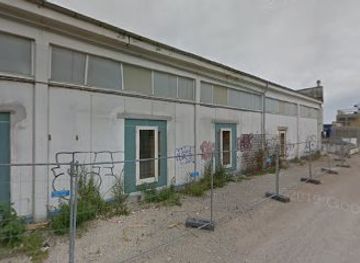
Musicon occupies what was once a vast concrete factory site on the southern edge of central Roskilde, a raw industrial landscape that lay dormant for years before being reimagined as a new kind of urban quarter. The old production halls, gravel pits and service yards have been gradually woven into a district where workshops, homes, performance spaces and studios sit alongside one another. Rather than erasing its past, Musicon incorporates traces of industry into its identity: surviving structures have been reused, robust materials left exposed, and wide service corridors converted into streets and plazas. The result is a place where you can still sense the scale and toughness of the former factory, even as it pulses with a very different kind of energy.

Architecture in Motion and Sound

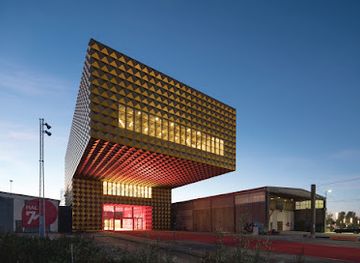
Musicon’s architecture is intentionally expressive, often playful and sometimes provocative. Along the main street, Rabalderstræde, you meet a collage of colourful facades, angled roofs and striking volumes. Landmark buildings such as the Ragnarock Museum of pop, rock and youth culture push this drama even further, with bold forms and strong colours that echo the world of live music. New housing blocks sit next to repurposed halls, container-based shops and small-scale studios. Many projects experiment with recycled materials, from timber salvaged from sports halls to re-used industrial components. At night, lighting installations and illuminated details give the district a theatrical quality, underscoring its link to performance and festival culture.

Urban Nature, Water and Skate Culture

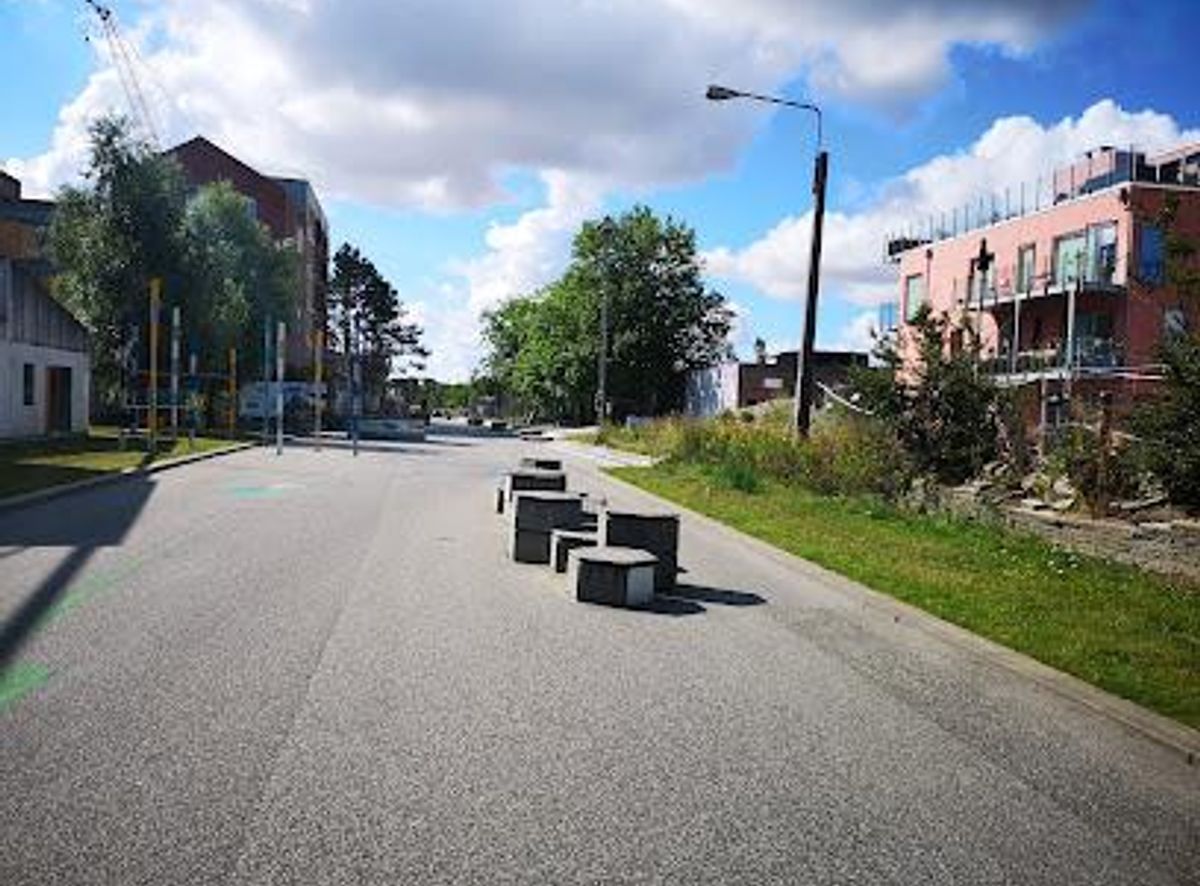
Musicon is also a landscape project. Former gravel pits and low-lying ground have been turned into Rabalderparken, a combined skatepark and climate-resilient rainwater facility. Here, sculpted concrete bowls and ramps double as channels for stormwater, creating an environment where skaters, scooters and families share space with a working piece of urban infrastructure. Along Rabalderstræde, rainwater is treated as a visible feature rather than hidden underground. White concrete "fabric" elements fold across the street, forming seats, play structures and speed-calming forms while channelling water towards the park. Trees, planting beds and small green pockets soften the industrial edges and offer places to pause between more energetic zones.

Culture, Community and Everyday Life

Musicon is home to a dense network of cultural actors: dance companies, rehearsal spaces, maker workshops, metal art studios and community galleries. Small stages, rehearsal rooms and flexible halls host concerts, contemporary dance, theatre and talks throughout the year, while studios and workshops buzz with craftspeople and artists at work. Community is central to the district’s character. Local associations, residents and creative entrepreneurs collaborate on events, street sports activities and shared spaces, including an annual district festival that spills into courtyards, plazas and skate areas. Cafés, microbreweries and food spots anchor this social life, giving you plenty of places to sit down, meet locals or simply watch the scene unfold.

Living, Playing and Exploring All Day

Unlike a single-attraction site, Musicon is designed as an all-day, everyday neighborhood. People live, study and work here, so mornings can feel calm and residential, while afternoons and evenings bring more movement as skaters, students and visitors pour into the streets and parks. The mix of housing, education, leisure and nightlife creates a steady rhythm rather than a single, sharp peak. For visitors, Musicon invites exploration without a fixed route. You can weave between skateparks, street art walls, container strips of small shops, creative courtyards and sculptural staircases. The adjacent Roskilde Festival grounds and the pedestrian connections towards the historic centre underline Musicon’s role as a bridge between Roskilde’s ancient heritage and its contemporary, experimental edge.

A Testbed for Future Cities

Underlying Musicon’s lively surface is an ambitious approach to urban development. Temporary structures have been used to test ideas before building permanently, and climate adaptation is integrated into the everyday public realm rather than hidden in technical zones. The district demonstrates how former industrial land can become a platform for culture, housing and entrepreneurship without losing its gritty authenticity. As more projects are completed, Musicon continues to evolve, adding new buildings, public spaces and initiatives while retaining space for spontaneity. For travelers, it offers a glimpse of how Danish cities are experimenting with creative, climate-conscious neighborhoods that invite participation instead of passive observation.

Busiest months of the year

Busiest hours of the day

Popular Experiences near Musicon-bydelen

Popular Hotels near Musicon-bydelen

Select Currency