
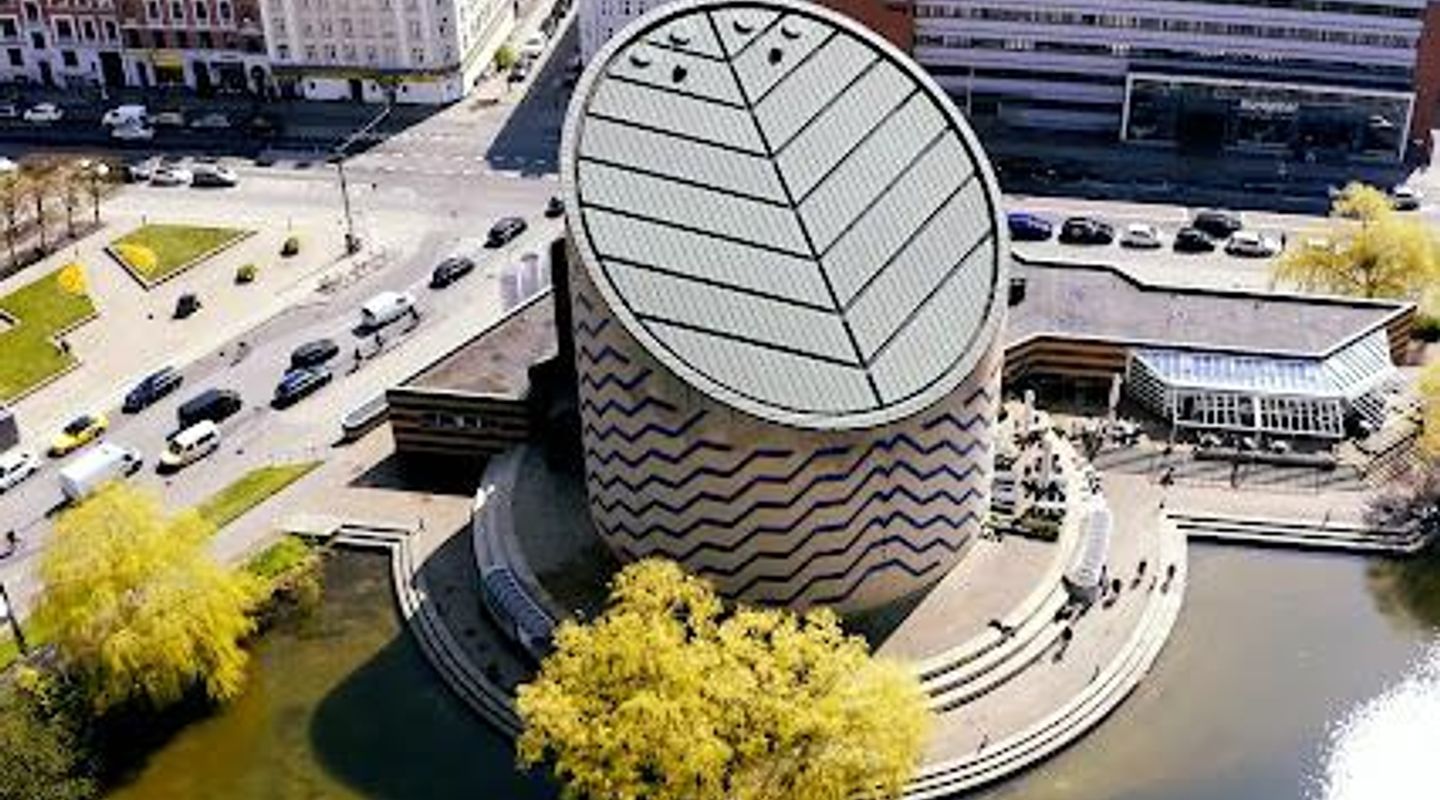
Planetarium, Copenhagen Travel Guide
Copenhagen’s copper-domed Planetarium launches you into immersive 8K space films, interactive cosmic exhibits and centuries of Danish stargazing beside the city’s lakes.
Perched beside Copenhagen’s inner lakes, Planetarium—officially Tycho Brahe Planetarium—is Denmark’s leading hub for astronomy and space science. Inside its striking cylindrical dome you step into immersive 8K fulldome films, hands-on exhibitions about the cosmos, and family-friendly activities that unpack everything from the Big Bang to black holes. It’s an engaging indoor attraction that blends science, storytelling, and spectacular visuals in the heart of the city.
A brief summary to Planetarium
- Gl. Kongevej 10, Indre By, Indre By, 1610, DK
- Click to display
- Click to display
- Duration: 1.5 to 3 hours
- Mid ranged
-
 Indoor
- Mobile reception: 5 out of 5
- Monday 12 pm-6:30 pm
- Tuesday 9:30 am-8 pm
- Wednesday 9:30 am-8 pm
- Thursday 9:30 am-8:30 pm
- Friday 9:30 am-9:30 pm
- Saturday 9:30 am-8:30 pm
- Sunday 9:30 am-7 pm

Know before you go
Hi, I'm Eve. Here are a few practical things to know before exploring Planetarium.
- Aim for a weekday morning or early evening screening to enjoy the dome with fewer crowds and more choice of seats.
- Tickets typically include one dome film—check the programme in advance and pick a show that suits your group’s interests and language needs.
- Allow extra time after your film to explore the exhibitions at a relaxed pace, especially if visiting with children.
- If you don’t speak Danish, ask about English audio headsets for dome shows when you enter.
- Combine your visit with a walk around Skt Jørgens Sø just outside for reflective views of the Planetarium’s striking architecture.
Do you manage this location?
Take control to get all the benefits, like improved information, better appearance, and stronger visibility across AI-powered discovery. Learn more about listing your business on Evendo
Activate your presenceOther nearby places you may find interesting
The closest places of the same kind, if this one is not quite what you had in mind.

Explore Planetarium on the Map
A handpicked selection of must-see spots near Planetarium, mapped for you.
Unlock the Best of Planetarium
Buy tickets
-
No tickets available
Book tours with entry


Getting There
-
Train from Copenhagen Central Station
From Copenhagen Central Station, Planetarium is roughly 600–800 metres away, so most visitors simply walk for about 8–10 minutes on flat, paved pavements that are suitable for wheelchairs and strollers. If you prefer to shorten the walk, you can take any S‑train one stop to Vesterport and walk a similar distance. Trains are covered by standard Copenhagen zone tickets; a single zone 1–2 ticket typically costs around 20–25 DKK and trains run every few minutes throughout the day.
-
Metro and walk from central Copenhagen
From the city centre, take metro line M3 or M4 to Rådhuspladsen Station, then walk about 10–12 minutes on even pavements past the lakes to reach Planetarium. The walk is mostly level and manageable with wheelchairs or prams, but can be windy in bad weather. A single metro trip in zones 1–2 usually costs about 20–25 DKK, and trains run every few minutes from early morning until late evening.
-
City bus connections
Several city buses run along major streets near Gammel Kongevej and the lakes, with stops within a 5–10 minute walk of Planetarium. Travel time from central hubs such as Nørreport or the City Hall area is typically 10–20 minutes depending on traffic. Standard bus fares in the inner zones are around 20–25 DKK per journey, and buses generally operate every 5–15 minutes during the day, with reduced frequency in the late evening.
-
Cycling from inner Copenhagen
Cycling is one of the easiest ways to reach Planetarium from inner Copenhagen, with dedicated bike lanes leading along the lakes and Gammel Kongevej. From areas such as Nørreport or Nyhavn, the ride usually takes 10–20 minutes on mostly flat terrain. You can use a rented city bike or standard bike‑share, which typically cost from about 20–40 DKK per half hour depending on the provider. Bike parking is available near the entrance, though it may be busy on weekends and school holidays.
For the on-the-go comforts that matter to you
-
 Restrooms
-
 Drink Options
-
 Drinking Water
-
 Food Options
-
 Seating Areas
-
 Trash Bins
-
 Information Boards
-
 Visitor Center
Discover more about Planetarium
A copper-clad gateway to Copenhagen’s cosmos
Planetarium rises at the edge of Skt Jørgens Sø like a gigantic, sliced cylinder reflected in the water, its copper cladding echoing Copenhagen’s green-patinated rooftops. Designed by architect Knud Munk and opened in 1989, the building was conceived as a modern monument to the night sky, a geometric form that hints at observatories and celestial instruments without copying any one of them.Step inside and the world outside drops away quickly. The foyer opens upward toward the great dome, with clean lines, warm materials and subtle lighting that keeps your eyes drawn toward models of planets, suspended installations and glimpses of exhibition spaces above. Though thoroughly contemporary, the design feels rooted in Danish traditions of functional, people-focused architecture.Honouring Tycho Brahe and Denmark’s starry heritage
Planetarium carries the name of Tycho Brahe, the 16th‑century Danish astronomer whose precise measurements of the heavens paved the way for modern astronomy. Inside, you’ll encounter stories of his island observatory at Hven, ingenious instruments crafted long before telescopes, and how his data helped Johannes Kepler describe planetary motion.These historical threads are woven into a much broader narrative about Denmark’s role in space science today. Exhibits touch on satellite technology, Nordic contributions to space missions and the way local researchers study everything from exoplanets to cosmic radiation. The result is a sense of continuity: centuries of sky‑watching distilled into a single, approachable space beside the city’s lakes.The Dome: Europe’s largest tilted fulldome experience
At the heart of the building lies the Planetarium Dome, the largest tilted fulldome of its kind in Europe. Here, a 1,000‑square‑metre screen curves above and around you while advanced 8K laser projectors and a powerful sound system turn documentaries into near‑physical experiences. Films might swoop through Saturn’s rings, dive into volcanoes or trace the life of a star, with the tilt of the dome enhancing the illusion of movement.Each screening traditionally begins with a brief guided journey through the current night sky, transforming the dome into a virtual observatory. Constellations are outlined, planets singled out and recent astronomical events highlighted. English narration is often available via headsets, making the shows accessible even when the main language is Danish.Hands-on journeys through space and time
Beyond the dome, Planetarium’s exhibitions turn complex astrophysics into something you can touch, see and play with. Permanent galleries explore the Big Bang, galaxy formation, black holes and the fragile conditions that allow life to exist on Earth. Interactive stations let you compare planetary gravity, manipulate light and shadow, or watch simulations of colliding galaxies.Installations such as large‑scale artistic pieces and immersive digital displays bridge the gap between art and science, using soundscapes, projections and sculptural forms to evoke cosmic structures. For younger visitors there are dedicated activity zones and special programmes on weekends and school holidays, where simple experiments and storytelling introduce the basics of space exploration.An urban observatory for all seasons
Because it is fully indoors, Planetarium works in every kind of Danish weather, from bright summer days to winter storms. Seating areas dotted through the building allow you to pause between exhibitions, gaze out over the lakes or simply absorb the quiet hum of families and school groups following their own routes through the cosmos.The location, steps from Copenhagen’s historic centre, also makes it easy to combine a visit with a lakeside stroll, nearby cafés or other cultural stops. Typical visits last around one and a half to two hours, but astronomy enthusiasts can easily linger longer, timing their day around multiple dome screenings or special talks.Planning your visit inside the star dome
Admission is organised as an all‑in‑one ticket that usually includes access to all exhibitions and one dome film. Prices for adults sit in the mid‑range compared with other city museums, with reduced rates for children and various discounts available via local city cards or concessions. Opening hours are generous most days of the week, often stretching into the evening, which makes late‑day or after‑dark visits particularly atmospheric.The building is designed with accessibility in mind, including lifts and step‑free routes to key areas, and it is straightforward to navigate once inside. Mobile reception is generally strong, but the dome shows remain best enjoyed with your phone tucked away as you follow the stars overhead.












Your all‑in‑one travel companion app
Explore expert travel guides, compare and book tours, experiences, hotels, and more—all from the palm of your hand. Download now for seamless trip planning wherever your wanderlust takes you.


Explore More of Copenhagen

Looking beyond Planetarium? Discover Copenhagen for broader travel guides, local hot-spots, and regional highlights.
Explore Copenhagen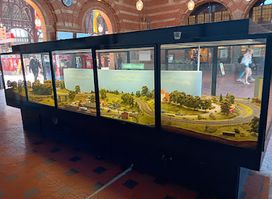
Discover the enchanting Model Train Display in Copenhagen, showcasing intricate landscapes and charming miniature railways for all ages.
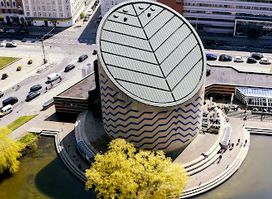
Step from Copenhagen’s lakeside promenade into Europe’s largest tilted dome, where cutting-edge projections, exhibits and art bring the universe within reach.
