
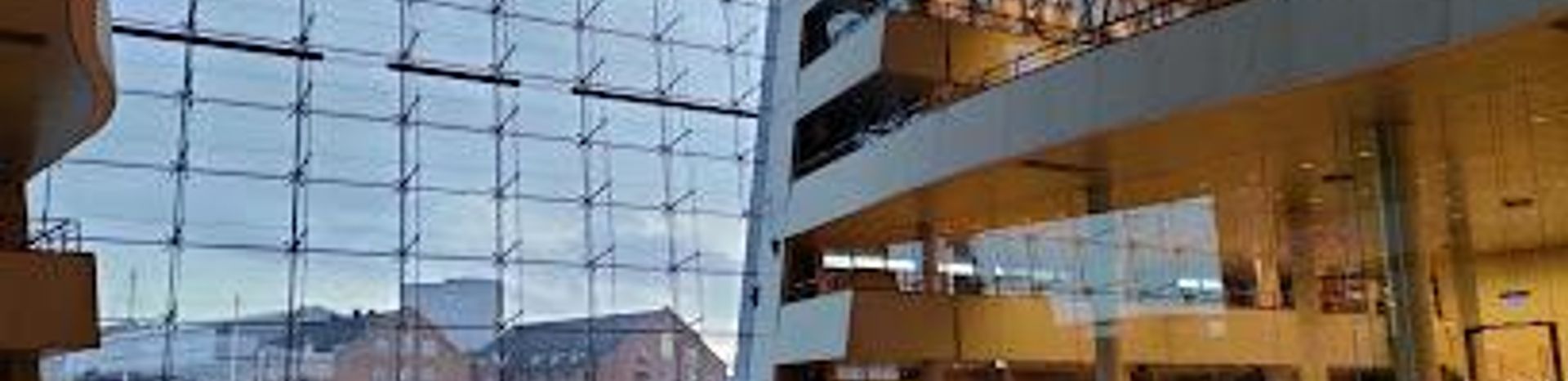
The Black Diamond
A polished black granite beacon reflecting Copenhagen's harbor and sky, where modern architecture honors centuries of Danish cultural heritage.
The Black Diamond is a striking modern extension of the Royal Danish Library, iconic for its polished black granite facade that reflects Copenhagen's harbor and sky. Completed in 1999 by Schmidt Hammer Lassen Architects, this architectural landmark houses reading rooms, exhibition galleries, a 600-seat concert hall, café, and restaurant across eight floors. Free admission welcomes visitors to explore its luminous atrium, historic library sections, and cultural collections while enjoying panoramic waterfront views.
A brief summary to Black Diamond
- Søren Kierkegaards Pl. 1, Copenhagen, Indre By, 1221, DK
- Click to display
- Duration: 1.5 to 4 hours
- Free
-
 Mixed
Mixed
- Mobile reception: 5 out of 5

Know before you go
Hi, I'm Eve. Here are a few practical things to know before exploring Black Diamond.
- Visit on weekday mornings for fewer crowds and a more peaceful experience exploring the atrium and reading rooms. Weekends and late afternoons tend to be busier.
- The ground floor café offers excellent harbor views and is an ideal spot for coffee while watching boats pass. Arrive early or during off-peak hours for seating.
- Bring a camera or smartphone—the building's reflective facade and interior geometry create exceptional photography opportunities throughout the day as light conditions change.
- Explore the historic 1906 library sections to appreciate the architectural contrast with the modern extension. The bridge decorated by Per Kirkeby marks the transition between eras.
- Check the official website for current exhibitions, concerts, and events in the 600-seat Queen's Hall, which hosts performances and conferences throughout the year.
Do you manage this location?
Take control to get all the benefits, like improved information, better appearance, and stronger visibility across AI-powered discovery. Learn more
Activate your presence
Getting There
-
Metro
Take the Copenhagen Metro (S-train) to Gammel Strand station, approximately 5-7 minutes travel time from central Copenhagen. Exit and walk approximately 400 meters along the harbor promenade toward Slotsholmen. The Black Diamond is directly accessible from the waterfront path. Trains run frequently throughout the day, with standard single journey tickets costing approximately 24-36 DKK depending on zones.
-
Bus
Multiple bus routes serve the area, including routes 1A, 2A, 6A, and 14 that stop near Christiansborg Palace and Slotsholmen. Travel time from central Copenhagen is typically 10-15 minutes depending on traffic and starting point. Single journey tickets cost approximately 24 DKK. Buses run regularly throughout the day with reduced frequency in early morning and late evening hours.
-
Walking
From Nyhavn or central Copenhagen, walk along the harbor promenade toward Slotsholmen, approximately 15-20 minutes depending on your starting point. The route is flat, well-maintained, and clearly marked. Follow signs toward Christiansborg Palace and the Royal Library. The waterfront path offers scenic views and passes through the city's cultural district.
-
Bicycle
Copenhagen's extensive cycling infrastructure makes reaching the Black Diamond straightforward. Bike rental is available throughout the city at approximately 80-100 DKK per day. The journey from central areas typically takes 10-15 minutes via dedicated cycle paths. Secure bike parking is available near the building entrance.
For the on-the-go comforts that matter to you
-
 Restrooms
-
 Drink Options
-
 Food Options
-
 Seating Areas
-
 Information Boards
-
 Visitor Center
Discover more about Black Diamond
A Sculptural Monument to Modern Danish Architecture
The Black Diamond stands as one of Copenhagen's most distinctive architectural achievements, a deliberate contrast to the historic Royal Danish Library building it adjoins. Completed in 1999 by the Danish architectural firm Schmidt Hammer Lassen, the structure was never designed to blend seamlessly with its surroundings—instead, it commands attention through its bold geometric form and striking material presence. The building's nickname derives from its facade of 2,500 square meters of polished black granite, each stone weighing 75 kilograms and cut with millimeter precision in northern Italy after being mined in Zimbabwe. This reflective surface transforms throughout the day, mirroring Copenhagen's skyline, the harbor waters, and the shifting Nordic light, creating an ever-changing visual experience that justifies its gemstone designation.Engineering Innovation Beneath the Surface
The Black Diamond's seemingly impossible geometry—including its dramatically slanting glass facade and undulating concrete balconies—represents a triumph of contemporary engineering. The structure spans eight floors with a total volume of 20,733 cubic meters, containing 450 rooms and 800 doors distributed across its expanse. The slanting pre-stressed glass facade is held aloft by giant steel girders weighing one ton per meter, secured at the base with L-beams and supported by a sophisticated system of pressure rods and cables. The building's central atrium, a 24-meter-high void sliced diagonally by a massive glass wall, required more than 10,000 coordinate points in the formwork to achieve its signature wave-like balconies. Beneath this visible splendor lies a vibration isolation system designed to protect centuries-old manuscripts from the subtle tremors generated by nearby harbor traffic—a hidden engineering marvel that ensures the library's precious collections remain undisturbed.A Living Bridge Between Past and Present
The Black Diamond functions as both a physical and conceptual bridge connecting Copenhagen's historical and contemporary identities. Visitors moving through the building experience a seamless transition from the sleek, light-filled modern extension into the historic library sections, including the original 1906 building designed by H.J. Holm. A ceiling bridge decorated by Danish artist Per Kirkeby, spanning 211 square meters, marks this threshold between eras. The older library sections retain their classical character while the new structure floods the complex with natural light through its expansive glass elements. This architectural dialogue demonstrates how contemporary design can honor heritage without attempting to replicate it, creating a unified cultural institution that serves both scholarly and public purposes.Cultural Hub and Public Gathering Space
Beyond its function as a library, the Black Diamond houses the National Museum of Photography, the National Museum of Cartoon Art, and the Danish Architecture Center, making it a vital cultural venue for Copenhagen. The building contains four modern reading rooms alongside the historic research facilities, a 600-seat concert hall known as the Queen's Hall, multiple exhibition galleries, a bookshop, café, and restaurant. The waterfront location and free public access transform the building into a genuine civic space where locals and visitors alike gather to work, learn, and experience culture. The ground floor café offers views across the harbor toward the Circle Bridge and city canals, while the upper levels provide quiet reading spaces and exhibition areas that draw diverse audiences throughout the year.The Play of Light and Reflection
The Black Diamond's most enchanting quality emerges from its relationship with light and water. The polished granite facade acts as a mirror to its environment, reflecting the sky, clouds, passing boats, and the harbor's rippling surface. At certain angles, the black granite sparkles in sunlight, creating moments of unexpected brilliance that justify the building's poetic name. At night, interior illumination transforms the dark exterior into something luminous and almost alive, creating a beacon effect visible across the harbor. This dynamic quality means the building never appears static—it continuously shifts in appearance based on weather, time of day, and season, offering visitors new visual experiences with each visit.Integration with Copenhagen's Waterfront Promenade
The Black Diamond anchors Copenhagen's transformation into a waterfront cultural destination. Positioned on Slotsholmen adjacent to Christiansborg Palace, which houses Denmark's Parliament, the building sits at the intersection of political power and cultural expression. The central atrium opens directly onto the harbor promenade, symbolizing transparency and public access to knowledge. This waterfront positioning provides unobstructed views of the city's maritime character while establishing the library as a prominent landmark in Copenhagen's evolving skyline. The building's location makes it accessible to both the city center and the harbor district, serving as a natural gathering point for residents and tourists exploring Copenhagen's cultural institutions.Explore the best of what Black Diamond has to offer













More about North Zealand
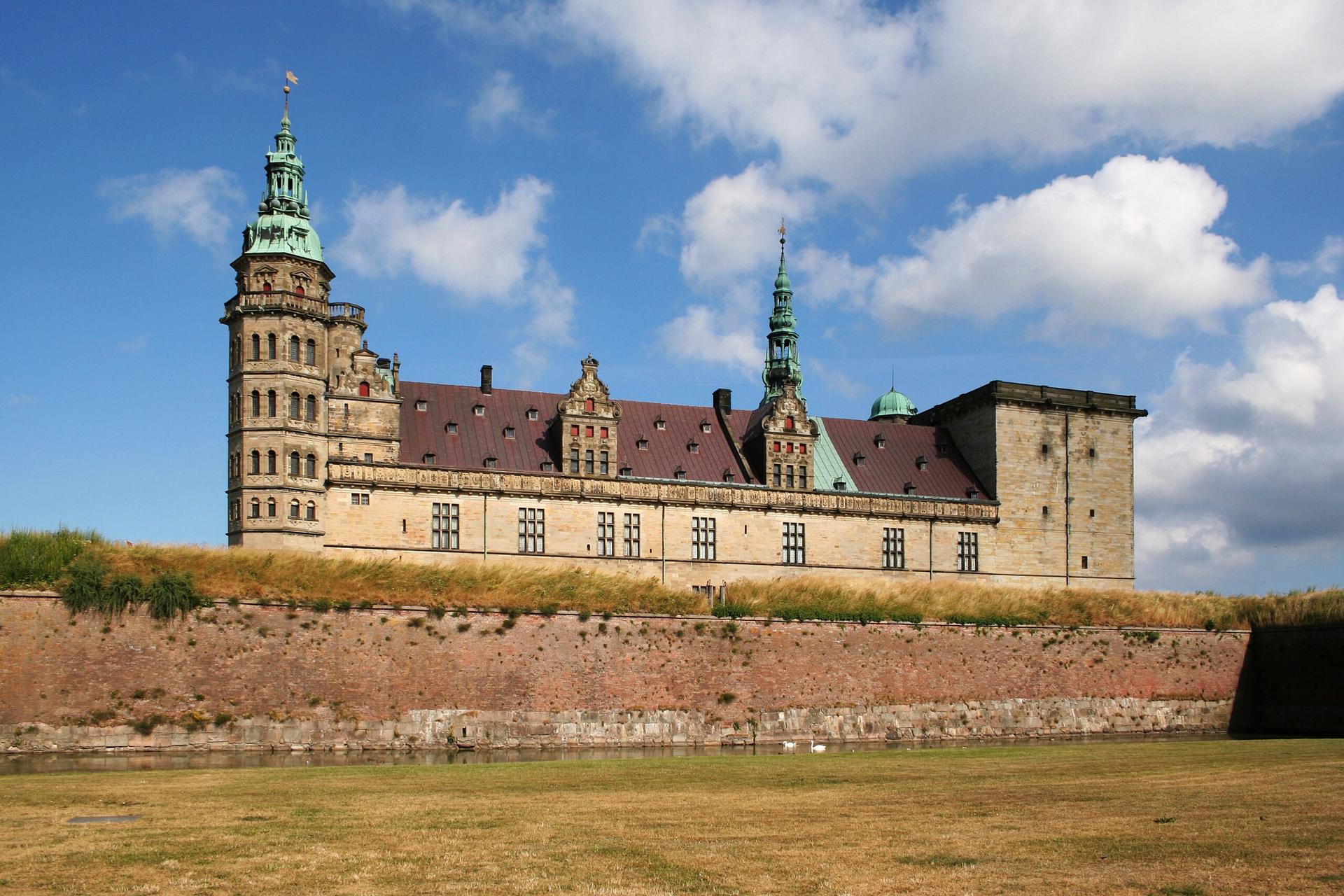
Explore North Zealand, Denmark's enchanting region of castles, beaches, and royal estates, perfect for history buffs, nature enthusiasts, and seaside lovers.
Tell me more about North Zealand
Bronze monument in central Copenhagen commemorating King Frederik VII and Denmark’s 19th-century transition to constitutional monarchy, steps from political landmarks.

A five-masted circle of light and steel where art, everyday crossings and Copenhagen’s maritime history meet above the waters of Christianshavn Canal.
