Background

Kunsthal Charlottenborg

Historic Charlottenborg Palace transformed into one of Northern Europe’s leading contemporary art halls, blending bold exhibitions with Nyhavn and Kongens Nytorv views.

4.3

Housed in the grand Baroque Charlottenborg Palace on Kongens Nytorv at the mouth of Nyhavn, Kunsthal Charlottenborg is one of Northern Europe’s leading venues for contemporary art. Since 1883 it has showcased ambitious, international exhibitions, from emerging voices to major names, alongside talks, performances, film screenings and the renowned Charlottenborg Spring Exhibition.

A brief summary to Kunsthal Charlottenborg

  • Nyhavn 2, Copenhagen, Indre By, 1051, DK
  • +4533744639
  • Visit website
  • Duration: 1 to 2 hours
  • Budget
  • Environment icon Indoor
  • Mobile reception: 5 out of 5
  • Tuesday 12 pm-8 pm
  • Wednesday 12 pm-8 pm
  • Thursday 12 pm-8 pm
  • Friday 12 pm-8 pm
  • Saturday 11 am-5 pm
  • Sunday 11 am-5 pm

Local tips

  • Plan your visit Tuesday to Friday if you enjoy quieter galleries; weekends can feel livelier with more locals and events in the courtyard.
  • Allow extra time for the Charlottenborg Spring Exhibition or the Academy degree show, when the number of works and variety of media increases.
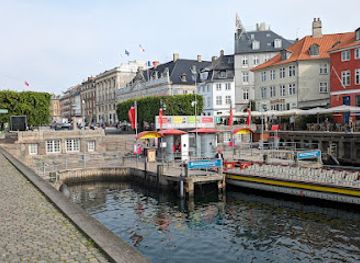
  • Combine your visit with a stroll along Nyhavn or Kongens Nytorv to appreciate how the kunsthal’s Baroque architecture anchors this central square.
widget icon

Getting There

  • Metro from central Copenhagen

    From central Copenhagen, take the M1 or M2 metro line to Kongens Nytorv Station, a journey of about 5–10 minutes from most inner-city stops. Trains run every few minutes throughout the day. A single zone ticket typically costs around 20–30 DKK and can be bought from ticket machines or via local transport apps. From the station, expect a short, level walk across the square on paved surfaces, generally suitable for wheelchairs and strollers in most weather.

  • City bus connection

    Several city buses serve the Kongens Nytorv and Nyhavn area from different neighbourhoods of Copenhagen, with typical travel times of 10–25 minutes depending on traffic and starting point. Standard bus tickets are in the same price range as metro tickets, around 20–30 DKK for a short journey, and can be purchased on apps or at stations. Buses usually run at least every 10–15 minutes during the day; check route maps to select a line stopping near Kongens Nytorv, from where it is a short, well-signposted walk.

  • Cycling in the city centre

    Copenhagen is highly cycle-friendly, and many visitors reach Kunsthal Charlottenborg by bicycle in 5–20 minutes from most central districts. Expect dedicated bike lanes on main routes and flat terrain throughout. Public bike-share schemes and rental shops offer hourly or daily rates, often starting around 75–125 DKK per day. Bike parking stands are available around Kongens Nytorv and Nyhavn, but they can fill up in peak hours, so allow a few extra minutes to lock your bike securely.

  • Walking within Indre By

    If you are already in Copenhagen’s historic centre, many key sights lie within a 10–20 minute walk of Kunsthal Charlottenborg. The route is generally flat, over cobblestones and paved pedestrian streets, so comfortable footwear is recommended. Walking offers the chance to combine your visit with stops at neighbouring squares, canals and shops, though surfaces can be slippery in heavy rain or winter conditions, so take extra care in bad weather.

Kunsthal Charlottenborg location weather suitability

  • Weather icon Any Weather
  • Weather icon Rain / Wet Weather
  • Weather icon Cold Weather
  • Weather icon Mild Temperatures
  • Weather icon Hot Weather

Unlock the Best of Kunsthal Charlottenborg

Buy tickets

    No tickets available

Book tours with entry

    No tours available

Book tours without entry

    No tours available

Discover more about Kunsthal Charlottenborg

Contemporary Art in a Baroque Palace

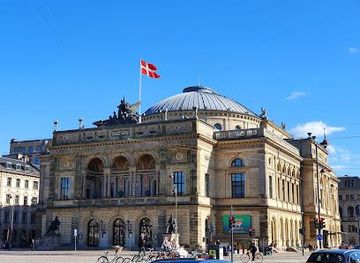
Kunsthal Charlottenborg occupies the south wing and exhibition building of Charlottenborg Palace, a Dutch Baroque mansion overlooking both Kongens Nytorv and the colourful facades of Nyhavn. Behind the stately brick and sandstone exterior, light-filled galleries stretch across generous floorplates, creating one of Northern Europe’s largest and most atmospheric spaces devoted to contemporary art. Since 1883, the kunsthal has operated as an exhibition venue rather than a collecting museum, which keeps its program agile and firmly rooted in the present. Entering from the courtyard or Nyhavn side, you move through high-ceilinged halls where crisp white walls and polished floors contrast with glimpses of the palace’s historic structure. This interplay between old and new is part of the charm: bold installations, video works and conceptual pieces unfold within a setting shaped by centuries of royal, academic and artistic life.

From Gyldenløve’s Mansion to Art Academy Hub

The story begins in the late 17th century, when Ulrik Frederik Gyldenløve, half-brother of King Christian V, commissioned a grand residence on newly laid-out Kongens Nytorv. Inspired by French and Dutch trends, the palace was built between 1672 and 1683 in a restrained Baroque idiom. In 1700 it passed to dowager queen Charlotte Amalie, whose name the building still carries. Over time, the palace shifted from private residence to cultural institution, becoming the home of the Royal Danish Academy of Fine Arts in the 18th century. To accommodate exhibitions and teaching, the complex evolved. The main corps de logis facing the square was remodelled in the 19th century, while a dedicated exhibition building was added at the rear, following a French model for purpose-built art halls. This annex, completed in 1883, is today’s Kunsthal Charlottenborg: an architecturally coherent suite of galleries where the academy, palace and contemporary art program intersect.

A Stage for Bold, Agenda-Setting Exhibitions

Without a permanent collection, Kunsthal Charlottenborg revolves entirely around temporary exhibitions. Its curatorial focus is on ambitious, often experimental projects that bring together Danish and international artists. Installations might address technology, climate, migration, identity or urban life, explored through sculpture, film, sound, textiles or performance. The scale of the rooms allows for immersive environments and large-format works that can transform the building’s atmosphere from season to season. Alongside solo presentations by established figures, the kunsthal supports emerging voices and cross-disciplinary practices, spanning visual art, architecture, design and craft. The widely recognised Charlottenborg Spring Exhibition uses an open, juried format to present artists selected from public submissions, while the annual MFA degree show from the Academy gives a glimpse of tomorrow’s art scene. The result is a program that regularly shifts from contemplative to provocative, yet remains accessible.

Events, Encounters and Everyday Life

Kunsthal Charlottenborg operates as a social and intellectual meeting point as much as an exhibition venue. Throughout the year, its program is enriched by artist talks, panel discussions, workshops, performances, concerts and film screenings that dig deeper into current themes. Some evenings the galleries serve as a backdrop for sound pieces or live interventions; on others, visitors gather for quiet screenings or conversations around a single work. The building opens onto a central courtyard that links Nyhavn and Kongens Nytorv, frequently used as an informal extension of the exhibition space. On mild days, people linger here or at the on-site café, surrounded by the brick arcades and large windows of the kunsthal. Inside, seating nooks and generous corridors invite you to pause, reflect or simply watch the flow of visitors navigating between rooms.

Art, Light and Views over Nyhavn

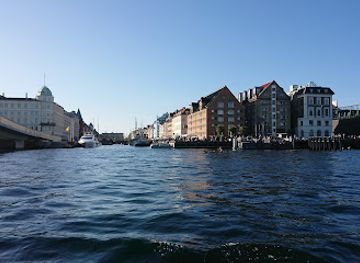
Moving up through the levels, long vistas and carefully framed apertures reveal both the architecture and the city outside. In some galleries, tall windows capture the masts and roofs along Nyhavn, turning Copenhagen’s harbourfront into a shifting backdrop for the art on display. At other points, you look back toward Kongens Nytorv, its equestrian statue and surrounding theaters emphasising the palace’s central position in the cultural district. This interplay of art, light and cityscape makes the kunsthal rewarding even for visitors with limited time. Whether you stay for a single exhibition or follow the full circuit of galleries, the experience is a blend of historical setting and forward-looking artistic practice. With varied programming, there is always a sense that the space is mid-conversation with the contemporary world, using a centuries-old palace as its stage.

Busiest months of the year

Busiest hours of the day

Popular Experiences near Kunsthal Charlottenborg

Popular Hotels near Kunsthal Charlottenborg

Select Currency