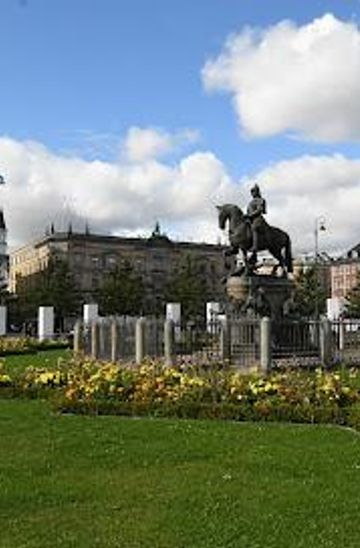
Kongens Nytorv
Copenhagen’s grand royal square, where 17th-century ambition, elegant façades and everyday city life meet between Nyhavn, Strøget and the Royal Danish Theatre.
Kongens Nytorv, “The King’s New Square”, is the grand, historic heart of Copenhagen’s old town. Laid out in the 17th century by King Christian V, this broad square is framed by elegant façades such as the Royal Danish Theatre, Hotel d’Angleterre and the Magasin du Nord department store. At its centre stands Copenhagen’s oldest equestrian statue, surrounded by formal garden beds, seasonal displays and busy pedestrian routes linking Nyhavn, Strøget and the city’s metro hub.
A brief summary to Kongens Nytorv
- Copenhagen, Indre By, DK
- Duration: 0.5 to 2 hours
- Free
-
 Outdoor
- Mobile reception: 5 out of 5

Know before you go
Hi, I'm Eve. Here are a few practical things to know before exploring Kongens Nytorv.
- Arrive early in the morning for soft light on the façades and a quieter look at the equestrian statue of King Christian V without heavy foot traffic.
- Combine your time on the square with a visit to the Royal Danish Theatre or Kunsthal Charlottenborg just off the plaza for a culture-filled half day.
- In winter, check if the square is hosting a Christmas market or ice rink and allow extra time to explore food stalls, decorations and seasonal installations.
- Use the central gardens and benches as a short rest stop between walks to Nyhavn and along Strøget, keeping an eye on your belongings in busy periods.
- Photographers should look for elevated angles from nearby department-store windows or side streets to capture the geometry of the square from above.
Do you manage this location?
Take control to get all the benefits, like improved information, better appearance, and stronger visibility across AI-powered discovery. Learn more
Activate your presenceOther nearby places you may find interesting

Getting There
-
Metro
Take any Copenhagen Metro line M1, M2, M3 or M4 to Kongens Nytorv Station, which sits directly beneath the square. From central hubs like Copenhagen Central Station or Nørreport, journeys typically take 3–8 minutes, with frequent departures throughout the day. A single-zone ticket within the city usually costs around 20–30 DKK, and station access is step-free with lifts for wheelchairs and strollers.
-
City Bus
Several city bus routes serve stops around Kongens Nytorv from districts such as Vesterbro, Østerbro and Amager in about 10–25 minutes, depending on traffic. Standard bus tickets are integrated with the metro system and cost roughly 20–30 DKK for central zones. Buses run regularly but can be slower during rush hours, and boarding is at street level with low-floor vehicles on most routes.
-
Bicycle
From most central Copenhagen neighbourhoods, cycling to Kongens Nytorv takes 5–15 minutes along dedicated bike lanes. Public bike-share schemes and rental shops offer bicycles from around 100–150 DKK per day. The square itself has bike stands on its edges, but it can be crowded at peak times, so dismount and walk the final stretch across the central area.
-
On Foot from City Hall Square
Walking from Rådhuspladsen, the City Hall Square, to Kongens Nytorv takes about 15–20 minutes at a comfortable pace, following the pedestrian shopping spine through the old town. The route is flat and fully paved, making it suitable for most visitors, though it can feel busy during weekends and holidays, so allow extra time if you prefer a leisurely stroll.
For the on-the-go comforts that matter to you
-
 Restrooms
-
 Drink Options
-
 Drinking Water
-
 Food Options
-
 Seating Areas
-
 Sheltered Areas
-
 Trash Bins
-
 Information Boards
-
 Visitor Center
Discover more about Kongens Nytorv
A royal vision at the heart of Copenhagen
Kongens Nytorv was created in the 1670s as a showcase for King Christian V’s ambitions for Copenhagen, replacing an old fortification ditch with a grand urban stage. The square quickly became the place where power, culture and commerce met, with noble townhouses and palaces rising around its edges. Today, the space still follows that original plan, anchored by the equestrian statue of Christian V unveiled in 1688, the oldest royal sculpture of its kind in the city.Standing here, you are surrounded by layers of Danish history embedded in brick and stone. The cobbles and pathways frame a central planted area that softens the geometry of the square, while the broad perimeter acts as a natural gathering point for everything from civic ceremonies to spontaneous street performance. Despite the constant movement, there is room to pause and take in how the square has evolved alongside the city itself.Architectural showcase on every side
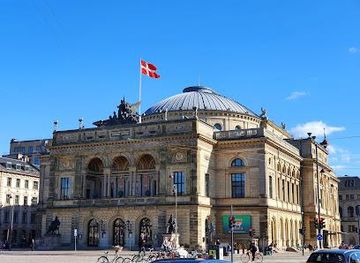
Kongens Nytorv is ringed by some of Copenhagen’s most recognisable buildings. On one side, the Royal Danish Theatre presents a dignified neoclassical façade, a reminder that this has long been a stage door to the country’s cultural life. Nearby, the ornate Hotel d’Angleterre reflects centuries of luxury hospitality, its pale exterior often lit or decorated to mark seasons and celebrations.Opposite, the Magasin du Nord department store adds a different kind of grandeur, with its slate roofs, dormer windows and glass canopy hinting at the city’s commercial prosperity. Just off the square, the Baroque Charlottenborg complex now houses an important contemporary art institution, linking royal history with cutting-edge creativity. Together, these buildings form a living architectural catalogue, from Baroque ambitions to refined modern interventions.Where streets, shops and stories intersect
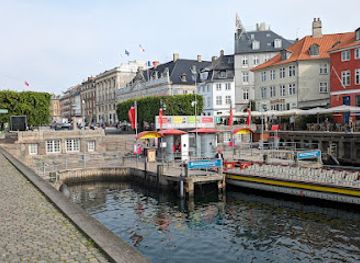
The square sits at the point where several of Copenhagen’s best-known routes converge. The pedestrian shopping street Strøget effectively culminates here, bringing a steady stream of shoppers to and from the luxury boutiques and flagship stores nearby. A few steps away, the houses of Nyhavn line the old harbour, their colourful façades visible down the adjoining streets, drawing your eye towards the water.Beneath your feet, the metro station connects multiple lines, underlining the square’s role as a transport crossroads as much as a social one. Cyclists glide through, locals cut across on their daily commute, and visitors use the open space as a natural orientation point when exploring the compact historic centre. Despite the traffic of people, the wide proportions prevent it feeling cramped.Seasonal scenes and city traditions
Over the course of a year, Kongens Nytorv changes character with the seasons. In warmer months, the planted beds and trees frame sunlit benches, and the square becomes a pleasant place to linger between museums, galleries and harbourfront walks. Mobile kiosks and nearby cafés add the scent of coffee and pastries to the air, especially in the morning.As winter approaches, the atmosphere shifts. The façades of surrounding buildings are often illuminated, and festive decorations appear around the central statue and garden. In some years an ice rink and Christmas market stalls transform the space into a wintry fairground of lights, music and mulled drinks. Even in colder weather, the square remains a focal point for celebrations and public events.Experiencing the square at your own pace
Visiting Kongens Nytorv is less about ticking off individual sights and more about absorbing a sense of place. You might trace the line from the royal figure in the centre out to the theatre steps, then turn to watch trams of cyclists streaming past the hotel entrance. Look up and details emerge: rooftop statues, coats of arms, balcony railings and carved stonework.Because the square is level and spacious, it offers a comfortable pause point between nearby attractions, suitable for a brief stop or an extended sit-down depending on your schedule. Early mornings tend to feel calm and contemplative, ideal for photography and quiet observation of the architecture, while later in the day the energy rises as office workers, shoppers and theatre-goers thread their own routes across this enduring royal stage.Explore the best of what Kongens Nytorv has to offer













More about North Zealand
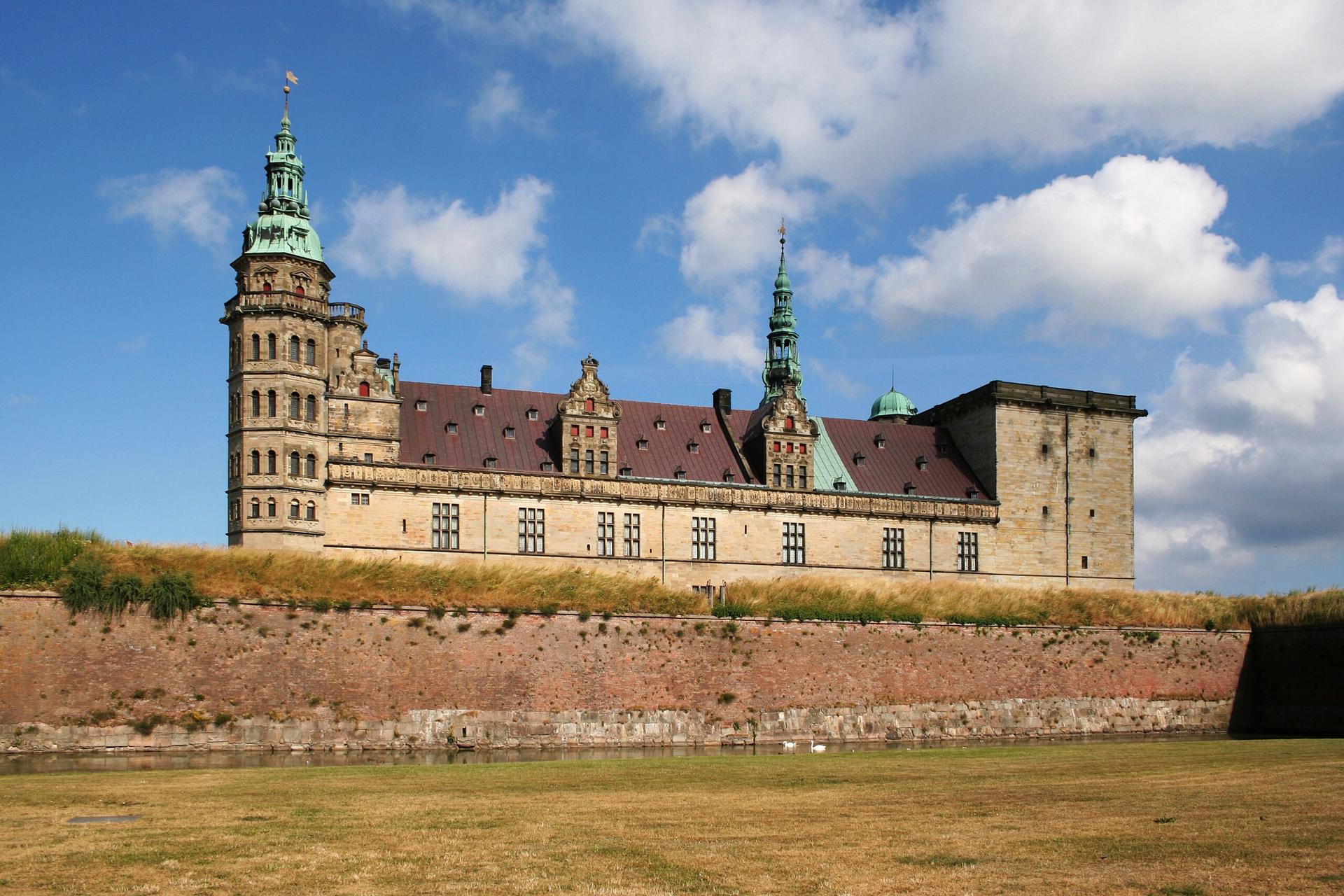
Explore North Zealand, Denmark's enchanting region of castles, beaches, and royal estates, perfect for history buffs, nature enthusiasts, and seaside lovers.
Tell me more about North Zealand
Experience Denmark's largest comedy theater in Copenhagen's vibrant Nørrebro district.

Copenhagen’s royal theatre world in two acts: a gilded 19th‑century stage on Kongens Nytorv and a bold, glass-fronted playhouse floating above the Inner Harbour.