Abbey Mill, Central Jutland Travel Guide
Historic Abbey Mill on Mossø’s shore, where Denmark’s longest wooden building meets bird-rich wetlands, gentle trails and a tranquil corner of the Gudenå River.
Abbey Mill, or Klostermølle, is a historic mill complex on the western shore of Mossø near Skanderborg, where monastic ruins, an old paper mill and Denmark’s longest wooden drying shed meet lakeside wetlands and forest. Today the site is a tranquil nature hub with birdwatching spots, informal exhibitions, canoe landings and trails leading to viewpoints over Jutland’s lake district, making it a relaxed blend of cultural heritage and outdoor escape.
A brief summary to Abbey Mill
- Klostermøllevej 48, Skanderborg, 8660, DK
- Click to display
- Click to display
- Duration: 1.5 to 4 hours
- Free
-
 Outdoor
- Mobile reception: 4 out of 5

Know before you go
Hi, I'm Eve. Here are a few practical things to know before exploring Abbey Mill.
- Pack snacks and drinks; Abbey Mill has basic facilities but no on-site café or shop, and the setting invites slow picnics by the lake or near the fire pits.
- Bring binoculars for the bird tower, especially in spring and autumn when migratory species gather around Mossø’s shallow bays and reed beds.
- Wear sturdy shoes that can handle mud; paths around the wetlands and along the Gudenå can be damp or slippery after rain.
- If you arrive by canoe, take advantage of the dedicated tent site with toilets, drinking water and a fire pit designed for river travelers.
- Plan extra time to follow one of the marked trails into the hills behind Klostermølle for wide views over Mossø and the surrounding lake district.
Do you manage this location?
Take control to get all the benefits, like improved information, better appearance, and stronger visibility across AI-powered discovery. Learn more about listing your business on Evendo
Activate your presenceOther nearby places you may find interesting
The closest places of the same kind, if this one is not quite what you had in mind.

Explore Abbey Mill on the Map
A handpicked selection of must-see spots near Abbey Mill, mapped for you.
Getting There
-
Car from Skanderborg
From central Skanderborg, driving to Abbey Mill typically takes 15–20 minutes through rural roads. The route is straightforward on paved surfaces suitable for all vehicles. There is free parking close to the buildings, and spaces usually accommodate both cars and small campervans. In busy summer weekends or during events, arrive earlier in the day to secure a convenient spot.
-
Regional bus plus walk
Regional bus services between Skanderborg and Brædstrup stop at Holmedal in Horsens Municipality, around 3–4 km from Abbey Mill. The bus ride usually takes 20–30 minutes. From Holmedal, allow about 45–60 minutes to walk on country roads and tracks through gently rolling terrain. Paths are generally easy but not ideal for wheelchairs or prams, and there is no shelter along the way in poor weather.
-
Bicycle from Ry or Skanderborg
Confident cyclists often reach Abbey Mill from nearby towns such as Ry or Skanderborg in about 30–50 minutes, depending on the starting point and route. Expect a mix of smaller paved roads and occasional gravel stretches, with mild hills typical of the lake district. There are no dedicated bike services or rentals at the mill, so arrange your bicycle in advance and bring lights and reflective gear if returning late in the day.
-
Canoe via the Gudenå River
Canoeists travelling on the Gudenå frequently use Abbey Mill as a stage point. Rental outfits along the river offer day and multi-day trips, and prices commonly range from about 400–700 DKK per canoe per day, often including the required river access permit. Paddling times vary by starting point, but sections are usually planned as half- or full-day journeys. Land at the designated canoe area near the tent site and secure your boat well in windy conditions.
For the on-the-go comforts that matter to you
-
 Restrooms
-
 Drinking Water
-
 Picnic Areas
-
 Trash Bins
-
 Information Boards
Discover more about Abbey Mill
A lakeside landscape shaped by monks and mills
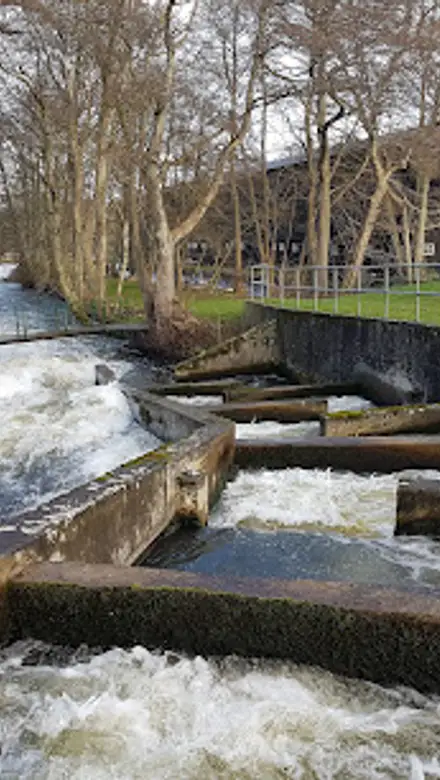
Abbey Mill, known locally as Klostermølle, sits where forested hills slide gently into Mossø, Jutland’s largest lake. The site began as a Benedictine monastery, strategically placed beside the Gudenå River and the lake for fishing, transport and water power. Though the medieval abbey itself is long gone, its legacy lingers in the layout of the grounds and the way water, work and worship once intertwined here.Later, the site was transformed into a paper mill, tapping the steady current to turn wheels and drive machinery. The industrial phase left a completely different imprint: broad yards, functional brick buildings and, most famously, a long wooden drying shed where paper once hung in neat rows to cure. Today, it is this unusual mix of monastic history and industrial heritage framed by reeds, oaks and beech woods that defines Klostermølle’s character.Denmark’s longest wooden building and quiet industrial heritage
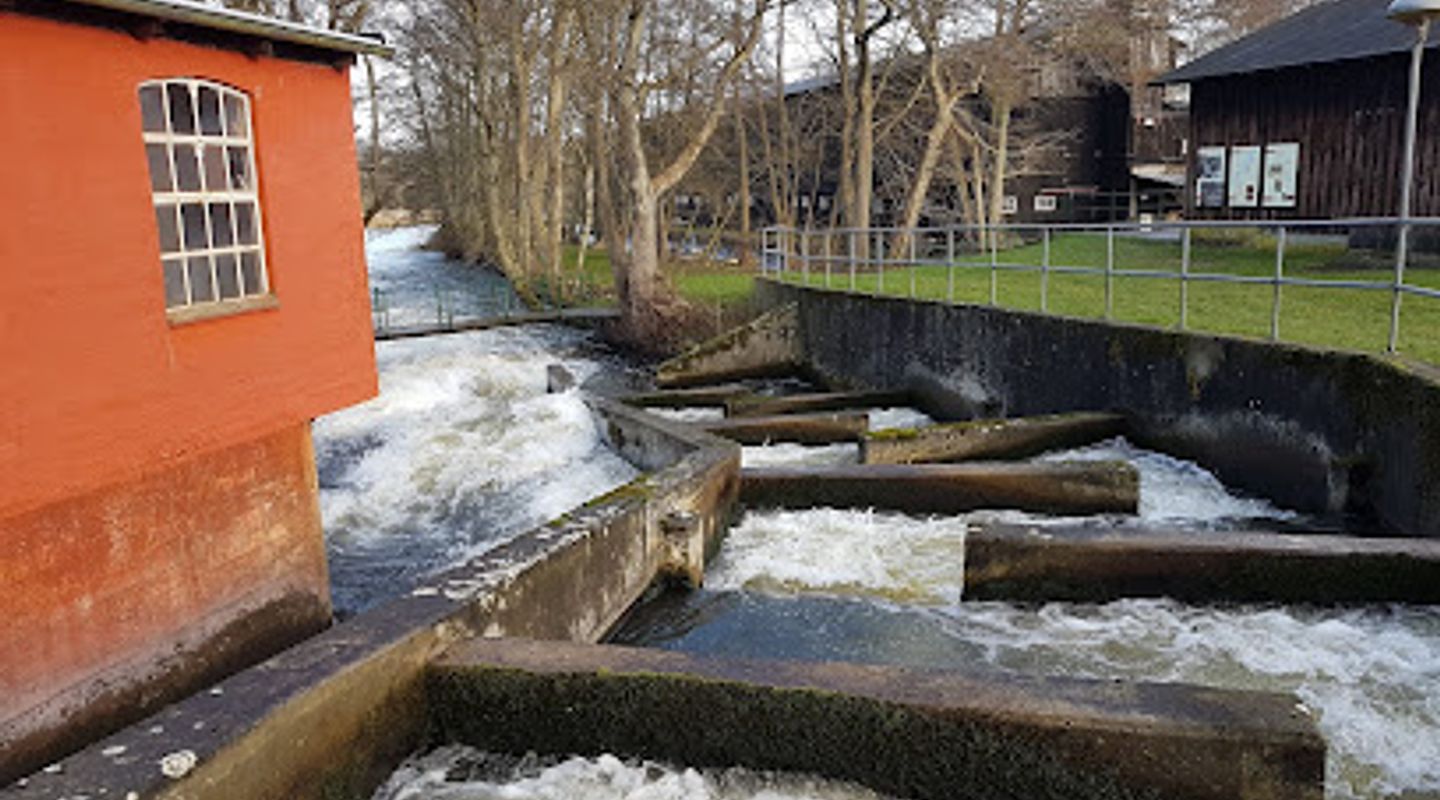
The great landmark at Abbey Mill is the former paper mill’s drying shed, often cited as Denmark’s longest wooden building. Step back to take it in and you see how it stretches in a straight line along the slope above the lake, a rhythmic sequence of pillars, planks and windows that once served a purely practical purpose. Its size feels almost out of scale with the modest countryside around it, giving the whole complex an unexpectedly grand silhouette.Around the shed, you will find other traces of industry: old mill buildings, simple workshops and remains of canals and sluices that once regulated the water. Some rooms house low-key displays telling the story of the monastery, the mill and the later paper production, usually with photos, objects and maps rather than high-tech installations. The overall impression is of a place preserved gently rather than polished, where the patina of age is allowed to speak for itself.Wetlands, birdlife and the wide waters of Mossø
Walk a few steps from the buildings and the mood changes from timber and brick to reeds, ripples and birdsong. Klostermølle is part of a larger protected landscape around Mossø, with wetlands that attract waterfowl and migratory birds. A wooden birdwatching tower rises above the shoreline, offering sweeping views over the lake toward distant wooded ridges and small islands.On calm days, the water can appear glassy, broken only by the wake of a canoe or the plunge of a diving bird. The air often carries the scent of wet earth, pine and wood smoke from the nearby fire pit areas. Paths wind through meadows and light forest, sometimes muddy but generally easy-going, and in spring and early summer wildflowers brighten the verges. For many visitors, the combination of open water, low horizons and the occasional call of cranes or geese is as memorable as the historical buildings themselves.Trails, viewpoints and life along the Gudenå
Abbey Mill doubles as a gateway to the Gudenå River, Denmark’s longest watercourse and a classic canoe route. Canoes frequently pull up at the landing by Klostermølle, and a tent site nearby caters specifically to paddlers making multi-day journeys downstream. Simple facilities such as toilets, drinking water, tables and a designated fire pit make it a convenient overnight pause in an otherwise wild-feeling stretch of river.From the mill, waymarked trails lead into the surrounding hills, including routes to viewpoints where you can look out across Mossø and the patchwork of forests and fields that form Denmark’s inland lake district. The terrain is gently undulating rather than steep, making walks accessible to most people with basic fitness. At times the path runs close to the water; at others it climbs onto sandy bluffs where the wind feels sharper and the lake suddenly seems far below.A calm, low-key escape in central Jutland
Despite its layered history and scenic position, Klostermølle retains a quietly understated atmosphere. There are no flashy attractions, just sturdy buildings, big skies and the slow rhythm of water and wind. Families come to let children explore the shoreline, couples linger on benches facing the lake, and nature lovers bring binoculars to scan for birds from dawn to dusk.The site is free to wander, making it easy to drop by for a short stroll or settle in for a full afternoon of walking, picnicking and contemplation. Bring what you need for comfort—extra layers, snacks, perhaps a thermos—and let the place reveal itself gradually: the way the wooden shed creaks in a breeze, the patterns of light on historic brickwork, the silhouette of a heron gliding over the reeds as evening falls.












Your all‑in‑one travel companion app
Explore expert travel guides, compare and book tours, experiences, hotels, and more—all from the palm of your hand. Download now for seamless trip planning wherever your wanderlust takes you.


Explore More of Central Jutland
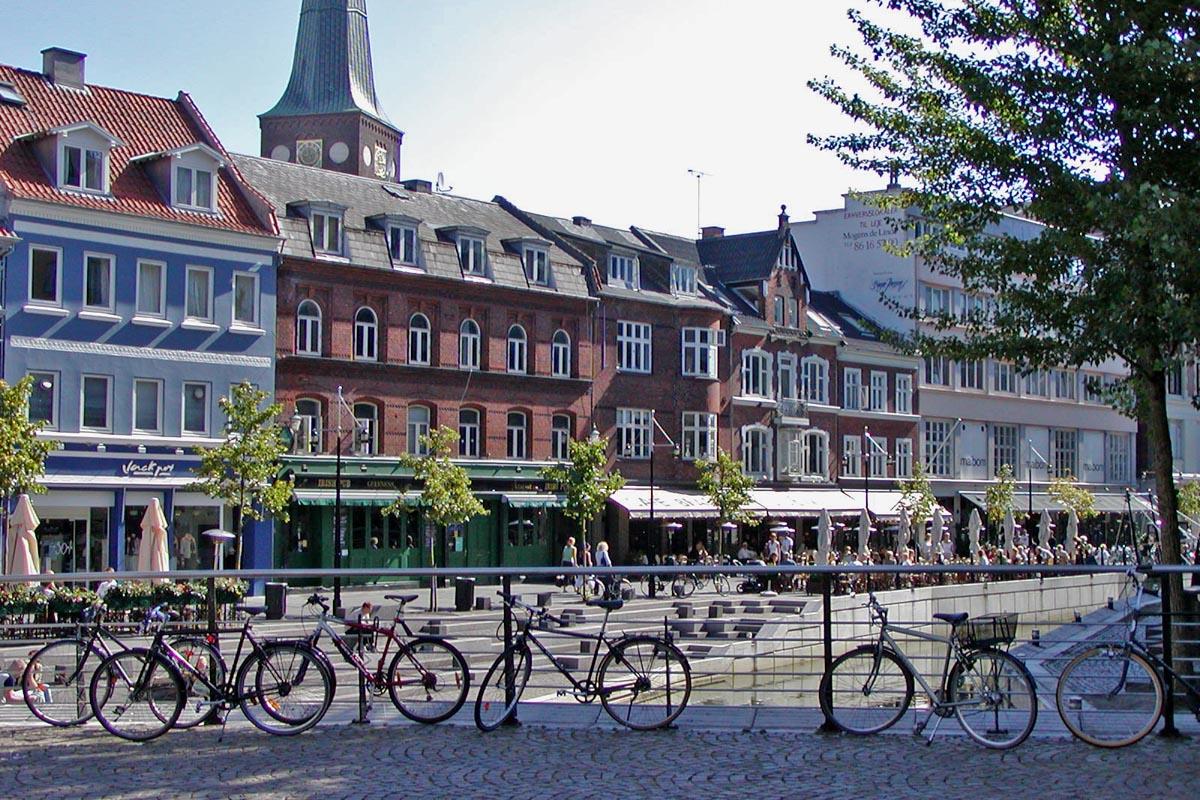
Looking beyond Abbey Mill? Discover Central Jutland for broader travel guides, local hot-spots, and regional highlights.
Explore Central Jutland