Frederiksberg Gardens, Køge Travel Guide
Free Guide: Copenhagen’s grand royal park of lakes, lawns and palace views, where canals, pavilions and everyday city life meet in one elegant green escape.


A brief summary of Frederiksberg Gardens
Copenhagen’s grand royal park of lakes, lawns and palace views, where canals, pavilions and everyday city life meet in one elegant green escape.
Frederiksberg Gardens is Copenhagen’s grand English-style park, wrapped around the ochre Frederiksberg Palace in the independent municipality of Frederiksberg. Sweeping lawns, canals and lakes, wooded corners and graceful bridges create a romantic landscape that feels far removed from the city. Boat tours glide beneath willow trees, the Chinese Pavilion recalls royal tea ceremonies, and on the edges you can even glimpse elephants in the neighbouring zoo. It is a classic spot for picnics, slow walks and everyday Copenhagen life year-round.
On-site amenities
 Restrooms
 Drink options
 Food options
 Seating areas
 Sheltered areas
 Picnic areas
 Trash bins
 Information boards
 Visitor centre
Opening hours
- Every day6 am–5 pm
Opening hours as listed on the venue’s Google Business Profile. Hours can change for services and special events, so check with the venue before you go.
- Address
- 2000 Frederiksberg
Getting there
Metro from central Copenhagen
Metro direct to Frederiksberg
City bus from Vesterbro area
Cycle from the historic centre
Discover more about Frederiksberg Gardens
A royal escape woven into the city
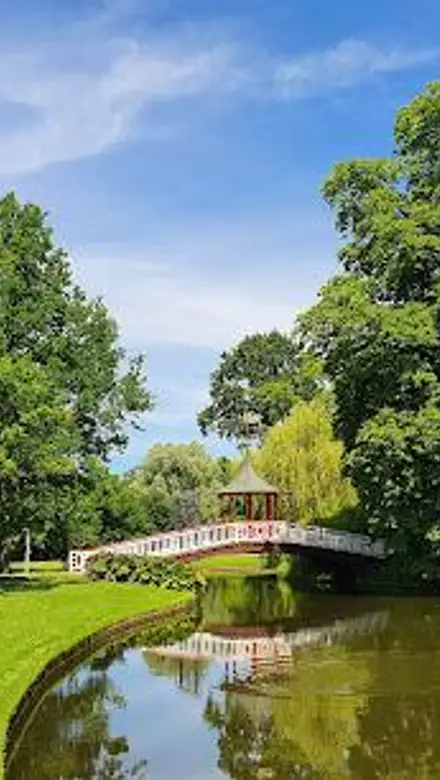
Frederiksberg Gardens began as the private baroque grounds of Frederiksberg Palace, laid out in the early 18th century when King Frederik IV chose this gentle hillside for his summer residence. Over time the formal geometry softened into an English-style landscape garden, with winding paths, carefully framed vistas and lakes shaped to look entirely natural. Yet the royal presence is still clear: at the main entrance, the bronze figure of Frederik VI greets you, a reminder that this was once very much a king’s back garden.From the lawns, the ochre palace rises on its hill, giving the whole park a stately backdrop. Today the building houses the Royal Danish Military Academy, but the relationship between palace and park remains theatrical. Long views run from the water up to the façade, especially atmospheric in early morning mist or low evening light.
Waterways, bridges and quiet corners
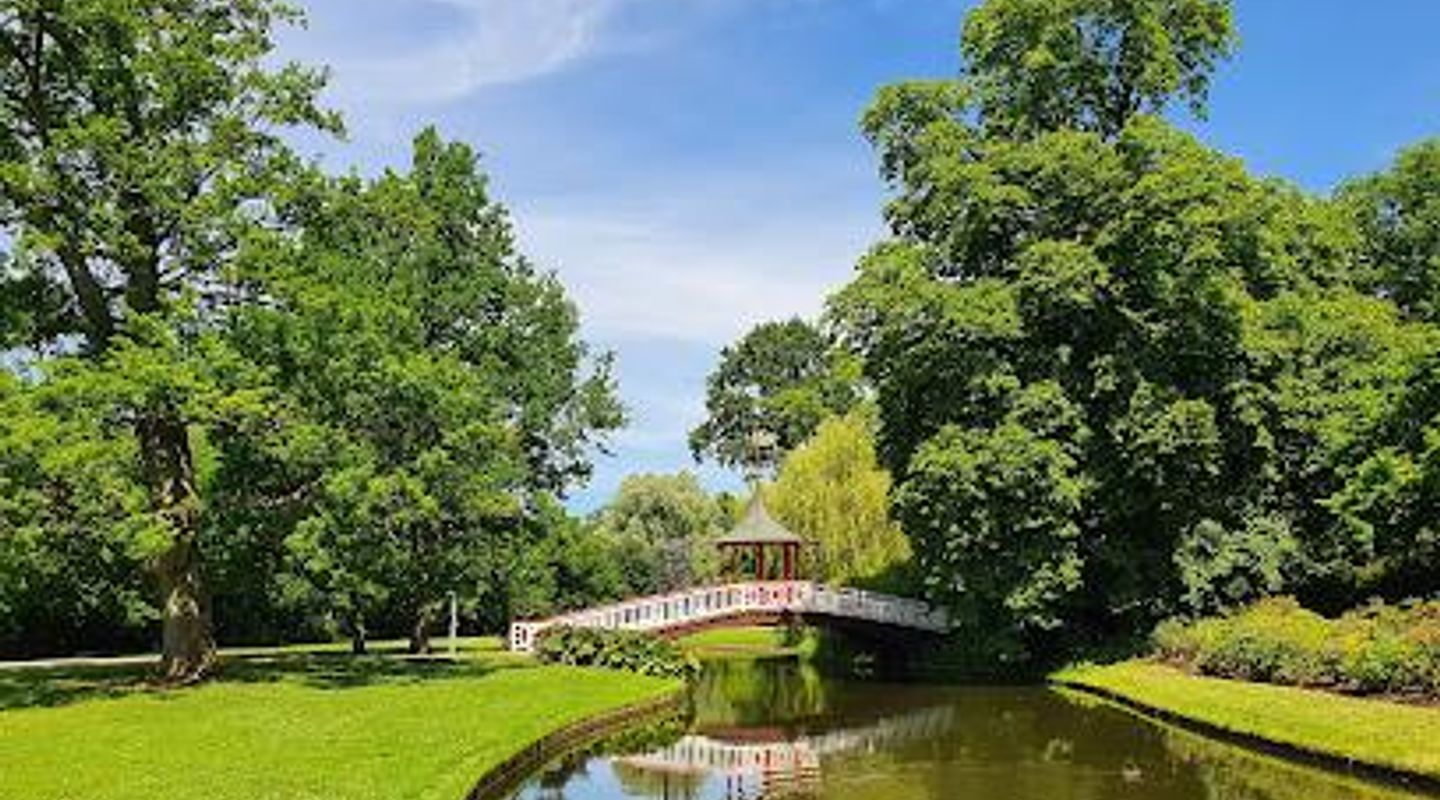
Canals and a broad lake thread through the gardens, turning the landscape into a series of small islands and peninsulas. Curving bridges arch over the water, some simple and rustic, others with classical balustrades. Herons, swans and ducks patrol the shorelines, so even a short stroll tends to become a slow, contemplative loop around the lake.Rowboats and small tour boats operate in the warmer months, following the same routes once used for royal outings. From the water, the park feels larger and wilder, with overhanging branches, glimpses of palace and pavilions, and the soft echo of oars under low bridges. Away from the main paths, narrow trails lead into small groves and secluded benches where the city sounds fade to a murmur.
The Chinese Pavilion and other curiosities
One of the most distinctive structures in the gardens is the Chinese Pavilion, set on a tiny island and linked by a bridge. Built in 1799 as a royal teahouse, it reflects the 18th‑century fascination with Asia, with playful ornament and delicate colours that contrast with the solid baroque of the palace above. It is especially striking when seen from a boat, framed by trees and reflected in the water.Scattered through the park are other historical details: small waterfalls in rockwork, ornamental grotto-style features, and sightlines that suddenly reveal the palace or distant church spires. Near one of the paths you may notice the famous pacifier tree, its branches hung with colourful ribbons and baby pacifiers left here as a rite of passage in Danish childhood.
Everyday life on the lawns
Despite its royal origins, Frederiksberg Gardens today functions as a shared living room for the city. Locals spread blankets on the lawns, children race to the playgrounds, and runners circle the lakes at all times of day. In good weather, almost every patch of grass seems claimed by picnics, book readers or quiet conversations.Simple kiosks and nearby cafés keep visitors supplied with ice creams, coffee and light snacks, while many people prefer to bring their own picnics. In spring, carpets of bulbs near the main entrance announce the new season; in autumn, the mature trees turn the paths into corridors of gold and copper.
Edges that blur into zoo and city
At the northern edge, the gardens share a boundary with Copenhagen Zoo, and from certain viewpoints you can look across the moat and watch elephants wandering their outdoor enclosure. It is an unusual juxtaposition: manicured lawns in the foreground, exotic animals just beyond. On the opposite sides, the park blends into grand avenues and other green spaces such as Søndermarken, forming a long belt of trees and grass.The result is a place where layered history, gentle design and everyday use coexist. Whether you come for a slow lap around the lake, a boat ride under low stone bridges, or simply to sit on a bench and watch palace, water and sky shift with the light, Frederiksberg Gardens offers one of Copenhagen’s most graceful escapes.
Evendo Review Centre
 Google
Guest reviews
Best time to go
Quietest: Jan, Feb & Mar · before 7am or from 10pm
Busy times are Evendo estimates for a typical year, to help you plan. Actual crowds vary with events, school holidays and the weather.
Explore Frederiksberg Gardens on the map
A handpicked selection of must-see spots near Frederiksberg Gardens, mapped for you.
Get your free copy of our complete guide to Frederiksberg Gardens, delivered straight to you.
Everything on this page, from opening hours and how to get there to Eve’s tips and the best time to go, in one PDF you can read offline, print or share.
Already have an account? Sign in
Your Frederiksberg Gardens guide is ready.
We'll send it to · Not you? Sign out

Getting your guide ready…
We are putting together a fresh copy of the Frederiksberg Gardens guide. This can take up to a minute.
This can take a few moments. If your browser asks, choose Allow so the download can start. You'll find the guide in your Downloads folder.
Nothing happened? Download it again
Sorry, the guide is taking longer than usual. Please try again in a minute, or get it by email instead.
Unlock the best of Frederiksberg Gardens
Skip-the-line tickets, guided tours with entry, and walking tours of the area, booked in a few clicks.



Other nearby places you may find interesting
The closest places of the same kind, if this one is not quite what you had in mind.
-
Køge Miniby Step into Køge’s past at 1:10 scale, where hand-built model houses, harbour scenes and church spires recreate the market town of 1865 in a tranquil seaside garden.
-
Køge Museum Time‑travel through Køge’s past inside a 17th‑century merchant’s house where Viking treasures, buried secrets and a tranquil courtyard meet in one intimate museum.
-
Ølsemagle Revle A shifting sandbar of shallow lagoons, rich birdlife and wide sandy beaches, where Køge’s urban edge gives way to one of Zealand’s most evocative coastal nature reserves.
-
Solgårdsparken Romantic coastal park between Køge Bay and Tryggevælde River, where historic garden design, tranquil nature, play areas and reflective audio stories meet in one green retreat.
-
Vandkunsten - Stationspladsen A sculptural fountain anchoring Køge’s station square, where moving water, stone and light turn a busy transport hub into an inviting urban meeting place.
Swipe for more places
More to explore near Frederiksberg Gardens

 Best experiences near Frederiksberg Gardens
 Best hotels near Frederiksberg Gardens
 Best landmarks near Frederiksberg Gardens
 Best attractions near Frederiksberg Gardens
 Best shops near Frederiksberg Gardens
 Best restaurants near Frederiksberg Gardens
 Best bars near Frederiksberg Gardens
Do you manage this location?
Take control to get all the benefits, like improved information, better appearance, and stronger visibility across AI-powered discovery.
Explore more
Explore more of Køge
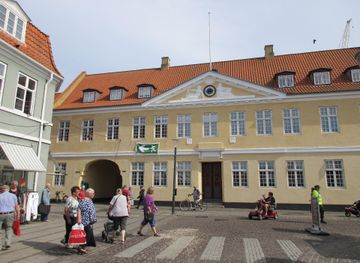
Explore Køge, Denmark's coastal gem, with its medieval charm, beautiful marina, and close proximity to the stunning Stevns Klint UNESCO World Heritage site.
Explore Køge
Explore more of Denmark
Discover Denmark: A perfect blend of history, modern design, and the cozy concept of hygge. Explore vibrant cities, serene landscapes, and world-class cuisine.
Explore Denmark