

Lindelse Mølle Travel Guide
Free Guide: Historic hilltop windmill and former mill farm on Langeland, blending rural views, traditional architecture and emerging community life in a compact village setting.


A brief summary of Lindelse Mølle
Historic hilltop windmill and former mill farm on Langeland, blending rural views, traditional architecture and emerging community life in a compact village setting.
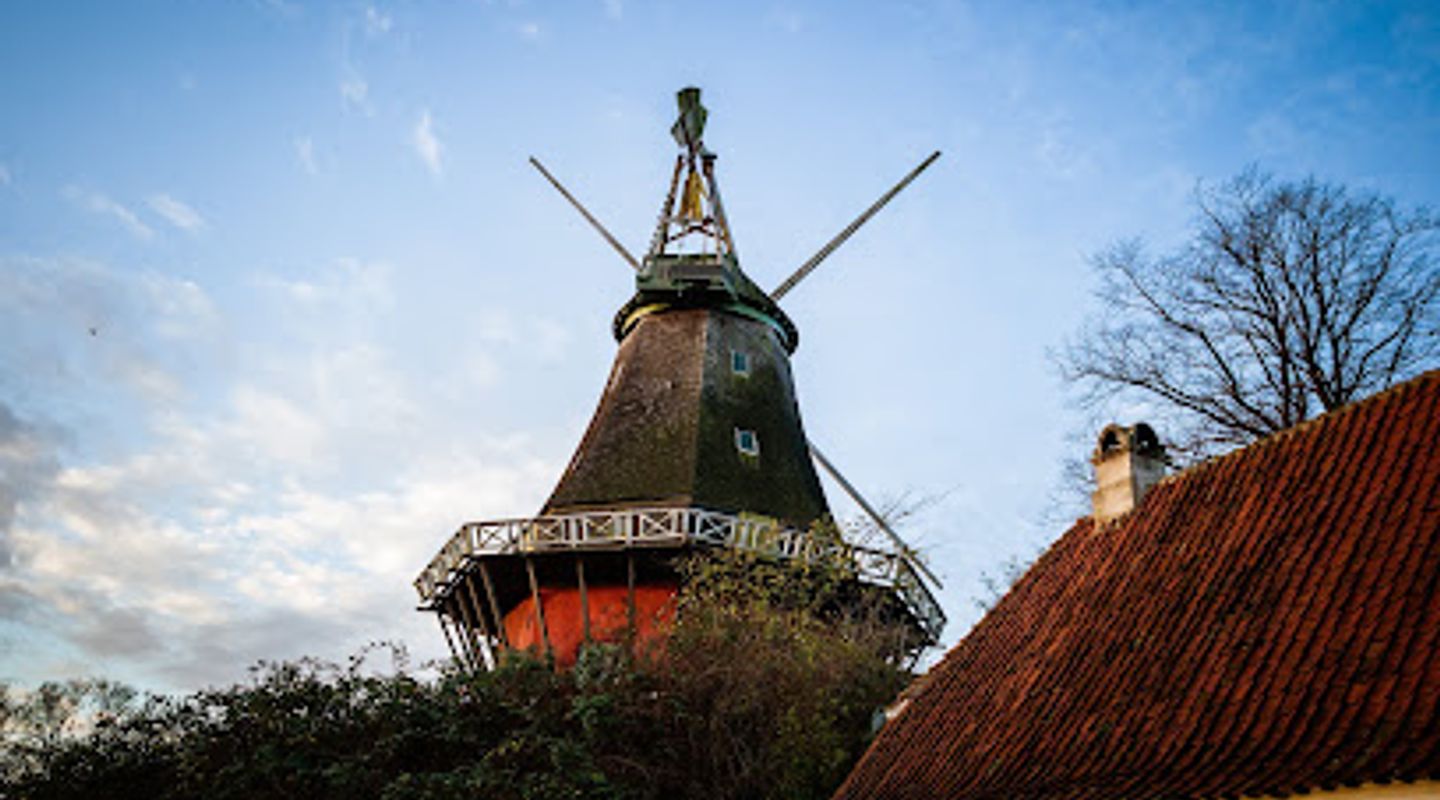
Perched on a low hill above the village of Lindelse on Langeland, Lindelse Mølle is a classic Danish windmill with sweeping views over gently rolling farmland. First rebuilt here in 1809 as a Dutch-style mill, it once ground grain for the surrounding community and today stands as a carefully preserved landmark with its former mill farm. The white tower, dark cap and wooden sails make a striking silhouette, while seasonal events and cultural activities are slowly giving this historic site a new life as a volunteer-run gathering place.
On-site amenities
 Seating areas
 Information boards
- Address
- Lindelse, Møllebanken 1, 5900 Rudkøbing
- Phone
- Website
Getting there
Car from Rudkøbing
Local bus within Langeland
Bicycle from Rudkøbing
Discover more about Lindelse Mølle
A village windmill on a Langeland hilltop
Lindelse Mølle crowns a small rise at the edge of Lindelse village, its wooden sails and dark cap clearly visible from the surrounding fields. The setting is unmistakably rural Langeland: low horizons, patchwork farmland and the soft coastal light that drifts in from the nearby sea. The mill stands beside its former farm buildings, creating a compact ensemble known as Lindelse Mølle & Møllegård, with the tower mill as its focal point.As you approach, the structure reveals its classic proportions: a white, tapering body in masonry, topped by a rotating cap and four long lattice sails. Even when still, the mill seems poised for movement, a reminder of an era when wind, not engines, powered everyday work. The modest scale of the site makes it easy to explore, yet the open surroundings give a sense of space and sky.
From stub mill to Dutch-style tower
The story of Lindelse Mølle goes back at least to the early 19th century, when a simple stub mill on this spot was replaced in 1809 by a more efficient Dutch-style mill. This newer design allowed the cap and sails to be turned into the wind, improving performance and making better use of Langeland’s steady breezes. Over the decades, the mill ground grain for local farms, turning harvests of rye and barley into flour and animal feed.Inside, the original machinery once filled the tower: great wooden gears, millstones, hoists and grain chutes that translated the wind’s energy into slow, powerful rotation. Much of this technical world is now at rest, yet the building still tells the story of rural industry. The robust brickwork, thick beams and carefully framed windows all speak to a time when durability and practicality guided every decision.
Mill yard, outbuildings and local life
Next to the tower you find the former mill farm, the Møllegård, historically home to the miller, his family and the animals that supported the business. The courtyard layout forms a sheltered pocket in contrast to the open fields outside. Barns and utility buildings, often timber-framed or brick, recall a working homestead where grain arrived in wagons, was stored, milled and then sent back out into the countryside.Today, these buildings are gradually being repurposed for community use. Local initiatives are transforming parts of the complex into a volunteer-run meeting place sometimes referred to as Phoenix Mølle, with room for exhibitions, workshops and cultural activities. Creative projects, including art inspired by the mill, link agricultural history with contemporary expression and keep the site woven into village life.
Views, atmosphere and seasonal visits
Because the mill stands on a gentle bank, the surroundings open out in almost every direction. On clear days the horizon stretches across fields and hedgerows, with changing colours through the seasons: fresh greens in spring, golden crops in summer, muted browns under big winter skies. The sails, when set, frame these views like a moving sculpture.The site is most atmospheric in soft, clear weather, when light plays across the white tower and long shadows mark the slope. On windier days you sense why this spot was chosen, as gusts sweep over the hill and whistle around the structure. Public access inside the mill is typically limited to special occasions such as Danish Mill Day and local events, but the exterior and yard can often be appreciated from outside, making it an easy stop on a wider exploration of Langeland.
Quiet stop on a Langland road trip
In practical terms, Lindelse Mølle is a compact, low-key stop rather than a full-day destination. Its appeal lies in the blend of rural tranquillity, vernacular architecture and a very tangible link to everyday history. It fits naturally into a slow journey across the island: a place to pause, stretch your legs, photograph the mill against the sky and imagine the sound of sails turning above the village.With no large visitor infrastructure on site, the experience remains simple and unhurried. Nearby villages and Rudkøbing provide cafés, shops and accommodation, while the mill itself offers a few peaceful minutes in the company of one of Denmark’s characteristic countryside landmarks.
Evendo Review Centre
 Google
Guest reviews
Best time to go
Quietest: Jan, Feb & Mar · before 8am or at 7pm
Busy times are Evendo estimates for a typical year, to help you plan. Actual crowds vary with events, school holidays and the weather.
Explore Lindelse Mølle on the map
A handpicked selection of must-see spots near Lindelse Mølle, mapped for you.
Get your free copy of our complete guide to Lindelse Mølle, delivered straight to you.
Everything on this page, from opening hours and how to get there to Eve’s tips and the best time to go, in one PDF you can read offline, print or share.
Already have an account? Sign in
Your Lindelse Mølle guide is ready.
We'll send it to · Not you? Sign out

Getting your guide ready…
We are putting together a fresh copy of the Lindelse Mølle guide. This can take up to a minute.
This can take a few moments. If your browser asks, choose Allow so the download can start. You'll find the guide in your Downloads folder.
Nothing happened? Download it again
Sorry, the guide is taking longer than usual. Please try again in a minute, or get it by email instead.
Other nearby places you may find interesting
The closest places of the same kind, if this one is not quite what you had in mind.
-
Langelandsfort A former coastal stronghold on Langeland’s southern tip where bunkers, ships and Cold War stories meet sea air, open skies and hands-on family exploration.
-
Medicine gardens in Tranekær Northern Europe’s largest medicinal plant garden, where themed circles, an arboretum and playful kids’ areas turn botanical medicine into a vivid, hands-on landscape.
-
Dovns Klint Wind-shaped cliffs, big Baltic skies and quiet pebble shores at the southernmost tip of Langeland, where Ice Age geology meets tranquil Danish coastal life.
-
Ristinge Klint Dramatic ice‑age cliffs, sweeping Baltic views and simple coastal trails make Ristinge Klint a quietly spectacular corner of southern Langeland.
-
Vilde heste A free‑roaming herd of hardy Exmoor ponies shaping a wild coastal landscape of grassland, marsh and cliffs at the southern tip of Langeland.
Swipe for more places
More to explore near Lindelse Mølle

 Best experiences near Lindelse Mølle
 Best hotels near Lindelse Mølle
 Best landmarks near Lindelse Mølle
 Best attractions near Lindelse Mølle
 Best shops near Lindelse Mølle
 Best restaurants near Lindelse Mølle
 Best bars near Lindelse Mølle
Do you manage this location?
Take control to get all the benefits, like improved information, better appearance, and stronger visibility across AI-powered discovery.
Explore more

Explore more of Langeland
Discover Langeland: Denmark's idyllic island retreat with scenic landscapes, rich history, and vibrant culture. Perfect for nature lovers, history buffs, and festival goers.
Explore Langeland
Explore more of Denmark
Discover Denmark: A perfect blend of history, modern design, and the cozy concept of hygge. Explore vibrant cities, serene landscapes, and world-class cuisine.
Explore Denmark
