Simmerbølle Church Travel Guide
Free Guide: A small medieval church on Langeland, where fieldstone walls, an east-end tower and quirky frescoes – including a playful Danish coat of arms – invite quiet exploration.


A brief summary of Simmerbølle Church
A small medieval church on Langeland, where fieldstone walls, an east-end tower and quirky frescoes – including a playful Danish coat of arms – invite quiet exploration.
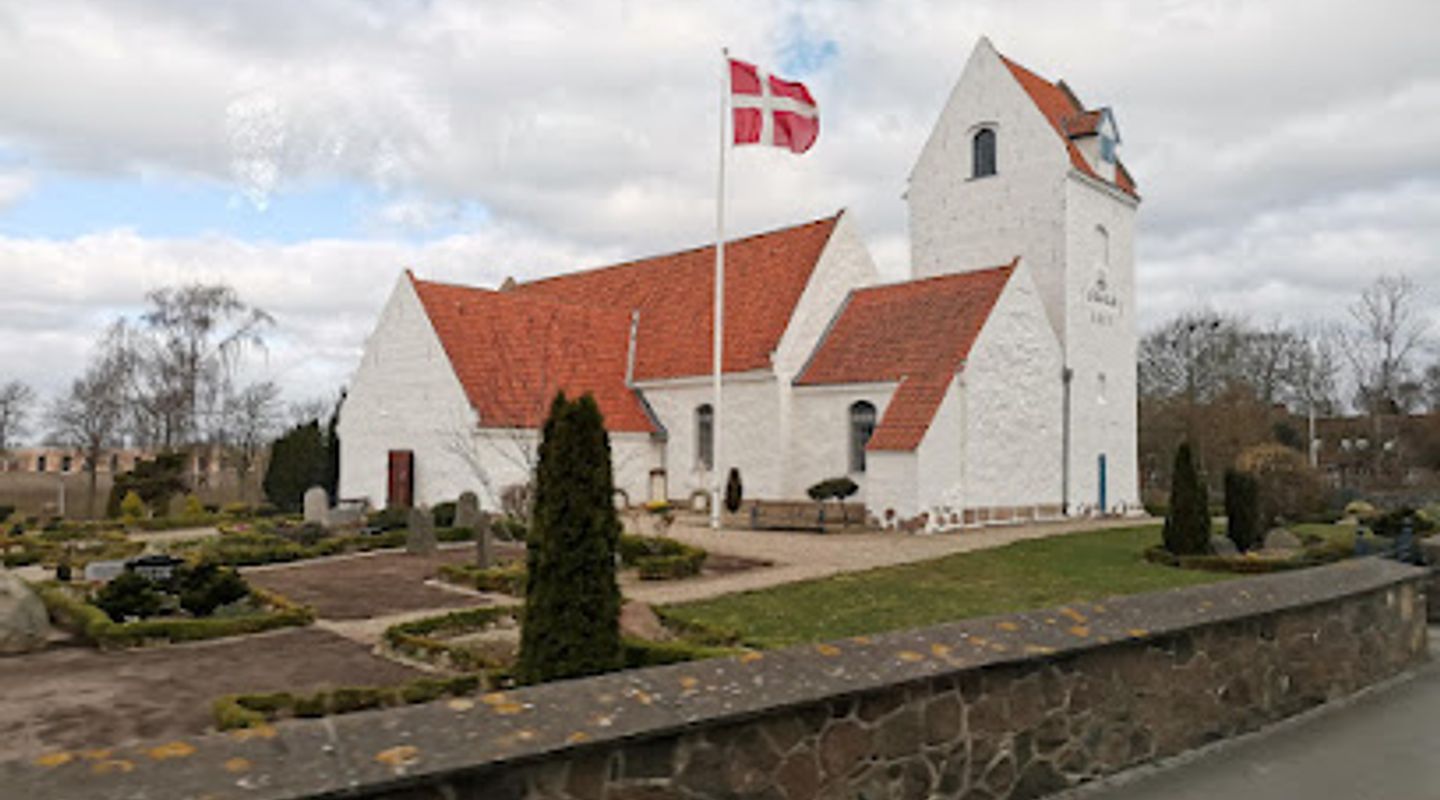
Simmerbølle Church is a small medieval parish church in the village of Simmerbølle, just east of Rudkøbing on Langeland. Built in the 13th century of hefty fieldstones, it blends simple village charm with standout interior details, including late-medieval frescoes and an unusual version of Denmark’s coat of arms. Surrounded by a peaceful churchyard and open daily, it is an inviting stop for travelers exploring Langeland’s gentle landscapes and historic churches.
On-site amenities
 Seating areas
 Trash bins
 Information boards
- Address
- Simmerbølle Kirkevej 12, 5900 Rudkøbing
- Website
Getting there
Car from Rudkøbing
Bicycle from Rudkøbing
Local bus on Langeland
Discover more about Simmerbølle Church
A modest village church with deep medieval roots
Simmerbølle Church sits quietly in the small village of Simmerbølle, a short way east of Rudkøbing on the island of Langeland. From the outside it looks like many traditional rural churches in Denmark: whitewashed walls, a sturdy profile, and a compact churchyard that has served the community for centuries. Its story, however, reaches back to the Middle Ages, when the first stone church was raised here to serve a scattered farming population.Like several churches on Langeland, Simmerbølle was built in the 13th century using large fieldstones gathered from the surrounding countryside. Later additions in brick refined its outline, but the thick medieval walls still define the building, giving it a solid, almost fortress-like feel. The church today belongs to the Church of Denmark and forms the heart of Simmerbølle Parish under the Diocese of Funen.
Stone, tower and an unusual eastern silhouette
Architecturally, one of the most distinctive features of Simmerbølle Church is the placement of its tower. Unlike the more common western towers of many Danish churches, here the tower is attached at the eastern end, creating a slightly surprising silhouette when you first approach. This atypical arrangement reflects the layered building history of the site, where expansions and alterations were fitted to an existing structure rather than drawn from a single grand plan.The nave and chancel retain their medieval character, with small, relatively low windows and a simple, rectangular footprint. The whitewashed exterior stands out against the green of the surrounding fields, especially on clear days when the sky over Langeland seems to stretch endlessly. Around the church, the graveyard is enclosed by stone walls and hedges, dotted with traditional Danish gravestones and carefully tended plantings that add color through the seasons.
Frescoes and a playful take on Denmark’s coat of arms
Inside, the church’s real treasures are its frescoes. Hidden for centuries beneath layers of limewash, they were uncovered and restored to reveal colorful scenes dating from the late Middle Ages. Among them are decorative patterns and biblical motifs, but also a particularly intriguing curiosity: an unusual version of Denmark’s coat of arms incorporated into the painted decoration.This reimagined coat of arms, with its stylized lions and hearts, hints at the way national symbols filtered into local church art in creative ways. It gives the interior a uniquely local character and is often the detail that most surprises attentive visitors. Combined with the warmly painted vaults and arches, the frescoes add a gentle richness to what might otherwise feel like a very simple village church.
Crafted interiors from bells to ship model
Simmerbølle Church also preserves a collection of historic fittings that quietly tell of changing tastes and devotional practices. The bells in the tower include examples from the late 15th and 18th centuries, their inscriptions worn smooth by time yet still calling people to services. The altarpiece, painted in the 19th century, reflects a more classical sensibility, with clear lines and balanced composition that contrasts with the freer medieval wall paintings.A votive ship, suspended from the ceiling, continues a strong maritime tradition seen throughout Danish coastal churches. Model ships were often donated in gratitude for safe voyages or as prayers for protection at sea. Here, the ship subtly links the inland village to the wider seafaring world around Langeland, where fishing and shipping have long been part of local life.
A quiet pause on a tour of Langeland’s churches
Today, Simmerbølle Church is open daily during daytime hours, inviting both worshippers and casual visitors. Step inside and you are likely to find a calm, uncluttered interior: simple wooden pews, pale light filtering through small windows, and the soft echo of your footsteps on the stone floor. It is an easy place to pause for a few moments of reflection while tracing the painted details on the ceiling.Many travelers explore Simmerbølle as part of a wider route linking Langeland’s historic churches, each with its own story. In that context, this modest building stands out not for grandeur but for its blend of unusual features: the east-end tower, the medieval masonry, and especially the imaginative version of the national coat of arms. Together they make Simmerbølle Church a rewarding, low-key highlight on the island.
Evendo Review Centre
 Google
Guest reviews
Best time to go
Quietest: Jan, Feb & Mar · before 7am or from 8pm
Busy times are Evendo estimates for a typical year, to help you plan. Actual crowds vary with events, school holidays and the weather.
Explore Simmerbølle Church on the map
A handpicked selection of must-see spots near Simmerbølle Church, mapped for you.
Get your free copy of our complete guide to Simmerbølle Church, delivered straight to you.
Everything on this page, from opening hours and how to get there to Eve’s tips and the best time to go, in one PDF you can read offline, print or share.
Already have an account? Sign in
Your Simmerbølle Church guide is ready.
We'll send it to · Not you? Sign out

Getting your guide ready…
We are putting together a fresh copy of the Simmerbølle Church guide. This can take up to a minute.
This can take a few moments. If your browser asks, choose Allow so the download can start. You'll find the guide in your Downloads folder.
Nothing happened? Download it again
Sorry, the guide is taking longer than usual. Please try again in a minute, or get it by email instead.
Other nearby places you may find interesting
The closest places of the same kind, if this one is not quite what you had in mind.
-
Langelandsfort A former coastal stronghold on Langeland’s southern tip where bunkers, ships and Cold War stories meet sea air, open skies and hands-on family exploration.
-
Medicine gardens in Tranekær Northern Europe’s largest medicinal plant garden, where themed circles, an arboretum and playful kids’ areas turn botanical medicine into a vivid, hands-on landscape.
-
Dovns Klint Wind-shaped cliffs, big Baltic skies and quiet pebble shores at the southernmost tip of Langeland, where Ice Age geology meets tranquil Danish coastal life.
-
Ristinge Klint Dramatic ice‑age cliffs, sweeping Baltic views and simple coastal trails make Ristinge Klint a quietly spectacular corner of southern Langeland.
-
Vilde heste A free‑roaming herd of hardy Exmoor ponies shaping a wild coastal landscape of grassland, marsh and cliffs at the southern tip of Langeland.
Swipe for more places
More to explore near Simmerbølle Church

 Best experiences near Simmerbølle Church
 Best hotels near Simmerbølle Church
 Best landmarks near Simmerbølle Church
 Best attractions near Simmerbølle Church
 Best shops near Simmerbølle Church
 Best restaurants near Simmerbølle Church
 Best bars near Simmerbølle Church
Do you manage this location?
Take control to get all the benefits, like improved information, better appearance, and stronger visibility across AI-powered discovery.
Explore more

Explore more of Langeland
Discover Langeland: Denmark's idyllic island retreat with scenic landscapes, rich history, and vibrant culture. Perfect for nature lovers, history buffs, and festival goers.
Explore Langeland
Explore more of Denmark
Discover Denmark: A perfect blend of history, modern design, and the cozy concept of hygge. Explore vibrant cities, serene landscapes, and world-class cuisine.
Explore Denmark