Tryggelev Kirke Travel Guide
Free Guide: A humble 12th‑century village church on South Langeland, with a rare medieval stone barn and a tranquil churchyard steeped in rural Danish history.


A brief summary of Tryggelev Kirke
A humble 12th‑century village church on South Langeland, with a rare medieval stone barn and a tranquil churchyard steeped in rural Danish history.
Tryggelev Kirke is a small, atmospheric medieval parish church in the village of Tryggelev on South Langeland. Dating back to the 12th century, it combines whitewashed walls, a sturdy tower and a rare stone-built church barn from around 1300, once used to store tithes. Inside, you find simple Nordic light, a carved pulpit, epitaphs and modest medieval details that tell the story of centuries of rural faith. It is a peaceful stop for anyone exploring Langeland’s villages, landscapes and history.
On-site amenities
 Restrooms
 Seating areas
 Trash bins
 Information boards
- Address
- Tryggelev 27A, 5932 Humble
- Website
Getting there
Car from Rudkøbing (Langeland’s main town)
Bus from Rudkøbing towards South Langeland
Bicycle along Langeland’s country roads
Discover more about Tryggelev Kirke
A quiet village church on South Langeland
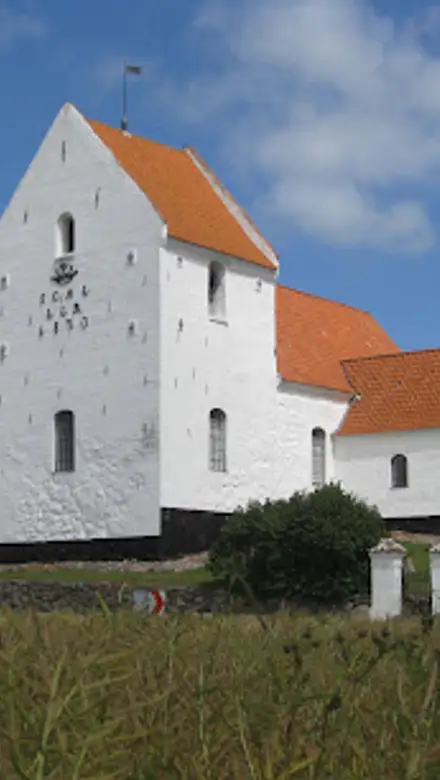
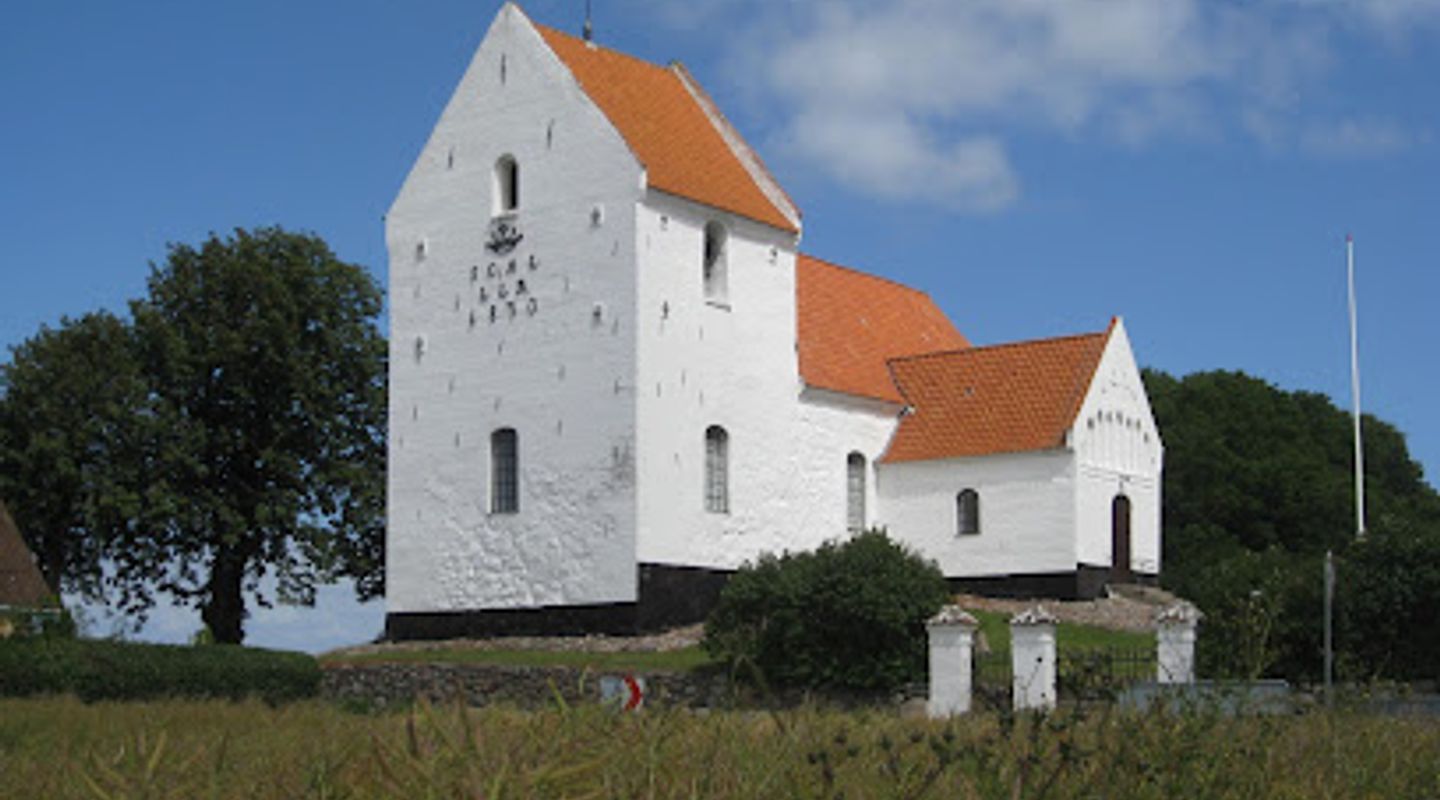
Tryggelev Kirke sits slightly elevated above the small village of Tryggelev in southern Langeland, its whitewashed walls and red-tiled roof a familiar silhouette against fields and low farmhouses. The church has served as the spiritual centre of the local community for centuries, and even today it feels closely tied to the surrounding farmland and the rhythm of rural life. From the churchyard, there are glimpses of the open South Langeland landscape, with its patchwork of fields, hedgerows and the distant suggestion of the sea.Stepping through the churchyard gate, you pass old gravestones and family plots that gently curve around the building. The atmosphere is quiet and unhurried; birdsong and the wind in the trees set the tone before you even reach the entrance. This is not a grand urban monument but a working village church, and that modesty is a large part of its charm.
Medieval roots and changing architecture
The core of Tryggelev Kirke dates back to the 1100s, making it a true medieval survivor on Langeland. The original Romanesque nave was likely built in rough fieldstone with small, narrow windows and a simple rectangular ground plan. Over the centuries, as needs and tastes changed, the church was altered and expanded, adding the characteristic brick tower and later architectural details that give it its present appearance.On the exterior, you can pick out traces of these phases in the masonry. Lower walls often preserve older stonework, while higher sections and the tower show later brick construction. Gothic-style, larger windows have replaced many of the original small openings, filling the interior with a softer, more generous light than the early builders could have imagined.
A simple interior with historical details
Inside, the church feels bright and intimate rather than imposing. Whitewashed vaults and walls reflect the daylight that filters in through clear or lightly tinted panes, creating a quiet, even light over the wooden pews. The atmosphere is one of simplicity: painted benches, a modest font, and a small, focused chancel area draw the eye forward without distraction.Among the interior treasures is a baroque epitaph set near the organ, dating from the 1600s. It commemorates the parish priest Erik Christensen Humble, his wife Sara Madsdatter and their daughter, and includes portraits and carved decoration that speak of both piety and status in 17th-century rural Denmark. The pulpit and altarpiece, with their carved and painted ornament, add further historical layers, showing how generations have continued to invest care and craftsmanship in this relatively small building.
The rare stone church barn
One of the most distinctive features of Tryggelev Kirke lies just outside: a separate church barn built around the year 1300. Constructed from large, unworked fieldstones, this sturdy structure once stored tithes paid in grain and other produce by local farmers. Church barns like this were once common across Denmark, but only a few survive today, making the example at Tryggelev particularly interesting for anyone with a taste for rural history and old building techniques.The barn’s heavy stone walls and simple openings contrast with the more refined masonry of the church itself. Together, they tell a broader story about how closely intertwined faith, land and livelihood were in medieval and early modern times. Standing between the church and the barn, you can almost picture wagons arriving with grain and the busy, practical life that once surrounded religious observance.
A contemplative pause on a Langeland journey
For present-day visitors, Tryggelev Kirke offers a calm, reflective pause while exploring South Langeland’s coastal landscapes, manor houses and nature areas. The churchyard is a pleasant place for a short stroll, and the combination of medieval stonework, later additions and the rare barn rewards an unhurried look from outside as well as within.Services, concerts and local events still take place here, so the church remains very much in use. When it is open, you can slip inside for a few quiet minutes on a bench, letting the soft light, distant sounds of the village and faint scent of old wood and stone sink in. Even a brief visit gives a sense of continuity: generations have marked life’s big moments here, and the building quietly holds those stories while welcoming new guests.
Evendo Review Centre
 Google
Guest reviews
Best time to go
Quietest: Jan, Feb & Nov · before 8am or at 7pm
Busy times are Evendo estimates for a typical year, to help you plan. Actual crowds vary with events, school holidays and the weather.
Explore Tryggelev Kirke on the map
A handpicked selection of must-see spots near Tryggelev Kirke, mapped for you.
Get your free copy of our complete guide to Tryggelev Kirke, delivered straight to you.
Everything on this page, from opening hours and how to get there to Eve’s tips and the best time to go, in one PDF you can read offline, print or share.
Already have an account? Sign in
Your Tryggelev Kirke guide is ready.
We'll send it to · Not you? Sign out

Getting your guide ready…
We are putting together a fresh copy of the Tryggelev Kirke guide. This can take up to a minute.
This can take a few moments. If your browser asks, choose Allow so the download can start. You'll find the guide in your Downloads folder.
Nothing happened? Download it again
Sorry, the guide is taking longer than usual. Please try again in a minute, or get it by email instead.
Other nearby places you may find interesting
The closest places of the same kind, if this one is not quite what you had in mind.
-
Langelandsfort A former coastal stronghold on Langeland’s southern tip where bunkers, ships and Cold War stories meet sea air, open skies and hands-on family exploration.
-
Medicine gardens in Tranekær Northern Europe’s largest medicinal plant garden, where themed circles, an arboretum and playful kids’ areas turn botanical medicine into a vivid, hands-on landscape.
-
Dovns Klint Wind-shaped cliffs, big Baltic skies and quiet pebble shores at the southernmost tip of Langeland, where Ice Age geology meets tranquil Danish coastal life.
-
Ristinge Klint Dramatic ice‑age cliffs, sweeping Baltic views and simple coastal trails make Ristinge Klint a quietly spectacular corner of southern Langeland.
-
Vilde heste A free‑roaming herd of hardy Exmoor ponies shaping a wild coastal landscape of grassland, marsh and cliffs at the southern tip of Langeland.
Swipe for more places
More to explore near Tryggelev Kirke

 Best experiences near Tryggelev Kirke
 Best hotels near Tryggelev Kirke
 Best landmarks near Tryggelev Kirke
 Best attractions near Tryggelev Kirke
 Best shops near Tryggelev Kirke
 Best restaurants near Tryggelev Kirke
 Best bars near Tryggelev Kirke
Do you manage this location?
Take control to get all the benefits, like improved information, better appearance, and stronger visibility across AI-powered discovery.
Explore more

Explore more of Langeland
Discover Langeland: Denmark's idyllic island retreat with scenic landscapes, rich history, and vibrant culture. Perfect for nature lovers, history buffs, and festival goers.
Explore Langeland
Explore more of Denmark
Discover Denmark: A perfect blend of history, modern design, and the cozy concept of hygge. Explore vibrant cities, serene landscapes, and world-class cuisine.
Explore Denmark