Tranekær Castle, Langeland Travel Guide
A red-plastered island fortress turned noble family home, Tranekær Castle crowns a hat-shaped hill on Langeland, blending medieval power, romance and working estate life.
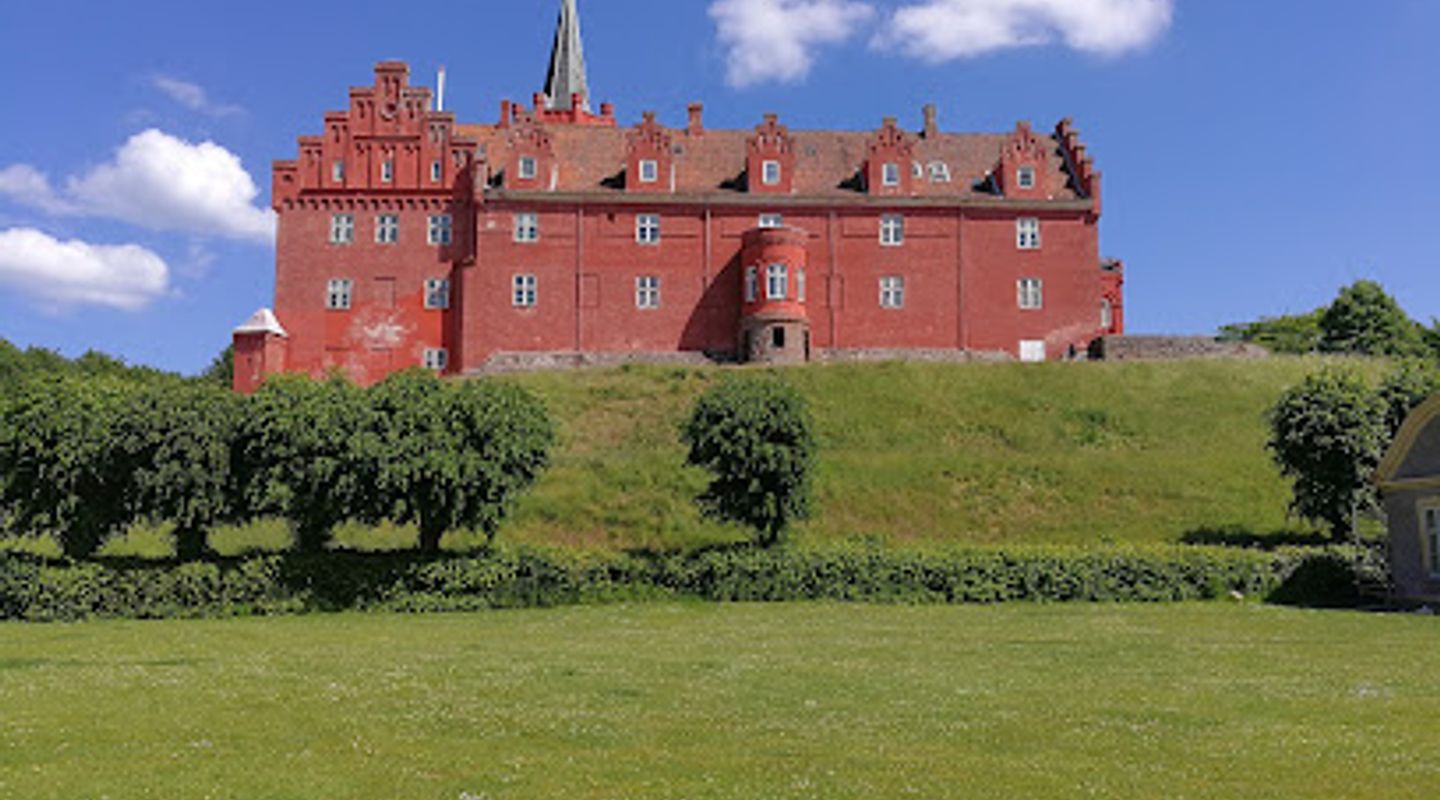
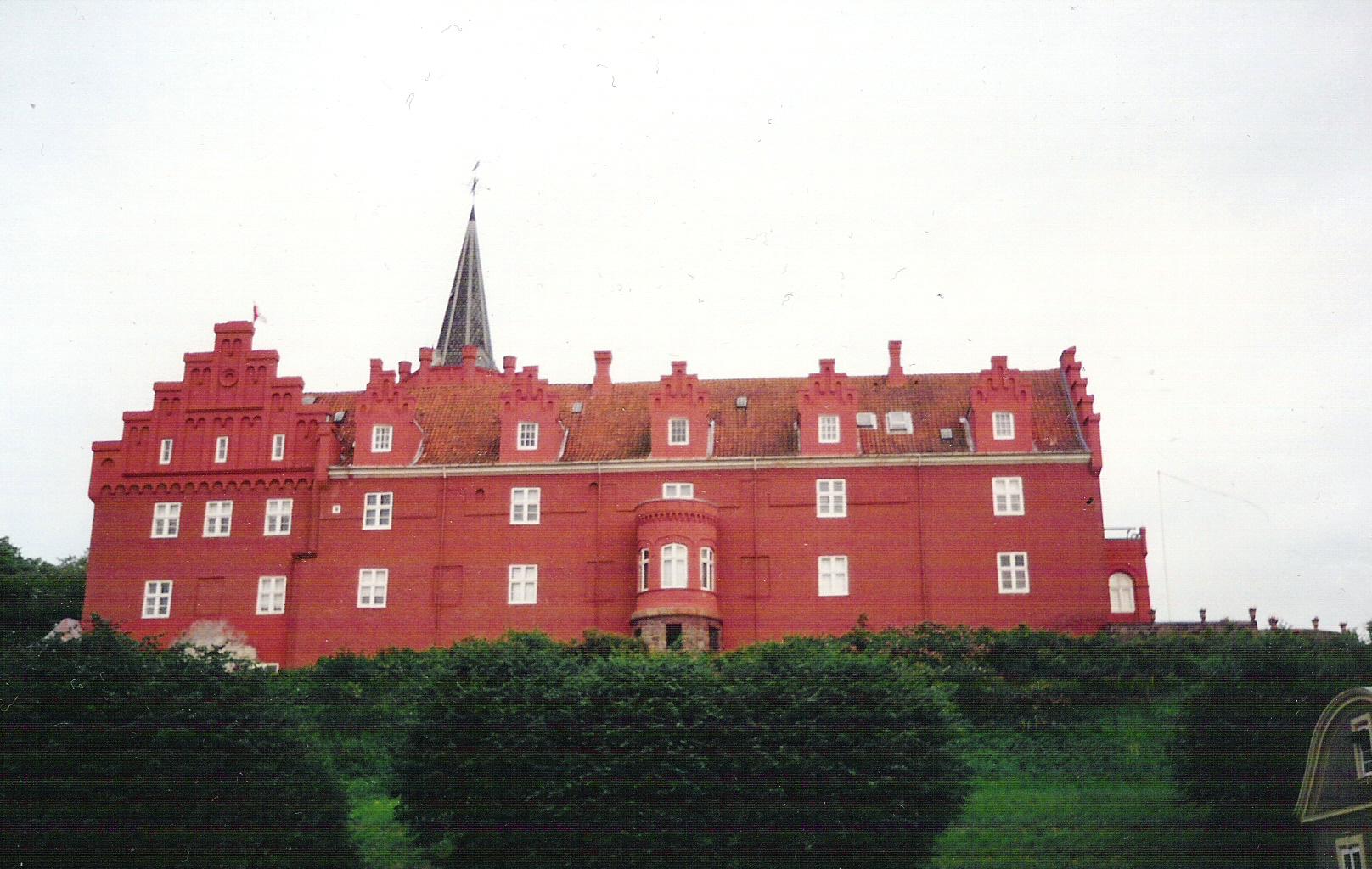
Tranekær Castle rises from a hat-shaped hill on northern Langeland, its long red wings and crow-stepped gables reflected in a broad moat. Dating back to the 12th century and still inhabited by the Ahlefeldt-Laurvig family, it is considered Denmark’s oldest lived-in secular residence. Beyond the fortified walls, landscaped grounds, artworks in nature and the surrounding village tell a thousand years of power struggles, noble romance and modern estate life.
A brief summary to Tranekær Castle
- Slotsgade 86, Tranekær, 5953, DK
- Click to display
- Click to display
- Duration: 1.5 to 3 hours
- Mid ranged
-
 Mixed
Mixed
- Mobile reception: 4 out of 5

Know before you go
Hi, I'm Eve. Here are a few practical things to know before exploring Tranekær Castle.
- Allow time to walk the full circuit around the moat and nearby paths; the castle’s setting, earthworks and village views are best appreciated from multiple angles.
- Check in advance which parts of the estate, park and any art or garden areas are open to the public, as access and opening hours can vary by season and events.
- Wear comfortable shoes suitable for grass, gravel and occasionally uneven slopes around the hill and moat, especially after rain when the ground can be soft.
- Combine a castle visit with a stroll through Tranekær village to see the planned manor houses and outbuildings that reflect the estate’s influence.
- Bring a light jacket even in summer; the elevated position above the moat can make the breeze feel noticeably cooler than in the surrounding countryside.
Do you manage this location?
Take control to get all the benefits, like improved information, better appearance, and stronger visibility across AI-powered discovery. Learn more about listing your business on Evendo
Activate your presenceOther nearby places you may find interesting
The closest places of the same kind, if this one is not quite what you had in mind.
Explore Tranekær Castle on the Map
A handpicked selection of must-see spots near Tranekær Castle, mapped for you.
Getting There
-
Car from Rudkøbing (Langeland’s main town)
From Rudkøbing, reach Tranekær Castle by car in about 20–25 minutes. The drive runs along the main north–south road on Langeland through open countryside and small villages. There is usually free parking available near the castle and in the village, but spaces can fill up on busy summer days and during events, so allow extra time to find a spot.
-
Regional bus on Langeland
Public buses connect Rudkøbing with Tranekær in roughly 25–35 minutes, depending on the route and stops. Services run a few times per day on most weekdays, with reduced frequency in the evenings and on weekends. Tickets are typically in the range of 30–60 DKK one way for adults within the island zone. Check the current timetable in advance, as some departures are scheduled around school and commuter hours.
-
Bicycle from Rudkøbing
Cyclists can follow Langeland’s country roads from Rudkøbing to Tranekær in about 45–60 minutes at a moderate pace. The terrain is generally gentle with a few rolling sections, and the route is suitable for most reasonably fit riders. Be prepared for wind from the sea and sharing the road with cars; wearing high-visibility clothing and using lights in low light conditions is advisable.
-
Car via ferry from Svendborg (Funen)
If you are staying on Funen, first take the car ferry from Svendborg to Rudkøbing, which usually takes about 45 minutes and runs multiple times daily. One-way prices for a car with passengers are commonly in the range of 200–400 DKK depending on vehicle size and time of travel. From Rudkøbing, continue by car for around 20–25 minutes to reach Tranekær Castle. It is wise to book ferry crossings in advance during peak holiday periods.
For the on-the-go comforts that matter to you
-
 Restrooms
-
 Seating Areas
-
 Trash Bins
-
 Information Boards
-
 Food Options
-
 Drink Options
Discover more about Tranekær Castle
A red fortress on a hat-shaped hill
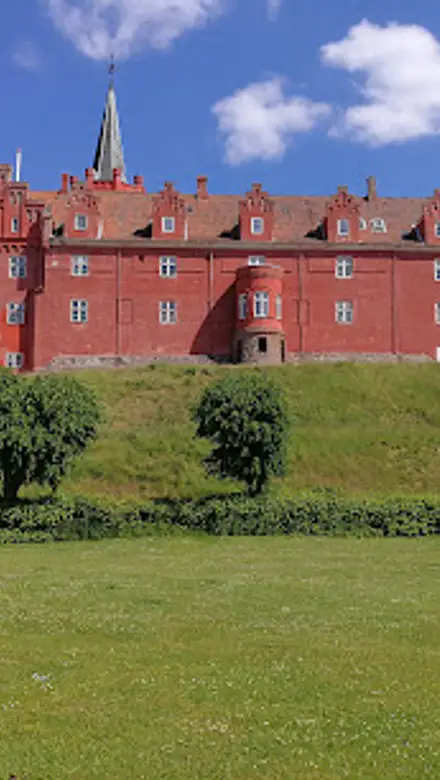
Tranekær Castle sits high on one of Langeland’s distinctive “hat hills”, its red-plastered wings perched above a wide, still moat. Approaching from the village, you see the building stretch along the ridge, two solid wings joined at a right angle, crow-stepped gables punctuating the skyline and the colour hovering between brick red and soft terracotta. The setting feels deliberately theatrical: water, elevation and a carefully framed approach road across the dam all underline that this was once a place of power.The site has been fortified since the High Middle Ages. Early versions consisted of four wings and heavy curtain walls; today’s two-winged layout hints at the former closed courtyard. West of the castle, the road runs atop the dam that still keeps the moat in place, while water flows past the old mill. Even in its softened, 19th-century guise, the building still reads as a fortress first and a home second.From royal stronghold to noble family seat
The story of Tranekær begins in the 1100s, when it was established as a royal castle in a turbulent border region. Medieval chronicles mention it as crown land, guarded by moats and drawbridges and used in the defence of southern Denmark. Kings and dukes held it in turn; at one dramatic point in the 14th century it was seized after a prolonged siege and folded into the Danish crown’s network of strongholds.By the 17th century, the fortress had lost much of its military value. Parts of the medieval complex were demolished, and in the aftermath of the Swedish Wars the castle entered a new chapter as the seat of the Ahlefeldt-Laurvig family. Through a mixture of royal favour, high office and an advantageous – and famously romantic – marriage to heiress Margrethe Dorothea Rantzau, the family consolidated its hold on Tranekær and the surrounding estate, which they still manage today.Architecture reshaped across centuries
Walk around the moat and you trace nearly 900 years of building history in a single circuit. Deep within the north wing lie stones from the original 12th-century structure, making Tranekær one of the oldest inhabited non-clerical houses in Denmark. Massive walls, in places up to four metres thick, hint at the days when arrow slits and parapet walks were more important than parlours and salons.The castle’s current look comes largely from a major 19th-century remodelling led by architect N.S. Nebelong. He extended the west wing, added the distinctive tower, reworked the roofline and unified the façades with pale red plaster and regularly spaced windows. Ornamental details remain restrained; the drama comes from the building’s bulk and position over water. Surrounding farm buildings, a theatre house and pavilions from different eras complete a coherent manor ensemble.A living estate in the Langeland landscape
Tranekær is not just a solitary castle but the heart of a large, working estate. Fields, woodland and game preserves radiate from the hill, and the business today includes forestry, arable farming, pheasant rearing and hospitality. The rhythm of estate life is never far away: across the moat you might glimpse machinery in the fields, hear activity from barns or see staff moving between manor, village and outbuildings.The adjoining village of Tranekær grew up in the castle’s shadow, with many houses originally built for estate workers. Rows of neat, uniform dwellings and older farmsteads give the settlement a planned, almost model-village character. Together, castle, lake, parkland and village form a cultural landscape that tells a continuous story from medieval stronghold to modern rural enterprise.Exploring the grounds and their stories
While the main building functions as a private residence and event venue, the surrounding grounds invite unhurried exploration. Paths lead through old trees and along water, and selected areas of the estate host land art and nature-focused installations that play with light, scale and the island’s geology. In season, nearby themed gardens and small attractions add botanical and cultural layers to a day at the castle.As you wander, details reward a slow pace: traces of former ramparts in the contours of the hill, stonework that switches from rough medieval blocks to smooth 19th-century brick, or glimpses of the castle framed between hedgerows in the village. Tranekær is less about a single showpiece room and more about the cumulative sense of continuity – a place where defensive walls, romantic tales and everyday farm work quietly coexist on one Danish island hill.












Your all‑in‑one travel companion app
Explore expert travel guides, compare and book tours, experiences, hotels, and more—all from the palm of your hand. Download now for seamless trip planning wherever your wanderlust takes you.


Explore More of Langeland
Looking beyond Tranekær Castle? Discover Langeland for broader travel guides, local hot-spots, and regional highlights.
Explore Langeland