
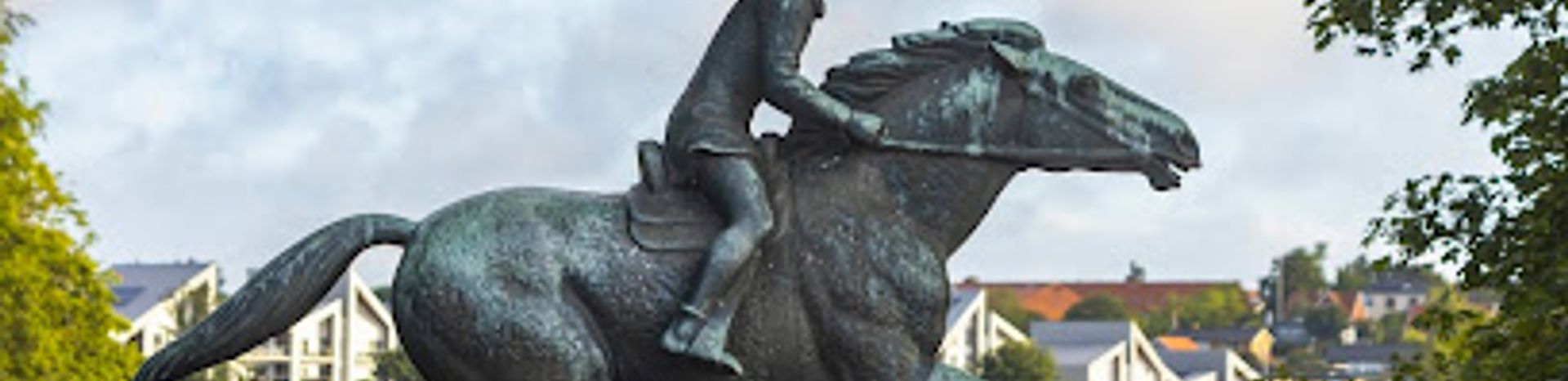
Skulptur: Dronning Dagmars dreng, Skanderborg
A quiet bronze tribute to Queen Dagmar’s child, set between lake and forest outside Hotel Skanderborghus in Skanderborg’s tranquil parkland.
Tucked beside Hotel Skanderborghus in Skanderborg’s leafy lakeside parkland, the bronze sculpture “Dronning Dagmars dreng” is a small but evocative tribute to Denmark’s medieval past. Set between forest, lawns and the calm waters of Skanderborg Lake, the artwork depicts Queen Dagmar’s child and adds a quiet, reflective note to strolls through Dyrehaven. It is an easy stop on a lakeside walk, inviting a short pause, a closer look at the details and perhaps a moment to imagine courtly life in the early Danish kingdom.
A brief summary to Skulptur, Dronning Dagmars dreng
- Ved Hotel Skanderborghus (Skanderborg Kom, Skanderborg, 8660, DK
- Duration: 0.5 to 1 hours
- Free
-
 Outdoor
- Mobile reception: 4 out of 5

Know before you go
Hi, I'm Eve. Here are a few practical things to know before exploring Skulptur, Dronning Dagmars dreng.
- Combine a stop at the sculpture with a gentle walk along Skanderborg Lake’s shoreline paths for the best sense of place and atmosphere.
- Visit in the early morning or late afternoon for softer light that brings out the bronze texture and makes for more atmospheric photos.
- Allow a few extra minutes to circle the sculpture, noticing details in the boy’s posture, clothing and weathered patina from all sides.
Do you manage this location?
Take control to get all the benefits, like improved information, better appearance, and stronger visibility across AI-powered discovery. Learn more
Activate your presenceOther nearby places you may find interesting

Getting There
-
Train and walk from Skanderborg Station
From Aarhus, frequent regional trains reach Skanderborg Station in about 15–20 minutes, while departures from Horsens take roughly 20–25 minutes, with adult single tickets typically around 40–70 DKK depending on distance and discounts. From the station, allow 20–25 minutes on foot along mostly paved, gently undulating paths through town and parkland to reach the lakeside area by Hotel Skanderborghus. The route is suitable for most walkers, though some sections can be slightly uneven or damp after rain.
-
Local bus and short lakeside walk
Local Midtjylland buses connect Skanderborg Station with stops near Skanderborg Lake and Dyrehaven in about 10–15 minutes, with single tickets generally in the 20–30 DKK range depending on zones. Services run regularly on weekdays but are less frequent in evenings and at weekends, so it is worth checking timetables in advance. From the closest stop, expect a 10–15 minute walk on park paths to the sculpture, with mostly flat terrain but occasional tree roots and gravel.
-
Car or taxi within Skanderborg
Arriving by car from within East Jutland, Skanderborg is close to the E45 motorway and is usually reached in 20–35 minutes from Aarhus or Horsens in normal traffic. Parking is available around Hotel Skanderborghus and nearby lakeside areas, though spaces can be busier on sunny weekends or during local events; parking is often free or low‑cost for a few hours. From the parking area it is only a short walk on level ground across the park to the sculpture, making this the most straightforward option for those with limited mobility.
For the on-the-go comforts that matter to you
-
 Restrooms
-
 Drink Options
-
 Drinking Water
-
 Food Options
-
 Seating Areas
-
 Sheltered Areas
-
 Trash Bins
-
 Information Boards
Discover more about Skulptur, Dronning Dagmars dreng
A medieval prince at the forest’s edge
The sculpture known as “Dronning Dagmars dreng” sits quietly near Hotel Skanderborghus, close to the water and the tall trees of Skanderborg’s lakeside park. Cast in bronze and mounted on a simple plinth, it portrays a young princely figure associated with Queen Dagmar, the beloved medieval consort of King Valdemar Sejr. There is no grand plaza or monumental pedestal here; instead, the piece feels deliberately modest, inviting you to step closer and meet the boy at eye level.Queen Dagmar’s story is woven deeply into Danish legend, and this sculpture gently taps into that narrative. In a town where the lake and surrounding woodland dominate the setting, this small figure adds a human, historical presence. It is as if a character from an old ballad had wandered out of the pages and come to rest on the path beside the water.Lakeside setting between woods and water
What gives the sculpture much of its charm is its immediate environment. Positioned near the hotel on the narrow neck of land between Skanderborg Lake and Lillesø, it shares space with lawns, mature beech trees and the still surface of the water beyond. From the figure’s base you can look out toward the lake, watch light shift across the ripples and hear the muffled sounds of the town carried over the water.The parkland here functions almost like an outdoor gallery, with the artwork blending naturally into the landscape. On quiet days, the only company might be waterbirds along the shore and the occasional jogger or cyclist passing along the path. The sculpture’s dark patina contrasts gently with the greenery, making it easy to spot yet never dominating the scene.Details, posture and quiet expression
A closer look at “Dronning Dagmars dreng” reveals finely worked details that reward a slow circuit around the plinth. The boy’s posture carries a mixture of formality and vulnerability: shoulders slightly drawn, gaze directed somewhere beyond the viewer, clothing that hints at noble status without lavish ornament. The sculptor has captured a sense of youth overshadowed by dynastic expectation, a quiet nod to the burdens placed on royal children.Weathering has softened some of the sharper lines, adding texture and colour variation to the bronze. Small streaks where rainwater runs, or lighter tones where hands have touched the metal, tell their own story of time and attention. The figure’s scale keeps everything at a human level; rather than towering overhead, it is approachable, something you can walk around in a few unhurried steps.A short contemplative pause on a longer walk
For most visitors, this sculpture forms part of a broader experience of Skanderborg’s lakeside environment rather than a stand‑alone destination. It offers a natural pause point on a walk through Dyrehaven or along the shoreline paths, a moment to stop, stretch, perhaps take a photo and read any nearby information before continuing along the water.The setting encourages a slower rhythm. You might sit on a nearby bench or the grass and let the combination of art, history and landscape sink in. Children often respond to the piece’s approachable scale, while adults tend to linger on the historical associations. In any season, from bright summer evenings to misty autumn mornings, the figure adds a focal point to this stretch of path.Link in Skanderborg’s cultural landscape
Although modest, “Dronning Dagmars dreng” occupies an interesting position within Skanderborg’s wider cultural landscape. It subtly connects the modern lakeside hotel and recreational park with the area’s deeper historical roots, including the royal castle that once stood nearby on an island in the lake. Seen in this light, the sculpture becomes a bridge between contemporary leisure life and stories from the Danish Middle Ages.Combined with the surrounding trails, viewpoints over the water and other small artistic touches around the lake, the statue enriches a visit to Skanderborg without demanding much time or planning. It is the kind of detail that gives a place texture: a reminder that even in a quiet patch of grass by the water, echoes of past royals and old ballads are never far away.Explore the best of what Skulptur, Dronning Dagmars dreng has to offer
-

Best experiences near Skulptur, Dronning Dagmars dreng
-

Best hotels near Skulptur, Dronning Dagmars dreng
-

Best landmarks near Skulptur, Dronning Dagmars dreng
-

Best shops near Skulptur, Dronning Dagmars dreng
-

Best restaurants near Skulptur, Dronning Dagmars dreng
-

Best bars near Skulptur, Dronning Dagmars dreng








More about East Jutland
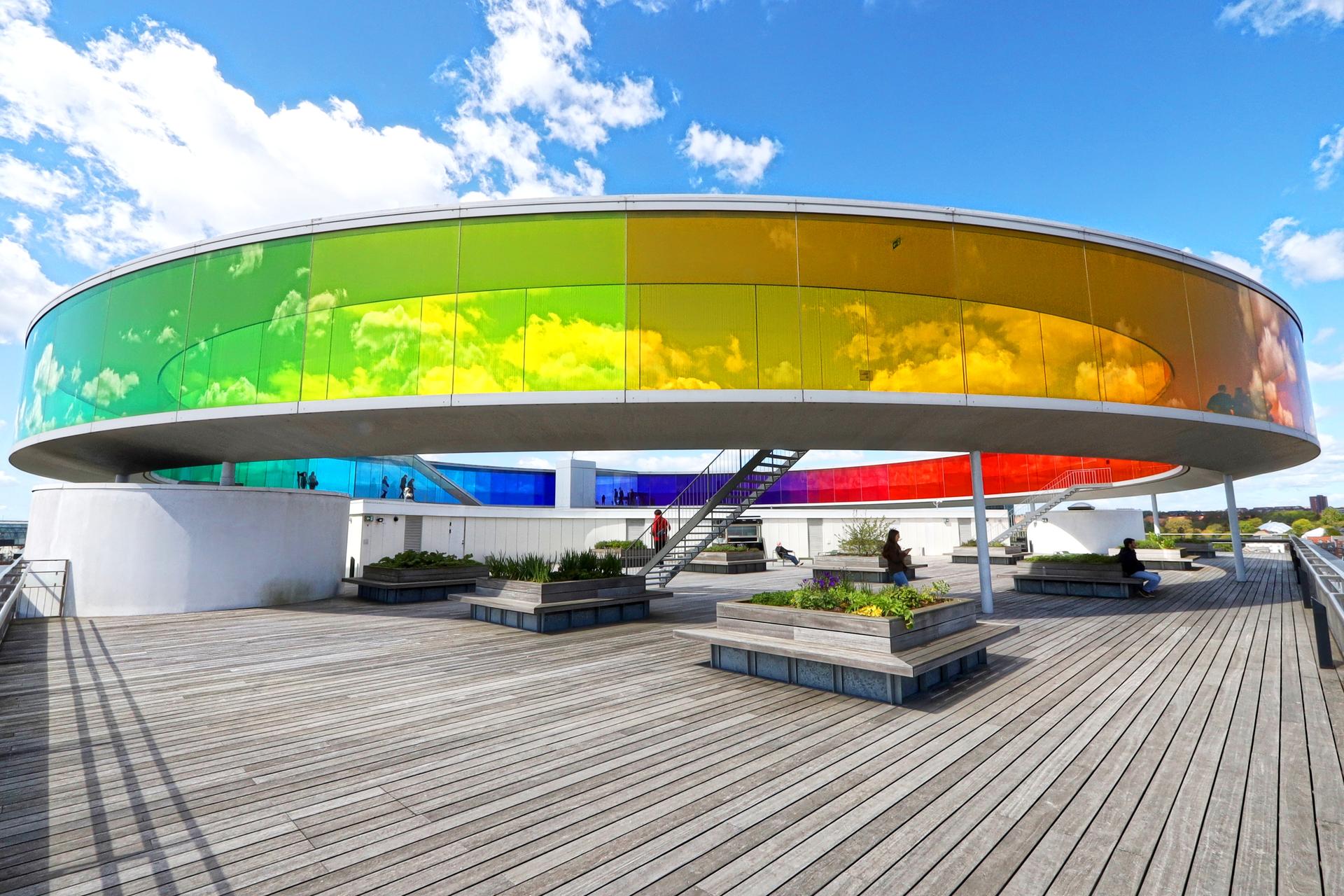
Discover East Jutland, Denmark's enchanting region blending vibrant cities, rich history, and stunning natural landscapes, perfect for every type of traveler.
Tell me more about East Jutland
Stand on Denmark’s highest natural point atop a quiet Jutland farm hill, marked by a lone millstone and wide views across the gently rolling Ejerbjerge.

Unassuming yet atmospheric, Skanderborg’s Fugletårn lifts you above reeds and water for calm, close-up encounters with East Jutland’s wetland birdlife all year round.
