

Møllehøj Travel Guide - Free Web & App
Your ultimate guide to Møllehøj. Discover top landmarks, proposed trips, and local tips. Free on the web or via the Evendo companion app.


Møllehøj, Denmark’s highest natural point, rises above glacial hills near Ejer Bavnehøj, offering rural walks, panoramic views and Danish landscape heritage.
A Small Summit in the Danish Lake Highlands
Møllehøj rises to 170.86 metres above sea level in the rolling countryside of eastern Jutland, close to the village of Ejer and within Skanderborg Municipality. It is Denmark’s highest natural point, although its modest elevation and open agricultural setting make it feel more like a gentle hill than a conventional mountain. The summit lies in a landscape shaped by the last Ice Age, where broad ridges, wooded slopes, lakes and glacial hollows form the distinctive scenery of the Danish Lake Highlands.Read more about Møllehøj
The Summit and Its Neighbours
Visiting the Countryside
When is the best time to visit Møllehøj?
Best: June–August · 23–25°C| Month | High (°C) | Rainfall (mm) |
|---|---|---|
| January | 3 | 33 |
| February | 3 | 28 |
| March | 6 | 31 |
| April | 11 | 36 |
| May | 19 | 43 |
| June (best) | 23 | 51 |
| July (best) | 25 | 58 |
| August (best) | 25 | 55 |
| September | 20 | 47 |
| October | 15 | 39 |
| November | 10 | 35 |
| December | 6 | 32 |
Getting to and around Møllehøj
How to get there
Transportation
Best attractions in Møllehøj
Møllehøj itself is the principal attraction: a quiet grassy summit marked by a millstone and recognised as Denmark’s highest natural point at 170.86 metres. The surrounding Ejer area provides the most meaningful extension to the visit, especially Ejer Bavnehøj with its historic beacon associations and tower, and the nearby high ground of Yding Skovhøj. Together these hills offer a compact geographical story about Denmark’s highest elevations, although they are reached through rural countryside rather than a single managed attraction complex. The wider Skanderborg region adds wooded ridges, lakes and glacially shaped scenery, while Skanderborg town provides access to the lake landscape and more substantial visitor services. Møllehøj is therefore best understood as one stop within an eastern Jutland hill-country outing, with the summit experience centred on landscape, measurement and rural atmosphere rather than extensive facilities or a large programme of activities.
-
Mountain peak
Møllehøj
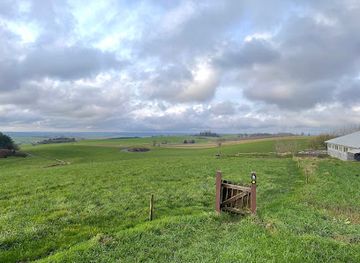
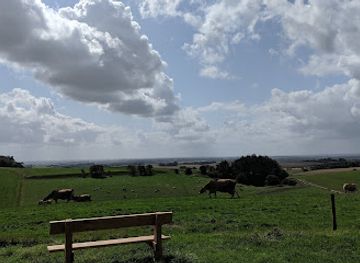
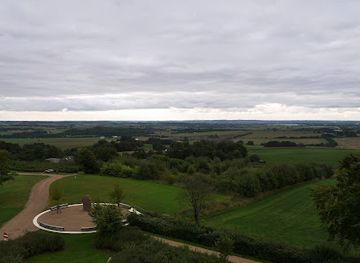
Stand on Denmark’s highest natural point atop a quiet Jutland farm hill, marked by a lone millstone and wide views across the gently rolling Ejerbjerge.
-
Scenic spot
Møllehøj, DK's highest hill
A modest hill with a millstone marker, Møllehøj turns Denmark’s highest natural point into a gentle countryside detour packed with quiet geographic significance.
-
Kiosk
Møllehjulet
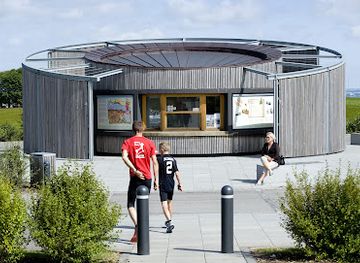
Compact circular kiosk and information hub on Denmark’s rooftop at Ejer Bavnehøj, combining refreshments, facilities and landscape insight amid sweeping views.
Best landmarks in Møllehøj
The defining landmark is Møllehøj’s summit millstone, a simple but memorable marker of Denmark’s highest natural ground and a reminder of the hill’s mill-related name. Nearby Ejer Bavnehøj is the area’s most prominent built landmark, with a tower rising from a historic beacon hill and giving the surrounding uplands a strong visual focus. Yding Skovhøj contributes another important point of reference to the local story of Denmark’s highest elevations, although it is distinct from Møllehøj. The wider landscape is itself a landmark of eastern Jutland: glacial ridges, wooded slopes, open farmland and nearby lake country reveal the physical setting in which these high points were formed and later measured. The significance of the area rests less on monumental architecture than on the relationship between modest summit features, rural history and national geography.
-
Historical landmark
Ejer Bavnehøj
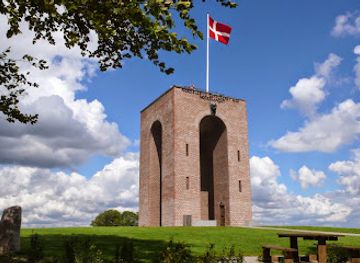
A modest Danish hill with a mighty horizon, Ejer Bavnehøj blends reunification history, beacon legends and big-sky views into an easy, rewarding countryside stop.
-
Memorial park
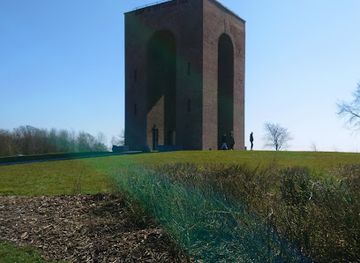
Genforeningstårn på Ejer Bavnehøj
Denmark's third-highest peak crowned by a historic 1924 tower with sweeping views across moraine landscape and distant islands.
-
Memorial park
Genforeningssten på Ejer Bavnehøj
Denmark's third-highest point crowned with a monumental 1920 reunification memorial and iconic tower.
Explore Møllehøj on the map
Plan your trip on one map. See where the top attractions, landmarks, restaurants and hotels are, and book hotels and experiences in a few clicks.
Best hotels in Møllehøj
Best shops in Møllehøj
Shopping at Møllehøj is limited to the practical scale of a rural landmark, with no shopping street or specialist retail centre at the summit. Visitors may find provisions, bakeries, independent shops and everyday services in Skanderborg, Horsens and surrounding settlements, while farm shops in the wider countryside can offer locally produced food when open. Regional purchases may include Danish baked goods, preserves, seasonal produce and other farm-related products, although availability depends on the individual business and season. Visitors interested in crafts or design will find a wider selection in larger Jutland towns than in the immediate Ejer area. It is sensible to buy picnic supplies before heading into the hill country, particularly when visiting outside normal town-centre opening patterns.
-
Convenience store
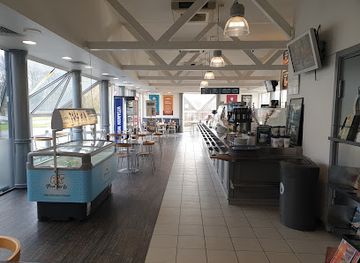
Shell / 7-Eleven Ejer Bavnehøj West
24/7 motorway pit stop at Ejer Bavnehøj, combining Shell fuel and a compact 7‑Eleven shop for coffee, snacks and essentials on the E45 through Jutland.
-
Store
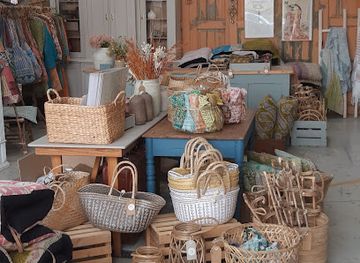
Ville vintage
Discover timeless treasures and unique vintage finds at Ville Vintage in Skanderborg.
Get your free copy of our complete guide to Møllehøj, delivered straight to you.
Everything on this page, from attractions and restaurants to essentials and local phrases, in one PDF you can read offline, print or share.
Already have an account? Sign in
Your Møllehøj guide is ready.
We'll send it to · Not you? Sign out

Getting your guide ready…
We are putting together a fresh copy of the Møllehøj guide. This can take up to a minute.
This can take a few moments. If your browser asks, choose Allow so the download can start. You'll find the guide in your Downloads folder.
Nothing happened? Download it again
Sorry, the guide is taking longer than usual. Please try again in a minute, or get it by email instead.
Møllehøj essentials
Currency and Payment
Safety
Emergency Situations
Do's and Don'ts
Local Tips
From Eve
Local phrases worth knowing
You don't need to get them perfect. A few words go a long way, and locals appreciate the effort.
Basics
| English | Local | Say it |
|---|---|---|
| Hello | Hej | [hey] |
| Goodbye | Farvel | [far-vel] |
| Yes | Ja | [ya] |
| No | Nej | [nay] |
| Please/You're welcome | Vær så god | [ver sa go] |
| Thank you | Tak | [tak] |
| Excuse me/Sorry | Undskyld | [un-skyld] |
| How are you? | Hvordan har du det? | [vor-dan har doo deh] |
| Fine. And you? | Godt. Og dig? | [goht. oh di] |
| Do you speak English? | Taler du engelsk? | [ta-ler doo engelsk] |
| I don't understand | Jeg forstår ikke | [yeh for-stor ee-keh] |
Eating & Drinking
| English | Local | Say it |
|---|---|---|
| I'd like to see the menu, please | Jeg vil gerne se menuen, tak | [yeh vil ge-rne se me-nwen, tak] |
| I don't eat meat | Jeg spiser ikke kød | [yeh spee-ser ee-keh kuhd] |
| Cheers! | Skål! | [skawl] |
| I would like to pay, please | Jeg vil gerne betale, tak | [yeh vil ge-rne beh-ta-le, tak] |
Emergencies
| English | Local | Say it |
|---|---|---|
| Help! | Hjælp! | [hyelp] |
| Go away! | Gå væk! | [gow vehk] |
| Call the Police! | Ring til politiet! | [ring teel po-lee-teet] |
| Call a doctor! | Ring efter en læge! | [ring ef-ter en le-ge] |
| I'm lost | Jeg er faret vild | [yeh er fa-ret veeld] |
| I'm ill | Jeg er syg | [yeh er soog] |
Shopping
| English | Local | Say it |
|---|---|---|
| I'd like to buy... | Jeg vil gerne købe... | [yeh vil ge-rne kuh-be] |
| I'm just looking | Jeg kigger bare | [yeh kee-ger ba-reh] |
| How much is it? | Hvor meget koster det? | [vor meh-yet kus-ter deh] |
| That's too expensive | Det er for dyrt | [deh er for duhrt] |
| Can you lower the price? | Kan du sænke prisen? | [kan doo sern-keh pree-sen] |
Time & Numbers
| English | Local | Say it |
|---|---|---|
| What time is it? | Hvad er klokken? | [vad er klok-en] |
| It's one o'clock | Den er et | [den er et] |
| Half past (10) | Halv ti | [halv tee] |
| Morning | Morgen | [mor-gen] |
| Afternoon | Eftermiddag | [ef-ter-me-da] |
| Evening | Aften | [af-ten] |
| Yesterday | I går | [ee gor] |
| Today | I dag | [ee dah] |
| Tomorrow | I morgen | [ee mor-gen] |
| 1 | Et | [et] |
| 2 | To | [toh] |
| 3 | Tre | [treh] |
| 4 | Fire | [fee-reh] |
| 5 | Fem | [fem] |
| 6 | Seks | [seks] |
| 7 | Syv | [suv] |
| 8 | Otte | [o-teh] |
| 9 | Ni | [nee] |
| 10 | Ti | [tee] |
Transport & Directions
| English | Local | Say it |
|---|---|---|
| Where's a/the...? | Hvor er en/et... | [vor er en/et] |
| What's the address? | Hvad er adressen? | [vad er a-dres-en] |
| Can you show me (on the map)? | Kan du vise mig (på kortet)? | [kan doo vee-se meeh (po kort-et)] |
| When's the next (bus)? | Hvornår er næste (bus)? | [vor-nor er ne-steh (bus)] |
| A ticket (to ....) | En billet (til ....) | [en bee-let (teel)] |
History of Møllehøj
A Landscape Shaped by Ice
Møllehøj stands within the glacially formed uplands of eastern Jutland. During the last Ice Age, moving ice sheets moulded the region’s ridges, depressions and lake basins, leaving the varied relief that distinguishes the Danish Lake Highlands from flatter parts of the country. Møllehøj is not a dramatic geological mountain but one of a series of elevated morainic landforms created by these processes. Its importance today comes from its measurable height and its position within a landscape where wooded hills, open fields and water-filled hollows reflect the interaction of glacial geology and later human land use.
Farming and the Møllehøj Name
The countryside around Møllehøj has long been used for agriculture, with fields and farmsteads occupying the fertile and manageable ground between wooded slopes and hilltops. The name Møllehøj means Mill Hill and is associated with a former windmill in the area. A millstone now marks the summit, linking the modern geographical landmark with the rural working landscape that gave the hill its name. Unlike a fortified or urban monument, Møllehøj’s historical character is rooted in farming, local topography and the practical use of elevated ground for wind-powered milling.
Ejer Bavnehøj and Beacon Tradition
The nearby hill of Ejer Bavnehøj preserves a different aspect of local history. Its name refers to a bavnehøj, or beacon hill, where signal fires could historically be lit as part of a wider warning system. The hill later became a national symbolic site, and its tower reflects the modern interest in identifying and commemorating Denmark’s high points. The proximity of Ejer Bavnehøj helped focus attention on the surrounding uplands, although Møllehøj itself remained a separate agricultural summit rather than a major built monument.
Measuring Denmark’s Highest Ground
For many years, the question of Denmark’s highest point involved comparisons between Møllehøj, Ejer Bavnehøj and Yding Skovhøj. Differences in surveying methods and in the treatment of natural ground and ancient artificial features contributed to the debate. More precise modern measurements established Møllehøj’s natural summit at 170.86 metres above sea level, making it Denmark’s highest natural point. The recognition gave the small rural hill a clear place in the country’s geographical identity and encouraged visitors to see it alongside the neighbouring high points of the Ejer area.
Møllehøj in Photos
Browse through our photo collection highlighting the charm and character of the destination.
Neighbouring destination travel guides
The closest destinations to Møllehøj, if you have time for more than one.
-

-

-

-

-


Swipe for more destinations
Explore more

Explore more of Central Jutland
Explore Central Jutland for Aarhus culture, Silkeborg lakes, Mols Bjerge landscapes, historic towns and the Kattegat coast.
Explore Central Jutland
Explore more of Denmark
Discover Denmark: A perfect blend of history, modern design, and the cozy concept of hygge. Explore vibrant cities, serene landscapes, and world-class cuisine.
Explore Denmark