

Fregatten Jylland, Mols Bjerge National Park Travel Guide
Step aboard one of the world’s longest wooden warships in Ebeltoft and explore decks, cannons and cabins that bring 19th‑century Danish naval history vividly to life.
Fregatten Jylland in Ebeltoft is one of the world’s longest preserved wooden warships, a 19th‑century frigate launched in 1860 and famed for its role in the Battle of Helgoland in 1864. Today it rests in a dry dock beside the harbor, transformed into a maritime museum where you can explore multiple decks, duck into cramped cabins, study cannons and rigging, and walk around the vast hull from below, gaining a vivid sense of Danish naval history and life at sea.
A brief summary to Fregatten Jylland
- S. A. Jensens Vej 4, Ebeltoft, 8400, DK
- Click to display
- Click to display
- Duration: 2 to 3.5 hours
- Mid ranged
-
 Mixed
Mixed
- Mobile reception: 4 out of 5
- Monday 10 am-4 pm
- Tuesday 10 am-4 pm
- Wednesday 10 am-4 pm
- Thursday 10 am-4 pm
- Friday 10 am-4 pm
- Saturday 10 am-4 pm
- Sunday 10 am-4 pm

Know before you go
Hi, I'm Eve. Here are a few practical things to know before exploring Fregatten Jylland.
- Allow at least 2–3 hours so you can walk all decks, visit the exhibition hall, and circle the hull from the dry dock floor without rushing.
- Check seasonal opening hours in advance; hours vary between winter, spring, summer and autumn, and some periods have closed days.
- Wear comfortable, non‑slip shoes and bring a light layer—interior spaces can be cool, and some ladders and decks are steep or uneven.
- Families should ask about children’s treasure hunts or story trails at the ticket desk to make the visit more engaging for younger visitors.
- Combine your visit with a stroll through Ebeltoft’s harbor and old town, as both lie within easy walking distance of the frigate.
Do you manage this location?
Take control to get all the benefits, like improved information, better appearance, and stronger visibility across AI-powered discovery. Learn more about listing your business on Evendo
Activate your presenceOther nearby places you may find interesting
The closest places of the same kind, if this one is not quite what you had in mind.
Explore Fregatten Jylland on the Map
A handpicked selection of must-see spots near Fregatten Jylland, mapped for you.
Getting There
-
Regional bus from Aarhus
From central Aarhus, take a regional bus toward Ebeltoft; typical services run at least hourly during the day and reach Ebeltoft in about 1–1.5 hours depending on route and stops. A standard adult ticket usually costs around 70–110 DKK one way. From Ebeltoft bus terminal it is a level walk of just over 1 km through town to the harbor where the frigate is located; pavements are generally good, but allow extra time if you have limited mobility.
-
Car within Djursland
Driving from towns in Djursland such as Grenaa, Rønde or Aarhus Airport typically takes 30–60 minutes on paved regional roads. There is public parking available near Ebeltoft harbor, though it can fill quickly in summer and on school holidays, so arriving earlier in the day helps. Standard parking fees in Danish coastal towns are often in the range of 10–20 DKK per hour in central areas, with some time‑limited free spaces a little farther away.
-
Cycling from Ebeltoft area
If you are staying in or near Ebeltoft, cycling to the frigate is a pleasant option in mild weather. Distances from local campsites or holiday homes around the bay are often 3–8 km, taking about 15–35 minutes each way on relatively flat roads or dedicated cycle paths. Surfaces are mostly asphalt, but expect occasional short hills and shared traffic sections; use lights and reflective gear outside daylight hours.
-
Walking from Ebeltoft town center
From the compact old town of Ebeltoft, reaching the frigate on foot typically takes 10–20 minutes, depending on your starting point and pace. The route follows ordinary town streets and harbor promenades with a mix of cobblestones and smooth pavement, generally suitable for most visitors, though some sections may be less comfortable for wheelchairs or pushchairs.
For the on-the-go comforts that matter to you
-
 Restrooms
-
 Drink Options
-
 Drinking Water
-
 Food Options
-
 Seating Areas
-
 Sheltered Areas
-
 Trash Bins
-
 Information Boards
-
 Visitor Center
Discover more about Fregatten Jylland
A 19th‑Century Giant in Dry Dock
Fregatten Jylland dominates Ebeltoft’s harbor, a 102‑metre wooden frigate resting in a purpose‑built dry dock that allows you to appreciate its sheer scale from every angle. Launched in 1860 as part of Denmark’s modernizing navy, it was designed as a hybrid vessel, combining steam power with full sail to keep pace with rapidly changing maritime technology. Standing on the dock edge, the hull towers above you, its dark planking, figurehead, and gunports evoking an era when timber warships still ruled the seas.Because the ship now sits on land, you can walk the entire perimeter and descend to the floor of the dock. From here the curve of the keel, the copper‑coloured underside, and the long sleek lines become strikingly clear, giving a rare, almost sculptural view normally hidden beneath the waterline.From Warship to Royal Yacht and Cultural Icon
Jylland’s most famous chapter came in 1864 at the Battle of Helgoland, when the Danish fleet engaged Austrian and Prussian ships during the Second Schleswig War. Under fire and hit multiple times, the frigate helped force the enemy to withdraw, cementing its place in national history. Later, the vessel was refitted as a royal yacht, transporting King Christian IX on voyages to Iceland, the Faroe Islands, and the Danish West Indies, linking far‑flung corners of the kingdom at a time when sea routes were vital.As iron and steel warships took over, Jylland’s military role faded and the ship faced a slow slide into obsolescence and decay. At one point it was even sold for scrap, before a determined conservation effort rescued it, brought it to Ebeltoft, and eventually restored it as a museum ship and symbol of Denmark’s maritime heritage.Life on Board: Decks, Cabins and Cannons
Exploring the interior, you move through several levels that reveal how officers and crew lived and worked. The upper gun deck, lined with heavy cannons, gives a sense of ordered power, with rigging belayed to pinrails and hatches opening to lower spaces. Below, headroom shrinks and the atmosphere grows more intimate: hammocks crowd the mess areas, narrow passageways lead to storerooms, and low‑lit cabins show the contrast between officers’ quarters and the bunks of ordinary sailors.Exhibits and displays explain daily routines at sea, from watch schedules and navigation to discipline, diet, and medical care. Artefacts such as tools, uniforms, and models help you picture the long voyages Jylland undertook, while information panels set the ship within wider 19th‑century conflicts and trade routes.A Hands‑On Maritime Museum for All Ages
The museum surrounding the frigate adds context with thematic exhibitions, scale models, and interactive elements. Children can follow treasure‑hunt style trails or character‑based stories that lead them through different parts of the ship, turning historical details into a playful quest. In the dockyard area, traditional craftsmanship takes centre stage: shipwrights and technicians maintain the hull and masts using time‑honoured techniques, demonstrating how such a vast wooden structure is kept sound.Seasonal activities often extend the experience beyond the decks, from small‑boat trips on Ebeltoft Bay to hands‑on workshops that explore rope‑making or seamanship. A maritime‑themed playground and nearby brasserie and shop round off the visit, making it easy to spend several hours here without leaving the waterfront setting.Ebeltoft Harbor Setting and Atmosphere
Fregatten Jylland forms the focal point of Ebeltoft’s harbor, surrounded by water, cobbled quays, and low‑rise buildings that give the area a pleasantly small‑town feel. Views from the upper deck stretch over masts and rooftops to the bay, especially atmospheric in clear weather when light glints off the water and seagulls wheel overhead. Even on grey or windy days the ship has a rugged, authentic character, with creaking timbers and taut rigging reinforcing the sense of stepping into another century.Whether you come for detailed naval history or simply to stand beneath an enormous wooden hull, the frigate offers a tangible connection to Denmark’s seafaring past, set within a compact, walkable harbor district that invites you to linger before or after your time on board.












Your all‑in‑one travel companion app
Explore expert travel guides, compare and book tours, experiences, hotels, and more—all from the palm of your hand. Download now for seamless trip planning wherever your wanderlust takes you.


Explore More of Mols Bjerge National Park
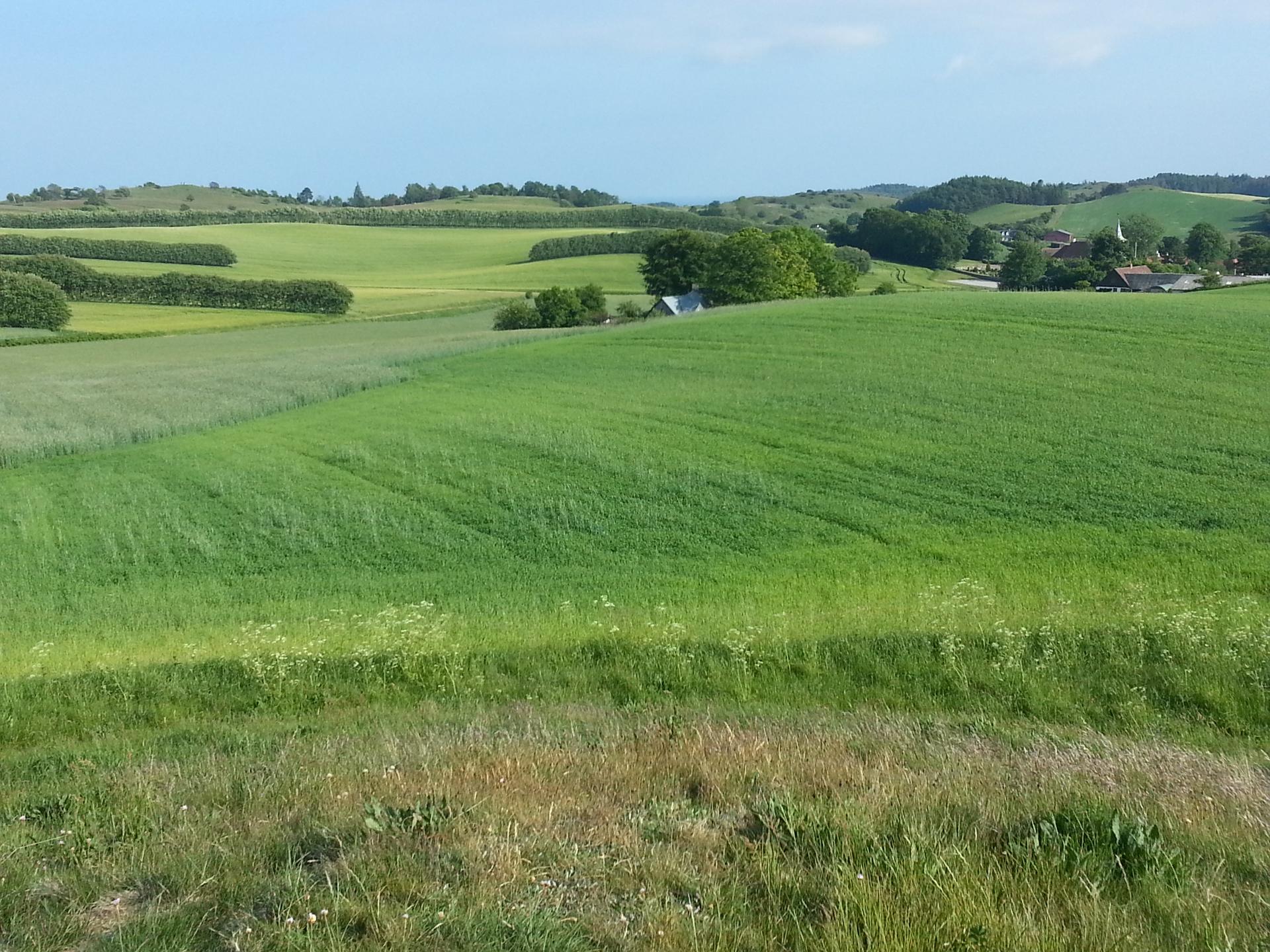
Looking beyond Fregatten Jylland? Discover Mols Bjerge National Park for broader travel guides, local hot-spots, and regional highlights.
Explore Mols Bjerge National Park
A quiet farmstead in Mols Bjerge where free-roaming horses, grazing cattle and long-term research turn a Danish hillside landscape into a living laboratory of wild nature.
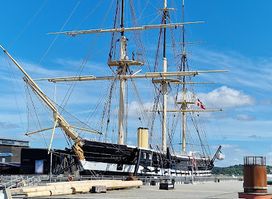
Step aboard one of the world’s great wooden warships in Ebeltoft and explore Danish naval history, royal voyages and life at sea across Jylland’s creaking decks.
