

Ribe VikingeCenter, Ribe Travel Guide
Free Guide: Immerse yourself in a full-scale reconstructed Viking town near Ribe, where costumed craftspeople, warriors and farmers bring 1300 years of Danish history vividly to life.


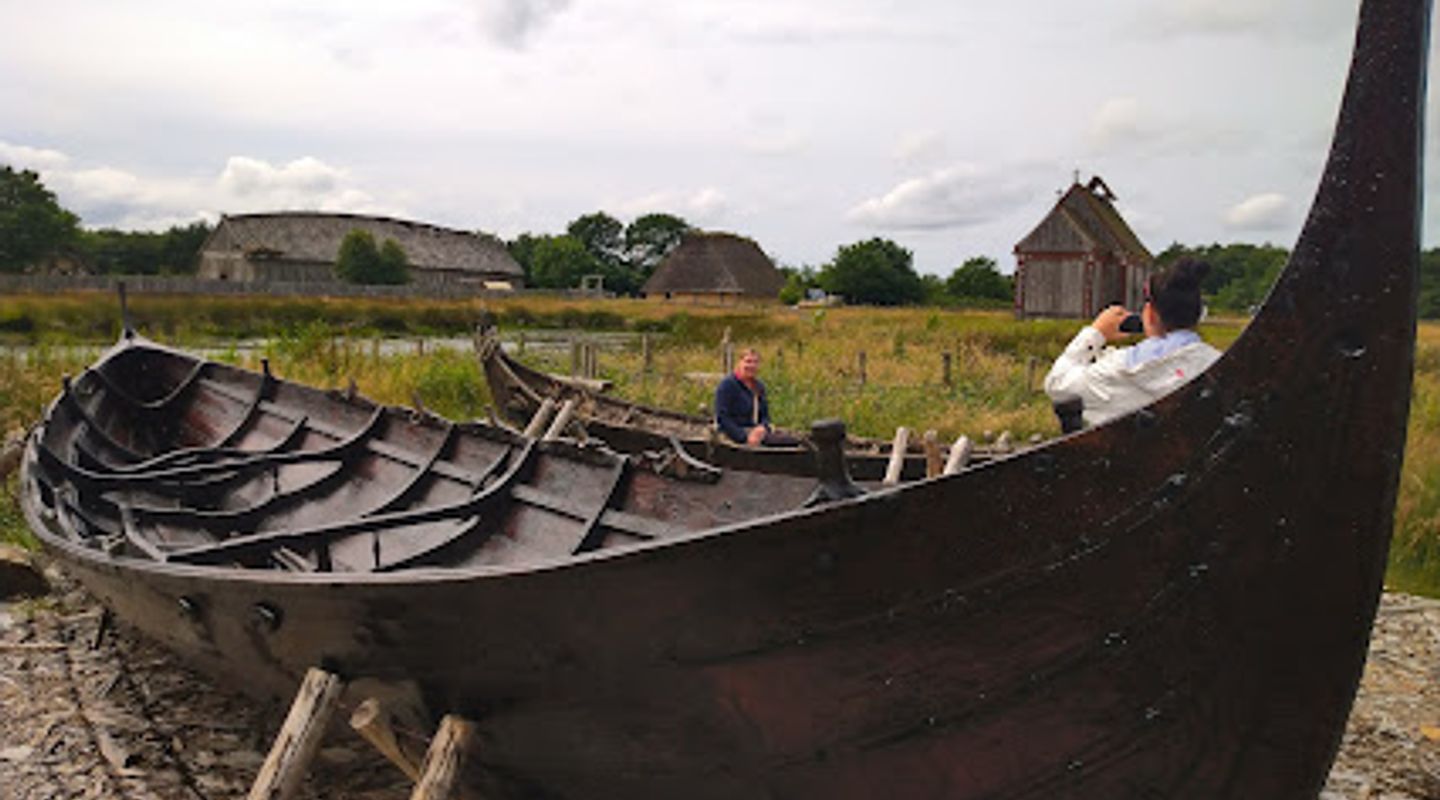
A brief summary of Ribe VikingeCenter
Immerse yourself in a full-scale reconstructed Viking town near Ribe, where costumed craftspeople, warriors and farmers bring 1300 years of Danish history vividly to life.
Ribe VikingeCenter, just outside Denmark’s oldest town, is a 12‑hectare open‑air Viking heritage centre where reconstructed marketplaces, farmsteads, ring walls and a wooden church bring the 8th–10th centuries to life. Costumed craftspeople, warriors and farmers demonstrate everyday skills, from blacksmithing and coin minting to archery and bread‑baking, while seasonal events such as the International Viking Market add extra drama. It is an immersive, family‑friendly place to spend several hours stepping into Viking‑age Ripa.
On-site amenities
 Restrooms
 Drink options
 Food options
 Seating areas
 Sheltered areas
 Picnic areas
 Trash bins
 Information boards
 Visitor centre
Opening hours
- Every day10 am–4:30 pm
Opening hours as listed on the venue’s Google Business Profile. Hours can change for services and special events, so check with the venue before you go.
- Address
- Roagervej 129, 6760 Ribe
- Phone
- Website
Getting there
Car from Ribe town centre
Bicycle from Ribe
Taxi within Ribe area
Regional arrival via Ribe Station
Discover more about Ribe VikingeCenter
Stepping into Viking-Age Ripa
Ribe VikingeCenter sits in the flat marshland just south of Ribe, yet once you pass the entrance you are transported back some 1300 years to the earliest days of Denmark’s oldest town. Spread over 12 hectares of fields and dirt lanes, the centre recreates key locations from the Viking Age, each pinned to a specific decade between around 700 and 1000. Rather than a static museum of glass cases, it feels like a living settlement where smoke drifts from chimneys, livestock bleats in the fields and the ring of hammer on anvil carries down the street.Archaeological research underpins the layout and building techniques, so the timber halls, wattle‑and‑daub houses and riverfront structures reflect what has been unearthed in and around Ribe. As you move between areas such as the early market, the harbour and the later town, you trace the evolution of Ripa from a seasonal trading camp to an organised Christian town on the edge of the North Sea world.
Marketplace, Harbour and Thing-Hall
One of the most atmospheric areas is the Marketplace 710, a reconstruction of the earliest trading site on the riverbank. Here stalls, tents and simple sheds evoke a bustling seasonal fair where merchants once arrived from across the North Sea with glass beads, furs, weapons and exotic goods. Costumed craftspeople might be working leather, weaving or shaping bone combs, giving a tactile sense of how portable wealth was created and exchanged.A short walk away, Ripa Harbour 750 presents a later phase when permanent wooden buildings lined the waterfront and sleek Viking vessels lay moored by simple jetties. You can examine clinker‑built hulls, feel the rough‑hewn timbers of the quay and imagine cargoes of amber and cloth being loaded in the briny air. In Ripa Town 825 the mood shifts again: here you enter more substantial houses, including the impressive Thing‑hall, where disputes were settled and decisions made under heavy roof beams painted in earthy colours.
Faith, Farming and the Manor Landscape
Across an artificial watercourse stands Ansgar Church 860, a compact wooden church that hints at the arrival of Christianity in a landscape still steeped in older beliefs. Its carved details and painted interior show how new religious ideas were adapted to local materials and aesthetics. The contrast with nearby pagan‑tinged storytelling about fate and seers underscores the coexistence of different worldviews in late 9th‑century Ribe.Further from the river you reach the Manor Farm 980, a substantial rural estate complete with longhouse, barns, pens and fields. Here the focus is on agriculture: hardy livestock graze close to the buildings, herbs and vegetables grow in fenced plots and simple tools lean against the walls. It is a reminder that most Vikings were farmers first and sailors second. Within the Ring Wall 980, a fortified enclosure with timber ramparts, you encounter the more martial side of the period, from weapon displays to training grounds that suggest how communities prepared to defend themselves and project power.
Living History and Hands-On Activities
What gives Ribe VikingeCenter its particular energy is the use of living history. Throughout the season, interpreters take on roles such as blacksmith, jeweller, falconer, weaver or thrall, staying in character as they work. Their conversations, tools and clothing are all tuned to the period, so asking a simple question can turn into a miniature lesson in trade, law or belief. Seasonal themes, from warrior life to Norse food, ensure that different visits can feel distinct.There is a strong emphasis on participation. Depending on the day’s programme, you might loose arrows at straw targets, grind grain, bake flatbread over an open fire or learn traditional games. Special events, notably the International Viking Market in spring, bring in visiting reenactors and craftspeople, filling the grounds with tents, stalls and demonstrations. Even on quieter days, the smell of woodsmoke, the creak of leather and the texture of rough wool make the experience particularly tangible for children and adults alike.
Practical Experience and Seasonal Rhythm
Facilities within the centre are designed to support long visits. There are simple food options with hearty dishes inspired by historical ingredients, alongside picnic tables if you prefer to bring your own meal. Benches and sheltered corners are scattered through the grounds, offering breaks between the more demanding outdoor areas. Dogs on a short leash are welcome, reflecting the site’s role as both a cultural attraction and a relaxed rural outing.The centre operates a defined season with varying opening hours, and activity programmes shift between the cooler shoulder months and the busy summer period. In fine weather the open fields and river views feel expansive and inviting, while in wind or drizzle the low doorways and thick timber walls of the buildings become especially evocative of historical daily life. Allow at least three to four hours to explore without rushing; those drawn to the details of craft and storytelling will easily fill a full day within this reconstructed Viking world.
Evendo Review Centre
 Google
Guest reviews
Best time to go
Quietest: Jan, Feb & Nov · before 8am or from 7pm
Busy times are Evendo estimates for a typical year, to help you plan. Actual crowds vary with events, school holidays and the weather.
Explore Ribe VikingeCenter on the map
A handpicked selection of must-see spots near Ribe VikingeCenter, mapped for you.
Get your free copy of our complete guide to Ribe VikingeCenter, delivered straight to you.
Everything on this page, from opening hours and how to get there to Eve’s tips and the best time to go, in one PDF you can read offline, print or share.
Already have an account? Sign in
Your Ribe VikingeCenter guide is ready.
We'll send it to · Not you? Sign out

Getting your guide ready…
We are putting together a fresh copy of the Ribe VikingeCenter guide. This can take up to a minute.
This can take a few moments. If your browser asks, choose Allow so the download can start. You'll find the guide in your Downloads folder.
Nothing happened? Download it again
Sorry, the guide is taking longer than usual. Please try again in a minute, or get it by email instead.
Other nearby places you may find interesting
The closest places of the same kind, if this one is not quite what you had in mind.
-
-
-
-
-


Swipe for more places
More to explore near Ribe VikingeCenter

 Best experiences near Ribe VikingeCenter
 Best hotels near Ribe VikingeCenter
 Best landmarks near Ribe VikingeCenter
 Best attractions near Ribe VikingeCenter
 Best shops near Ribe VikingeCenter
 Best restaurants near Ribe VikingeCenter
 Best bars near Ribe VikingeCenter
Do you manage this location?
Take control to get all the benefits, like improved information, better appearance, and stronger visibility across AI-powered discovery.
Explore more
Explore more of Ribe
Discover Ribe, Denmark's oldest town, where medieval charm meets modern allure. Experience Viking history, stunning architecture, and breathtaking natural wonders.
Explore Ribe
Explore more of Denmark
Discover Denmark: A perfect blend of history, modern design, and the cozy concept of hygge. Explore vibrant cities, serene landscapes, and world-class cuisine.
Explore Denmark
