

Replika af langhus fra Vikingetiden, Ribe Travel Guide
Free Guide: Step into an authentic 8th-century Viking longhouse and discover how permanent settlements transformed Scandinavia's oldest town.


A brief summary of Replika af langhus fra Vikingetiden
Step into an authentic 8th-century Viking longhouse and discover how permanent settlements transformed Scandinavia's oldest town.
A full-scale reconstructed Viking longhouse located on the outskirts of Ribe, Denmark's oldest town. This archaeological replica showcases authentic building techniques and materials from the 8th century, offering visitors a tangible connection to daily life during the Viking Age. The structure demonstrates how permanent settlements developed in early Scandinavian trading centers, with exhibits and interpretive displays that bring Viking domestic architecture to life.
On-site amenities
 Information boards
 Picnic areas
Opening hours
- Every day10 am–3:30 pm
Opening hours as listed on the venue’s Google Business Profile. Hours can change for services and special events, so check with the venue before you go.
- Address
- Unnamed Road, 6760 Ribe
Getting there
Car from Ribe town center
Bicycle from Ribe town center
Taxi from Ribe town center
Walking from Ribe town center
Discover more about Replika af langhus fra Vikingetiden
A Window into Viking Domestic Life
This full-scale replica of a Viking longhouse stands as a direct window into the domestic world of 8th-century Scandinavia. Built using archaeological evidence and traditional construction methods, the structure faithfully recreates the wickerwork walls, hard-stamped clay floors, and timber framework that characterized permanent Viking dwellings. At least six metres in length, the longhouse represents a significant shift in settlement patterns—from seasonal trading camps to year-round habitation that anchored Ribe's transformation into a proper town.The reconstruction is grounded in meticulous archaeological research. Dendrochronological dating of oak wood from ancient wells confirms that Ribe was founded around 705 AD, and by the late 8th century, structures like this longhouse replaced temporary shelters. The building's design reflects the standardized plot layouts that early Scandinavian towns employed, with gables oriented toward the street or river for convenient access to trade routes and water transport.
Ribe's Evolution from Marketplace to Urban Center
Ribe began as a carefully planned seasonal marketplace around 700 AD, strategically positioned on the west coast of Denmark near the North Sea. By the time this longhouse was constructed, the settlement had evolved into a permanent trading hub linking Western Europe and Scandinavia. The replica sits within the broader context of Ribe's archaeological landscape, where excavations have revealed thousands of artifacts—imported Frankish ceramics, Middle Eastern glass beads, volcanic basalt, and Scandinavian soapstone—all testifying to the town's role as a cosmopolitan center of commerce and craft.The longhouse itself represents the domestic infrastructure that supported this thriving marketplace. Craftspeople, traders, and their families lived in structures like this, engaging in metalwork, textile production, and the daily activities that sustained one of Northern Europe's most important early medieval towns. The hard-stamped clay floor would have withstood years of foot traffic, indicating permanent occupation rather than seasonal use—a crucial distinction that archaeologists use to define true urbanization in the Viking Age.
Archaeological Significance and Research
This replica draws its authenticity from decades of excavation and scholarly analysis. The oldest cultural layers in Ribe, dating between 704 and 710, revealed evidence of both temporary structures and what may have been early permanent dwellings. By 770–780, more substantial buildings emerged on standardized plots, suggesting year-round occupation. The longhouse replica embodies this transition, constructed to match the dimensions and materials identified in archaeological contexts.Ribe remains the most archaeologically rich site in Denmark for the period leading up to and during the Viking Age, with well-preserved stratigraphy serving as a reference point for understanding material culture across Northern Europe. The Northern Emporium project continues extensive excavations in the marketplace area, and this replica helps visitors understand the domestic context of those findings. The structure's wickerwork walls and clay floor are not speculative—they are based on direct evidence from the archaeological record.
Experiencing Viking-Age Architecture
Visitors to the replica can observe firsthand how Vikings engineered shelter in an era before stone construction became common. The wickerwork walls provided insulation and weather protection, while the hard-stamped clay floor offered durability and easy maintenance. The interior layout reflects the multifunctional nature of Viking homes, where family life, craft production, and storage occurred within a single structure. The longhouse's orientation and size suggest it housed an extended family or a household of craftspeople engaged in trade-related activities.The site's location on the outskirts of modern Ribe places it within walking distance of the town's medieval center, allowing visitors to trace the evolution of settlement patterns across more than a thousand years. The contrast between this 8th-century dwelling and the preserved medieval buildings in Ribe's historic core illustrates how urbanization transformed Scandinavian society during the Viking Age and beyond.
Evendo Review Centre
 Google
Guest reviews
Best time to go
Quietest: Jan, Feb & Nov · before 8am or from 5pm
Busy times are Evendo estimates for a typical year, to help you plan. Actual crowds vary with events, school holidays and the weather.
Explore Replika af langhus fra Vikingetiden on the map
A handpicked selection of must-see spots near Replika af langhus fra Vikingetiden, mapped for you.
Get your free copy of our complete guide to Replika af langhus fra Vikingetiden, delivered straight to you.
Everything on this page, from opening hours and how to get there to Eve’s tips and the best time to go, in one PDF you can read offline, print or share.
Already have an account? Sign in
Your Replika af langhus fra Vikingetiden guide is ready.
We'll send it to · Not you? Sign out

Getting your guide ready…
We are putting together a fresh copy of the Replika af langhus fra Vikingetiden guide. This can take up to a minute.
This can take a few moments. If your browser asks, choose Allow so the download can start. You'll find the guide in your Downloads folder.
Nothing happened? Download it again
Sorry, the guide is taking longer than usual. Please try again in a minute, or get it by email instead.
Other nearby places you may find interesting
The closest places of the same kind, if this one is not quite what you had in mind.
-
-
-
-
-


Swipe for more places
More to explore near Replika af langhus fra Vikingetiden
-
 Best experiences near Replika af langhus fra Vikingetiden
-
 Best hotels near Replika af langhus fra Vikingetiden
-
 Best landmarks near Replika af langhus fra Vikingetiden
-
 Best attractions near Replika af langhus fra Vikingetiden
-
 Best shops near Replika af langhus fra Vikingetiden
-
 Best restaurants near Replika af langhus fra Vikingetiden
-
 Best bars near Replika af langhus fra Vikingetiden


Do you manage this location?
Take control to get all the benefits, like improved information, better appearance, and stronger visibility across AI-powered discovery.
Explore more
Explore more of Ribe
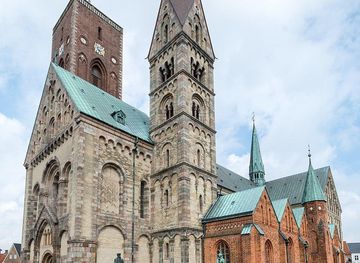
Discover Ribe, Denmark's oldest town, where medieval charm meets modern allure. Experience Viking history, stunning architecture, and breathtaking natural wonders.
Explore Ribe
Explore more of Denmark
Discover Denmark: A perfect blend of history, modern design, and the cozy concept of hygge. Explore vibrant cities, serene landscapes, and world-class cuisine.
Explore Denmark
